At a time when social networks dominate our digital interactions, OpenAI is preparing a revolutionary initiative aimed at profoundly transforming our way of communicating online. This innovative social network stands out with a unique authentication system: iris recognition, an advanced biometric technology designed to ensure that each user is a genuine human being, distinct from bots and automated accounts. As the proliferation of artificial intelligences gradually invades platforms, threatening the authenticity of exchanges, OpenAI proposes a radical technological response to restore trust and security in the digital space.
This project, currently under development, arouses both enthusiasm and controversy, mixing futuristic ambitions and crucial questions about privacy and personal data protection. With a device as intrusive as it is ingenious, based on ocular scanning via specialized equipment, the company led by Sam Altman seeks to establish an unprecedented standard for identity verification. The prospect of a social network protected from fake profiles and automated robots promises a more authentic experience but also raises major technical, logistical, and ethical challenges. In this context, it is essential to understand the project’s mechanisms, its implications in terms of biometrics, its expected benefits, as well as the obstacles to its adoption worldwide.
- 1 The innovative operation of OpenAI’s social network based on iris recognition
- 2 The stakes of biometrics and privacy in iris recognition authentication
- 3 Logistical and psychological obstacles to adopting the biometric social network
- 4 The integration of artificial intelligence in a secure social network for authentic content
- 5 Future prospects for biometric and secure social networks
- 6 Sam Altman and the vision of a genuine overhaul of digital interactions
- 6.1 Challenges and issues for the future of biometric secure social networks
- 6.2 What is iris recognition and how does it work?
- 6.3 What are the advantages of biometric authentication through ocular recognition?
- 6.4 What are the main challenges associated with using this technology?
- 6.5 How does OpenAI guarantee the confidentiality of biometric data?
- 6.6 Will this biometric social network replace traditional platforms?
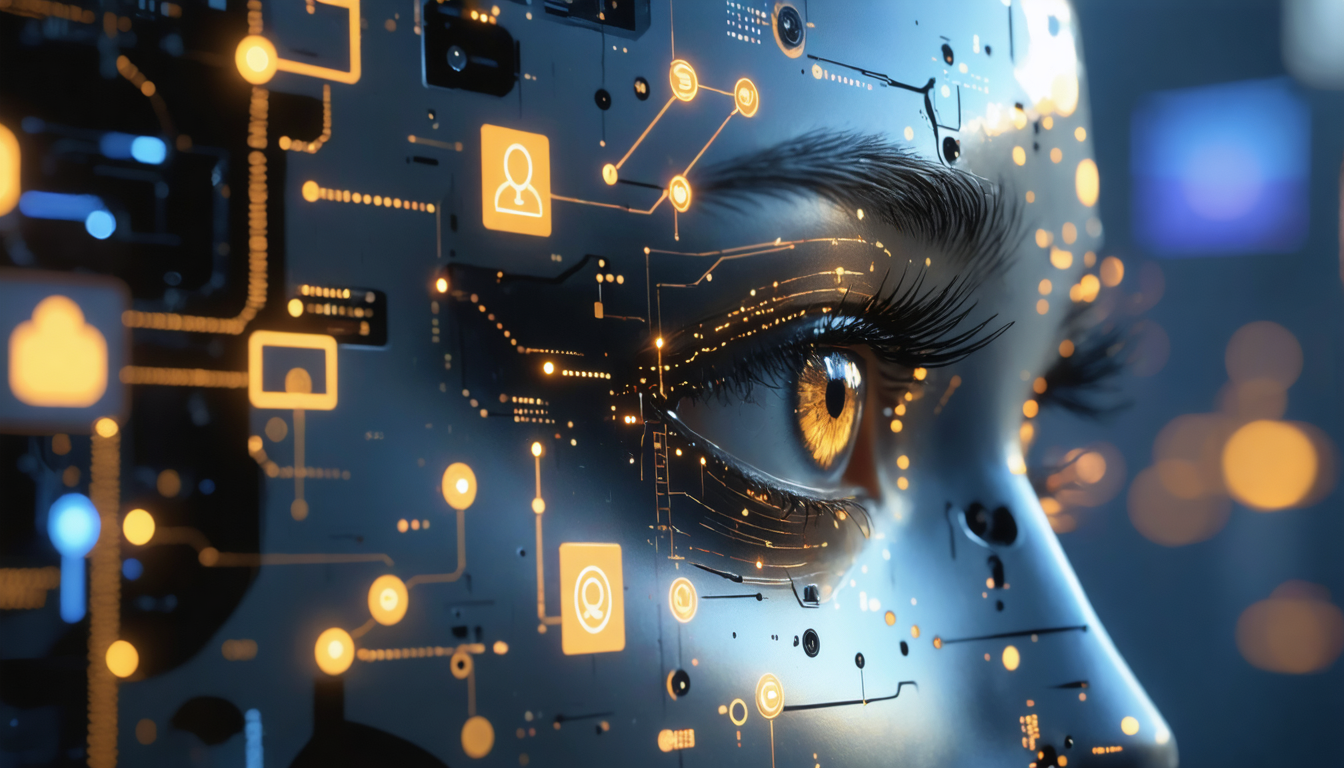
The cornerstone of this social network lies in its biometric authentication system, which notably relies on iris recognition. Unlike traditional systems based on passwords or two-factor authentication, this technology directly exploits the unique and unalterable characteristics of the human eye, offering a very high level of security.
The device used, named Orb, was specially designed to precisely scan users’ irises. About the size of a soccer ball, this device performs a rapid scan that generates a unique digital identifier, stored directly on the user’s smartphone or personal device. This strong authentication method prevents the creation of fake accounts or bots, as each account is strictly linked to a real and verified human eye.
In practice, access to the social network does not occur through a simple online registration form but requires a visit to a physical verification center. These centers, numbering 674 worldwide, welcome users for a complete scan that serves to validate their biometric identity. This step guarantees the authenticity of participants and drastically limits the possibility of identity theft or massive automation.
Application example: secure authentication in various fields
Ocular biometrics is not only a web innovation; it has a wide potential beyond social networks. Already used in some financial security procedures, it could guarantee safer transactions by banning identity fraud. Similarly, in online games or sensitive discussion spaces, this system can ensure that all interactions come from human users, thus avoiding the growing domination of bots or unregulated artificial intelligences.
The implementation of ocular scanning therefore provides an inimitable digital identity, opening the way to a digital environment where trust is paramount. In short, OpenAI is not limited to creating a simple social network but offers a security technology that could redefine how we access and interact on the web.
The stakes of biometrics and privacy in iris recognition authentication
While iris recognition represents considerable progress in the fight against bots and fake accounts, it also raises important questions around data protection and privacy. The collection and storage of sensitive biometric data require strong guarantees to prevent any abuse, leaks, or commercial exploitation.
The intrinsically personal and immutable nature of an iris imprint places this technology within a very strict legal framework, where transparency and data security must be ensured at every stage. OpenAI, aware of these issues, states that biometric identifiers are stored locally on the user’s device, limiting risks associated with data centralization on external servers.
However, critics point to the complexity of managing this information over the long term, especially in case of a security breach or breach of confidentiality. Several countries have already taken regulatory measures to regulate or even restrict the use of advanced biometric devices, in response to concerns expressed by digital rights organizations and citizens.
The debate between enhanced security and respect for privacy
Unlike the simple use of cookies or passwords, ocular scanning constitutes a deeper intrusion into the private sphere. This technology can provoke legitimate mistrust, especially when associated with a flagship Silicon Valley company with an ambivalent reputation.
Supporters of biometrics insist, however, on the need for a balance between security and privacy. They believe that advanced encryption mechanisms and strict protocols can reduce risks. Thus, iris recognition-based authentication, properly regulated, could offer a viable compromise: strengthening trust in the social network without sacrificing users’ fundamental rights.
Despite potential benefits, several barriers slow down the widespread adoption of this technology. The first major obstacle is logistical: to validate their identity by iris scan, users must imperatively go to a physical verification center. However, these centers remain few and geographically concentrated in certain countries, such as the United States, where most of them are located in Florida.
This requirement limits accessibility to a restricted audience and creates a significant barrier to the international expansion of the innovative social network. Indeed, travel is often expensive or simply impossible for many people, especially in rural areas or developing countries.
Alongside these practical constraints, the psychological aspect plays a significant role in users’ refusal or mistrust. Many are reluctant to entrust such intimate data as a scan of their eye to a company that represents a global technology giant, capable of collecting, analyzing, and potentially reselling this information.
Factors hindering Orb’s adoption and proposed solution
Several factors may explain the low current number of users, estimated at about 17 million, far from OpenAI’s ambitions to exceed one billion. Among them:
- Mandatory travel: requiring an appointment in one of the 674 centers is a major hindrance.
- Mistrust of biometric technology, sometimes perceived as an excessive intrusion into privacy.
- Concerns about data security: fear of leaks or hacking.
- Lack of clear communication on the processing and protection of personal data.
To counter these limits, OpenAI is studying alternative and less restrictive solutions, such as facial recognition via Face ID, although this method is considered less secure. Other, more futuristic avenues could emerge soon, combining innovation and ease of use.
Another important dimension of OpenAI’s project concerns the massive integration of artificial intelligence into the social platform. Contrary to the common fear that AI feeds the multiplication of fake accounts and bots, OpenAI wants to leverage this technology to offer a genuinely enhanced digital experience.
The future social network will allow users to create and share AI-generated content, such as images, videos, or creative texts. The combination of a biometric authentication system and advanced artificial intelligence tools thus promises a community where each post originates from a true, validated, and reliable human identity.
This innovative model could serve as a barrier to the spread of false information and harmful automated behaviors. By coupling biometric security and creative AI, OpenAI is reinventing not only the social network but also the way information is produced, consumed, and shared online.
| Platform | Number of users (in billions) | Authentication | Use of AI for content | Bot control |
|---|---|---|---|---|
| OpenAI Social Network | 0.5 (estimate early 2026) | Iris recognition (biometrics) | YES (image, video creation) | High (unique biometric verification) |
| Facebook (Meta) | 3.5 | Password, 2FA | YES (AI for recommendations) | Medium (automated detection) |
| Instagram (Meta) | 2.1 | Password, 2FA | YES | Medium |
| WhatsApp (Meta) | 2 | Phone number + SMS code | No | Low |
This table clearly shows the major differences between OpenAI’s new platform and established giants in the sector. OpenAI’s focus on biometrics and security aims to offer a social network where the authenticity of users takes precedence over quantity.
In 2026, the trend to strengthen digital security and guarantee an authentic human experience is growing. OpenAI is driving a dynamic that could transform industry standards. Biometrics, coupled with artificial intelligence, seems to be the key to a healthy and reliable future social network.
Several experts already predict a gradual adoption of these technologies on a larger scale, particularly in professional or educational contexts requiring strict identity control. The goal is not only to eliminate fake profiles but also to create safer environments where privacy is respected thanks to well-defined protocols.
Despite the challenges, the race for innovation pushes OpenAI and other players to not neglect the human dimension at the heart of digital experiences. The promise of a more transparent and secure online world, where every interaction is sincere, constitutes a powerful lever to renew user trust.
- Global accessibility of verification centers to facilitate user adoption.
- Strengthening guarantees for personal data protection through encryption and anonymization.
- Simplification of the authentication process to not discourage potential users.
- Complete transparency on the use and retention of biometric data.
- Educating internet users about the advantages and risks related to biometrics.
Sam Altman and the vision of a genuine overhaul of digital interactions
Sam Altman, CEO of OpenAI, embodies the desire to rethink the nature of online relationships profoundly. With his experience in artificial intelligence development, he expresses his ambition to fight the invasion of bots that has transformed the web over the years into an artificially saturated environment.
He does not hide his frustration with the massive spread of automated accounts on popular platforms like Twitter or Reddit. The perception of social networks as “dead” or falsely animated by robots pushes Altman to imagine a genuinely lively digital space, where the veracity of profiles is indisputable and interactions remain human.
In this context, the biometric social network appears as a radical but necessary solution. Altman seeks, in a way, to “save the web after having automated it,” aware of the paradoxes and responsibilities linked to his contributions to the emergence of generative technologies.
There remain questions to be resolved:
- How to address privacy concerns, especially in a context where data scandals are frequent?
- Can equitable access be guaranteed without marginalizing the most technologically or geographically distant populations?
- What role for regulation and international laws facing the rapid development of these technologies?
- Will biometric technology maintain its security against advances in cyberattacks?
- Finally, will this radical approach be able to attract an audience accustomed to free and easy access?
These questions highlight the complexity of an ambitious project carried by OpenAI, which could well change how we conceive authenticity in the digital world.
What is iris recognition and how does it work?
Iris recognition is a biometric technology that analyzes the unique patterns of the iris of each individual. A specialized scanner captures these patterns to create a secure digital identifier used notably to authenticate the identity of users on platforms like OpenAI’s social network.
What are the advantages of biometric authentication through ocular recognition?
This method guarantees enhanced security by preventing the creation of automated fake accounts or bots. It provides a form of identity proof that is difficult to falsify, thus ensuring that every member of the social network is a genuine human.
What are the main challenges associated with using this technology?
The main challenges include logistical constraints due to the obligation to visit a verification center, as well as concerns related to privacy and the security of biometric data, which require rigorous and transparent management.
How does OpenAI guarantee the confidentiality of biometric data?
OpenAI states that the biometric identifier is stored only locally on the user’s device, thus limiting the risks of leaks or hacking. Advanced encryption protocols are also implemented to protect this sensitive information.
It is unlikely to completely replace existing networks, as the biometric approach imposes specific constraints. However, it could establish a new standard regarding security and authenticity, attracting an audience concerned with a more reliable online experience.