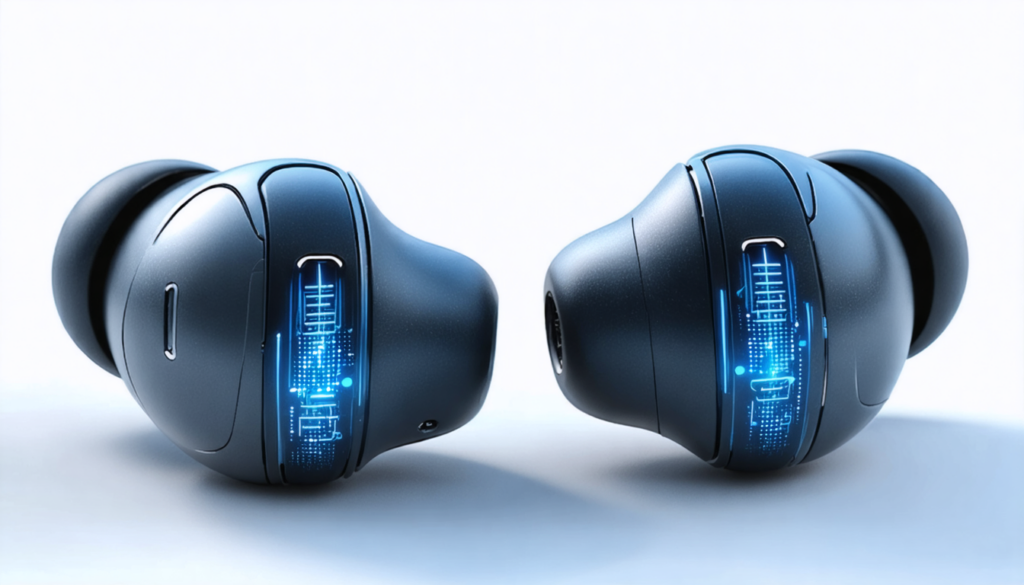
As the wearable technology market continues to seek the successor to the smartphone, a recent leak related to OpenAI is making a big splash. Named Sweetpea, this innovative project could revolutionize the way we interact with artificial intelligence. Far from mere “AI-boosted” earbuds, these ChatGPT earbuds promise to include an intelligent voice assistant capable of understanding not only voice but also the surrounding context. For several years, Silicon Valley has been experimenting with connected glasses, various sensors, and other technological jewels, often without significant commercial success. Yet, OpenAI seems to be taking a different direction by betting on an audio wearable with a discreet design, worn behind the ear, featuring increased battery life and revolutionary functions. This unprecedented product could ultimately profoundly change our relationship with virtual assistants and mobile devices.
The potential is enormous: envisioning a device capable of being always active, observing its environment with unprecedented finesse, intervening at the right moment without requiring constant use of a screen. The launch timeline, planned for September, with production expected between forty and fifty million units, illustrates OpenAI’s confidence in this extraordinary project. However, this innovation does not come without challenges or questions, notably regarding privacy, increased dependence on AI, and the social acceptability of an “assistant” so close to the body. So, will Sweetpea be the must-have future or just another gadget?
- 1 ChatGPT Earbuds: an announced revolution in wearable audio technology
- 2 Sweetpea: unprecedented autonomy for an always-active assistant
- 3 Unprecedented contextual understanding thanks to ultrasonic sensors
- 4 Sweetpea, a potential smartphone rival in user interface
- 5 A new habit embodied by OpenAI beyond a mere gadget
- 6 The stakes and challenges of OpenAI’s industrial bet
- 7 Why Sweetpea could redefine our usage compared to classic AI gadgets
- 8 Ethical and social questions around ChatGPT earbuds and omnipresent AI
ChatGPT Earbuds: an announced revolution in wearable audio technology
The smart earbuds market continues to grow, but in 2026, competition remains fierce. OpenAI, mainly known for its advances in artificial intelligence software, is preparing to make a big impact in hardware with Sweetpea. This codename evokes a pair of multimodal earbuds designed to go beyond simple audio use. Unlike traditional models, these would not fit into the ear canal but would be worn behind the ear, a technical choice heavy with meaning.
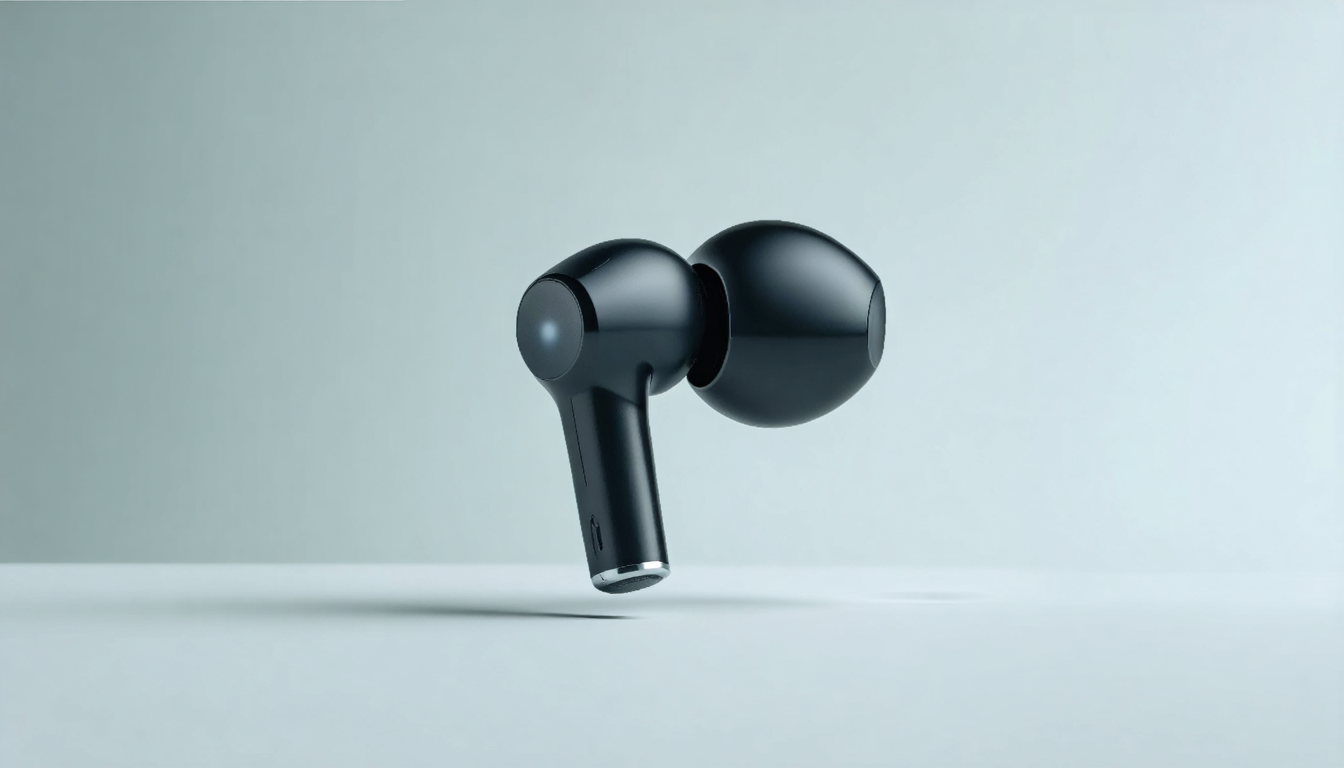
Positioning behind the ear allows for a larger battery, a crucial element to offer extended autonomy. In a world where voice assistants must always be available, energy has become a key resource. Sweetpea aims to remain active permanently, ensuring intelligent listening and contextual intervention, which usual gadgets cannot guarantee once their battery is depleted.
But what fundamentally distinguishes these earbuds is their ability to integrate environmental understanding through ultrasonic sensors and signal recovery devices. They can perceive not only your voice but also movements, proximity, and the sound characteristics of the environment. This advancement shifts wearable audio technology into another dimension—that of the ever-present yet discreet personal assistant, interacting at the right moment without disturbing or requiring constant solicitation.
As a reminder, several startups have already attempted the adventure of “AI-powered” earbuds but failed to convince sustainably. The key thus lies in the fusion of high-performance hardware and finely integrated AI, seamlessly included in everyday use. OpenAI seems to have understood that innovation does not only lie in raw technology but in the ability to create new habits effortlessly for the user. This bet of combining quality hardware and advanced artificial intelligence could well change the landscape of connected devices in 2026.

Sweetpea: unprecedented autonomy for an always-active assistant
As the leak indicates, these earbuds are not designed to be limited-use gadgets. Their anatomical positioning behind the ear has a precise reason: to offer much greater battery life than traditional earbuds inserted into the ear canal. The larger battery allows Sweetpea to remain powered all day, or longer, which is essential for an AI assistant supposed to operate “always on”.
In practice, this means the user can rely on continuous support without having to constantly think about recharging their equipment. This constraint is crucial to overcome to truly democratize voice-controlled assistants in daily life. Furthermore, OpenAI could integrate advanced energy management techniques, notably via smart sensor shutdown based on context and software optimization to prolong usage duration.
This longevity could make usage smoother, less interrupted, and promote real social integration of this type of product. For example, a user could summon ChatGPT without having to take out their smartphone in contexts where such access is inconvenient, like in meetings, while traveling, or during sports activities.
But beyond energy, the question of hardware performance is crucial. Continuous audio data processing requires significant computing power, which will be found in these earbuds via dedicated chips optimized for embedded artificial intelligence. Thus, one can imagine that latency will be reduced, creating a natural and almost instantaneous interaction, a giant leap compared to current assistants.
Key advantages of extended autonomy for AI earbuds
- Continuous use without interruption: the assistant can remain available without constant need to recharge.
- Increased user confidence: the fear of losing connection or running out of power is reduced.
- More open functionalities: additional sensors and features are possible thanks to sufficient energy.
- Enhanced mobility: ideal for long trips or situations without access to an electrical outlet.
The design behind the ear is therefore a thoughtful choice, not only for aesthetics or comfort but also as a technical lever to provide a truly improved user experience. It is a bold step for OpenAI, which thus positions itself in a more mature wearable audio race.
Unprecedented contextual understanding thanks to ultrasonic sensors
What above all differentiates Sweetpea from all other solutions on the market is the ability to observe and analyze the wearer’s sound and physical environment. To this end, the device integrates an ultrasonic emitter and several sensors capable of collecting information about movements, the presence of objects, or the nature of surrounding sounds.
This advanced technology allows the integrated ChatGPT assistant to go beyond simple voice recognition. For example, if you are in a noisy café, the earbuds could detect this context and adapt their responses, their volume, or even intervene differently according to the environment. If the user is in motion, the algorithm can deduce that they do not wish to be interrupted intrusively.
This smarter and more adaptive interaction is a major breakthrough in the field of embedded artificial intelligence because it makes it possible to offer deeply personalized services without requiring laborious configuration. The machine gradually learns to understand needs and preferences through context and the immediate environment rather than being limited to voice commands.
A concrete example is the possibility of receiving a reminder or notification only when the situation is favorable, thus avoiding stress or forgetfulness. Ultrasonic sensors also allow analyzing the proximity of objects or gestures, offering an innovative additional interaction channel.
Thus, Sweetpea embodies the promise of a non-invasive but intuitive assistant, capable of interacting in a human-like way.
Sweetpea, a potential smartphone rival in user interface
It is not so much the audio function that positions Sweetpea as a major innovation, but the way it revolutionizes our interface with technology. In 2026, smartphones remain the nerve center of our digital interactions. Yet, a discreet object, worn behind the ear and always active, can profoundly change this equation.
With this assistant capable of perceiving context, hearing voice, and responding without requiring a screen, the door opens to “screenless” usages. This transformation could reduce dependence on smartphones, especially for simple tasks like getting quick information, managing a calendar, or controlling connected home devices.
OpenAI, through its renown in natural language processing, has a strategic advantage over other players such as Apple or Google. Where these remain tied to proprietary platforms heavily linked to their smartphones, the Sweetpea project could rely on a cloud-based, flexible AI, independent of traditional hardware support.
This break could result in a redefinition of technological habits. The wearable would no longer be just an accessory but a central component of the personal digital ecosystem. This results in a smoother and more natural experience, freed from the manual and visual constraint of the classic smartphone.
| Characteristic | Traditional Smartphone | Sweetpea Earbuds |
|---|---|---|
| Type of interface | Touchscreen | Voice command and contextual perception |
| Requirement to have device in hand | Yes | No, worn continuously |
| Interaction on the move | Poor (requires manual use) | Optimal and natural |
| Ability to understand context | Limited | Advanced thanks to sensors |
| Battery life | Average one day | Several days possible |
This inevitable shift in the center of gravity of usage also requires deep reflection on ergonomics and software design. OpenAI must therefore compete in innovation to make this interface accessible and intuitive on a large scale, while carefully integrating privacy imperatives to which the general public is now very sensitive.
A new habit embodied by OpenAI beyond a mere gadget
OpenAI is not just marketing a new electronic product. Through Sweetpea, it aims to establish a true habit, a daily reflex based on integrated and natural artificial intelligence. In 2026, hundreds of millions of users already interact with ChatGPT via various software platforms. This familiarity creates a solid foundation to adopt an accessory that materializes this interaction.
Unlike other products presented at CES or in high-tech fairs, often impressive but disconnected from everyday use, Sweetpea capitalizes on OpenAI’s already mature software experience. The wearable thus becomes a physical, fluid, and transparent extension, accompanying the user without imposing effort or complex learning.
This fits into an innovation trend where hardware fades behind improving the user experience. The interface becomes almost invisible; the point of contact between man and machine becomes subconscious. This “disinvisibilization” marks a turning point in technology, where the product is no longer an end in itself but a vector for adopting new practices.
This approach shows a fine understanding of modern needs, balancing the quest for simplicity and the demand for efficiency. More so, Sweetpea could facilitate the democratization of artificial intelligence in everyday life, making it omnipresent yet non-intrusive.
The stakes and challenges of OpenAI’s industrial bet
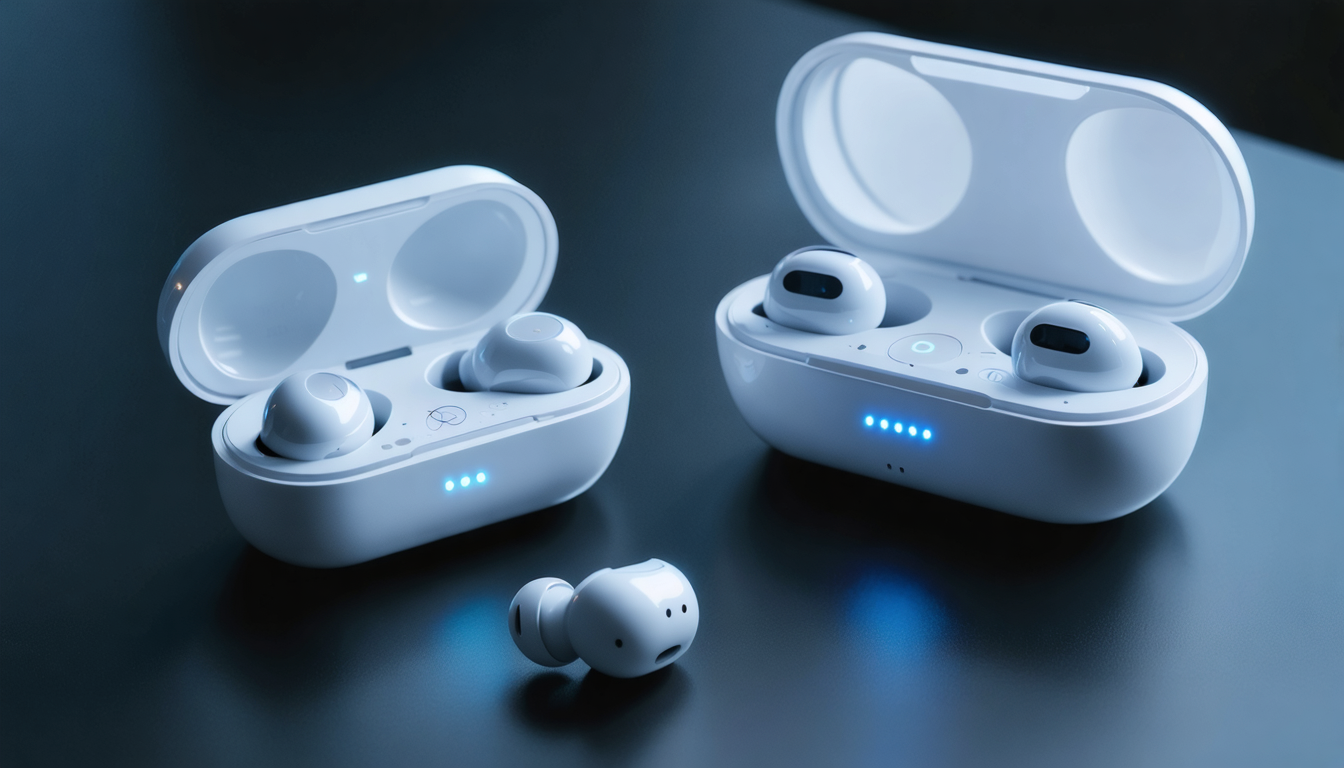
Producing between forty and fifty million units right from the first launch is a colossal industrial challenge. The cost of components is comparable to that of smartphones, which suggests that the selling price could be high, at least in the early stages. OpenAI, until now famous for its software exploits, is therefore taking a significant financial and image risk.
Beyond price, several technical challenges must be overcome: large-scale reliability, ambient noise management, component lifespan, mastery of embedded algorithms. Additionally, sound quality must be up to par to convince audiophiles and make the product attractive compared to the competition.
But the obstacles are not only technical. The social perception of an “always present” assistant behind the ear raises legitimate questions about privacy. Users will have to consent to continuous monitoring, even if data is processed locally or encrypted. This acceptance is far from guaranteed and could hinder adoption.
Finally, increased dependence on an omnipresent AI could raise psychological and practical impact concerns among users. OpenAI will have to ensure that AI is ethical, transparent, and responsible to avoid criticism and outright rejection. Dialogue with users and authorities will be essential.
Why Sweetpea could redefine our usage compared to classic AI gadgets
Many AI-based wearables have emerged, but many ended up forgotten due to a lack of real daily contribution. Sweetpea stands out by offering a product deeply integrated into the OpenAI ecosystem and users’ lives. This integration relies on powerful contextual intelligence and permanent availability, elements missing from many competitors.
The ability to interpret the environment and anticipate intervention timing transforms the voice assistant into a benevolent companion, capable of smoothing activities without becoming a source of distraction. In this sense, OpenAI’s product could erase the barrier between the machine and user, offering an invisible but active presence.
This technological sophistication is embodied by positioning that goes beyond the gadget to approach a natural, almost organic human interface. OpenAI is therefore betting not only on technology but also on a profound cultural shift regarding how machines are used in our lives.
With a device capable of constantly listening, observing, and analyzing, the issue of privacy becomes central. Sweetpea raises questions about the data collected, its use, and guarantees for users. In a general context where trust in technology is fluctuating, transparency must be a pillar of the project.
Social acceptance of an “always there” wearable will also depend on the balance between perceived usefulness and felt intrusion. OpenAI’s communication will need to be clear and reassuring, with, for example, visible indicators of sensor activation and the ability to finely control data sharing options.
On a broader level, increased dependence on an omnipresent assistant could also raise questions about personal autonomy and mental health. The risk of excessive assistantiation, where human initiative is reduced, must be addressed seriously.
Despite these challenges, successful adoption could open a new era of more natural and friendly interactions with technology, integrated lightly into our routine. The ball is now in the users’ and society’s court to decide on this evolution.
What are the main advantages of Sweetpea earbuds over classic earbuds?
Sweetpea offers extended battery life, advanced contextual understanding thanks to ultrasonic sensors, and continuous voice interaction, surpassing the limits of traditional earbuds.
How does Sweetpea protect users’ privacy?
OpenAI works on data encryption protocols and provides strict control over collection settings, with visible indicators to ensure transparency of listening and monitoring.
At what price could Sweetpea be sold?
The exact price is not yet known, but due to advanced components, Sweetpea could be positioned in a premium range comparable to high-end smartphones.
What impact could Sweetpea have on smartphone usage?
By offering a voice interface always available and contextual, Sweetpea could reduce dependence on smartphones for simple interactions, opening a new era of screenless interfaces.
Why is OpenAI entering hardware when its expertise is mainly in software?
OpenAI aims to offer a complete user experience, combining hardware and artificial intelligence to create a new usage habit, making AI more accessible and integrated into daily life.