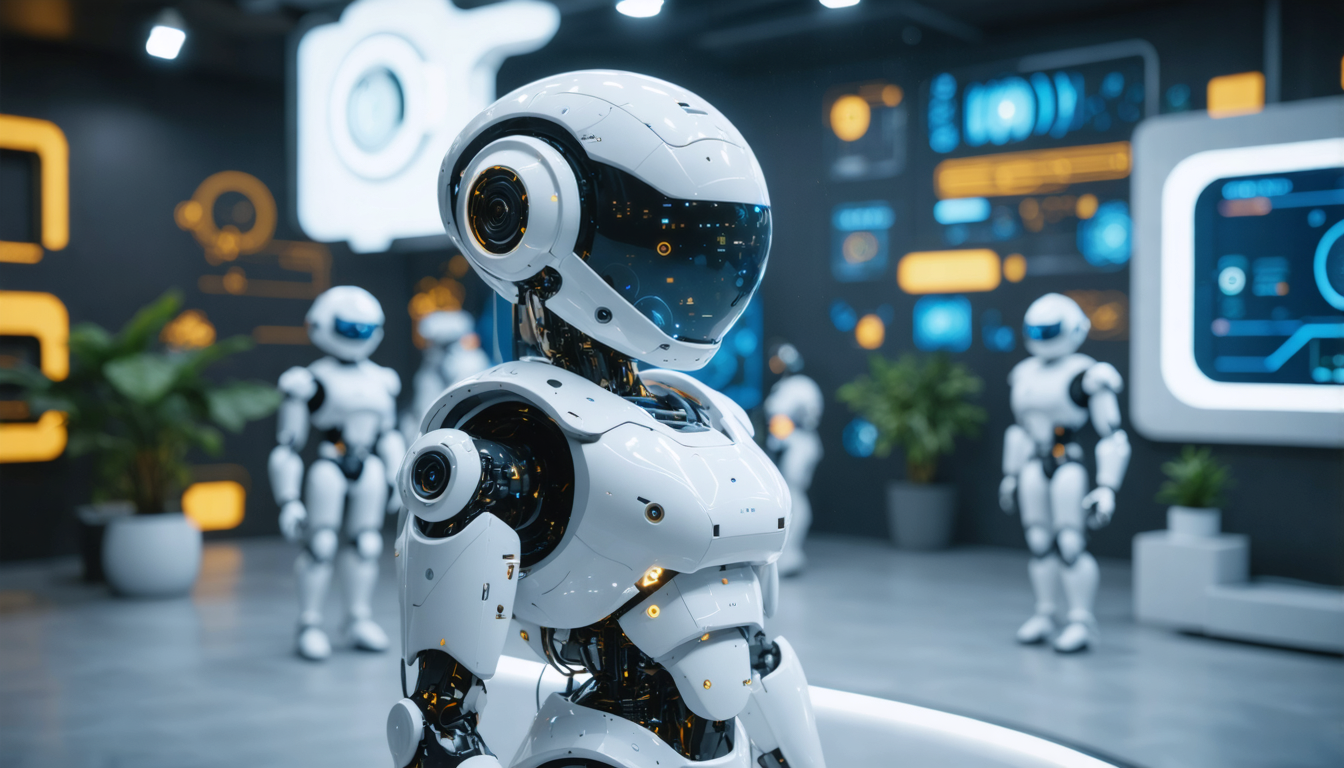
At the dawn of 2026, the prospect of sharing our daily lives with a domestic humanoid robot seems poised to move straight out of a science fiction film and into our reality. Neo, the humanoid robot developed by the Norwegian startup 1X Technologies, promises to revolutionize the way we live at home by becoming much more than a simple mechanical assistant. Capable of interacting with its environment and users, this technological companion fascinates as much as it raises legitimate questions: Will Neo truly be autonomous? Does this project mark a decisive step in the integration of robotics into our daily lives, or will it remain a myth amplified by spectacular videos?
With an innovative design intended to break the metallic and rigid stereotypes of traditional robots, Neo seeks to establish itself as a full-fledged member of the household, appealing by its lightweight appearance and an intuitive form of visual expression. Its hybrid operation combining embedded artificial intelligence and remote human teleoperation opens the way to an unprecedented human-machine interaction, but also raises many questions about its accessibility, reliability, and true autonomy.
As Neo is about to enter the market at a price of 20,000 dollars or as a subscription, it is crucial to analyze its promises, technical capabilities, as well as the challenges and opportunities it represents in the field of domestic robotic innovation. This detailed exploration helps demystify preconceived notions and understand how this advancement could transform – or not – our relationship with technology and its artificial companions.
- 1 Neo, the domestic humanoid robot: a technological innovation that changes the game
- 2 Design and ergonomics: how Neo redefines the appearance of the humanoid robot
- 3 Neo’s mechanical capabilities: an agile and robust robot serving everyday life
- 4 Artificial intelligence and human supervision: a balance between autonomy and control
- 5 A silent and interactive domestic presence for comfortable use
- 6 Neo acquisition plans: towards accessible mass-market distribution
- 7 Alternatives to Neo: the humanoid robotics race intensifies
Neo, the domestic humanoid robot: a technological innovation that changes the game
At the outset, Neo marks a significant industrial turning point by offering a domestic humanoid robot, accessible in the near future starting at 20,000 dollars, launched by the dynamic startup 1X Technologies based in Norway. This singular machine stands out by its featherweight 30-kilogram weight and silent operation, a combination rarely achieved in the world of service robotics.
What then distinguishes Neo from competing models? On one hand, its internal structure made of 3D lattice polymer gives it remarkable lightness and flexibility, breaking with the usual rigid architectures of industrial robots. This “Soft Robotics” design guarantees safer and more natural interaction with the human domestic environment.
On the other hand, the progressive integration of sophisticated artificial intelligence allows Neo to learn continuously and adapt to each household, while its advanced sensors ensure smooth navigation and avoid collisions. Its ability to combine different technologies, from sensors to stereoscopic vision to real-time data processing, illustrates a concrete advancement in how machines can assist humans daily.
Neo’s design reminds us that beyond technical performance, the success of a technological companion also relies on its acceptance in the private sphere. The choice of a removable and washable textile cover, the absence of visible mechanical parts, and a soft aesthetic in harmony with domestic furniture reflect a strong desire to integrate this robot as a natural extension of our spaces.
These characteristics make Neo a true innovation laboratory embodying the trend towards more humanized robotics, where technology serves to improve quality of life without oppressing the user through complex or intrusive interactions.
Design and ergonomics: how Neo redefines the appearance of the humanoid robot
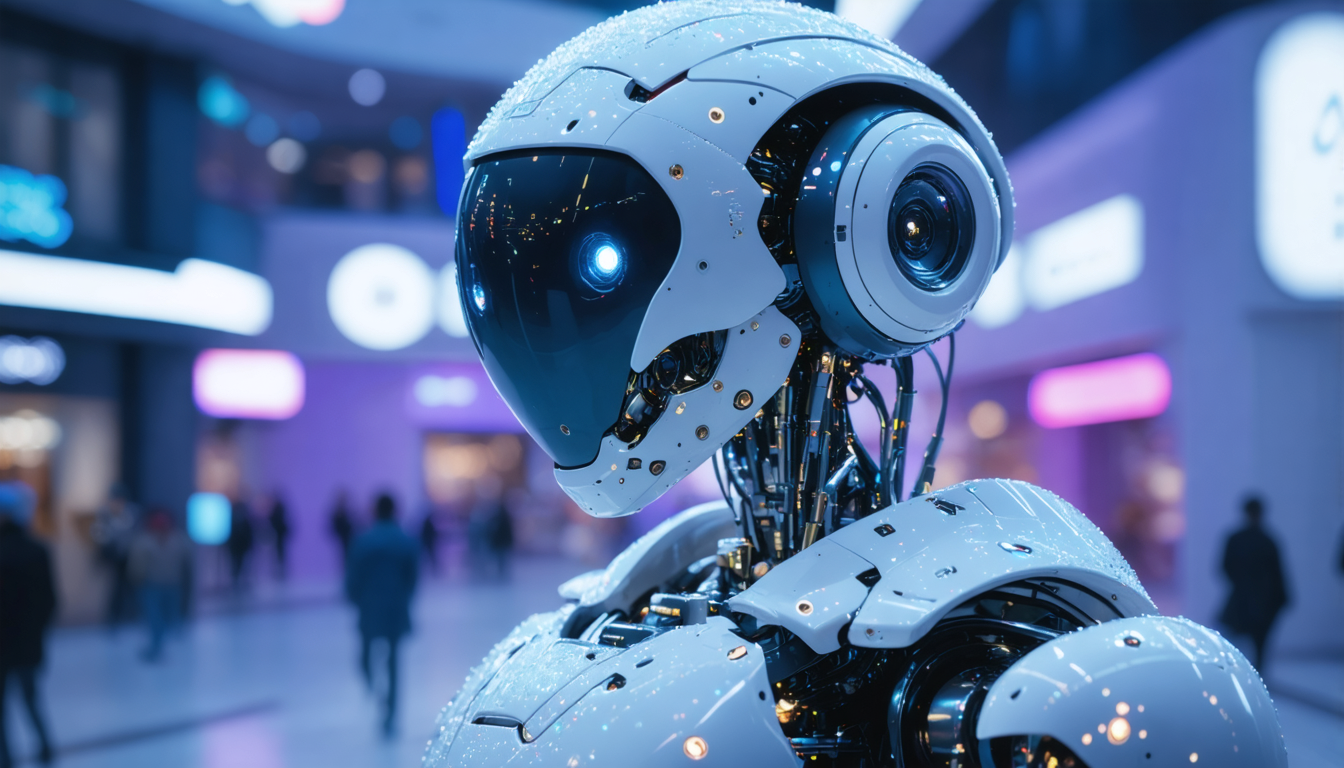
Neo triggers a real breath of fresh air in robotic aesthetics by celebrating a slender silhouette of 1.67 m for an astonishingly light weight of 30 kilograms, notably made possible by the absence of heavy gears. This technical feat is paired with a remarkable stylistic choice.
Unlike industrial robots that often display brutal mechanics made of visible cables and metal cylinders, Neo adopts a soft and organic visual form derived from the “Soft Robotics” concept. Its body is fully covered with a removable and washable technical fabric suit, reinforcing its “domestic accomplice” side. This cover dresses an internal 3D lattice polymer structure acting as passive and flexible padding, limiting risks linked to accidental contacts.
The robot benefits from a natural, fluid, almost human posture thanks to a tendon-driven system precisely imitating muscular biomechanics. The high finesse of its movement avoids mechanical or rigid mechanic aspects, promoting a soothing presence. This is reinforced by expressive body gestures and soft light signals on its face, visible but unobtrusive, used to communicate its intentions clearly and intuitively.
This minimalist approach breaks the known “uncanny valley” effect, where overly realistic humanoids cause discomfort. Here, Neo embodies a clever balance between familiarity and innovation, facilitating its acceptance in a family context where technology is often viewed both with curiosity and caution.
To deepen, here is a list of key elements comprising the ergonomic design and the unique appearance of Neo:
- Removable textile suit: for comfort and ease of maintenance.
- 3D lattice polymer structure: flexible, cushions shocks.
- No visible cylinders: organic and fluid silhouette.
- 22 degrees of freedom in the hands: human dexterity to manipulate various objects.
- Light signaling and gestures: intuitive non-verbal communication.
- Neutral colors and textile textures: discreet integration within a domestic setting.
Ultimately, Neo redefines what we expect visually and tactilely from a humanoid robot intended to occupy our homes, combining technical performance and warm aesthetics.
Neo’s mechanical capabilities: an agile and robust robot serving everyday life
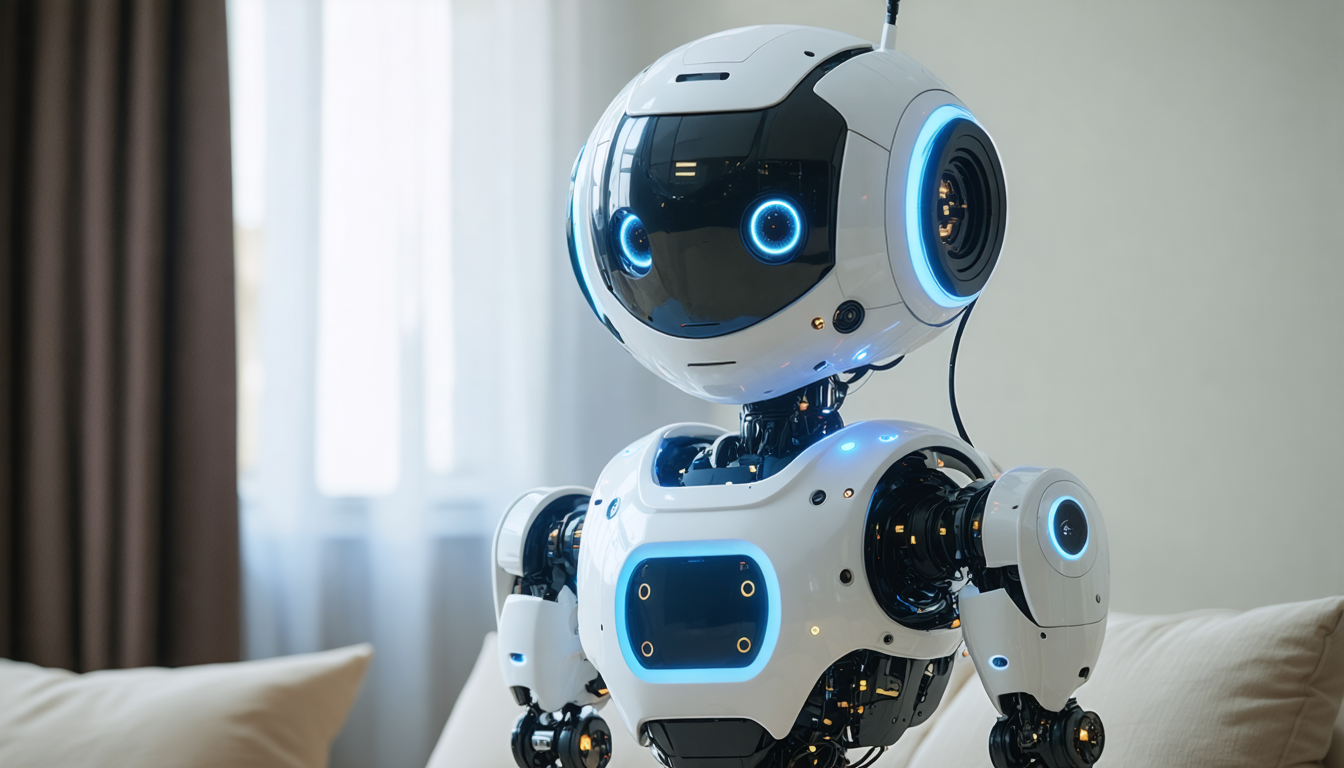
Beyond its appearance, Neo pushes robotics into an advanced functional dimension. Its tendon-driven propulsion system grants it an astonishingly dynamic mobility capacity, allowing it to walk at an average speed of 4 km/h, equivalent to normal human walking. This speed is sufficient to follow a user in their usual movements without causing a lag.
To impress, Neo does not hesitate to accelerate up to 12 km/h, comparable to a fast human run. Such speed, rare for a bipedal robot, highlights the quality of its balance ensured by a network of sensors spread across the body and inertial units. These technologies guarantee exemplary stability even on uneven terrain or during rapid movements.
The robot’s payload capacity is also remarkable. Neo is capable of continuously carrying up to 25 kilograms, perfectly matching suitcases, shopping bags, or other common household loads. For occasional actions, its strength can reach 70 kilograms, an impressive value showing an exceptional power-to-weight ratio in the domestic robot sector.
Here is a summary table of Neo’s key mechanical performances:
| Capacity | Description | Value |
|---|---|---|
| Height | Robot’s vertical dimension | 1.67 meters |
| Weight | Total mass | 30 kg |
| Walking speed | Normal movement | 4 km/h (1.4 m/s) |
| Running speed | Rapid movement when needed | 12 km/h (6.2 m/s) |
| Continuous carried load | Weight the robot can carry without interruption | 25 kg |
| Maximum lifting force | Maximum occasional load handled | 70 kg |
These capabilities no longer place Neo in the category of simple gadgets, but rather as a true physical assistant capable of engaging in significant efforts within a connected and intelligent home.
Artificial intelligence and human supervision: a balance between autonomy and control
Neo’s operation illustrates the complexity of the challenge posed by advanced humanoid robotics. The machine relies on a hybrid architecture combining powerful embedded artificial intelligence and human teleoperation capability. The heart of its system is the NVIDIA Jetson Thor chip, capable of executing up to 2070 teraflops, a guarantee of rapid and efficient processing of local captured information.
This embedded AI allows Neo to perform autonomous navigation inside a home, avoiding obstacles smoothly and performing repetitive household tasks learned previously. However, the complexity of certain actions, such as fine tidying or delicate laundry folding, still requires human intervention via an “Expert Mode”.
This mode allows a qualified operator to take remote control of the robot through a virtual reality interface and a 5G connection. This dual method ensures safety, precision, and personalization of actions in varied domestic scenarios. Furthermore, each teleoperation session is a valuable data source that enriches the learning model of the Redwood AI powering Neo, progressively increasing its autonomy.
Here are the essential aspects of Neo’s hybrid operation:
- Embedded AI: autonomous processing of common tasks and navigation.
- Expert Mode teleoperation: remote human control for complex tasks.
- VR interface and 5G connection: latency-free transmission and control.
- Continuous learning: progressive improvement of capabilities thanks to collected data.
This mechanism combines the best of technology and human input, allowing Neo to be a truly versatile and reliable technological companion.
A silent and interactive domestic presence for comfortable use
In view of harmonious daily coexistence, Neo is designed to operate with almost absolute discretion. Its operation is remarkably quiet, barely 22 decibels, which is less than the noise generated by a common refrigerator. This point is fundamental to allow the robot to work without disturbing the household’s tranquility, especially during periods of rest or occupant concentration.
This acoustic performance is made possible by the use of tendon-driven motors, which eliminate the sharp mechanical noises usually emitted by gearboxes used in most industrial robots. Add to this a set of sophisticated sensors, including:
- Two 8-megapixel 90 Hz fisheye stereoscopic cameras, offering wide-angle vision and depth perception.
- Four 360° directional microphones, allowing Neo to precisely locate sounds and respond efficiently to calls.
- A subtle light signaling system, called “emotive earrings”, visualizing its state and intentions without cluttering screen.
This carefully calibrated sensory suite enhances human-machine interaction, making exchanges more intuitive and natural. The user can thus communicate with Neo, who knows how to listen, understand, and act accordingly, with exemplary discretion.
The user experience thus becomes fluid, pleasant, and non-intrusive, a sine qua non condition for the democratization of this type of domestic robotics.
Neo acquisition plans: towards accessible mass-market distribution
The commercial strategy deployed for Neo draws inspiration from high-end automotive sector models, offering dual access paths for individuals: traditional purchase at 20,000 dollars or a monthly subscription formula at 499 dollars, accompanied by a refundable deposit of 200 dollars.
This latter option aims to democratize access to humanoid robotics by possibly including complementary services such as regular maintenance and software updates. The subscription model also suits those who wish to test the technology without heavy commitment while benefiting from professional technical support.
The first targeted units will be available as early as 2026 in the United States, with international rollout planned shortly thereafter. Neo offers about 4 hours of autonomy in use, supported by a fast charger capable of restoring one hour of use in only six minutes.
Thus, users have a turnkey solution, designed to integrate smoothly into their daily lives and thereby demystify the presence of such an advanced technological companion.
Alternatives to Neo: the humanoid robotics race intensifies
Neo does not stand alone in this rapidly growing sector. Several serious competitors also aim to dominate the market of versatile robotic companions:
- Tesla Optimus (Bumblebee): initially intended for industrial production, this robot aspires to future domestic adaptation.
- Figure 01: a versatile robot integrating OpenAI’s AI, specially designed for warehouse and logistics environments.
- Agility Robotics Digit: currently active in logistics, with a pragmatic profile mainly focused on movement and manipulation of simple objects.
- Boston Dynamics Atlas: a technological showcase oriented towards extreme mobility and agility, however distant from domestic uses.
- Ameca and Sophia: two robots focused on social interaction and human-machine communication, with advanced facial expression capabilities.
- Unitree G1: an accessible research platform focused on robotic agility.
This diversity highlights the intensity of the race to develop next-generation humanoids, each player striving to meet specific needs with often complementary technical approaches. Neo positions itself in this constellation as a committed domestic pioneer, combining flexibility, interaction, and functionality.