
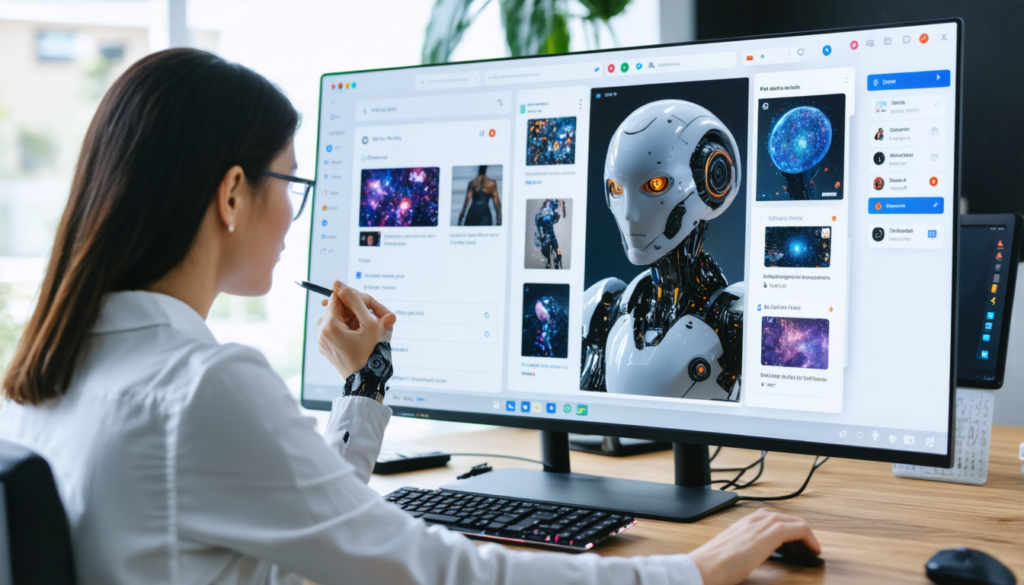
The revolution in visual creation takes a major new step forward with the arrival of Nano Banana directly integrated into Chrome. This advancement, driven by the power of Google’s artificial intelligence, profoundly simplifies the way users can generate and edit images online. No more back-and-forth between different applications or tabs, Nano Banana installs itself in the browser so that every creative idea finds immediate realization. Accessible with a single click at any time, this Chrome extension is not just a fruity gadget; it embodies a transformation in generative image creation and paves the way for enhanced productivity on the web.
Designed to meet the expectations of creators, marketers, designers, and content professionals, the integration of this tool into Chrome confirms Google’s desire to make its browser much more than just a simple access point to information. With Nano Banana, Chrome becomes a workspace where generative AI is a visual assistant capable of understanding contextual needs, creating smoothly, and editing visuals without interrupting the workflow. This innovation answers a strong demand for efficiency while making the technology accessible to the widest audience. In 2026, this breakthrough changes the game for those wishing to fully leverage the power of AI-created images directly within their usual browsing environment.
- 1 Nano Banana on Chrome: the new frontier of AI image generation integrated into the browser
- 2 An intuitive interface: how Nano Banana transforms the user experience on Chrome
- 3 Technical specifications of Nano Banana: speed, precision, and innovative editing capabilities
- 4 Economic and professional impacts of Nano Banana in today’s digital ecosystem
- 5 Advanced features of Nano Banana: customization, automated browsing, and integration with Google AI Pro
- 6 Impact on image creation in digital marketing and social networks
- 7 Ethical and privacy challenges surrounding the integration of Nano Banana into Chrome
Nano Banana on Chrome: the new frontier of AI image generation integrated into the browser
The integration of Nano Banana directly into Chrome is more than just a functional addition; it is a complete redefinition of visual creation on the Internet. Today, image generation no longer requires opening a dedicated application or new tab, as it is now accessible via an intelligent sidebar integrated within the browser. For users, this means a significant time saving: they can trigger image creation or editing instantly, regardless of the site being viewed.
This feature relies on Gemini, Google’s AI platform, which powers Nano Banana in Chrome. The embedded technology offers advanced natural language understanding: simply describe an idea or need in everyday language, and the tool immediately generates a visual that matches expectations. For example, an advertising content creator can quickly visualize different versions of the same concept without leaving their work page.
The benefit of this integration goes beyond simple ease of use. Nano Banana also revolutionizes the way of working by embedding AI technology into the daily flow of tasks. For a photographer or graphic designer, modifying an existing image becomes as simple as providing a textual instruction, something that previously might have required using complex editing software. Now, everything is done “on the spot,” streamlining the creative process.
This fundamental change extends Google’s strategy: making Chrome a true multifunctional digital “hub,” where artificial intelligence acts as constant support, anticipating users’ needs and facilitating a wide range of activities.
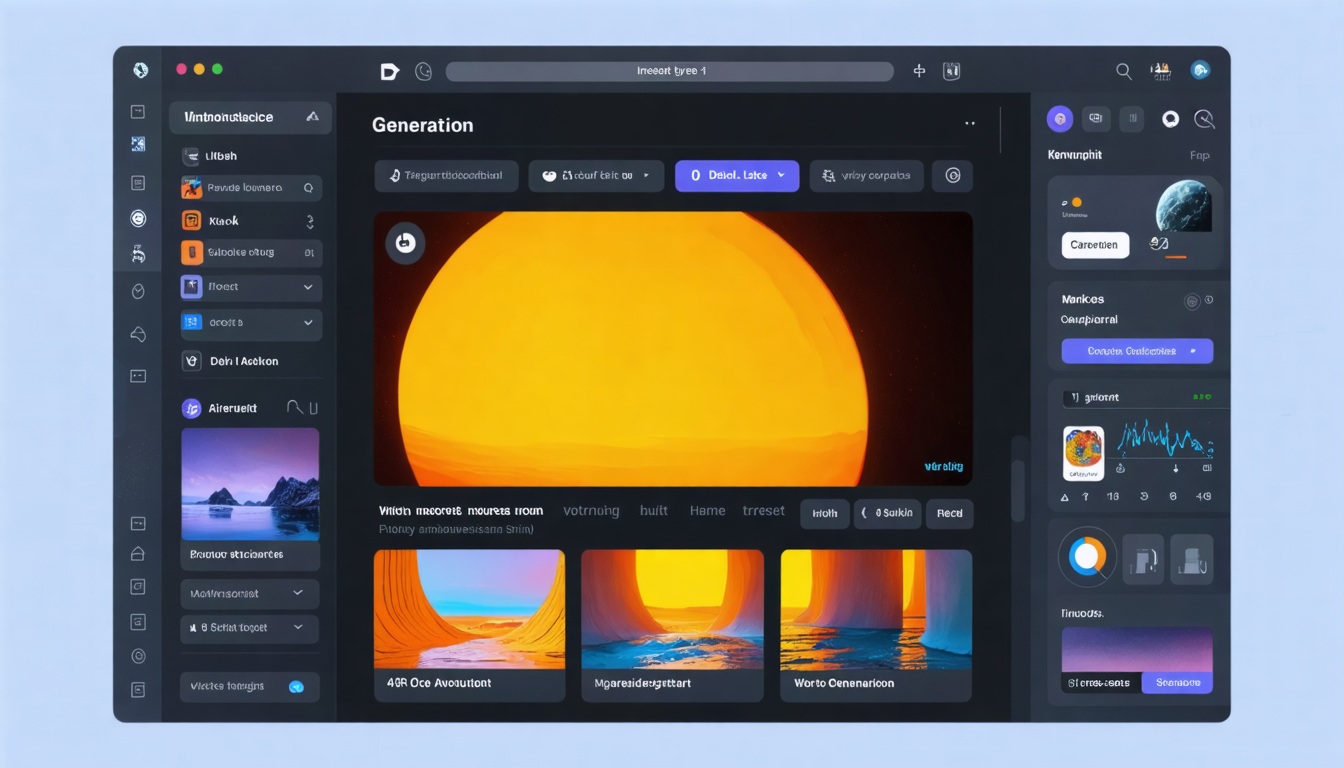
An intuitive interface: how Nano Banana transforms the user experience on Chrome
One of the major strengths of Nano Banana on Chrome lies in its ease of use and perfect integration within the browser. The sidebar dedicated to Gemini allows continuous interaction with the visual assistant without interrupting web browsing. The user can thus generate AI images, ask questions, or request modifications while browsing a site or during multitasking sessions.
This interactive interface manages to combine power and lightness. For example, during internal tests, users were able to compare products on multiple sites simultaneously, ask the assistant to summarize customer reviews while directly generating images to accompany their analysis. Nano Banana’s ability to track browsing context and provide relevant answers is a significant advance in intelligent assistance.
Furthermore, Gemini on Chrome can automatically interact with other Google applications, such as Gmail or Google Calendar. This means it can extract data from your emails or calendar to, for example, create an illustrative image of an upcoming event or prepare visuals for a campaign based on information gathered from your messages. This functionality brings AI even closer to the real life of users and professionals.
The ergonomics designed by Google for Nano Banana on Chrome creates a true visual and productive ecosystem, adaptable to all profiles: from novices who simply want to illustrate a blog post to professionals needing a quick image generator for their marketing projects. Here, the democratization of AI-powered visual creation is highlighted.

Technical specifications of Nano Banana: speed, precision, and innovative editing capabilities
This model of generative image AI leverages Google’s latest technological advances, notably the Gemini 2.5 Flash Image system. This engine ensures instant generation of visuals, with creative and faithful results matching requested descriptions. One of Nano Banana Pro’s strengths is its speed: an image is produced in just 1 to 2 seconds, making it one of the fastest AI image generators available in 2026.
This velocity does not sacrifice quality. The rendering of images is rich in detail, with increased color accuracy and fine texture management, essential elements especially in a professional context. Texts embedded within visuals are now legible and precise, which significantly improves relevance for marketing materials or web publications.
Moreover, Nano Banana offers advanced editing tools that go far beyond simple prompt-based generation. You can provide an existing image and request targeted modifications using natural language. For example, a user can ask to add a visual element, change the lighting, or even merge several images to create a coherent montage. This advanced understanding capability opens new creative possibilities, reducing the need for traditional technical skills.
| Features | Description | Key Advantages |
|---|---|---|
| Generation Time | 1 to 2 seconds | Instant responsiveness |
| Image Quality | Precise details, faithful colors | High-quality professional materials |
| Text Support | Legible and embedded texts | Marketing, clear presentations |
| AI Editing | Modification via textual instructions | Creativity without software expertise |
| Chrome Integration | Interactive sidebar | Work without interruptions |
Economic and professional impacts of Nano Banana in today’s digital ecosystem
The democratization of Nano Banana substantially changes several sectors involved in digital content creation. Communication agencies and design professionals experience a drastic acceleration in visual development, with optimized return on investment. Where previously photo shoots or creation sessions could stretch over several days, Nano Banana now allows finished images to be obtained in moments.
Moreover, this technology has a positive impact on cost reduction. Access to a powerful image generator and editor integrated into Chrome eliminates the need for specific hardware or expensive software. For small businesses or freelancers, this represents a concrete opportunity to access professional visual production without heavy investment.
For content creators, the ability to quickly create and adapt images on the fly revolutionizes campaign management on social networks, blogs, or websites. The new integrated and smooth workflow with the visual assistant clearly increases productivity while opening creativity to all, regardless of technical level.
This evolution also pushes creative professions toward new expertise, centered on mastering precise textual commands to maximize the relevance of generative images. Additionally, Google has made Nano Banana available in several languages, further enhancing its global adoption.
Advanced features of Nano Banana: customization, automated browsing, and integration with Google AI Pro
Google’s vision for Chrome and Nano Banana goes beyond static image generation. The development roadmap includes advanced features that should revolutionize the user experience. Notably, the integration of Personal Intelligence is under preparation, which will allow Gemini to remember past conversations to offer more personalized and contextual assistance.
This intelligent memory will enable continuous dialogue where the AI can anticipate needs or propose suggestions based on history and user preferences. For example, by analyzing previous requests during image creation sessions, Gemini could automatically adjust settings to better match recurring styles or requirements.
In parallel, an automated browsing function is in the experimental phase. It aims to make Gemini act directly within the browser, performing tasks without manual intervention. This can include, for example, retrieving an old purchase, recommending it, and guiding the user step-by-step through the process, while requiring prior validation at each sensitive step.
This feature is currently available only to Google AI Pro and Ultra subscribers in the United States, but it offers a promising preview of Google’s direction. The incursion of AI into proactive online initiative should open unprecedented possibilities, while keeping the user in full control of their data and actions.
- Advanced personalization via Personal Intelligence
- Secure and controlled automated browsing
- Seamless interaction with other integrated Google apps
- Proactive assistance adapted to browsing context
- Features adapted for Google AI Pro and Ultra subscribers
In 2026, visual communication takes a decisive turn thanks to tools like Nano Banana integrated directly into browsers. For marketers, the ability to produce impactful visuals quickly without leaving Chrome is a considerable strategic advantage. Campaigns can be adjusted in real time according to observed feedback or trends, offering unprecedented flexibility.
Social networks, particularly sensitive to publishing speed and content originality, greatly benefit from this rapid execution. A community manager can go from idea to image publication in moments, while adapting the visual message to their target thanks to the contextual intelligence of the visual assistant.
Moreover, AI technology allows diversifying visuals with many relevant variants, facilitating A/B testing and optimizing advertising performance. This ability to quickly create multiple versions guarantees adaptation to multiple audiences and varied channels.
In summary, Nano Banana offers a powerful tool for those who want to combine creativity and efficiency in the contemporary digital environment. This union between artificial intelligence and the browser opens a new era for generative image creation.

Ethical and privacy challenges surrounding the integration of Nano Banana into Chrome
The massive arrival of generative artificial intelligence in tools as everyday as Chrome naturally raises ethical and privacy questions. Google, as a major player in AI technology, places data protection at the heart of its concerns by ensuring that interactions with Nano Banana remain confidential and secure.
Advanced features such as automated browsing or contextual memory via Personal Intelligence clearly require rigorous user data management. Google explains that every sensitive action is subject to strict user control and data transmission is encrypted. These measures aim to prevent any unwanted actions or leaks of personal information.
At the same time, the easier access to AI-based image generation and modification also requires vigilance about usage. The risk of disseminating manipulated, misleading, or inappropriate content must be fought through regulatory frameworks and best practices encouraged among users and platforms.
It is therefore about finding the balance between technological exploits and responsibility, in an environment where the power of integrated AI becomes a daily reality in the digital world.




