With the launch of Nano Banana 2, Google marks a decisive milestone in the world of artificial intelligence applied to image generation. This model, which relies on Gemini 3.1 Flash Image technology, brings a spectacular improvement, not only in terms of speed and performance but also in visual quality and ease of use. In a world where rapid production of visual content has become crucial, this innovation represents a significant advance for both professionals and amateurs.
For several years, image AI has revolutionized graphic creation, opening new perspectives in digital marketing, design, and education. Nano Banana 2 embodies the new generation of these technologies, combining computing power, integration with the Google ecosystem, and enhanced real-time contextual analysis capabilities. Google is deploying here an artificial intelligence that no longer merely generates high-quality visuals but also offers smooth and fast interaction with its users, thus making this technology accessible to the widest audience.
This 2.0 evolution takes place in a context where competition is fierce with other major players in the sector, but Google bets on the alliance between productivity and precision. The challenge goes beyond simple artistic creation, as it is now about transforming image generation into an operational tool capable of meeting the specific and often complex needs of various fields of activity. Nano Banana 2 therefore deploys unprecedented features, such as simultaneous management of several characters in a scene or 4K image generation, offering users a comfort and graphic richness rarely seen until now.
- 1 Unmatched performance: how Nano Banana 2 speeds up AI image generation
- 2 Character management: a technical challenge brilliantly met by Nano Banana 2
- 3 Embedded texts and graphic design: Nano Banana 2’s visual intelligence at the service of professionals
- 4 Real-time web listening: a key innovation for always up-to-date artificial intelligence
- 5 Concrete daily uses thanks to the integration of Nano Banana 2 in the Google ecosystem
- 6 A competitive market where Nano Banana 2 asserts its technological assets
- 7 Why choose Nano Banana 2 for your AI image generation needs in 2026?
- 8 Ethics, challenges and future perspectives for Google’s image AI with Nano Banana 2
Unmatched performance: how Nano Banana 2 speeds up AI image generation
One of the first noticeable changes with Nano Banana 2 undeniably lies in its processing speed. Relying on Gemini 3.1 Flash Image, this brand-new model accelerates image production, even when commands – or prompts – are particularly detailed. This fluidity is crucial in a professional environment where every second counts, especially for content creators and marketers.
Speed of execution does not sacrifice visual quality at all. On the contrary, Nano Banana 2 retains and even refines the ability to produce extremely detailed images, with precise textures and a faithful rendering of complex scenes. This optimization also translates into an almost instantaneous sequence of modifications, avoiding any perceptible latency that could harm creativity or productivity.
For example, a designer working on an advertising campaign can now experiment with several versions of visuals very quickly, testing different compositions and lighting with just a few clicks. This fundamental change guarantees a qualitative as well as quantitative leap in AI image production. Creative industries thus gain a reliable ally that combines computing power with optimized ergonomics.
To better understand this advance, here is a comparative table between the original Nano Banana, Nano Banana Pro, and the new Nano Banana 2:
| Characteristics | Nano Banana (1.0) | Nano Banana Pro | Nano Banana 2 (2.0) |
|---|---|---|---|
| Execution speed | Moderate | Fast | Ultra-fast, almost instantaneous |
| Image quality | Good | Very high | 4K high definition, rich textures |
| Management of multiple characters | Limited | Excellent | Perfect coherence up to 5 simultaneous characters |
| Real-time analysis (web search) | No | Yes | Integrated, for updates and precise infographics |
| Accessibility | Standard | Reserved for professionals | General public and pros, accessible within the Google ecosystem |
This combination of speed and performance positions Nano Banana 2 as an essential tool for all those who need to quickly generate atypical and sophisticated images without compromising visual fidelity.
Character management: a technical challenge brilliantly met by Nano Banana 2
One of the most innovative aspects of Nano Banana 2 lies in its ability to manage multiple characters with visual coherence across different images. Maintaining the appearance and features of up to five characters in the same creation session is a true technical feat.
This achievement is all the more remarkable because this aspect is a major challenge for image AI. Indeed, managing coherence involves fine adaptation of features, proportions, expressions, as well as interactions between characters. Previous models often struggled with annoying visual variations that disrupted visual storytelling or could distort the perception of a project.
For example, in the context of creating a comic book or storyboard, an artist now benefits from reliable support that ensures faces and poses remain consistent from one panel to another. This level of visual consistency improves narrative coherence and the final quality of productions.
This improvement also opens the door to various professional uses, such as targeted advertising featuring multiple actors, or video game design where character coherence is essential for immersion. Creative studios value this asset, which greatly simplifies visual development work.
In summary, Nano Banana 2 transforms the way artificial intelligence addresses the complexity of multi-character scenes. This evolution not only increases rendering quality but also accelerates the creative process by limiting tedious manual retouching.
Embedded texts and graphic design: Nano Banana 2’s visual intelligence at the service of professionals
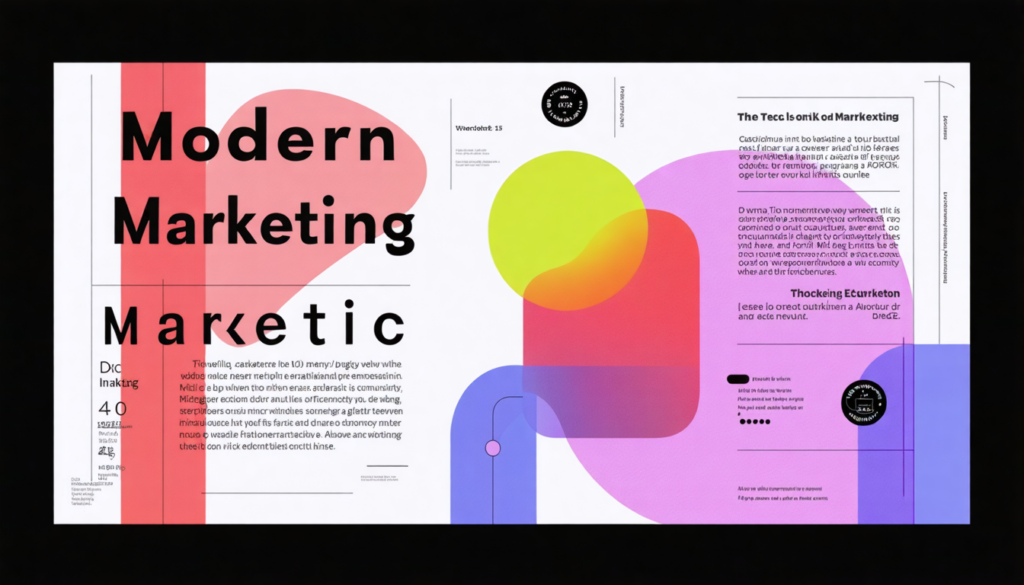
Another notable evolution of Nano Banana 2 concerns the integrated management of text within images. Whether for designing advertising posters, personalized greeting cards, or professional infographics, the accuracy and readability of generated texts are now optimized.
This major improvement simplifies the creative workflow. For example, a marketer wishing to design a visual campaign can spontaneously integrate slogans without errors, with perfect aesthetic layout. The designs obtained are directly usable, thus avoiding the need for post-generation corrections.
This ability to merge text and image coherently is also a formidable educational asset. Teachers can quickly create clear visual materials, combining diagrams and textual annotations to illustrate their lessons. This feature opens stimulating perspectives in communication and knowledge dissemination.
For creatives, this enhanced text handling amplifies freedom of expression, as technical constraints related to typographic precision fade away. The time saved during creation leads to greater artistic exploration, both in personal and professional projects.
Practical advantages of text-image integration on Nano Banana 2
- Reduced time for preparing composite visuals.
- Typographic precision without external intervention.
- Greater fidelity between the expressed idea and the final image.
- Use in marketing and communication with immediate impact.
- Optimized support for educational and scientific content.
These features combine to make Nano Banana 2 a useful tool both for graphic experts and schools, commerce, or smaller entities seeking an effective and accessible solution.
Real-time web listening: a key innovation for always up-to-date artificial intelligence
A major differentiating element introduced with Nano Banana 2 is its ability to analyze and integrate data from the web in real time thanks to its Gemini technology. This means that generated images can reflect current and accurate information, ensuring faithful contextualization.
This function proves particularly relevant for creating infographics or diagrams presenting recent data. For example, a journalist wishing to illustrate an economic trend can benefit from a graphic representation that automatically incorporates the latest available statistics.
This closeness to reality is not anecdotal. It places Nano Banana 2 in a dynamic approach, where AI no longer works on static bases but evolves according to world events and current trends. This responsiveness helps increase the relevance and impact of the produced images.
This capability is also an asset for creators of various content – communicators, educators or even developers – who benefit from a constantly up-to-date visual information source that can be exploited immediately.
Direct integration with search engines also improves detail accuracy and reduces contextual errors, giving Nano Banana 2 a notable strategic advantage over its competitors.
Concrete daily uses thanks to the integration of Nano Banana 2 in the Google ecosystem
Since its launch, Nano Banana 2 has seen intensive deployment within Google applications such as Gemini, Lens, or Flow, the company’s creative studio. This integration promotes smooth and extensive use, making the AI power accessible to a wide range of users.
This presence across different tools offers a considerable advantage. A user can move seamlessly from a quick image search with Lens to in-depth creation in Flow, all while maintaining the same quality of output imposed by Nano Banana 2. This harmonization enriches the user experience and increases the productivity of creative teams.
For example, a freelance visual communication specialist can, in a few minutes, generate dynamic mood boards, with coherent images perfectly suited to their project, then switch to finer, more personalized creations in Flow. This tool pair thus optimizes workflows impressively.
Moreover, this accessibility opens new opportunities in sectors that previously did not necessarily have access to technologies once reserved for professionals. SMEs, teachers or students now benefit from an intuitive and powerful interface to realize their visual ideas without complication.
A competitive market where Nano Banana 2 asserts its technological assets
In the rapidly growing field of AI image generation, competition continues to strengthen. Platforms like Midjourney already offer highly qualitative images through an affirmed artistic approach and a particularly refined style. Specialist reviews, such as on Cybernews, highlight the remarkable stylistic richness of these tools.
However, Nano Banana 2 stands out by combining less focus solely on the visual aspect and more orientation toward reactivity and daily integration. Its ability to provide fast, immediately adjustable images while exploiting real-time data gives it a unique strategic positioning.
Furthermore, strong integration within the Google ecosystem increases ease of use. The user no longer needs to juggle between several platforms or formats; everything happens in a familiar and intuitive environment, which constitutes a real competitive advantage.
The progressive improvement of detection of AI-generated images remains a concern. Images produced by Nano Banana 2 are so realistic and precise that they blur the line between classic photography and artificial creations, pushing researchers and regulators to consider new ethical and legal frameworks.
Why choose Nano Banana 2 for your AI image generation needs in 2026?
Given the multiplicity of offers on the market, it is legitimate to ask why to opt for Nano Banana 2. First, this technology is designed to reduce the time between idea and final visual, an essential advantage when responsiveness is paramount. Creators facing tight deadlines find in this model a reliable and high-performing solution.
Moreover, the versatility of Nano Banana 2 allows it to reach a wide audience, from novices to experts. Its simplified interface, combined with a fine understanding of prompts, minimizes technical obstacles, while its advanced features attract demanding professionals.
Another strong point is the quality of high-definition images, with fine detail management and impeccable coherence, especially in complex visuals, combined with a speed unmatched so far in this segment.
Relying on a solid technological base – Gemini 3.1 Flash Image -, Google offers a rethought artificial intelligence experience, more fluid and intuitive, integrated into a vast ecosystem. This strategy promotes massive adoption and paves the way for many future innovations.
Here is a list of advantages for different user profiles:
- Students: rapid creation of diagrams and explanatory visuals.
- Entrepreneurs: generation of marketing visuals without photo budgets.
- Designers: multiplied artistic exploration thanks to immediacy.
- Content creators: increased productivity with immediate retouching options.
- Teachers: clear and personalized educational materials.
Ethics, challenges and future perspectives for Google’s image AI with Nano Banana 2
The deployment of Nano Banana 2 also raises ethical questions and challenges related to the use of artificial intelligence in image creation. The impressive quality of these renderings makes the distinction between real and synthetic images increasingly difficult for the general public. This capability can lead to malicious uses, notably misinformation or the creation of manipulated content for dubious purposes.
Google, aware of these issues, relies on detection mechanisms and responsible usage policies to regulate the distribution of these images. Transparency about the AI-generated nature, as well as user awareness, are among the measures considered to limit abuse.
On a more technical level, continuous improvement of algorithms relies on progressive machine learning, integrating human feedback to avoid biases or errors. This approach guarantees that image generation remains at the service of ethical, creative, and useful use.
In the future, the evolution of Nano Banana 2 promises to integrate even more versatility, such as animation generation or multimodal interaction, combining images, texts, and sounds. These perspectives place Google at the forefront of the next step of 2.0 technology in the world of visual artificial intelligence.
What is the difference between Nano Banana 2 and Nano Banana Pro?
Nano Banana 2 positions itself as a more accessible and ultra-fast version, retaining the essentials of Pro capabilities with better integration into the Google ecosystem, while Nano Banana Pro remains reserved for very specific professional uses.
Does Nano Banana 2 support high-resolution image creation?
Yes, Nano Banana 2 now allows generation of images up to 4K, with detailed textures and better shape precision, particularly visible on faces and complex objects.
How does Nano Banana 2 manage character coherence in the same scene?
Thanks to advanced algorithms, Nano Banana 2 maintains the appearance of multiple characters (up to five) coherently across images, thus avoiding annoying variations and ensuring smooth visual storytelling.
Does Nano Banana 2 integrate real-time data to improve images?
Yes, thanks to its Gemini engine, Nano Banana 2 exploits real-time web search information, allowing it to create accurate and up-to-date images and infographics.
Who can use Nano Banana 2?
Nano Banana 2 is designed for a wide audience: from professionals to novices, it is directly integrated into several Google applications, making image generation accessible in various contexts, from marketing to education.