In a technological landscape largely dominated by a few American giants, a French start-up stands out with a bold vision: to make artificial intelligence accessible, agile, and local, while freeing users from cloud constraints. The Mistral 3 family, launched by Mistral AI, embodies this ambition by offering AI specifically designed to integrate into smartphones, drones, and other connected devices, without sacrificing performance or privacy. This French innovation redefines embedded data processing, offering a modular, transparent, and open-source alternative capable of competing with major global players while meeting the specific needs of the European and global markets.
With a range composed of ten models, each optimized for a precise use, Mistral 3 does not merely compete by the size of parameters or raw power. It prioritizes utility and flexibility, capable of running locally on machines with limited resources—sometimes with only 4 GB of video memory. This strategy is not just a technical feat: it is a genuine revolution for engineers, developers, and companies seeking to control their infrastructure and protect sensitive data, notably in the fields of drones, robotics, or smartphones, where embedded artificial intelligence has become a key to innovation.
- 1 Mistral 3: a French technology revolutionizing embedded AI for smartphones
- 2 An open-source French AI designed for drones and advanced robotics
- 3 The innovative architecture of Mistral 3 and its multiple models adapted to each use
- 4 Multilingual footprint and cultural openness: a Mistral 3 asset
- 5 Open source and sovereignty: the new frontier of French artificial intelligence
- 6 The challenge of local performance facing the Silicon Valley giants
- 7 Concrete application examples and future innovations with Mistral 3
- 8 The major strengths of Mistral 3 that attract developers and companies
Mistral 3: a French technology revolutionizing embedded AI for smartphones
The smartphone sector is a constant innovation ground where the power and speed of artificial intelligence applications can radically transform the user experience. Mistral 3 fits perfectly into this dynamic thanks to its models specially designed to operate locally, without dependence on the cloud.
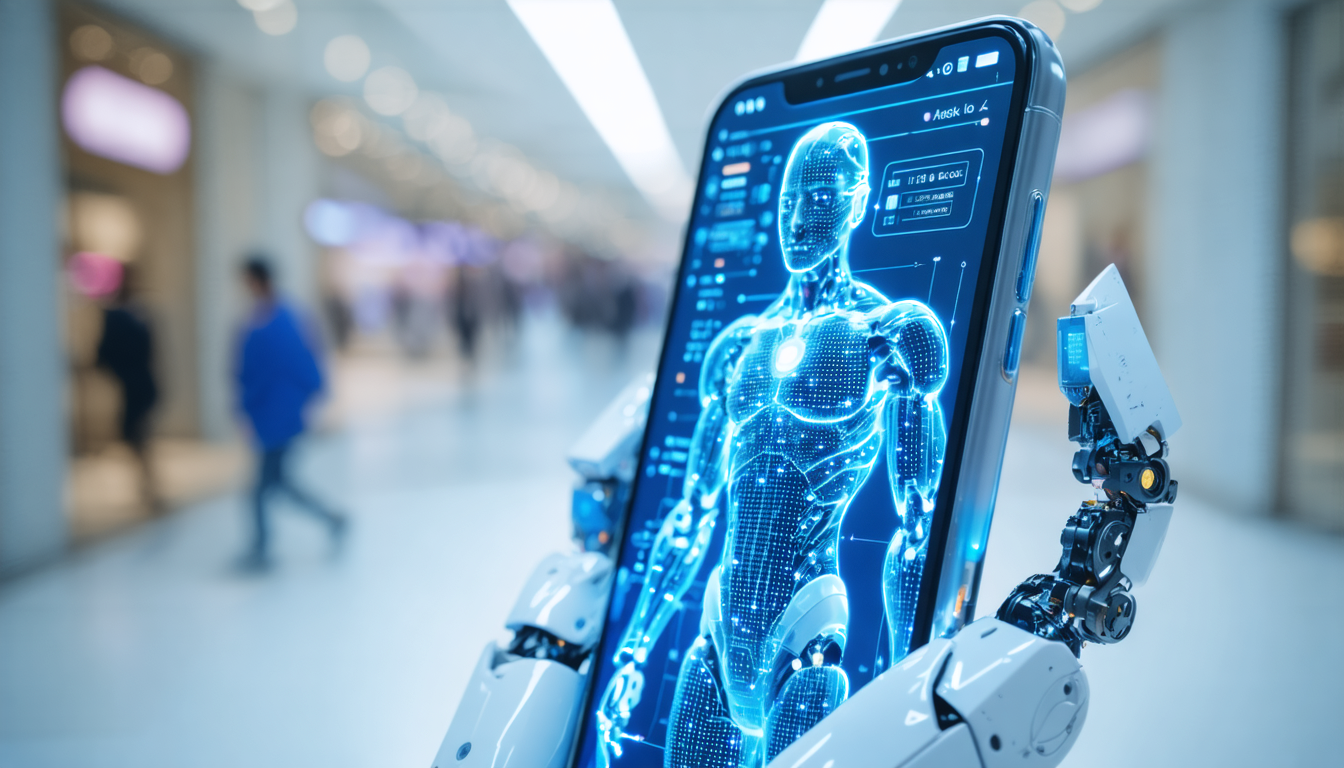
While most AIs still rely on remote servers, Mistral 3 offers an alternative allowing smartphones, even entry-level ones, to fully leverage the power of artificial intelligence. Thanks to an optimized design, models like Ministro 3, for example, with versions ranging from 3 to 14 billion parameters, can adapt according to the specific needs of applications, whether simple voice recognition or complex image analysis in augmented reality apps.
This local approach also presents a significant advantage in terms of privacy. Data does not leave the device, limiting the risks linked to transmission to remote servers and reassuring users increasingly sensitive to protecting their privacy.
The integration of multilingual models further enhances the accessibility and relevance of voice assistants, translators, or other interaction tools based on natural language understanding. Mistral’s French artificial intelligence thus ensures better adaptation to local contexts and cultural nuances, unlike American models often focused on the Anglo-Saxon market.
Concrete example: an instant translation application operating entirely offline on a mainstream smartphone could now compete with solutions requiring a permanent internet connection while ensuring smooth usage and optimal user data protection.
An open-source French AI designed for drones and advanced robotics
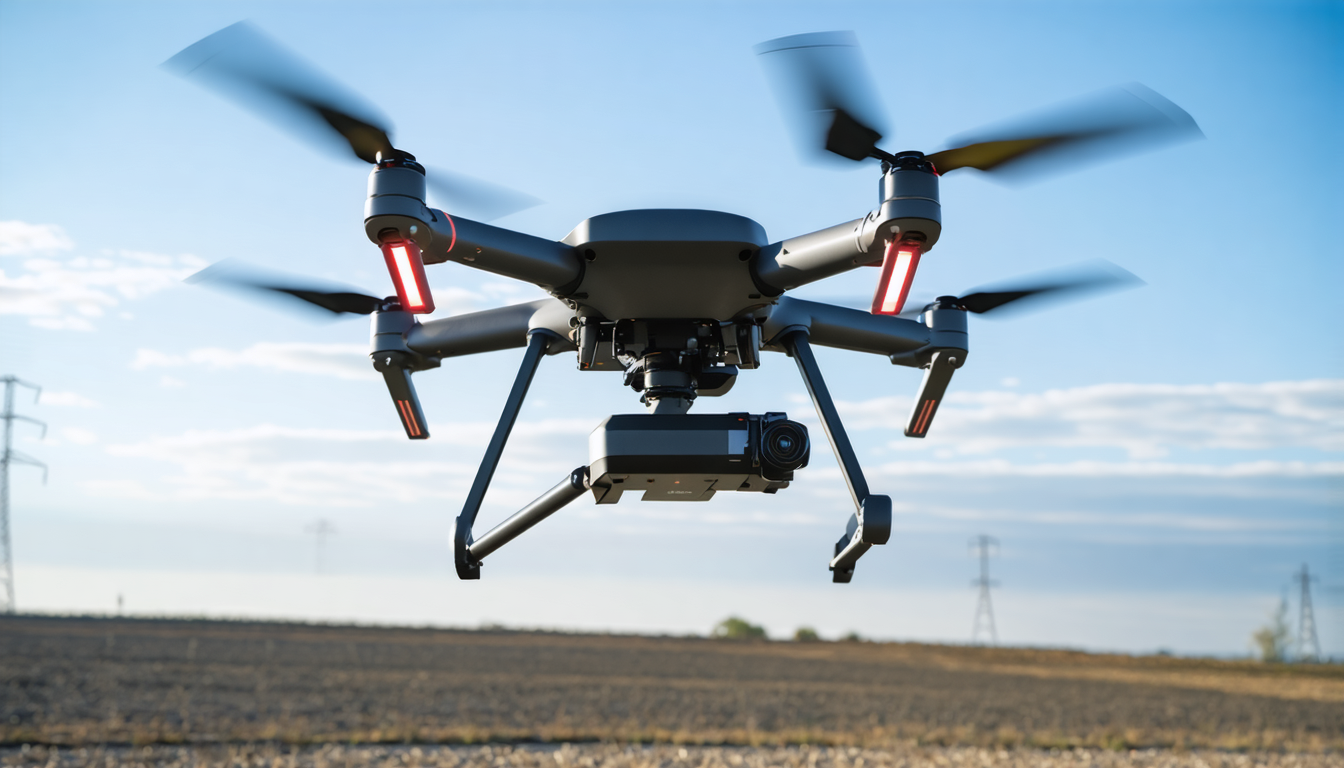
In the fields of drones and robotics, the responsiveness and security of AI processing are critical. Again, Mistral 3 meets a growing need: to allow fast and reliable local data processing, often in real-time, without depending on the cloud or distant infrastructures.
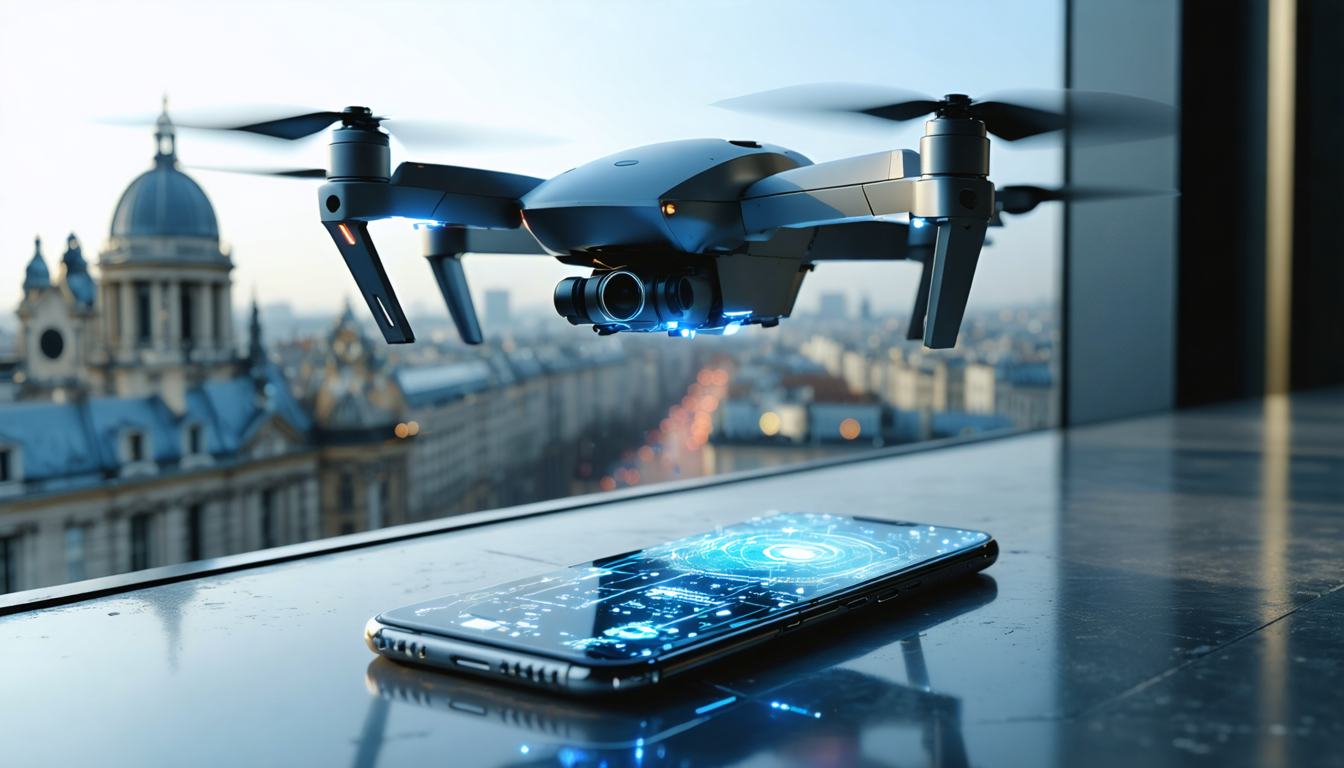
This autonomy thanks to embedded artificial intelligence is a real asset for industrial and commercial applications, notably for surveillance, mapping, or interventions in challenging environments. A drone equipped with a Mistral 3 model can thus analyze images, recognize objects, or make autonomous decisions directly onboard. This significantly reduces latency and improves safety, especially in contexts where connectivity is sporadic or absent, such as in mountains or at sea.
The diversity of offered models allows precise adjustment of capabilities according to mission load and hardware constraints. For example, an agricultural drone wishing to analyze crop health in real-time can opt for a lightweight and fast model, while a banking security drone will favor a more robust model capable of processing complex requests on long texts or images.
Moreover, the open-source and modifiable nature of the Mistral 3 models offers valuable flexibility to customize algorithms according to the specific needs of the robot or drone. This aspect is particularly appreciated by European manufacturers and developers seeking to limit their dependence on large foreign platforms while maintaining a high level of innovation and performance.
The local implementation of AI also contributes to preserving data sovereignty, a major issue in strategic sectors. Embedded processing prevents sending sensitive data to foreign clouds, thus strengthening the overall security of the mission and user confidence.
Local AI in robotics: promising perspectives
Beyond drones, the adoption of Mistral 3 opens enormous possibilities for advanced robotics. Factory robots, autonomous vehicles, or personal assistants benefit from models capable of adapting to varied environments, ranging from voice recognition to complex real-time visual data analysis.
This adaptability allows deploying intelligent solutions even in constrained contexts where a stable internet connection would be difficult, if not impossible. It is a key to accelerating the digitalization and robotization of European companies while keeping full control over information flows.
The innovative architecture of Mistral 3 and its multiple models adapted to each use
Mistral 3 is not limited to a single heavy and complex model but offers a complete range designed to meet the diverse needs of users. This family includes ten distinct models, from the most compact to the most powerful, each available in several variants to cover different processing scenarios.
At the top is Mistral Large 3, with its 41 billion parameters, capable of ingesting very long textual sequences of 256,000 tokens and processing text and images simultaneously. This versatility makes it a suitable solution for complex applications requiring deep context understanding, such as industrial decision support systems or multimodal intelligent assistants.
The real strength of the range lies, however, in the Ministral 3 models, available in versions of 14, 8, and 3 billion parameters. Each of these models offers three configurations: the base version, the instruction-optimized version, and the enhanced reasoning version. This specialization allows precise calibration of resources used and adapting the AI to specific constraints, notably regarding energy consumption and computing power.
From this perspective, Mistral 3 follows a philosophy radically different from actors who favor creating ever larger and more resource-hungry models. Instead, the French start-up bets on adapted modularity, prioritizing efficiency and simplicity of integration across a wide range of devices.
| Mistral 3 Model | Parameters (in billions) | Preferred Uses | Special Capabilities |
|---|---|---|---|
| Mistral Large 3 | 41 | Complex multimodal applications | Text + images, long memory (256,000 tokens) |
| Ministral 3 – 14B | 14 | Embedded AI on drones and high-end smartphones | Base, instruction, reasoning versions |
| Ministral 3 – 8B | 8 | Mobile applications and light robotics | Base, instruction, reasoning versions |
| Ministral 3 – 3B | 3 | Connected objects and low-power AI | Base, instruction, reasoning versions |
Multilingual footprint and cultural openness: a Mistral 3 asset
One of the recurring criticisms directed at major Anglo-Saxon AIs is their intrinsic bias towards English and the American and Chinese markets. Mistral 3 addresses this issue through multilingual and multicultural training, valuing linguistic diversity and encouraging more natural interactions with users from different regions.
This openness choice goes beyond the mere technical aspect. It is an anchoring in today’s global reality, where digital borders are no longer really present. An AI capable of understanding and processing multiple languages allows innovation in automatic translation, educational tools, or even robotics aimed at the international market.
But beyond multilingualism, this work also fosters the reduction of cultural and cognitive biases that can distort model responses, thus improving the quality and relevance of interactions regardless of context.
A striking example: an application intended for emergency services, integrating Mistral 3, could understand and process requests effectively in multiple languages, decisive for saving lives in cosmopolitan areas.
Open source and sovereignty: the new frontier of French artificial intelligence
Mistral AI’s choice to publish its models under the Apache 2.0 license is a major turning point in the AI industry. This decision reflects a clear will to promote free use, modification, and unrestricted integration while allowing users to customize models according to their specific needs.
For European companies in particular, this openness means technological independence and respect for data protection standards, two essential factors in a tense geopolitical context reinforced by regulations such as GDPR.
This freedom of use also facilitates collaborative research and rapid innovation, as developers can enhance performances, fix vulnerabilities, or design unprecedented solutions without waiting for an external actor’s update. A big step towards a more democratic, European AI adapted to its usage contexts.
Moreover, this transparency addresses concerns about the “black boxes” often represented by closed models. It establishes a climate of trust and provides the keys to understanding, verifying, and improving the embedded artificial intelligence used daily.
The challenge of local performance facing the Silicon Valley giants
Mistral 3 does not claim to beat on the ground of raw power AI giants like OpenAI or Google, which have colossal resources to develop massive and complex models. However, the French start-up adopts a tactic that rather bets on precision, modularity, and adaptability of models.
This pragmatic approach not only reduces costs associated with computing power and energy consumption but also offers a more predictable and easy-to-integrate AI. A valuable characteristic for industrial companies or mobile application publishers, less concerned with topping benchmark tests than obtaining a reliable solution tailored to their specific needs.
The various Mistral 3 models illustrate this precision in calibration, with powerful alternatives for advanced research and lighter ones designed for embedded AI in smartphones or field robots.
It is also an innovative economic model that opens the door to more modest projects, to local or regional initiatives, without investing in expensive infrastructures or depending on a single provider.
Concrete application examples and future innovations with Mistral 3
The deployment of Mistral 3 models paves the way for a multitude of innovative use cases in many sectors, whether improving the user experience on smartphones or enriching the capabilities of industrial drones.
Among possible applications:
- Smart personal assistants: operating entirely locally, guaranteeing confidentiality and responsiveness.
- Augmented and mixed reality applications: rapid analysis of images and scenes in real-time, without cloud-related latency.
- Autonomous drones: embedded decision-making for inspections, precision agriculture, or security.
- Industrial robotics: intelligent and adaptable control according to production constraints, with fast decision-making processing.
- Multilingual applications: translation, transcription, and natural interaction in several languages.
Tomorrow, Mistral 3 could also integrate into autonomous connected vehicles, wearable medical devices, or smart home solutions, continuously expanding the scope of French embedded technology.
The major strengths of Mistral 3 that attract developers and companies
The growing adoption of Mistral 3 is explained by several key characteristics:
- Freedom and openness: an open source license that facilitates innovation and customization.
- Local performance: embedded AI that works efficiently on limited resources.
- Privacy and sovereignty: data processing on the device, without transmission to the cloud.
- Usage flexibility: a range of models adapted to various use cases and needs.
- Multilingualism and inclusivity: better understanding and serving markets beyond English.
- Cost savings: reduction of expenses in cloud infrastructure and energy.
These strengths allow meeting varied requirements, from start-ups seeking to prototype quickly to industrial groups wishing to guarantee maximum control.
What is Mistral 3 and how does it differ from other AIs?
Mistral 3 is a family of artificial intelligence models developed by the French start-up Mistral AI. Unlike AI giants who focus on raw power and enormous models, Mistral 3 offers open source, modular models capable of running locally on smartphones, drones, and robots, thus ensuring efficiency, privacy, and usage flexibility.
What types of devices can use Mistral 3?
Mistral 3 is designed to integrate into a wide range of devices such as smartphones, drones, connected cars, and industrial robots. Thanks to its low memory consumption (even with 4 GB of video memory), it can run efficiently on modest hardware without relying on a constant internet connection.
Why is Mistral 3 important for digital sovereignty?
Mistral 3 is published under the Apache 2.0 open source license, allowing European companies to keep control of their data and infrastructures. Unlike cloud-based solutions from the US, this local AI prevents data leaks to foreign servers, thus addressing security and compliance issues.
How does Mistral 3 manage multilingualism?
Mistral 3 is trained not only in English but also in several other languages to better understand and respond to requests in a multilingual context. This feature avoids ethnocentrism and improves the relevance of interactions with users from various regions of the world.
What are the advantages for independent developers?
Independent developers benefit from open source models that are easy to integrate and customize, running locally without requiring constant cloud access. They can thus create innovative applications at lower cost while ensuring user data privacy.