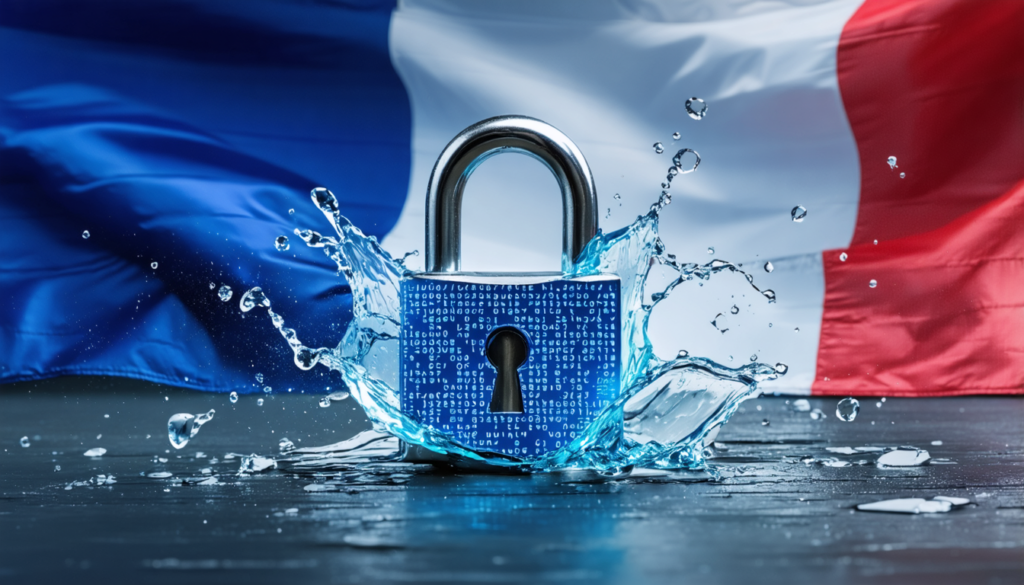
In 2026, France is facing one of the most terrible data breaches ever recorded on its territory, with more than 45 million potential victims concerned. This digital disaster far exceeds the usual simple incidents, involving massive exposure of sensitive personal information. As cyberattacks multiply and data security becomes a major concern, this leak worryingly probes persistent flaws in the protection of citizens. The issue goes beyond strictly technical matters to affect trust in institutions and businesses, as well as the privacy of millions of French people. The consequences of this massive hacking reveal a new level in the threat hanging over personal data, uncovering organized and sophisticated criminal practices. Faced with this unprecedented situation, France must deeply rethink its cybersecurity strategy and strengthen individual vigilance.
- 1 The most catastrophic data breach in France: decoding an unprecedented breach of confidentiality
- 2 France, one of the countries most exposed to data breaches: a worrying vulnerability
- 3 Potential consequences for victims and personal data protection in France
- 4 French cybersecurity efforts: revealed shortcomings and ways to strengthen protection
- 5 How can French citizens protect themselves against such a massive data breach?
The most catastrophic data breach in France: decoding an unprecedented breach of confidentiality
For several years, data breaches in France have been occurring with alarming regularity. Usually, they involve thousands or a few million records, often resulting from internal errors or isolated technical vulnerabilities. However, the breach foiled in 2026 disrupts all benchmarks. With nearly 45 million files gathered in a single database, freely accessible on the Internet without any protection, this violation far exceeds known incidents. The very scale of the hack is staggering, as it does not result from a simple mistake but seems to be the work of a methodical operation, orchestrated by a malicious actor playing the role of data broker.
This database gathers information from at least five different sources, aggregated to maximize their value and potential for fraudulent exploitation. It notably contains demographic data covering more than 23 million profiles, including full names, addresses, and dates of birth. Added to this are nearly 9.2 million medical data records from official French registries (RPPS, ADELI), millions of customer contacts from CRM systems, as well as highly sensitive information such as banking details (IBAN, BIC) of approximately 6 million people. The variety and richness of these elements give the database an exceptionally critical nature.
For example, ill-intentioned individuals can combine personal and financial data to commit complex fraud, both in the banking sector and other areas such as administrative procedures. Additionally, the presence of information on vehicles and their owners opens the door to other types of abuses, such as automobile identity theft.
The severity of this breach is heightened by its hosting on a server located in France, raising legitimate questions about the security of national digital infrastructures. Despite efforts to lock access to this database, many data could have been copied or disseminated before neutralization. The intentional nature of this disclosure reinforces the urgent need to review current protection measures and to further raise user awareness about the growing threat posed by targeted cyberattacks.
France, one of the countries most exposed to data breaches: a worrying vulnerability
Despite national efforts to strengthen cybersecurity, France ranks as one of the most vulnerable states in Europe to massive data thefts. According to 2025 statistics, whose outcome heavily impacted early 2026, the country ranks second worldwide for the number of hacked accounts, just behind the United States, with nearly 1.8 million compromised accounts during the first half of that year. This figure contrasts with the global trend which, paradoxically, saw a sharp decline in data breaches, dropping to about 15.8 million compromised accounts, a twentyfold decrease compared to 2024.
This French paradox reflects a persistent fragility of local systems, from companies to public institutions. Major companies in banking, healthcare, or public services continued to be targeted by cyberattacks during the second half of 2025, with incidents not yet included in global reports.
January 2025 had already been particularly critical, concentrating nearly 1.6 million affected accounts. This situation has continuously raised concern and debates around IT security practices, regulations on personal data protection (notably the GDPR), and the means deployed to track cybercriminals.
Among the reasons put forward to explain this unprecedented exposure, there are:
- The multiplication of digital access points in a country where digitalization accelerated without always ensuring proportional reinforcement of protections.
- Often lengthy judicial processes and European cooperation, leaving free rein to international hackers.
- Insufficient awareness among end users who sometimes underestimate the risks related to phishing and disclosure of sensitive information.
- The increasing complexity of IT infrastructures, sometimes introducing vulnerabilities during rapid updates and deployments.
A landscape where, paradoxically, the wealth of collected data and the offer of innovative digital services become as many levers of attack for hackers constantly seeking new ways to penetrate defenses and steal personal data en masse.
Potential consequences for victims and personal data protection in France
For the tens of millions of people affected, the impact of such a large-scale breach is multi-level and can be devastating. The main immediate fear concerns identity theft, a phenomenon facilitated by the cross-availability of multiple types of personal information within a single corpus.
Imagine Claire, an average French citizen: thanks to the data from this breach, a cybercriminal could obtain her full name, date of birth, address, and even her banking details. This would open the way to highly targeted phishing attempts, designed to siphon funds directly from her account or generate fraudulent credits in her name. Similarly, the exposed medical data breaches a fundamental medical secrecy, with privacy risks not always immediately perceived.
Beyond the individual, the economic impact is colossal: trust in digital technology erodes, complicating relationships between consumers, companies, and administrations. The costs related to managing such crises, compensations, and overhauls of security systems represent very high amounts, as well as long-term strategic investments.
Risks such as phishing, banking fraud, abuse of sensitive information, and especially organized fraud increase sharply in this context. Here are some scenarios feared by experts:
- Targeted banking hacking: Use of stolen credentials to carry out fraudulent transfers.
- Identity theft: Creation of accounts or subscription to services in place of victims.
- Highly personalized phishing (spear phishing): Fraudulent messages based on precise data to deceive vigilance.
- Medical exploitation: Use of health data to extort or discriminate.
- Privacy breach: Unauthorized dissemination of sensitive personal information.
In this perspective, securing personal data is no longer just a regulatory obligation: it becomes a social imperative to ensure the stability of the digital fabric and citizens’ trust.
French cybersecurity efforts: revealed shortcomings and ways to strengthen protection
While the leak of 45 million data records revealed significant gaps, it also highlighted the current mechanisms to fight cyberattacks in France. Many institutions and companies have already invested in advanced defense systems: real-time detection, behavioral analyses, artificial intelligence dedicated to cybersecurity. Nevertheless, vulnerabilities persist, often exploited by organized criminal groups on an international scale.
The French regulatory framework, relying on the GDPR and CNIL recommendations, imposes rigorous management of personal data. However, this framework shows its limits when attacks are targeted, sophisticated, and attackers aggregate multiple databases from various sources to mount hybrid attacks.
This situation highlights several areas for improvement:
- Strengthening security audits within companies and administrations, to proactively identify and fix vulnerabilities.
- Accelerating international cooperation to dismantle data broker networks and infrastructures used for these leaks.
- Enhanced training for employees and increased awareness for citizens, notably to thwart phishing attempts and understand the importance of confidentiality.
- Investment in advanced technologies for strong authentication and encryption of sensitive data.
- Adapted legislation to more severely punish cyberattack perpetrators and facilitate legal proceedings.
The table below illustrates the evolution of some key cybersecurity indicators in France, compared to other major nations:
| Country | Hacked accounts (millions) | Annual cybersecurity investment (billion €) | Number of legal actions (2025) |
|---|---|---|---|
| France | 3.5 | 2.2 | 135 |
| United States | 18 | 15 | 920 |
| Germany | 1.1 | 1.5 | 87 |
| United Kingdom | 1.3 | 1.8 | 102 |
Progress is visible, but the need for better anticipation and responsiveness remains paramount. Only a global strategy involving public actors, private sectors, and citizens can truly stop such a hemorrhage of personal data.
How can French citizens protect themselves against such a massive data breach?
Individual vigilance is a first essential line of defense in a context where cybercriminals deeply exploit personal information. Even though the main responsibility lies with companies and institutions that must secure their systems, every French person must adopt reflexes to limit the risk of suffering disastrous consequences.
Here is a list of concrete measures recommended to users:
- Regularly monitor bank accounts and statements to detect any suspicious transactions as early as possible.
- Systematically change passwords and choose complex, unique, and regular passwords.
- Activate two-factor authentication when available, especially for online services.
- Never click on suspicious links or attachments in unsolicited emails or SMS messages.
- Consult verification platforms when data breach alerts are issued, to know if your data is concerned.
- Protect yourself with antivirus and firewall software regularly updated.
- Avoid sharing too easily personal information on social networks or other unsecured sites.
At the same time, French institutions are working to strengthen alert devices and victim support, notably through CNIL and other specialized bodies. The goal is to best assist affected persons to minimize damage.
This major breach must serve as a wake-up call. Whether for the government, companies, or citizens, the protection of personal data is now a critical issue, faced with a hacking that knows no borders and underlines how indispensable digital security is to preserve confidentiality and trust within society.