
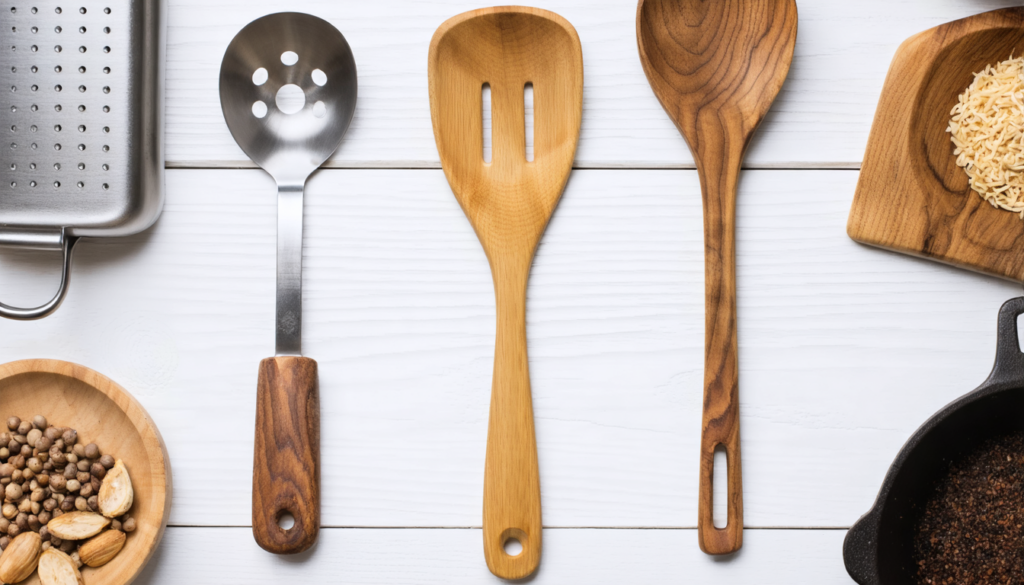
The kitchen is often considered a place of conviviality and creativity, where flavors intertwine to nourish the body and mind. However, behind this warm image lie unsuspected dangers related to the kitchen utensils we use daily. Recent studies in 2025 have revealed that chemicals from certain materials can migrate into our food and compromise our long-term health. Beyond individual effects, the accumulation of these toxins in our bodies raises a critical food safety issue. In light of these findings, it is now essential to rethink our choices in the kitchen, favoring non-toxic and durable materials. This article thus explores the hidden risks of our utensils while offering healthy and ecological alternatives for a kitchen that respects our well-being and the environment.
Kitchen utensils are everyday objects, but they sometimes release substances that go unnoticed. This phenomenon, called migration, is more common than believed and mainly occurs during cooking or contact with acidic and fatty foods. Chemical components like phthalates, bisphenols, and flame retardants, recognized as endocrine disruptors, can contaminate our dishes without us realizing it. Added to this is the mechanical risk linked to surface degradation, especially scratched non-stick pans, which release millions of plastic micro-particles that can accumulate in the body. This dual effect highlights the importance of carefully choosing kitchen utensils to avoid contamination and protect health.
- 1 The mechanisms of hidden risks in your kitchen utensils
- 2 Which materials should absolutely be avoided in your kitchen utensils in 2025?
- 3 Healthy and sustainable alternatives for a safe kitchen
- 4 How to gradually replace your harmful utensils for a safe kitchen?
- 5 Care and maintenance of ecological utensils to prolong their effectiveness
Understanding the hidden risks in kitchen utensils requires closely examining two interconnected phenomena: chemical migration and mechanical release of particles. Chemical migration corresponds to the transfer of harmful substances from materials to food, especially under the effect of heat, acidity, or fat content. For example, some Teflon coatings contain PFAS (per- and polyfluoroalkyl substances), which, when heated beyond 250 °C, release toxic compounds that can cause respiratory disorders and endocrine disruptions. Simultaneously, this migration also occurs with plastics, notably in containers intended for food storage, where phthalates or bisphenol A (BPA) can infiltrate food heated in the microwave.
Beyond this chemical aspect, the mechanical risk linked to utensil wear should not be overlooked. A scratched non-stick pan, often made of plastics and polymers, can release up to 2,300,000 microplastics larger than 5 micrometers, as well as several million nanoplastics, invisible to the naked eye but potentially more harmful. This silent pollution, insidiously integrated into our meals, represents a major health issue still poorly assessed, but early studies link these particles to inflammatory disorders and disruptions of the gut microbiota.
The cocktail effect adds an additional complexity to the issue. If each utensil releases a minimal dose of toxicological substances, the daily accumulation of these toxins from multiple sources can provoke a synergistic aggravating effect. Toxicologists warn about this phenomenon, showing that combined exposure to low doses of different chemical contaminants can intensify their harmful effects, thus fueling the development of chronic diseases such as cancers, endocrine disorders, and immune deficiencies. Faced with this observation, learning to identify materials to avoid is imperative for effective risk prevention.
Which materials should absolutely be avoided in your kitchen utensils in 2025?
The materials to ban are mainly those that release toxic substances or contribute to the chemical pollution of our food. One of the most controversial remains Teflon, belonging to the PFAS family. Long appreciated for its non-stick coating, it is associated with the release of toxic gases at high temperatures and the presence of carcinogenic compounds originally used in its manufacture, notably PFOA, banned since July 2020. Its successor, GenX, is also classified as a substance of concern by European health authorities.
Plastics, in all their forms, also represent a major source of contamination. Black plastic utensils, often made from recycled electronic waste, frequently contain brominated flame retardants, highly toxic and likely to infiltrate food in contact with heat. Among common plastic risks, there are also:
- Plastic storage boxes, which can release phthalates and bisphenol A, especially when microwaved;
- PVC cling film, sometimes loaded with phthalates that migrate during cooking;
- Melamine utensils, which can release formaldehyde when heated.
Finally, aluminum, widely used in kitchens due to its lightness and thermal conductivity, can pose problems because of its migration, particularly into acidic foods. Using aluminum foil to cook or store highly acidic dishes accentuates this risk, making this practice inadvisable. Note that anodized aluminum, although more stable, is not immune to wear, making the bare metal accessible and potentially dangerous over time.
| Materials to Avoid | Main Risks | Examples of Concerned Utensils |
|---|---|---|
| Teflon and PFAS | Release of toxic gases, carcinogenic substances | Non-stick pans, saucepans |
| Black and recycled plastics | Brominated flame retardants, phthalates, BPA | Spatulas, ladles, storage boxes |
| PVC cling film | Phthalate migration | Cling film |
| Melamine | Formaldehyde release | Utensils, dishes |
| Unprotected aluminum | Migration into acidic foods | Aluminum foil, damaged saucepans |
Avoiding these materials is essential to reduce chemical contamination risks in the kitchen. Vigilance is also required when purchasing, favoring labels and certifications guaranteeing non-toxic materials. These precautions help limit risks and ensure flawless food safety.
Healthy and sustainable alternatives for a safe kitchen
Facing the multiplication of known risks, the good news is the availability of non-toxic materials offering excellent food safety. Stainless steel, particularly 18/10 stainless, has become the benchmark for daily use. Stable, inert, and corrosion resistant, it releases no harmful substances, even in contact with acidic foods. Used for saucepans, pans, cutlery, and salad bowls, it guarantees a healthy kitchen while ensuring good durability.
Cast iron, for its part, is enjoying renewed justified interest. Natural or enameled, it contains no controversial chemical elements. Raw cast iron, once well seasoned, develops a naturally non-stick surface without any harmful synthetic substances. Furthermore, it provides iron to the diet, beneficial for health. Enameled cast iron combines robustness with easy cleaning thanks to its non-porous enamel, ensuring safe cooking. It is an advantageous choice for those looking to combine performance and longevity.
Wood is an essential option to counter problems related to plastics in serving utensils. Spoons, spatulas, and cutting boards made of raw wood, such as olive or bamboo, not only offer proven effectiveness but also a natural ecological and antibacterial character. Well maintained, they last long and neither alter the taste nor the quality of cooking. This simplicity activates the prevention of risks related to cross-contamination in food preparation.
- 18/10 Stainless steel: corrosion resistance, non-reactive, wide variety of utensils.
- Natural or enameled cast iron: even cooking, natural non-stick, durable.
- Raw wood: natural antibacterial, ecological, ideal for serving tools.
- Borosilicate glass: for containers and cooking dishes, thermal resistance and safety.
- Food-grade silicone: for flexible utensils, without phthalates or BPA, to be favored with caution.
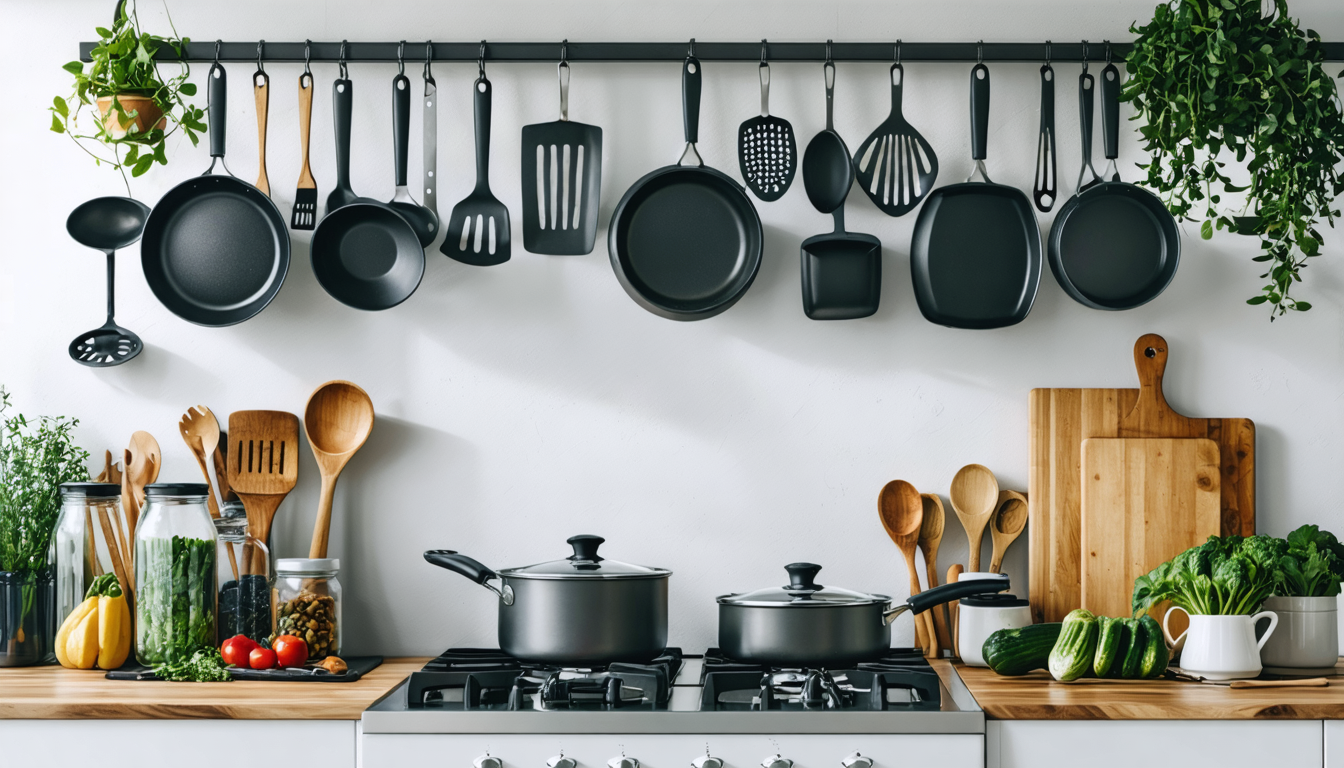
Adopting these non-toxic materials significantly reduces the risks of chemical release and ensures safe cooking for the whole family. This transition towards ecological and durable utensils is also a step towards a stronger environmental awareness.
How to gradually replace your harmful utensils for a safe kitchen?
Changing your kitchen equipment may seem complex and costly, but it is possible to adopt a gradual and conscious approach, prioritizing the riskiest items. The first object to replace is often the non-stick pan, especially if it shows signs of wear or scratches. Turning to a stainless steel or cast iron pan guarantees healthier and more durable cooking.
Next, move on to essential plastics, such as spatulas, ladles, and food containers. Ban black plastic utensils and favor alternatives in wood or stainless steel. For storage, prefer glass boxes with BPA-free lids to avoid any contamination linked to microwave heating.
Here is a simple list to organize your transition:
- Replace scratched non-stick pan with a cast iron or stainless steel pan.
- Change plastic spatulas and ladles for wooden or stainless steel versions.
- Opt for borosilicate glass containers for storage and reheating.
- Favor utensils without toxic varnishes or glues in raw wood.
- Avoid PVC cling film by using reusable alternatives.
A thoughtful and spread-out replacement allows managing the budget while significantly reducing risks. Also consider the second-hand market, which can offer quality equipment at attractive prices, notably cast iron, a material that gains value and efficiency with age.
Reading labels carefully and being wary of marketing is crucial. Mentions like “PFOA-free” do not necessarily guarantee the absence of other PFAS. Prefer precise information on composition, such as 18/10 stainless steel, borosilicate glass, or heavy-metal-free ceramics. This vigilance ensures investing in ecological and reliable utensils, guarantees of a healthy kitchen and adequate risk prevention.
Care and maintenance of ecological utensils to prolong their effectiveness
Proper maintenance of your utensils made from non-toxic materials is essential to preserve their durability and safety performance. Cast iron, for example, requires regular seasoning: this involves heating a thin layer of oil to polymerize a protective natural non-stick surface. Daily cleaning with hot water without detergent, followed by gentle heat drying, prevents rust. Finally, applying a little vegetable oil prevents drying out.
For stainless steel, ease of maintenance is a major advantage. However, to avoid white stains or superficial oxidation, it is recommended to add salt only once the water is boiling. For persistent stains, a mixture of white vinegar or baking soda in hot water works wonders, provided abrasive pads that could scratch the surface are not used.
Wood utensils, for their part, must be washed quickly by hand, without soaking or dishwasher use. Immediate drying and regular application of food-grade mineral oils or a beeswax-based mixture prevent cracking and prolong the life of the wood. These care practices help prevent microbiological risks and maintain the natural beauty of utensils.
Adopting these maintenance practices contributes to an eco-responsible approach, reducing the need for frequent tool replacement and thus limiting waste production. Healthy cooking also involves constant attention to the materials we choose to use.