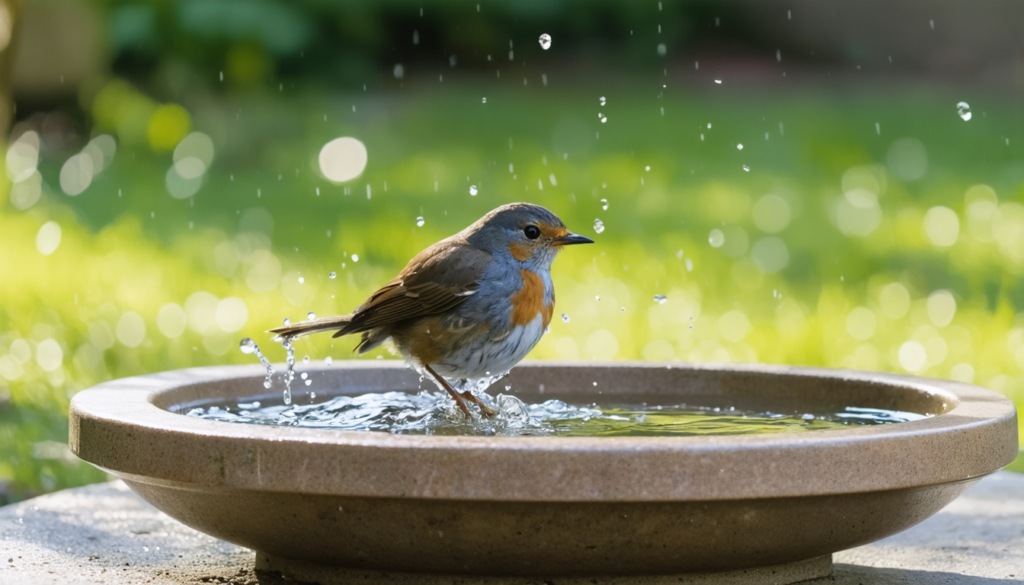
Winter settles in, and with it, the garden transforms. While the vegetation falls asleep under a calmer atmosphere, winged visitors, especially the robin, become precious companions of our outdoor spaces. Emblematic of the cold season, this small bird with its bright red plumage braves the frost thanks to remarkable resilience. Yet, winter conditions do not make its life easy: frozen ground, limited access to food, and ever-present predators make its survival difficult. However, with some adapted arrangements, you can turn your winter garden into a true haven of peace for this much-loved passerine. From creating a natural space that promotes biodiversity to installing specific feeders, every action counts to preserve this important player in the garden ecosystem. Discover how, through 5 essential tips, you can offer shelter and food to your red visitor while contributing to bird protection this winter.
- 1 Creating a natural habitat conducive to robins in your winter garden
- 2 Installing feeders and offering suitable robin food in winter
- 3 Providing an accessible and safe water point for birds in winter
- 4 Planting winter shrubs for a natural and protective bird shelter
- 5 Maintaining a safe and clean garden for the effective protection of robins
Creating a natural habitat conducive to robins in your winter garden
The first step to making your garden a winter refuge for robins is to recreate their natural habitat. Contrary to what one might think, a garden that is too well-maintained is not favorable to them. These insectivorous birds feed mainly on the ground through patient hunting of insects, worms, and larvae. Despite low temperatures, they depend on a rich and varied ecosystem to sustain themselves.
For this, it is essential to dedicate a wild corner in your garden layout where nature can take its course. Letting dead leaves accumulate under a shrub or near a tree creates a protective mulch that shelters a multitude of invertebrates essential to the robin’s food chain. This mulch also promotes soil moisture and local biodiversity, thereby increasing the resilience of your winter garden against the season’s harshness.
Place a pile of wood and branches: this natural refuge protects birds from bad weather and their predators while serving as a temporary shelter for several insect species. Likewise, avoid mowing all grassy areas too frequently; taller grass in some sections promotes faunal diversity within your garden ecosystem.
Finally, planting local plant species adapted to the winter climate is an essential lever. Endemic plants naturally attract local insects, which in turn are the favorite prey of robins. Planting hedges of pyracantha, hawthorn, or holly offers a double advantage: these shrubs provide nourishing berries during winter while offering safe and dense shelter for birds. This environment, which replicates the robin’s original habitat, encourages their sustainable settlement and well-being during the cold season.
Installing feeders and offering suitable robin food in winter
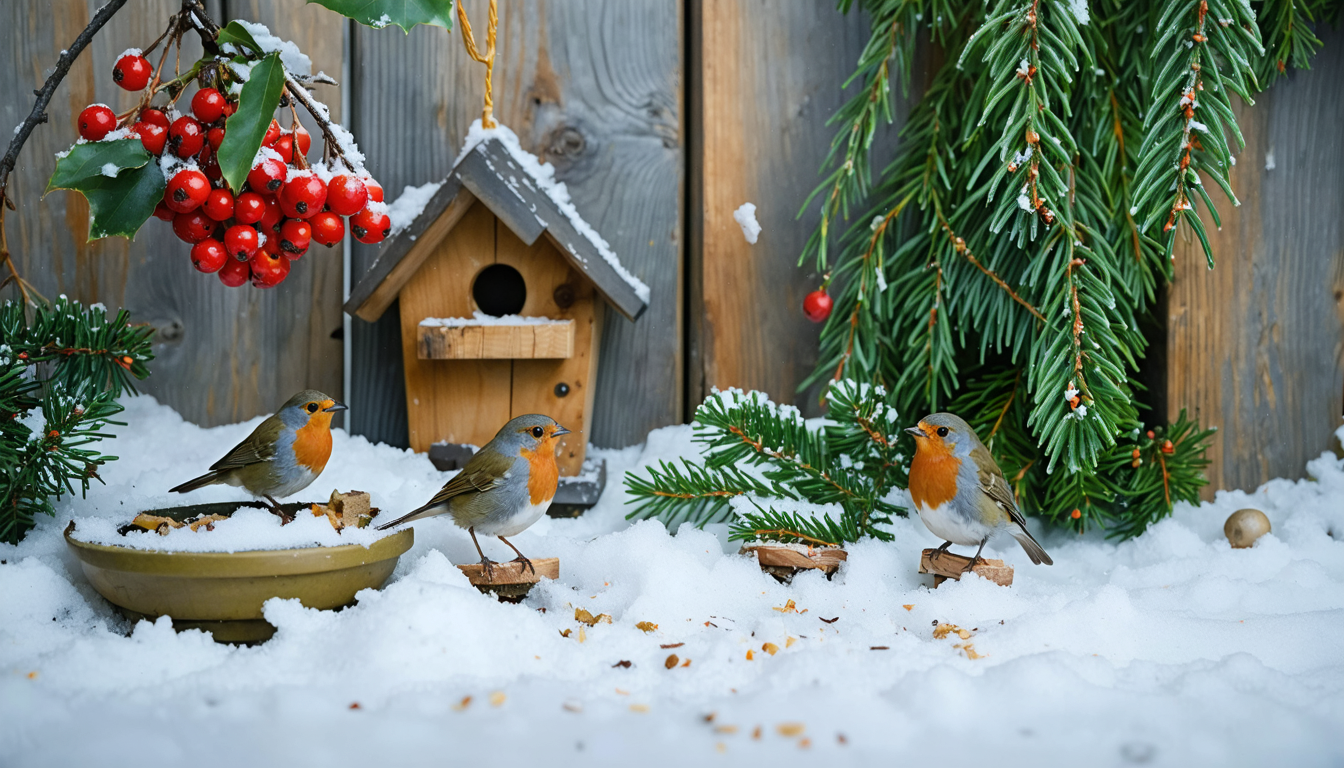
When considering winter feeding, it is crucial to understand the dietary particularities of the robin. The latter differs from other garden birds: although it appreciates seeds such as small hulled sunflower seeds and oat flakes, it mainly consumes insects and worms. Thus, classic suspended seed feeders are not suitable for it, as this passerine feeds essentially on the ground or on flat surfaces.
Installing a tray feeder or a clear ground area where food can be scattered is therefore preferable. This approach, respectful of its habits, guarantees easy and safe access. But beware of hygiene: it is imperative to regularly clean these feeding points to avoid the spread of diseases, a precaution all the more important in winter when birds’ immune systems are under severe strain.
| Recommended foods | Foods to avoid |
|---|---|
| Oat flakes | Bread (dry or fresh) |
| Small hulled sunflower seeds | Rusks |
| Overripe fruit (apples, pears) fallen on the ground | Milk and dairy products |
| Unsalted vegetable fats (Vegetaline) | Salty foods or meal leftovers |
| Mealworms (live or dehydrated) | Large non-hulled seeds |
Promoting this diet rich in fats allows the robin to have the energy reserves necessary to face the cold. By aiming for this balance, you help make your garden a true dietary haven where each meal represents a vital moment for this shy and territorial bird.
Providing an accessible and safe water point for birds in winter
Water is an element often neglected in winter garden layout, yet it is as crucial as food for robins. In winter, natural water points freeze, making access to drinking difficult for many birds. Yet, this water need is vital, not only for hydration but also for bathing and caring for their plumage.
A clean and well-maintained plumage ensures optimal thermal insulation, helping the bird retain its body heat. Therefore, it is essential to provide them with a source of unfrozen water, which may seem like a major challenge when temperatures drop below zero every night.
A few simple tips are enough to circumvent this obstacle. Change the water each morning with lukewarm water, install the water point in the sun to benefit from the relative warmth of the day – these are actions accessible to all. Placing a small floating object, such as a ping-pong ball, in the container creates a slight movement preventing the water from freezing too quickly. It is imperative to avoid any toxic additives, especially salt or sugar, which would be fatal to birds.
The shape of the water point should be shallow, between 2 and 3 centimeters, to avoid drowning risks. A saucer, a small plate, or an inverted lid is perfectly suitable, especially if a few stones are added to serve as perches to facilitate the approach and safety of the robins.
Planting winter shrubs for a natural and protective bird shelter
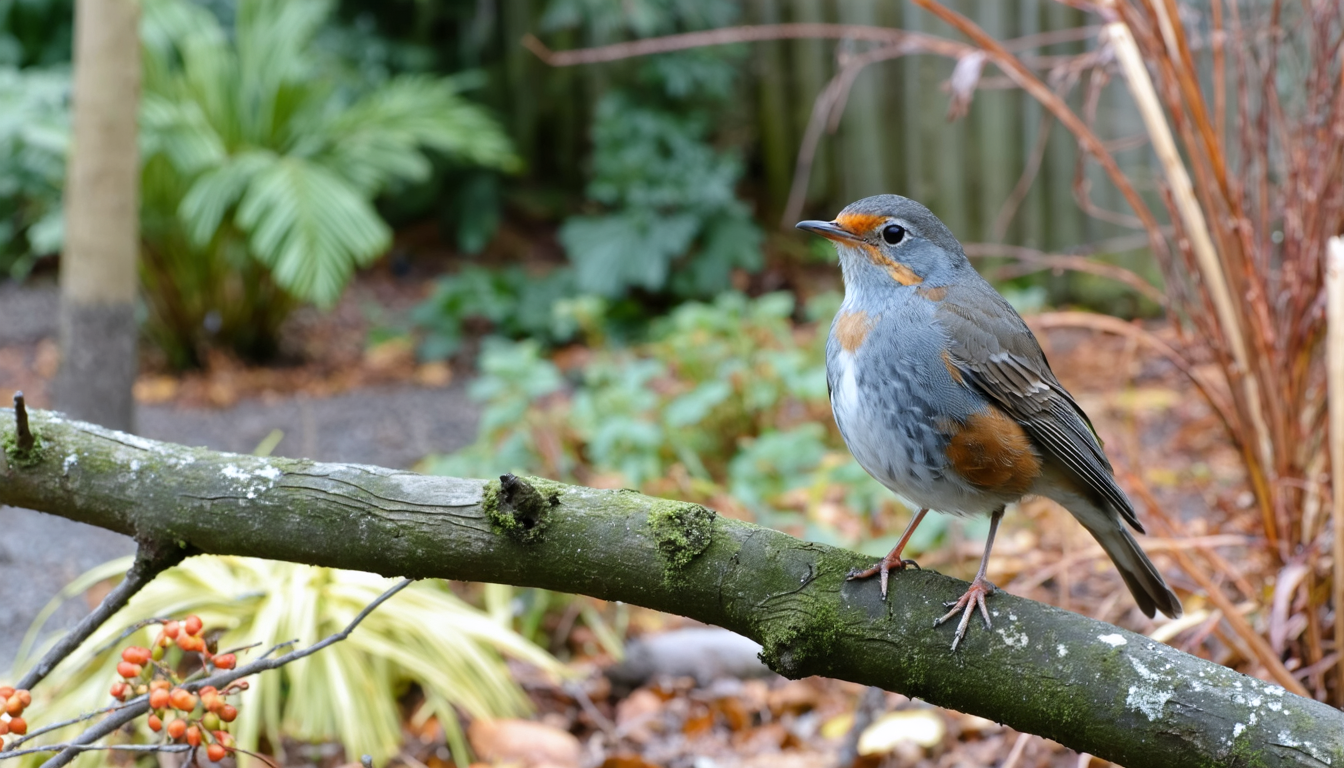
An essential element to transform your winter garden into a sanctuary for robins is winter vegetation. Evergreen shrubs with berries represent the perfect combination to guarantee shelter and food. They provide birds with refuge from the cold wind and snow, while constituting a natural pantry during periods when food is scarce.
Holly (Ilex aquifolium), hawthorn (Crataegus monogyna), pyracantha (firethorn), and cotoneaster are among the favorites of wintering birds, not only for their juicy fruits but also for their thorny branches, effectively deterring predators. Alongside these berry shrubs, it is wise to include evergreens like ivy or small conifers. These maintain dense foliage all year round, offering permanent and secure shelter.
The installation of dense hedges in your garden creates a microclimate favorable to bird survival. These shelters allow them to rest protected from gusts, but also to establish their territory, a fundamental criterion for the robin that fiercely defends its personal zone.
You can also consider facilitating nesting for spring by providing appropriate nest boxes near these vegetated areas. The garden ecosystem thus arranged becomes a true lasting sanctuary, combining bird protection and natural diversity.
Maintaining a safe and clean garden for the effective protection of robins
Beyond providing food, water, and shelter, ensuring the hygiene and safety of your winter garden is a final essential pillar to protect birds. Rigorous hygiene prevents the appearance of diseases, sometimes deadly, which can spread through poorly maintained feeders and drinking points. This vigilance is more necessary than ever when birds gather around limited resources.
Systematically clean all feeding points at least once a week with a brush and a solution of hot water and white vinegar, rinsing thoroughly. This simple yet effective precaution limits the proliferation of harmful bacteria such as avian salmonellosis.
Also, it is necessary to reduce certain common dangers. Large glass surfaces can become deadly traps through collisions. Provide stickers or visible silhouettes to birds to signal these obstacles. Eliminate all use of chemical pesticides or herbicides to avoid disrupting the indirect food chain of robins.
Finally, consider limiting the intrusion of domestic predators, especially cats. Their hunting instinct makes them very dangerous for small birds. Install feeders in visible areas sufficiently far from potential cat hiding spots, and equip your pets with collars fitted with bells to warn them.
- Leave a wild corner in the garden where dead leaves and branches accumulate.
- Offer suitable food on a tray or on the ground.
- Install a shallow water source regularly renewed and protected from freezing.
- Plant berry-bearing and evergreen shrubs to ensure food and shelter.
- Keep installations clean and safe to avoid diseases and accidents.
Adopting these five essential tips means building a harmonious and functional environment that invites the robin to make its home in your winter garden, thereby offering a living spectacle and a valuable contribution to protecting an emblematic species of the cold months.