The data revolution, a true driving force behind digital transformation, is profoundly changing the way French companies manage their financial operations, particularly through the dematerialization of invoices. This process, mandatory since 2026 for all VAT-registered entities, is no longer limited to a simple digitization of paper documents. It paves the way for intelligent use of data extracted from each electronic invoice, enabling significant gains in efficiency, transparency, and security.
Indeed, invoice dematerialization is part of a broader movement of automation and optimization of administrative and accounting processes. It offers companies an unprecedented vision of their financial flows while facilitating their regulatory compliance in the face of increasingly stringent legislation. The data revolution thus maximizes not only operational performance but also strategic decision-making within French companies.
Analysis, document management, data security—all now converge toward a new era where each electronic invoice becomes a lever for growth. This shift brings new challenges but also immense opportunities, both for large groups and for small and medium-sized enterprises. Let’s dive into the multiple facets of this digital transformation that is reshaping the contours of invoicing and financial management in France.
- 1 Invoice dematerialization: an essential vector of the data revolution for French companies
- 2 Exploitation of data from electronic invoices: towards fine and anticipative financial management
- 3 Automation and optimization of processes: productivity gains and reduction of accounting errors
- 4 Regulatory compliance and security: the essential pillars of invoice dematerialization in 2026
- 5 Digital transformation and document management: driving the performance of French companies
- 6 Optimization of supplier relationships thanks to dematerialization and the data revolution
- 7 The central place of humans in the success of the digital transformation linked to dematerialization
- 8 Perspectives and innovations to come in invoice dematerialization and data management
Invoice dematerialization: an essential vector of the data revolution for French companies
Since the implementation of mandatory electronic invoicing for French companies, invoice dematerialization has gone beyond its simple role of administrative modernization to become a true strategic lever. At the heart of this revolution lies the ability to transform simple commercial documents into a rich and exploitable set of structured data.
Each electronic invoice now encapsulates a multitude of key information: amounts, taxes, dates, supplier identifiers, payment terms… These data are extracted automatically via standardized formats, ensuring enhanced reliability and perfect consistency with the requirements of the tax administration. For example, formats such as Factur-X, Chorus Pro, or Peppol have become the pillars of smooth communication between business partners, as well as with various government services.
In practice, this means accounting teams are no longer required to manually enter information – a historic source of errors and delays. By delegating this task to algorithms, they can focus on detailed data analysis and informed decision-making. It is no longer just about processing an invoice but extracting a lever for economic intelligence.
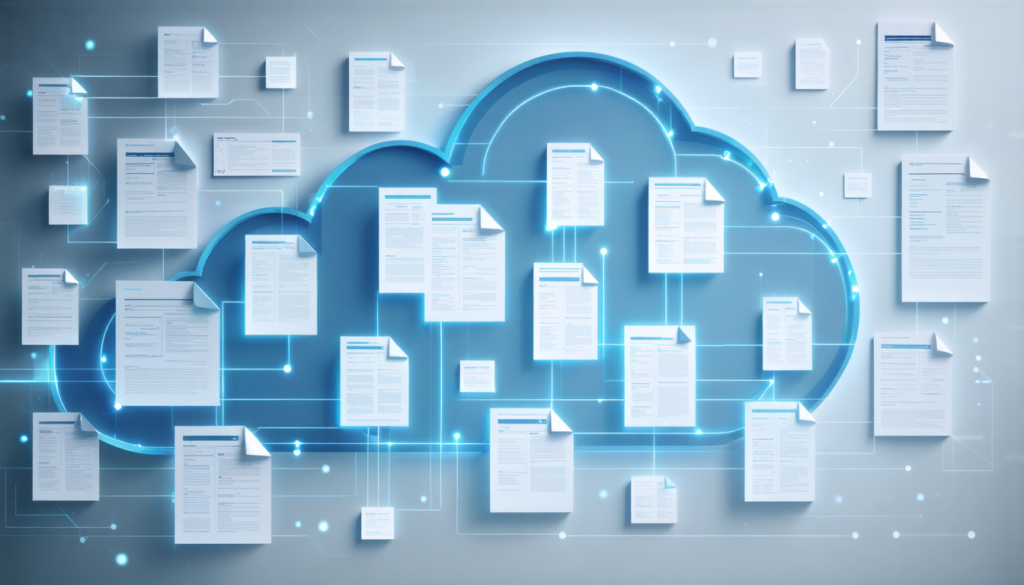
Moreover, dematerialization drastically improves document management by centralizing all documents in secure databases accessible in real time. This system ensures complete traceability, essential for regulatory compliance, but also valued by management to optimize risk management.
The automation of processes, enabled by this intelligent data structuring, plays a decisive role in improving financial flows. It accelerates internal invoice validation times, facilitates cash flow management, and reduces frictions between internal interlocutors – finance, purchasing, management control – and suppliers. These time savings, once accumulated within a company, represent thousands of euros in savings and a better allocation of resources.
Finally, this evolution is part of a broader perspective of global digital transformation of French companies. Beyond simple dematerialization, data from electronic invoices feed real-time decision dashboards, enriching macroeconomic and sectoral analyses. By integrating these resources, decision-makers can anticipate market developments, adjust their commercial strategies, and steer their growth with unprecedented precision.
Exploitation of data from electronic invoices: towards fine and anticipative financial management
The data revolution triggered by the dematerialization of electronic invoices enables French companies to better understand and manage their financial flows. Each invoice becomes a source to generate precise indicators, indispensable for proactive management adapted to contemporary economic challenges.
To explain, the generated metadata is analyzed by intelligent systems capable of identifying customer payment habits, flagging potential risks of late payments or defaults before they actually occur. Consequently, the financial management benefits from increased visibility into short- and medium-term financial health, which fosters preventive measures and optimizes cash management.
Moreover, modern data analytics tools applied to electronic invoicing cross-reference other internal data (purchasing, logistics, production) and external data (economic indicators, sectoral trends). This holistic approach enables the detection of underlying trends, anticipation of financing needs, or even a finer adjustment of commercial policy by targeting, for example, underperforming suppliers or clients with low payment reliability.
Decision-making management is thus profoundly impacted. For illustration, an SME in the distribution sector can now integrate data extracted from invoices into its management system to adjust stocks in real time, reduce procurement costs, and negotiate with suppliers based on precise financial performance data.
This use of financial data also opens the door to new automated reporting methods, speeding up the production of accounting statements and facilitating communication with external partners such as banks or tax authorities. The result is a gain in quality and transparency in the company’s financial communication.
However, to fully leverage these new resources, it is essential that companies invest in training their teams in data management, statistical analysis, and monitoring of key indicators. This represents a profound cultural shift, now imposed as a key competitiveness factor.
| Benefits of invoice data exploitation | Concrete examples |
|---|---|
| Anticipation of payment delays | Automatic alerts on at-risk clients |
| Optimization of cash flow cycles | Adjustment of payment and collection schedules |
| Improvement of supplier strategy | Identification of underperforming suppliers |
| Automated reports for audits | Time savings during tax inspections |
Thanks to these practices, a company can significantly limit financial risks related to payment malfunctions and strengthen its economic stability.
Automation and optimization of processes: productivity gains and reduction of accounting errors
Invoice dematerialization does not just digitize documents: it revolutionizes administrative processes through advanced automation. This automation is a key point in the digital transformation of French companies, contributing to global optimization and a drastic reduction of human errors.
Previously, accounting teams spent considerable time manually entering each invoice, checking discrepancies, and correcting errors. Today, thanks to electronic invoicing solutions, all steps, from receipt to approval, recording, and archiving, take place without human intervention, or with a minimum of targeted intervention.
This automation yields impressive gains. A large industrial group thus managed to reduce the average invoice processing time by four times, from several days to just a few hours. Moreover, the increased reliability of the process eliminates disputes related to entry errors or contradictory information.
Additionally, the integration of collaborative platforms between suppliers and buyers promotes better coordination. Automatic alerts instantly signal detected anomalies or errors, prompting a quick correction before payment is triggered. Real-time monitoring of the invoice status reassures all parties and reduces post-invoicing disputes.
This evolution leads to a reconfiguration of internal roles: employees focus on higher value-added tasks, such as strategic analysis, supplier negotiation, or proactive management of financial risks. A French accounting firm reported that its teams estimated a 30% productivity gain after implementing full automation of electronic invoices.
Finally, this process optimization strongly contributes to data security by limiting physical access to paper documents and using encrypted digital archiving systems compliant with current standards. Every action is traced, ensuring indispensable transparency for regulatory compliance and financial audits.
Regulatory compliance and security: the essential pillars of invoice dematerialization in 2026
Electronic invoicing, now mandatory for all French companies, continues to evolve to meet the growing demands of tax legislation and the fight against fraud. Regulatory compliance is at the heart of this digital transformation, imposing high standards regarding traceability, authenticity, and integrity of data.
The legal framework requires that every dematerialized invoice be transmitted via certified platforms, ensuring format compliance and transmission reliability. The regulation also mandates electronic storage of documents for a minimum period of ten years, with a guarantee of information immutability. These measures protect companies against future disputes and facilitate digital tax audits.
Furthermore, transaction security is a major issue. The use of cryptography, enhanced electronic signatures, and access control systems ensures the confidentiality of sensitive financial data. Every modification of the document is traced and timestamped, preventing fraudulent alterations or falsifications.
The implementation of automatic alert systems in case of detected discrepancies or anomalies enables quick reaction to limit risks. For example, an alert about inconsistent banking details of a supplier can prevent an erroneous payment.
This strict compliance with standards promotes not only the legal security of companies but also the trust of business partners. A company that scrupulously respects regulations inspires greater confidence among its suppliers and clients, thereby consolidating its commercial ecosystem.
This evolution also relies on close cooperation with public institutions, which, thanks to automated data transmission, modernize tax controls. Now, verifications are carried out in real time and remotely, reducing costs and intrusions for companies while strengthening the fight against fraud.
Digital transformation and document management: driving the performance of French companies
Document management is a major challenge in the context of invoice dematerialization. Thanks to the transition to a standardized electronic format, French companies have a high-performance digital infrastructure guaranteeing the organization, storage, and protection of financial information.
Dematerialized documents are stored in highly secure virtual spaces, often hosted in certified data centers. This centralization significantly reduces risks related to loss, theft, or deterioration of paper invoices. As a result, document retrieval becomes almost instantaneous, even several years after issuance, facilitating daily management and audit processes.
Moreover, database structuring enables fast and intelligent searches by cross-referencing various criteria (date, supplier, amount). Automatic document indexing helps classify invoices into precise categories, limiting human errors and simplifying navigation through an ever-growing volume of data.
Beyond preservation, digital document management paves the way for internal collaborative tools, fostering sharing and communication among teams. For example, a purchasing department can quickly check the status of an invoice validated by accounting, avoiding redundancies and speeding up decision-making.
Ensuring data security remains a priority. Companies must adopt GDPR-compliant solutions to guarantee the confidentiality of sensitive information, especially during exchanges with external service providers. Dematerialization thus helps strengthen organizations’ digital resilience, highlighting its key role in overall IT strategy.

Optimization of supplier relationships thanks to dematerialization and the data revolution
The digital transformation driven by invoice dematerialization also revolutionizes relationships between companies and suppliers. The increased fluidity and transparency of electronic invoice processing foster better collaboration and strengthened trust.
In practice, suppliers benefit from almost instant visibility on the processing of their invoices, reducing inquiries about payment deadlines. IT traceability allows identification of every step in the document’s lifecycle, from issuance to actual payment.
This transparency greatly limits commercial disputes related to errors or lost documents, frequent problems in traditional paper exchanges. Collaborative platforms often offer real-time communication features, allowing quick resolution of any anomalies detected by the systems.
To guarantee this fluidity, interoperability between different companies’ information systems is essential. This technical challenge is met through the widespread use of standard formats and common protocols, ensuring perfect compatibility between electronic invoicing tools.
Here is an overview of the major benefits brought by this optimization:
- Precise and real-time tracking of invoices and payments
- Significant reduction of disputes related to incorrect or missing information
- Strengthening of trust and long-term commercial partnership
- Better anticipation of financial needs and flows between partners
- Increased security thanks to exhaustive traceability and automatic alerts
A French company specialized in the agri-food sector thus saw its number of disputes decrease by more than 40% in less than a year after implementing a fully dematerialized system. Collaboration was deeply improved, with a positive effect on overall stock and procurement management.
The central place of humans in the success of the digital transformation linked to dematerialization
If technology forms the backbone of the data revolution, the success of invoice dematerialization largely depends on human support. The integration of new systems indeed requires a profound change in practices, skills, and corporate culture.
First of all, team training remains essential. They must acquire not only the technical know-how necessary to use electronic platforms but also the analytical skills to correctly interpret generated data. This dual mastery is crucial to fully benefit from the advantages offered by data from electronic invoices.
Moreover, the transformation implies better interdepartmental collaboration. Exchanges between accounting, purchasing, IT, and financial management must become more fluid and regular, thus strengthening overall cohesion and efficiency.
Managers also have a key role in establishing a strategic vision that values these changes as an opportunity rather than a constraint. Supporting staff, managing resistance to change, and communicating transparently are indispensable levers to succeed in digital transition.
Finally, this evolution creates new roles and specialties around data management, performance steering, and cybersecurity. Companies must now anticipate these qualification needs to remain competitive. An industrial SME that deployed a complete dematerialization solution invested in a continuous training program which increased employee versatility and autonomy.
Thus, humans remain at the heart of the digital revolution, ensuring sustainable process transformation and optimal exploitation of technological assets.
Perspectives and innovations to come in invoice dematerialization and data management
Invoice dematerialization in France, strengthened by the data revolution, is far from stopping with current measures. The coming decade promises to be rich in innovations and technological evolutions, offering new opportunities for French companies engaged in this transformation.
Among anticipated avenues, the integration of artificial intelligence into invoice processing promises enhanced automation capacities and predictive analysis. For example, AI could more finely identify anomalies, anticipate financial risks with greater precision, or even propose real-time adapted financial optimization scenarios.
Blockchain could, for its part, strengthen the security and traceability of electronic invoices by creating tamper-proof registries. This technology could revolutionize document management by guaranteeing absolute trust between business partners as well as increased compliance with regulatory requirements.
In parallel, convergence with other digital systems, such as contract management, order processing, or automated payments (e-procurement), sketches a horizon where the financial chain will be fully digitized and integrated. This setup will improve exchange fluidity, internal control, and commercial responsiveness.
A final major challenge concerns the democratization of these technologies among small businesses, often hindered by solution complexity or cost. The development of accessible and modular platforms will be a determining factor to ensure broad and balanced adoption.
The data revolution thus imposes itself as a powerful innovation lever, not only to optimize the management of electronic invoices but also to transform French companies into agile and competitive players on the global economic stage.