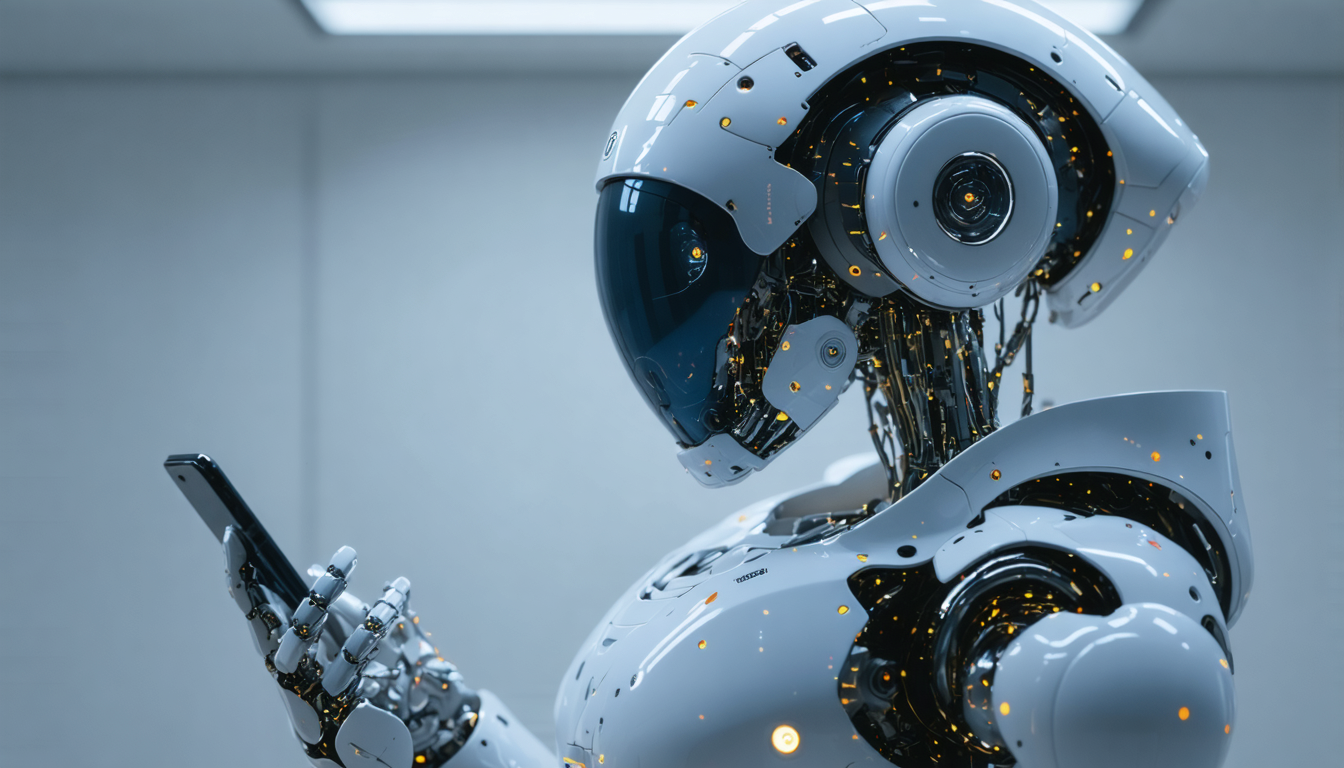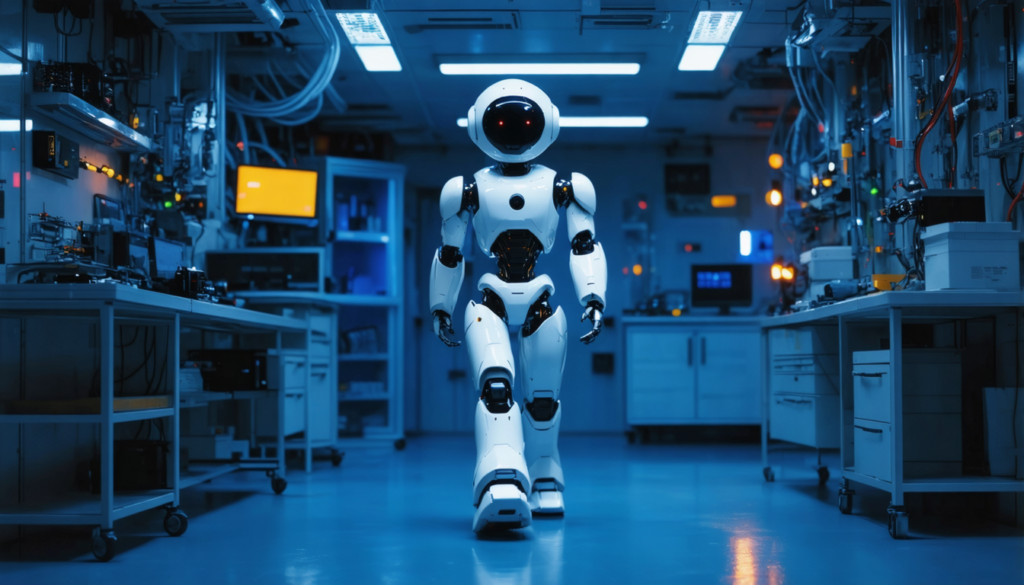
After long captivating with its affordable and powerful smartphones, Honor is undergoing a spectacular transformation that leaves no one indifferent in 2026. The Chinese brand, well known for having challenged the giants of the smartphone market, unveils a brand-new technological direction: the shift from classic gadgets to humanoid robots. This strategic offensive is notably showcased at the Mobile World Congress (MWC) in Barcelona, where Honor presents a robot designed to accompany consumers in their daily lives. Far from futuristic concepts disconnected from reality, this humanoid embodies pragmatic innovation, ready to redefine the customer experience in stores and beyond.
This return to the forefront is all the more impressive as it marks a radical repositioning. Honor is not content with perfecting its screens or improving its smartphones; the brand gives a concrete form to artificial intelligence by materializing its capacities in robots that interact with humans. This challenge, at the crossroads of robotics and AI, illustrates the new battle waged by technology giants, especially Chinese players, to conquer the humanoid market.
In this article, we will examine from several angles how Honor makes its grand comeback: from the evolution of its flagship products to robotic ambitions, including an analysis of the competition, massive investments, as well as the strategy implemented to firmly anchor its innovations in users’ daily lives. We will see how this revolution goes beyond simple technology to touch on the very way humans might coexist with their new mechanical assistants.
- 1 Honor: from smartphone leader to pioneer of intelligent robotics
- 2 A humanoid robot at MWC 2026: innovation at the service of customer experience
- 3 The competitive context: a booming humanoid robotics market
- 4 A massive investment of several billion for a strategy of the future
- 5 A strategic shift far more than a simple product evolution
- 6 The innovative concept of the “Honor Robot Phone”: convergence between smartphone and robotics
- 7 The challenges and opportunities of embodied technology in the future of high-tech
Honor: from smartphone leader to pioneer of intelligent robotics
Historically known for its range of smartphones offering the best value for money, Honor left a lasting mark on the market before 2020. Its separation from Huawei forced the brand to redefine its positioning. Facing a smartphone sector that had reached maturity, with less visible hardware innovations and fierce competition, Honor decided to redirect its expertise toward emerging technological fields. MWC 2026 therefore represents the perfect occasion to announce its future, that of a player emphasizing humanoid robotics and artificial intelligence.
The choice of humanoid robots is far from incidental: it is a segment where technology can embody a real change in daily life. By creating robots capable of accompanying consumers and interacting in real time, Honor leverages the maturity of AI to design a tangible, palpable, and ultimately accessible expression of it. The goal is clear: to move from a simple smartphone manufacturer to a provider of integrated technological solutions, where the mobile device and robotic body complement each other.
For Honor, this evolution opens a new chapter in which the brand wishes to establish itself as an essential player. This involves adjusting user perception, which still primarily associates Honor with its former high-tech gadgets. The introduction of these robots in public spaces will demonstrate that innovation no longer stops at screens but now extends to devices capable of adapting, understanding, and assisting beyond usual functionalities.
A humanoid robot at MWC 2026: innovation at the service of customer experience
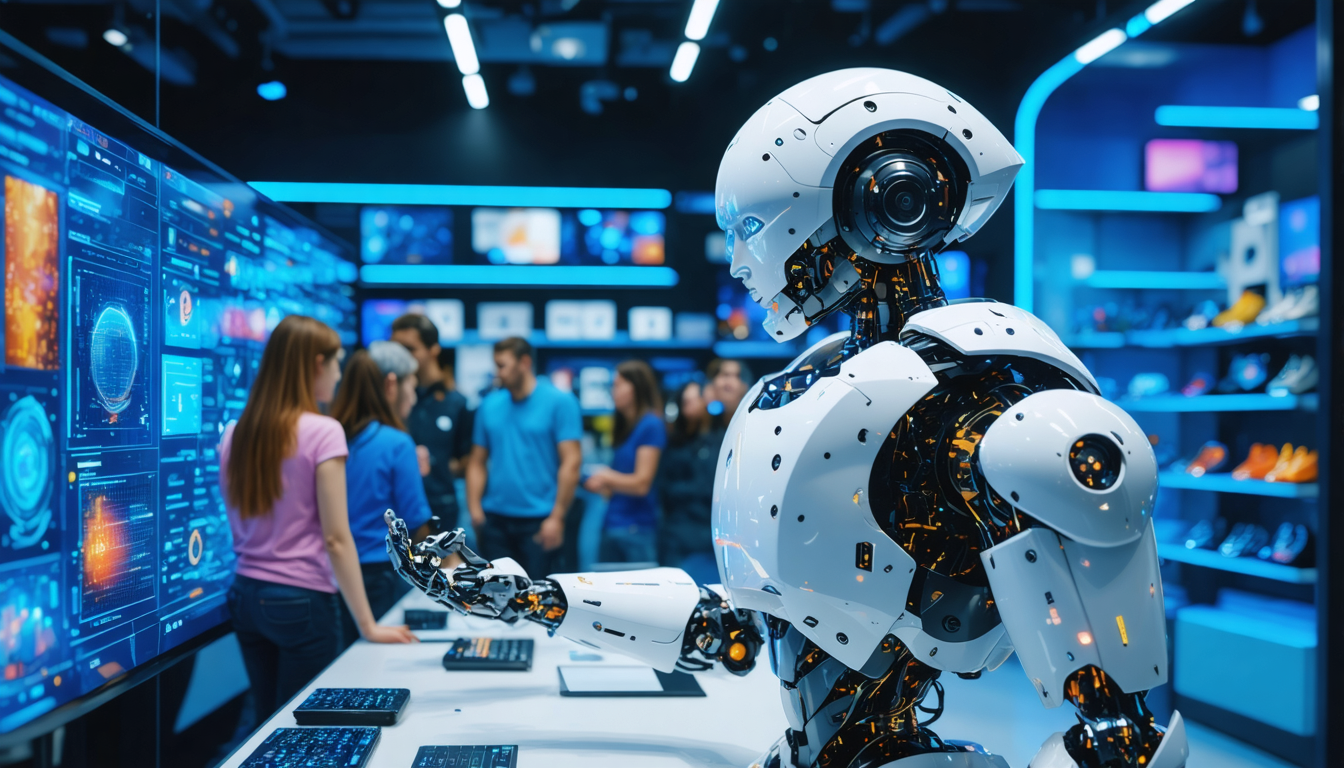
At the Mobile World Congress in Barcelona, Honor unveils for the first time a humanoid robot dedicated to in-store assistance. Rather than presenting a futuristic prototype difficult to grasp, the brand adopts a pragmatic approach. This robot is not just a gadget displayed for effect, but a real assistant capable of improving the customer experience by directly responding to consumers’ needs on site.
Concretely, the humanoid guides shoppers, answers their questions about products, offers personalized advice, and facilitates the purchasing journey. This approach aims to overcome the limitations of traditional human interactions in commercial spaces, especially when staff are overwhelmed or when a simple consumer wants to quickly obtain technical or practical information.
The integration of this physical intelligence fills an essential link: robotics becomes a means to introduce AI into daily life, far from abstract and often considered speculative scenarios. By adopting a focus on immediate usefulness, Honor offers a new definition of high-tech technology. The humanoid thus becomes a natural extension of smartphones, combining mobility and conversational capabilities, responding to the need for real-time personalization.
This commercial application model represents a notable novelty in the industry, especially in a context where the multiplication of high-tech gadgets is no longer enough. Honor’s promise rests on smooth and intelligent interaction based on advanced AI, thus materializing the fusion between technological innovation and everyday use.
The competitive context: a booming humanoid robotics market
Although Honor benefits from an enticing strategy, it enters an already highly competitive arena. Several players, notably from China, are intensifying efforts to become leaders in humanoid robots. Xiaomi, Unitree Robotics, and even Tesla multiply announcements and robotic developments, showing that robotics has become a key industrial issue.
China already dominates this industry significantly: of the 13,000 humanoid robots shipped worldwide in 2025, the majority came from Chinese companies. This leadership is not limited to quantity but also embraces an innovative approach combining hardware and software intelligence, enabling them to address varied needs such as health, logistics, or commerce.
In this context, Honor stands out with a targeted approach. Instead of trying to create a versatile robot occupying all possible roles, the brand focuses its efforts on a specific sector: customer service. This specialization allows it to offer a product suited to concrete use cases, with features optimized for commercial interactions, potentially accelerating product adoption and profitability.
This race for humanoids opens the way to a new form of technological competition that goes beyond the mere race for smartphones, highlighting the importance of ecosystems and interactions between humans and machines. Honor and its competitors illustrate this major transition, where technology must be both innovative and immediately useful.
A massive investment of several billion for a strategy of the future
Honor’s robotics project is not a mere experiment. Behind this announcement lie colossal investments, amounting to billions of dollars, intended to finance advanced research and development. This positioning intention is part of a global plan to adopt artificial intelligence and emerging technologies.
This strategic plan aims to establish Honor as the first brand to fully integrate the humanoid robotics market with products directly linked to its expertise in smartphones and AI. To support this ambition, the brand is also considering a future initial public offering, which would strengthen its financial means and lend credibility to this shift within the international market.
Market figures reinforce this perspective. According to Omdia’s analyses, the global sales volume of humanoid robots multiplied by five in just one year, reflecting an accelerated technological revolution. These robots find growing applications in logistics, health care, or commerce, opening multiple horizons for Honor.
| Year | Volume of humanoid robots sold (global) | Annual growth (%) | Main applications |
|---|---|---|---|
| 2024 | 2,600 | – | Logistics, health |
| 2025 | 13,000 | 400% | Logistics, health, commerce |
| 2026 (est.) | 27,000+ | 107% | Commerce, customer services, health |
This is an opportunity to seize quickly, hence the relevance of Honor’s strategic investments in this sector. This financial and technological positioning reveals a favorable dynamic for the brand in the long term.
A strategic shift far more than a simple product evolution
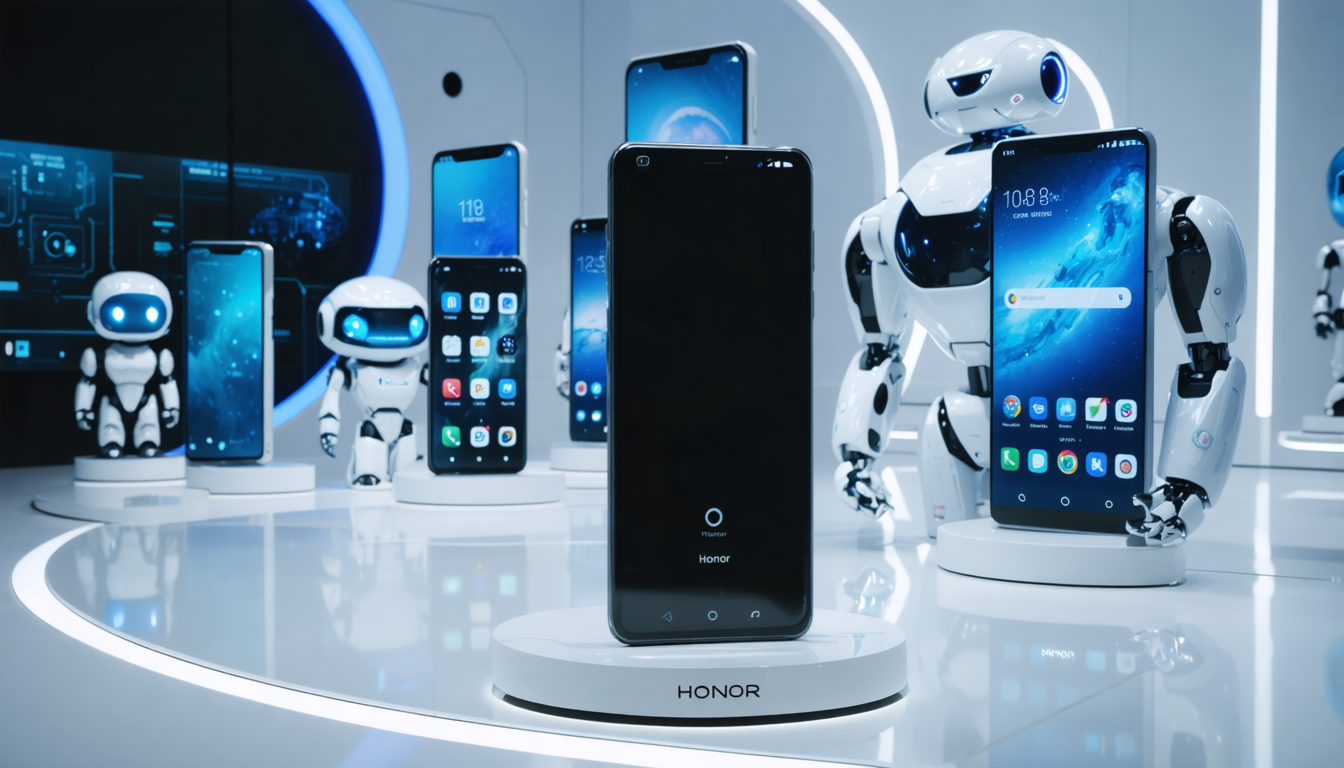
The turn taken by Honor goes far beyond the simple introduction of new high-tech gadgets. This transformation is a genuine repositioning in the high-tech market. Instead of staying confined to smartphones, Honor aims to become a key brand in the development of physical AI, where robots and connected objects work together to enrich the user experience.
This change occurs in a context where hardware innovation in smartphones reaches its classic limits. Products are standardizing, while competition now focuses on services and personalization. Honor thus seizes the opportunity to push boundaries by offering robots that embody artificial intelligence, giving technology a new tangible dimension.
However, the greatest challenge remains the social acceptance of this technology. The introduction of robots into commercial spaces involves multiple issues: consumer perception, privacy respect, understanding human-machine interactions. Furthermore, the industrial challenge is immense, as the battle to dominate this futuristic market pits Chinese and Western players directly against each other.
A cautious and targeted approach by Honor could prove rewarding: by showcasing a useful and non-threatening robot, the brand increases its chances of creating a favorable ground for everyday use. This trust-building work will be essential in the coming years.
The innovative concept of the “Honor Robot Phone”: convergence between smartphone and robotics
Alongside the development of its humanoid robot, Honor also presents a concept called the “Honor Robot Phone.” This device pushes the limits of traditional smartphones by integrating a retractable camera mounted on a motorized gimbal that allows dynamic tracking of filmed subjects, a major asset for creating smoother and more natural interactions.
This technology transforms the smartphone into an autonomous sensor capable of perceiving its environment, analyzing situations in real time, and interacting adaptively with the user. This device no longer only performs the classic functions of a phone; it becomes a sort of miniature robot, at the boundary between high-tech gadgets and advanced robotics.
Honor thus aims to shape a hybrid ecosystem where agent-based AI is deployed at the heart of connected objects, enabling a perfect symbiosis between the user and technology. The smartphone is no longer a mere terminal but an intelligent agent capable of acting, observing, and anticipating.
This concept opens exciting prospects, both for everyday uses and future innovations in the high-tech gadgets universe. By emphasizing mobility and the capacity to extend AI into the concrete world, Honor is charting an unprecedented path that could inspire the entire industry.
The challenges and opportunities of embodied technology in the future of high-tech
The rise of humanoid robots and intelligent smartphones like the “Honor Robot Phone” brings its share of questions and challenges for users and industry players. One of the key elements remains the issue of cultural acceptance of these physical assistants. Their integration into public or private spaces will depend on perceptions of security, respect for privacy, but also on the friendliness of their interaction.
Moreover, managing data collected by these devices raises major confidentiality questions. These robots and gadgets analyze behaviors, preferences, even purchasing intentions, requiring rigorous protocols to protect consumers. Honor will have to combine innovation and ethics to gain public trust.
From an industrial point of view, the battle rages between Chinese and Western technology giants, each seeking to impose its robotic ecosystem. This competition should accelerate technological advances but also complicate market dynamics by multiplying platforms and standards.
- Social acceptance of robots: importance of natural interfaces and trust.
- Data protection: confidentiality challenges enhanced by embedded AI.
- Industrial competition: strategic rivalry shaping market evolution.
- Technological integration: necessity to create coherent and accessible ecosystems.
- Practical use: useful robot versus superficial gadget.
By betting on concrete solutions and embodied artificial intelligence, Honor already establishes itself as a pioneer in this high-tech transformation. The next chapter of this adventure promises to redefine the very notion of gadget, transforming it into a physical and intelligent ally for everyday life.