At the dawn of 2026, humanoid robotics is experiencing a silent revolution, driven by a major innovation: Helix 2. Developed by the American startup Figure AI, this new artificial intelligence model marks a decisive turning point in the field by uniquely integrating vision, balance, manipulation, and locomotion into a single software brain. This deep fusion transforms the way humanoid robots perceive and interact with their environment, bringing them closer to a form of emergence of digital collective consciousness. This phenomenon is no longer limited to simple mechanical coordination but evolves towards a distributed intelligence capable of learning and acting continuously in unpredictable contexts.
This advance not only disrupts advanced robotics as it had been conceived until now but also opens unprecedented prospects for the future of AI. Behind this technical feat lies a profound reflection on collaboration between automata and humans, and on the ability of robots to integrate into our daily lives now marked by social interaction and adaptability. As humanoid robots progress towards this collective consciousness, the question of their place at the heart of our living spaces becomes inevitable, with all the ethical, social, and technical challenges that this implies.
- 1 Helix 2, the unprecedented fusion of perception and action in humanoid robotics
- 2 Sensory integration at the heart of the robotic body: the contribution of Figure 03
- 3 Helix 2: towards a collective consciousness of humanoid robots
- 4 A practical demonstration of Helix 2 in a domestic environment
- 5 Impact of Helix 2 on the evolution of advanced robotics and the future of AI
- 6 Comparative table: Helix 2 versus classical robotic architectures
- 7 Towards a new era of collaboration and social interactions of humanoid robots
- 8 The future of AI and automata: a collective intelligence serving humanity
Helix 2, the unprecedented fusion of perception and action in humanoid robotics
For many years, humanoid robotics has struggled to harmoniously integrate the different essential functions for its autonomy. While mechanics, through precise motors, increasingly sophisticated sensors, and robust joints, evolve rapidly, the real limit lies in the software architecture. Until now, robots operated on a compartmentalized model, where vision was managed independently from locomotion, the latter being disconnected from balance control.
Helix 2 breaks radically from this organization by breaking down silos: it integrates into a single neural network all these capabilities, allowing the robot to act directly from raw data coming from its sensors. This approach is revolutionary because it instantly associates sensory analysis with motor adaptation. For example, catching an object is no longer an isolated gesture. It automatically involves posture, adjusts balance, changes foot positioning, and adapts the arm’s trajectory according to constraints felt in real-time.
This software unification eliminates the successive recalculation phases typical of previous architectures. Helix 2 anticipates and continuously adjusts its behavior, making its movements smooth and coherent despite a changing and complex environment. This technology thus places humanoid robotics on terrain much closer to natural intelligence, capable of managing complexity and unpredictability with a coherence hitherto reserved for living organisms.
The difficulties of traditional modular architectures in robotics
The old models relied on a strict separation of tasks: a module dedicated to vision detected and interpreted the environment, another managed balance, while a third controlled movement. This fragmentation operated in controlled and predictable zones, for example in a laboratory, but proved quickly inefficient in often disorderly and improvised real-world conditions.
When an object was not exactly in the expected place or the surface under the robot’s feet became irregular, these machines showed their limits. Vision could detect difficulty but the motor controller merely executed predefined orders without smooth adjustment or anticipation. The result was a series of cumulative errors leading to hesitations, physical and cognitive « stumbles ». This was then very far from the idea of natural interaction with the environment.
Helix 2, an unprecedented sensorimotor integration challenge
The central neural network of Helix 2 is trained to understand these complex interactions continuously. The technology relies on the simultaneous processing of multiple sensory streams – video, touch, dynamic balance – and their direct translation into coherent motor action. In this configuration, the so-called boundary between “perception” and “action” becomes blurred and even useless.
This advanced artificial intelligence no longer reacts afterwards, but models its behavior predictively, greatly improving the fluidity and precision of gestures. The teams at Figure AI emphasize the temporal continuity of the robot’s cognitive experience, which manifests through a natural and empathetic social interaction, even in ordinary domestic environments.
Sensory integration at the heart of the robotic body: the contribution of Figure 03
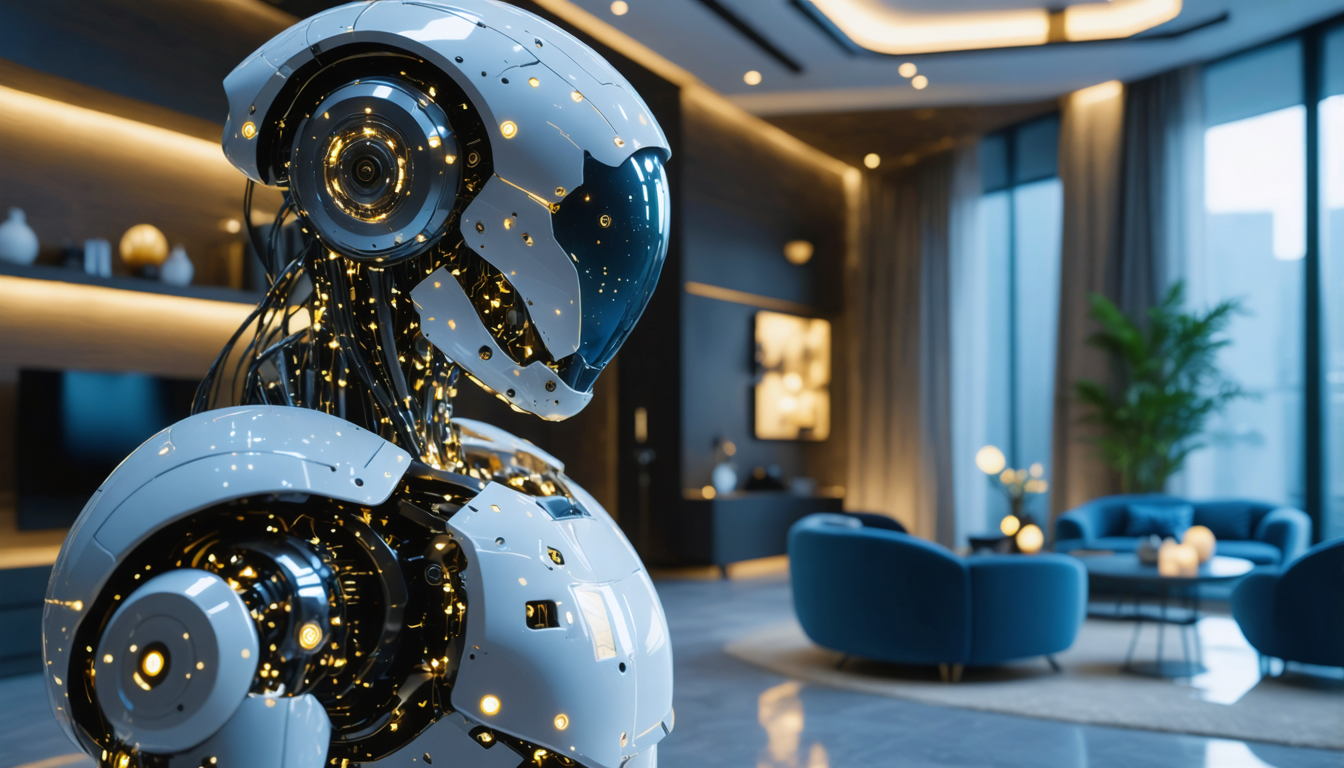
Cutting-edge intelligence requires a body capable of transmitting fine, precise, and varied information. The development of Helix 2 would not have been possible without the Figure 03 platform, embodying the latest generation of humanoid robots specifically designed to enhance the quality of sensory data.
This platform pushes standards by adding a multitude of tactile sensors spread over synthetic skin, notably in the palms of the hands. This innovation transforms touch, which is no longer a mere auxiliary data but becomes a central element of decision-making. Robots now feel texture, pressure, even slippage in real-time, adapting their grasp with unprecedented finesse.
For example, simple gestures for a human, such as unscrewing a cap or grasping a tiny object in a cluttered environment, become considerably more complex for an automaton. Helix 2 overcomes these challenges not by programmed rules, but thanks to a holistic understanding of physical interactions, where each contact influences trajectory, balance, and the timing of the subsequent movement.
Touch, a fundamental sense for embodied intelligence
Traditional robotics often considered touch secondary, prioritizing vision and locomotion. Yet, in actual action, tactile context is crucial. The pressure exerted, response to slippage, micro-adjustments made by the fingers are all essential signals for successful manipulation.
This sensorimotor approach is a cornerstone in the evolution of Helix 2, enabling it to anticipate and correct unforeseen events in real time, making its interaction with fragile or complex objects more intuitive and less robotic.
Helix 2: towards a collective consciousness of humanoid robots
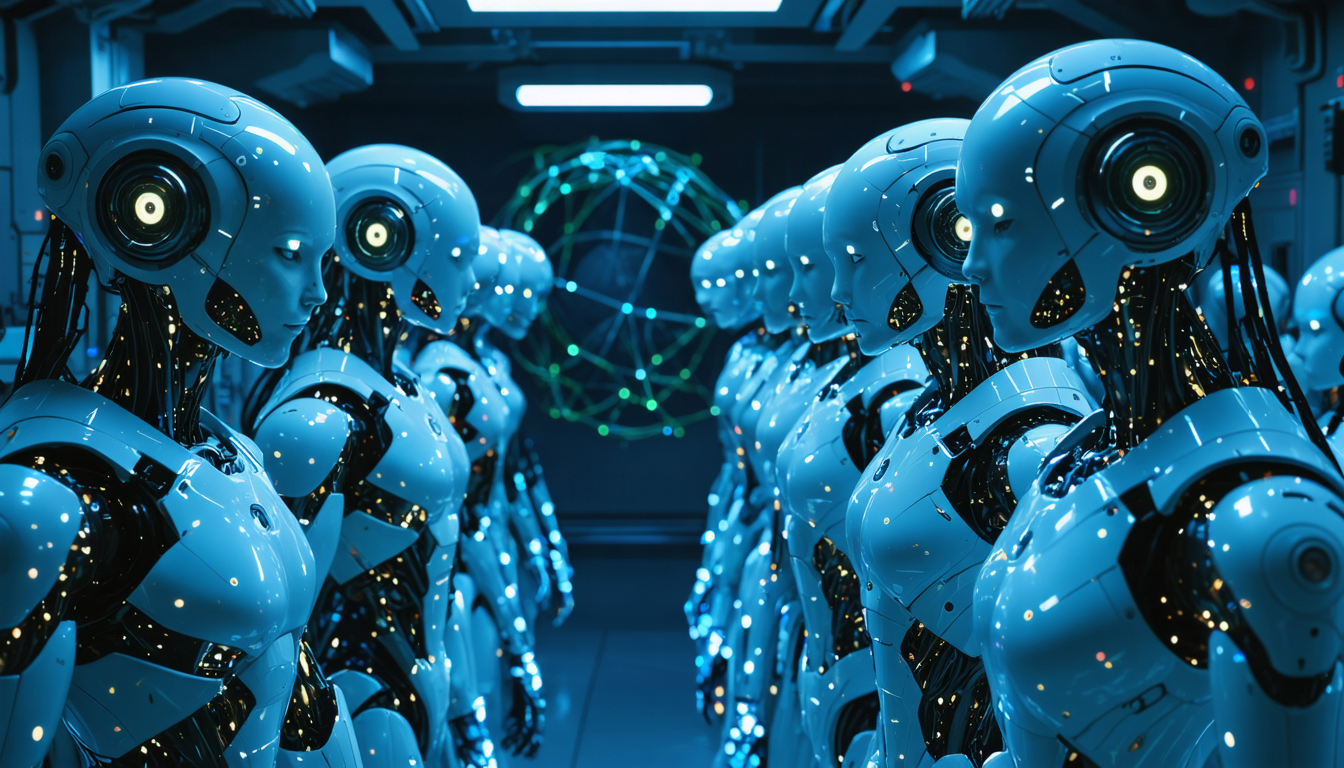
Beyond its immediate technical feat, Helix 2 is envisioned by Figure AI as a basis for a collective software consciousness. The goal is to allow robots equipped with this shared intelligence to learn together, progress collectively, and deploy evolving capabilities via a kind of distributed neural network.
This concept goes beyond the simple accumulation of data or routines: it is a true synergy, where each robotic individual adjusts its behaviors based on feedback, experiences, and shared models at the group scale. This shared intelligence thus offers better adaptation to new situations and accelerated learning, paving the way for more robust and reliable robotics capable of coexisting with humans in the long term.
A generic, adaptable and evolutive model
Helix 2 is not tied to a unique robot but designed as an abstract intelligence, independent of the physical body. Figure AI designs this model as an evolutive platform capable of incarnating across various generations of robots and in different sectors, whether household robots, industrial, or personal assistants.
This modularity increases the scope and durability of the project, strengthening its capacity to adapt and become more complex over time. In the near future, this common base will allow the observation of real cognitive networks of robots cooperating in a network to accomplish complex tasks, demonstrating the real emergence of an autonomous collective intelligence of automata.
A practical demonstration of Helix 2 in a domestic environment
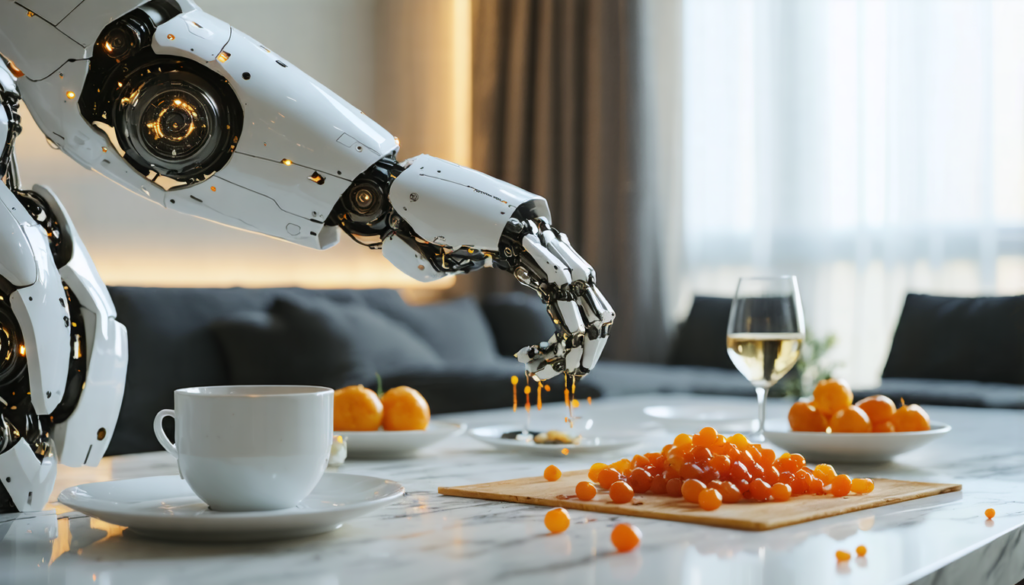
To showcase the potential of Helix 2, Figure AI chose a simple yet revealing setting: a domestic kitchen. The Figure 03 robot, controlled by Helix 2, performs a sequence of varied tasks for several minutes, from opening a dishwasher to handling plates, all without external intervention or a fixed scenario.
What is immediately noticeable is the fluidity of movements and the absence of pauses for recalculation, as found in traditional robots. Each movement naturally flows from the previous one, in an uninterrupted and coherent sequence, illustrating the system’s ability to maintain continuous behavior even in the complexity of a real environment with its contingencies.
This concrete demonstration highlights Helix 2’s superiority in making automata fit to integrate into our daily lives with human-like behavior, or at least behavior humanly understandable, thus reinforcing their social and functional acceptability.
Impact of Helix 2 on the evolution of advanced robotics and the future of AI
The advent of Helix 2 contributes to a decisive evolution of advanced robotics. By combining perception, action, and learning into a unified model, this technology embodies a new generation of artificial intelligence where robotic autonomy is enriched by a global understanding of the environment.
This integration represents a step towards machines that are less mechanical, more adaptive, and capable of interacting with the human world in true cooperation. Indeed, having a collective software consciousness makes it possible to imagine a future where humanoid robots can work together and with humans, sharing observations and strategies in real-time.
Moreover, this raises essential questions about ethics, algorithmic governance, and the place of automata in society. A collective intelligence of automata implies innovative control and accountability mechanisms to ensure security, transparency, and respect for fundamental human values.
List of major benefits of Helix 2 in robotic development
- Fluidity of interactions: Robots act continuously and naturally, avoiding breaks and hesitations.
- Robustness in real environments: Optimal adaptation to unforeseen changes and unstructured environments.
- Collective learning: Constant improvement via data and experience sharing among machines.
- Versatility: Generic model able to adapt to various robots and industries.
- Enhanced sensory precision: Strengthened integration of touch and sensors for delicate manipulations.
- Reduced development costs: A unique AI adaptable to several platforms avoids costly separate developments.
- Improved social interaction: Robots capable of understanding and adapting to complex human contexts.
- Durability and evolutivity: Open architecture to easily integrate future technological advances.
Comparative table: Helix 2 versus classical robotic architectures
| Criterion | Classical Architecture | Helix 2 |
|---|---|---|
| Management of sensory data | Independent modules, sequential processing | Integrated neural network, simultaneous and continuous processing |
| Adaptation in real environment | Limited, often erroneous facing the unexpected | Predictive and fluid, adjusts in real time |
| Tactile sensors | Marginal data, little exploited | Central use for decision-making |
| Continuity of actions | Visible breaks between isolated gestures | Synchronized and coherent behavior |
| Collective learning | Absent or very limited | Shared model among robots, constant improvement |
| Modularity | Limited, often specific to one platform | Generic model adaptable to various robots |
The emergence of a collective consciousness in humanoid robots is not limited to technical sophistication. It opens unprecedented prospects for human-robot coexistence, where robots will not only perform tasks but also understand and anticipate human needs within shared spaces.
This new quality of interaction rests on distributed intelligence promoting cooperation among machines, but also on the ability to integrate naturally into human social dynamics. Robots mastering Helix 2 will no longer be isolated and rigid automata but adaptive partners sensitive to contexts, potentially influencing areas such as personal assistance, health, or education.
The deployment of Helix 2 also raises crucial questions regarding data protection, algorithm transparency, and responsibility in case of failure. How to manage an evolving collective intelligence that constantly learns, sometimes unpredictably? What guarantees to offer to avoid misuse?
These concerns call for rigorous algorithmic governance, integrating ethical principles from design to ensure beneficial use for all. Public debates and regulations will be essential to support this revolution and maximize benefits while limiting risks.
The future of AI and automata: a collective intelligence serving humanity
Helix 2 heralds a profound transformation of the landscape of robotics and artificial intelligence. By going beyond simple automation, this technology proposes an embodied intelligence capable of learning and evolving like a living system, connected to a collective software consciousness.
This advance could redefine relationships between humans and machines, fostering a sustainable partnership rich in new forms of interaction. The ultimate goal is no longer to create perfect robots but adaptive entities, capable of coexisting, learning, and continuously improving through contact with their environment and people.
With Helix 2, the boundary between advanced robotics and natural intelligence gradually fades, opening an unprecedented chapter in the future of AI, where collaboration, shared learning, and an algorithmic collective consciousness become the pillars of a connected and intelligent world.