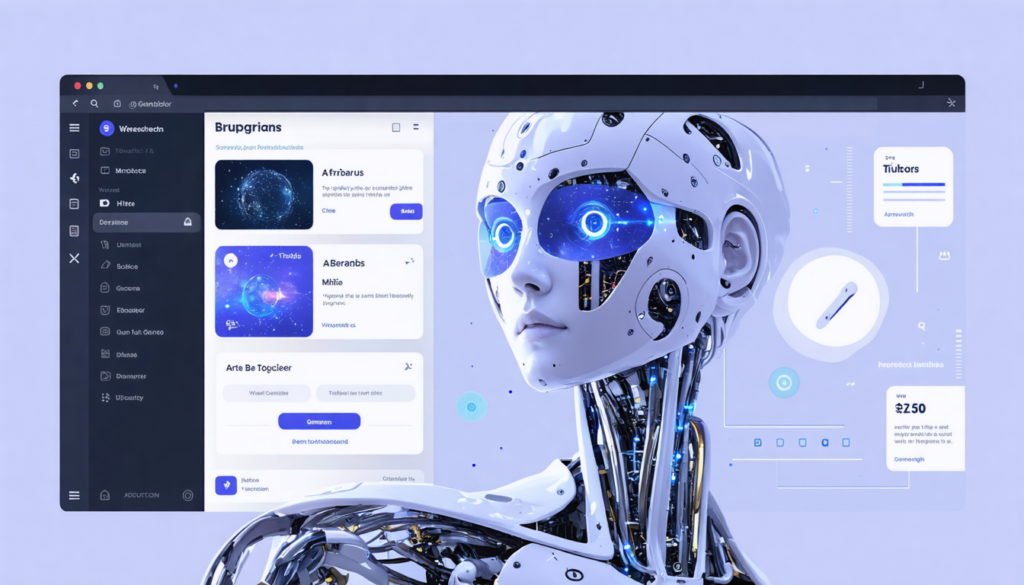
In a context where web browsing is becoming increasingly complex with the accumulation of tabs and the multiplication of information sources, Google is redefining the user experience thanks to GenTabs. Presented in December 2025, this experimental tool embodies a major breakthrough in the field of online search. Harnessing the power of artificial intelligence, notably the Gemini 3 model, GenTabs reinvents the way data is collected, organized, and utilized on the Internet. It is no longer just about launching queries but benefiting from an intelligent interface that understands your needs, anticipates your expectations, and gathers the most relevant answers in real time. This innovative project, launched via Google Labs in an experimental browser named Disco, promises smoother, more efficient, and user-centered browsing.
At the heart of this transformation, personal productivity gains a valuable ally. The tool goes far beyond simple search by integrating your browsing and conversation history to build tailor-made web applications. Whether you are preparing a trip, designing a meal planner, or developing educational resources, GenTabs adds a new dimension to the digital assistant. This advancement demonstrates Google’s ability to push the boundaries of technology and artificial intelligence, offering a future where online search becomes genuinely intuitive and personalized.
- 1 GenTabs: a new era for online search powered by artificial intelligence
- 2 How GenTabs optimizes productivity through intelligent digital assistance
- 3 GenTabs and Gemini 3: the duo that drives innovation in online search
- 4 Disco: the experimental environment unveiling the future of web browsing
- 5 Concrete examples of GenTabs usage in daily and professional life
- 6 Current challenges and limitations of GenTabs in the technological landscape
- 7 The potential impact of GenTabs on the future of online search and web browsing
- 8 Registration and access to GenTabs via Google Labs and the Disco browser
GenTabs: a new era for online search powered by artificial intelligence
The classic difficulties of web browsing—multiple tabs, loss of information, disorderly navigation—have long hindered the quest for efficiency in information search. GenTabs presents itself as an innovative response to this problem. Thanks to its architecture based on Gemini 3, a cutting-edge AI model developed by Google, this tool promises to simplify and enrich the online search experience. Instead of opening a myriad of tabs to compare different sources, GenTabs centralizes all essential data into a single, reorganized, and interactive interface.
Artificial intelligence plays a crucial role here as it analyzes not only the tabs open on the browser but also the history of conversations and previous user interactions. This allows it to understand the context and purpose of the searches beyond simple keywords. This comprehensive understanding offers more intuitive navigation. For example, if you are preparing a trip to Japan, GenTabs can create a dedicated web application with the best offers, routes, suitable accommodations, and local advice by gathering relevant data accessible online.
Another revolutionary aspect comes from the fact that GenTabs generates these personalized web applications without the user needing to write a single line of code. In other words, the technological complexity is masked by a user-friendly interface where the digital assistant becomes a true creative partner. Web browsing then becomes a task accessible to everyone, incorporating AI not just as a simple answer machine but as an agent capable of proactive and creative assistance.

How GenTabs optimizes productivity through intelligent digital assistance
Productivity and efficiency are now indispensable, both in the professional and personal spheres. GenTabs transforms long, tedious search sessions into simplified processes focused on the essentials. By automatically grouping relevant information, the tool significantly reduces the time spent juggling between tabs and applications.
This technology exploits the ability of artificial intelligence to learn from user behavior. Every interaction, every search, every piece of selected information enriches the model, offering an increasingly personalized experience. For example, a student preparing a presentation can create a GenTabs space where articles, videos, documents, and notes merge, intelligently arranged according to the theme. The tool goes even further by proposing unprecedented complementary resources, discovered in real time.
In a professional setting, possibilities are also multiple. A project manager can, thanks to GenTabs, centralize data from different teams, manage working documents, and track task progress within a unified interface. Meetings become more productive because participants have an interactive reference tool, continuously updated by the digital assistant powered by AI. This avoids information losses and facilitates rapid decision-making.
The power of GenTabs also lies in its ability to integrate various sources, whether public or private, while respecting confidentiality through customizable settings. The tool takes personal data into account, thus refining its recommendations and ensuring a smooth and secure experience. This marriage between productivity, personalization, and security transforms online search into a real lever of daily efficiency.
List of concrete advantages brought by GenTabs in productivity:
- Data centralization: gathers all information in a single dynamic place.
- Advanced personalization: adapts results and recommendations to your habits and goals.
- Time saving: reduces the need to navigate between multiple scattered tabs.
- Creation of web applications: facilitates the building of interactive tools dedicated to your specific needs.
- Simplified collaboration: data sharing and co-construction in real time with teams.
- Security and confidentiality: rigorous control of your personal data integrated into the system.
GenTabs and Gemini 3: the duo that drives innovation in online search
Considered one of Google’s major advances in artificial intelligence, the Gemini 3 model is the engine that makes GenTabs particularly performant and flexible. Unlike classic generative AIs, Gemini 3 is designed to interact directly with the web in real time, offering true dynamic synthesis of available content.
This unique ability allows GenTabs to provide constantly updated results, taking into account the latest trends, data, and news. For example, a query related to climate news will be automatically enriched with the most recent reports, studies, and articles, even a few minutes after their publication on the Internet.
The algorithms of Gemini 3 also include a deep contextual understanding of the user query. They analyze nuances, implicit intentions, and the overall framework, thus offering a smarter and more sensitive interface. This granular understanding allows the tool not only to answer the question but also to anticipate underlying needs.
Beyond its technical prowess, Gemini 3 favors an ethical use of artificial intelligence. Google is committed to integrating safeguards to prevent the dissemination of erroneous or manipulative content, and to respect copyright and data protection. This model thus represents a technological advance respectful of users and content creators.
| Feature | Description | Impact on the user |
|---|---|---|
| Real-time web interaction | Access to the latest data from the Internet | Always up-to-date and relevant results |
| Contextual understanding | In-depth analysis of user intentions | Accurate and tailored answers |
| Creation of web applications | Building personalized tools without coding | More autonomy and creativity |
| Built-in security | Respect for privacy and data | Trust and peace of mind |
Disco: the experimental environment unveiling the future of web browsing
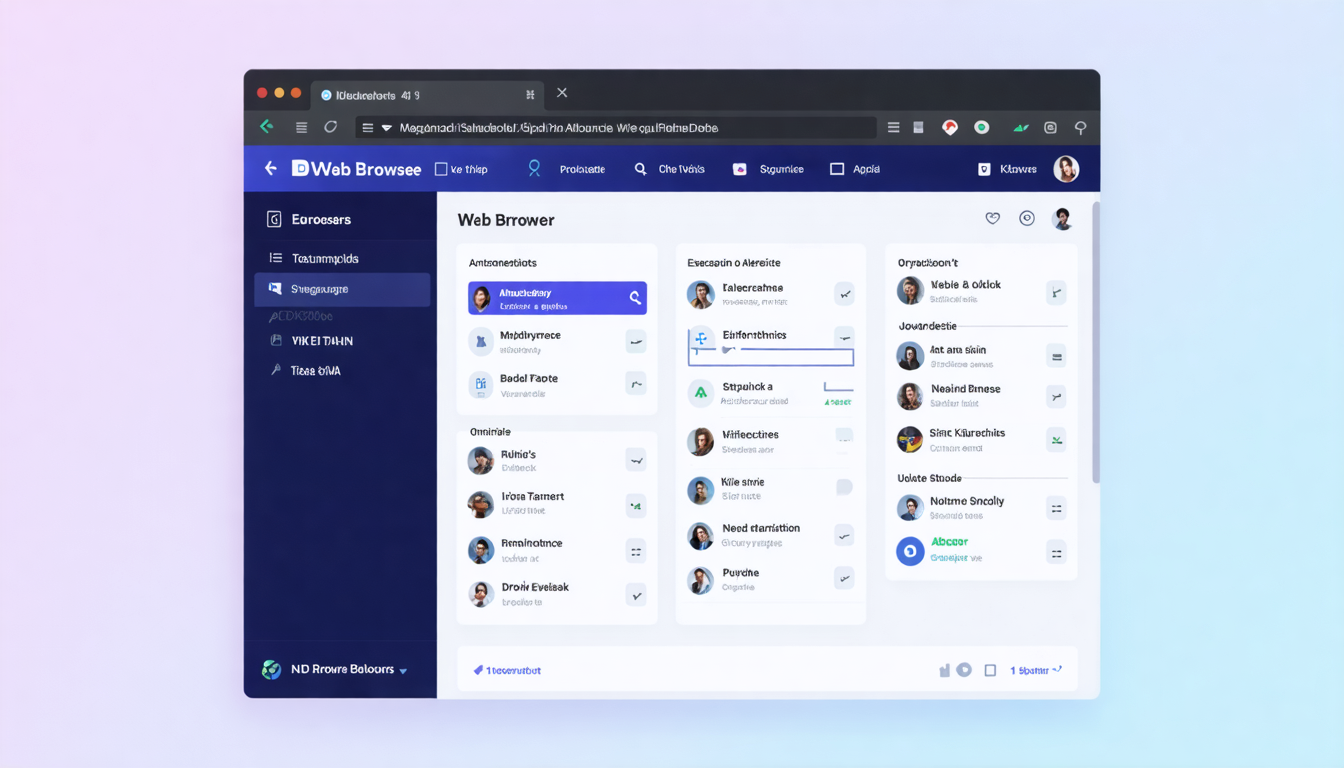
To accompany GenTabs, Google launches Disco, an experimental browser serving as a testing ground for these innovations in real-world situations. Initially available on macOS, Disco offers a simplified interface, designed for intelligent and adaptive browsing.
Disco places the user at the center of online discovery. It capitalizes on GenTabs’ capabilities to automatically organize tabs according to projects or topics while offering personalized applications assembled by AI. This experimental framework invites users to rethink their browsing habits, abandoning dispersion for a coherent and stimulating experience.
The browser also integrates advanced features such as dynamic tab grouping, enhanced contextual search, and better system resource management to ensure smoothness and speed. Every element is designed to highlight the technology and offer an intuitive, silent but omnipresent digital assistant.
Eventually, Disco could become a bridge to even more integrated forms of browsing, where the boundary between online search and direct content interaction blurs. For now, the first feedback from the Google Labs community is very encouraging, and the official launch is expected to reach a broader audience.
Concrete examples of GenTabs usage in daily and professional life
Since the experimental release of GenTabs, many users have explored the possibilities offered by this smart solution. Here are some revealing scenarios of its potential:
- Travel Planning: automated creation of a dashboard with flights, hotels, routes, reviews, and cultural tips, enriched in real time by AI.
- Meal Organization: development of weekly menus including recipes, personalized shopping lists, and nutritional suggestions.
- Educational Preparation: interactive assembly of teaching materials adapted to each level, with multimedia resources and integrated exercises.
- Professional Project Management: collaborative tracking of tasks, synchronization of documents, and automatic generation of progress reports.
- In-depth Documentary Research: aggregation and synthesis of reliable sources, thematic classification, and intelligent annotation.
These cases show how much GenTabs enhances web browsing by making it more productive and less scattered. The tool facilitates complex processes by turning artificial intelligence into a real digital assistant capable of adapting information to your specific needs.
Current challenges and limitations of GenTabs in the technological landscape
Despite its many promises, GenTabs remains in the experimental phase, which means it still has to overcome several challenges to become a mainstream tool. Major issues include managing personal data, fine understanding of user context, as well as integration with existing systems.
Privacy is a key concern. Google must ensure a high level of security to prevent the abusive exploitation of personal data used to refine results. Moreover, the AI’s ability to interpret complex queries without error is constantly improving but remains imperfect. Contextual understanding can sometimes generate inappropriate or lacking nuanced answers.
Furthermore, the variety of uses, ranging from the simple consumer to the seasoned professional, requires flexibility that Google seeks to achieve without compromising ease of use. The progressive rollout via Google Labs aims to collect user feedback to continuously correct and improve the tool.
This delicate balance between technological innovation and respecting user expectations is a challenge that Google faces with ambition, aware that transforming online search is not just a simple interface change but a cultural and functional revolution.
The potential impact of GenTabs on the future of online search and web browsing
By integrating GenTabs with Gemini 3 within online search, Google is laying the foundations of a new era where web browsing transforms into a smarter, more interactive, and personalized experience. This shift could profoundly change internet users’ behaviors and expectations towards digital assistants.
In the near future, one could imagine the gradual disappearance of simple searches in favor of tools that create tailor-made environments adapted to each user’s precise goals. GenTabs acts in this direction by offering not a raw list of results but dynamic web applications dedicated to the task.
The concept of a digital assistant will then evolve into a collaborative partner capable of following complex projects, enriching content in real time, and even anticipating next steps based on previous interactions. This transformation promises to increase productivity, enhance decision quality, and reduce the cognitive overload linked to scattered browsing.
However, this revolution also raises questions about dependence on intelligent technologies, preserving diversity of information sources, and user control of algorithms. Google’s role and responsibility within this new ecosystem will thus be essential to observe, to guarantee a balanced and ethical digital future.

Registration and access to GenTabs via Google Labs and the Disco browser
To be among the pioneers and test GenTabs, you must register on a waiting list accessible from Google Labs. This gradual rollout currently targets macOS users via the experimental Disco browser. This approach allows Google to gather a wide range of feedback from varied users to refine the experience and correct imperfections.
The choice to launch Disco and GenTabs first on macOS is explained by the desire to reach a specific audience, often more tech-savvy and accustomed to testing innovations. Participants thus benefit from early access to these revolutionary technologies while actively participating in their evolution.
Registration on the waiting list is done via a simple form where the user specifies their uses and expectations. Google then offers support to get started with GenTabs, through tutorials and a helpful community. This collaboration between the company and its users ensures a controlled ramp-up and an experience adapted to real needs.
Once the tool is stabilized and improved, a broader rollout can be expected, including other operating systems and platforms, with a refined and even more intuitive interface. GenTabs could become a standard for online search in the years to come, profoundly redefining how everyone uses the Internet.