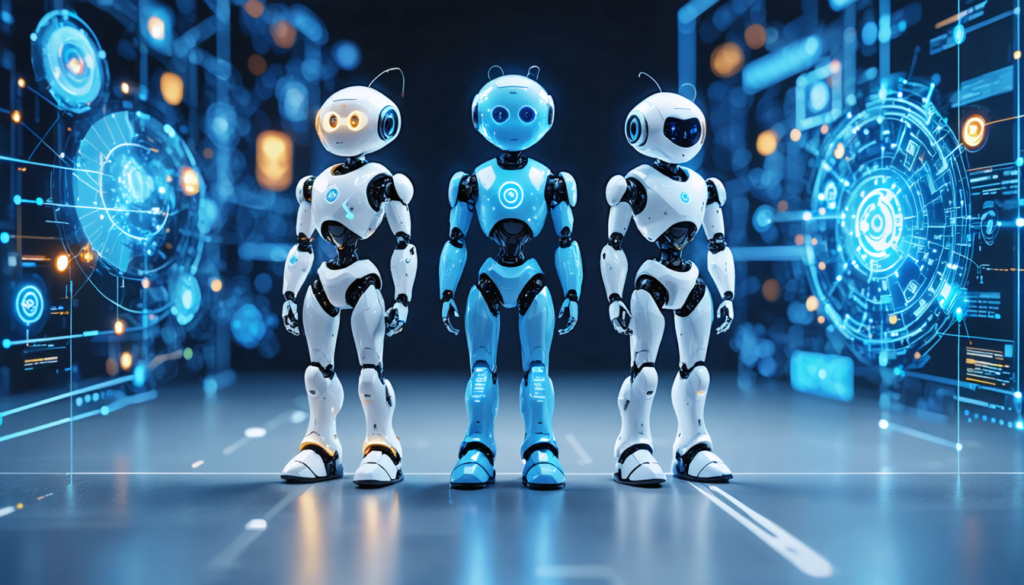
In a rapidly evolving technological universe, digital giants Google, Microsoft, and OpenAI have taken a decisive step by joining forces to create a new era in the development of artificial intelligence (AI) agents. This alliance, which brings together some of the world’s leading tech powerhouses, aims to establish interoperability between AI agents, a major challenge for the future of decentralized and collaborative artificial intelligence. Faced with the proliferation of autonomous systems that often operate in silos, this collaboration marks a significant strategic evolution by seeking to standardize exchanges and facilitate the coexistence of AI agents across different platforms. This approach takes place in a context where the need for a common language and unified protocols becomes urgent to encourage innovation while controlling the risks related to security and market fragmentation.
Since the recent establishment of the Agentic AI Foundation (AAIF) under the auspices of the Linux Foundation, Google, Microsoft, OpenAI, as well as other players like Anthropic and Amazon, have combined their efforts to build the technological and regulatory foundations of these interoperable intelligent agents. This initiative aims not only to simplify interactions between AI agents but also to encourage open technological collaboration conducive to innovation. The development of AI agents capable of freely communicating with each other, without brand or platform limitations, positions this alliance as a potential catalyst for the evolution of artificial intelligence systems in 2025.
The project indeed embodies a dual turning point: on one hand, a desire to integrate practices and protocols among major companies; on the other, an attempt at common governance in a rapidly expanding sector. An analysis of this major collaboration, its technical and economic stakes, as well as the long-term implications for the future of autonomous agents and global innovation in the field of artificial intelligence.
- 1 Agentic AI Foundation: the common foundation for innovative interoperability of AI agents
- 2 The strategic partnership between Google, Microsoft, and OpenAI to accelerate AI agent innovation
- 3 Interoperability of AI agents: what are the challenges for technology and security?
- 4 The role of collaborative innovation in AI agent development
- 5 Development of AI agents: tools facilitating creation and deployment
- 6 Technological collaboration and industrial ecosystem: what impacts for the AI market?
- 7 Concrete examples of interoperable agent integration in companies
- 8 Future perspectives and challenges for interoperable AI agents
Agentic AI Foundation: the common foundation for innovative interoperability of AI agents
The Agentic AI Foundation (AAIF) is now the heart of this cooperation between Google, Microsoft, OpenAI, and other leading technological players. Created under the aegis of the Linux Foundation, the AAIF’s mission is to develop open standards and a common language enabling autonomous AI agents to communicate and interact without friction. This technical framework aims to solve one of the fundamental problems in AI agent development: the fragmentation of protocols and interfaces.
For the industry, this approach marks a paradigm shift because it implies that agents developed by different companies can now integrate into various ecosystems. In practice, this means greater efficiency, smoother exchanges, and above all, easier access to various innovations and services. For example, an AI agent designed by Google can easily cooperate with a system developed by OpenAI thanks to these common standards.
The technical collaboration revolves around several essential pillars:
- The MCP (Model Connection Protocol) introduced by Anthropic, which facilitates connecting agents to various data sources without heavy transformations.
- The AGENTS.md guide proposed by OpenAI to structure interactions between specialized agents, particularly in niche areas like web development.
- The Goose platform implemented by Block, offering a universal interface to handle different language models with a unified developer experience.
Thanks to this structure, the AAIF is not just imagining a technological future; it is already deploying concrete tools that facilitate the implementation of interconnected AI agents while ensuring better security and more agile development. The Linux Foundation has praised this advancement as a tool promoting open collaboration and data protection in the artificial intelligence sector.
In short, the Agentic AI Foundation represents the promise of a revolution in interoperability between AI agents. It is an initiative that lights the way toward more interconnected, efficient, and easily integrable systems in professional and public environments.
The strategic partnership between Google, Microsoft, and OpenAI to accelerate AI agent innovation
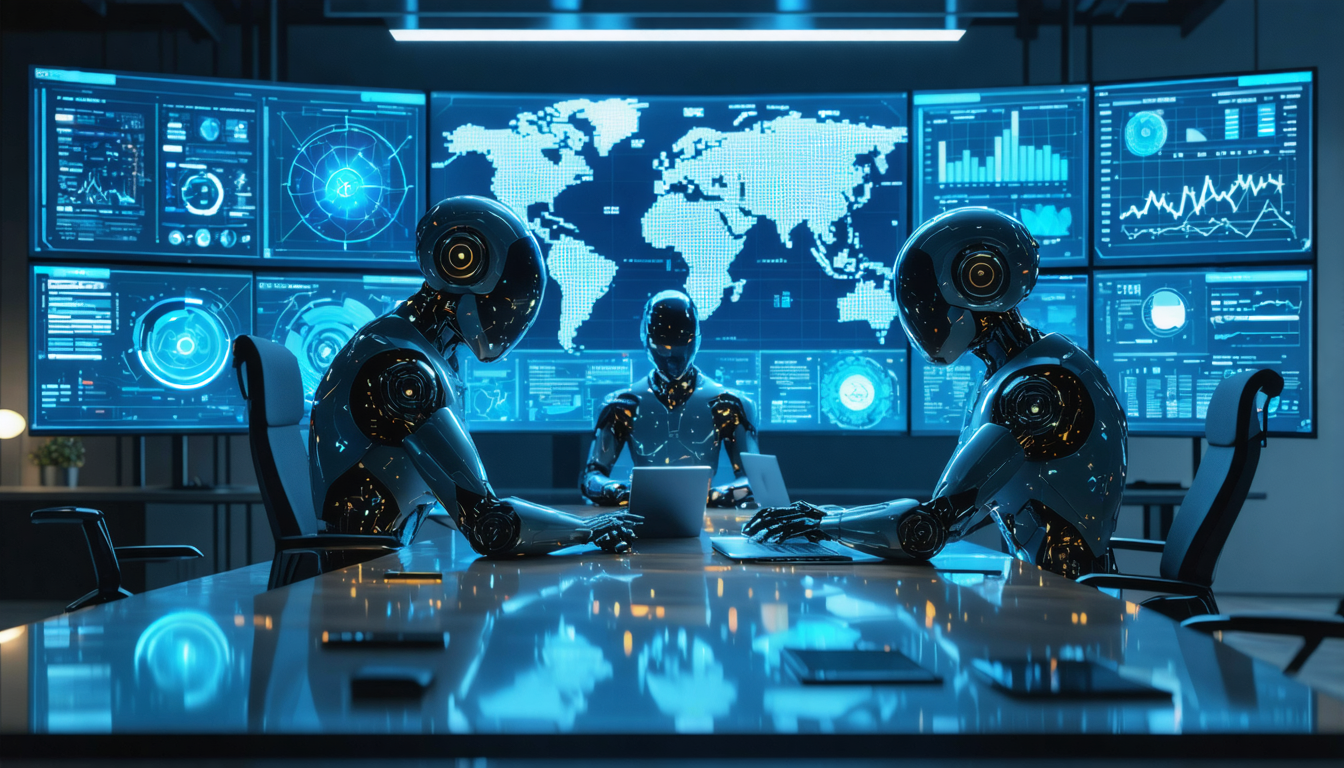
The synergy between Google, Microsoft, and OpenAI illustrates an unprecedented model of technological collaboration in the often competitive landscape of artificial intelligence. These companies, each a leader in its field, have made a strategic decision to pool their efforts to build common foundations, thus fostering faster and more coherent development of AI agents for the entire community.
Google, notably with its “Agentspace” program and its Workspace Studio platform powered by Gemini 3, positions itself as a key player in creating environments conducive to designing accessible and powerful AI agents. The company provides simplified tools that even users without advanced technical skills can use to deploy intelligent agents.
Microsoft, on its side, integrates the Agent2Agent (A2A) protocol developed by Google into its Azure AI Foundry and Copilot Studio ecosystems, demonstrating rapid and practical adoption of common standards. This choice opens the door to direct interoperability between the AI services offered by Microsoft and agents designed according to the protocol adopted by Google, guaranteeing flexibility and robustness for all developers.
OpenAI, with its experience in modeling advanced AI systems and its strong expertise in generative models, enriches this collaboration with its normative recommendations and its AGENTS.md framework, which standardizes the interaction of specialized agents. This approach aims to avoid an anarchic multiplication of proprietary languages, a likely hindrance to innovation and cooperation.
| Company | Main Contribution | Impact on the AI Ecosystem |
|---|---|---|
| Agentspace, Workspace Studio, Agent2Agent (A2A) protocol | Facilitating the creation of accessible and interoperable agents | |
| Microsoft | Integration of the A2A protocol into Azure AI Foundry and Copilot Studio | Ensuring interoperability and robustness of AI agents |
| OpenAI | AGENTS.md guide for standardizing agent interactions | Framing relationships between specialized agents for better cooperation |
This AI partnership thus proves to be an innovation accelerator on multiple levels: not only does it catalyze technological advances, but it also structures the sector to reduce fragmentation. By pooling their strengths, these companies pave the way for a more harmonious market where every stakeholder can benefit from common tools, better security, and greater efficiency in developing their agents.
Interoperability of AI agents: what are the challenges for technology and security?
The central issue driving Google, Microsoft, OpenAI, and other players to work on the interoperability of artificial intelligence agents is primarily a major technological challenge. In a world where AI agents are gradually becoming autonomous and capable of performing complex tasks, their ability to communicate with each other is essential to meet user expectations and industrial challenges.
But this communication raises many questions about security and data management. Indeed, when AI agents exchange sensitive information or interconnect with different sources, the risks of hacking, information leaks, or uncontrolled behaviors may increase. The establishment of secure and standardized protocols is therefore a prerequisite to prevent these risks while encouraging smoother collaboration between agents.
The standards proposed by the AAIF specifically incorporate these concerns: they impose strict frameworks for access control, verification of exchanges, and transparency of operations. By ensuring that each agent respects a common and adaptive security foundation, companies make sure that technological innovation does not lead to major vulnerabilities.
Moreover, poorly regulated interoperability could lead to increased market fragmentation if each player creates incompatible protocols. This situation would result in a “silo effect” where AI agents could not cooperate or benefit from others’ innovations, slowing overall technological progress. The collaboration led by Google, Microsoft, and OpenAI therefore appears as a proactive approach to avoid these pitfalls.
- Enhanced security: standardized cryptographic protocols and access controls.
- Frictionless interoperability: unified communication formats for data exchanges.
- Prevention of unwanted behaviors: automated monitoring and auditing of agents.
- Facilitation of collaboration: sharing resources and coordination on open platforms.
- Multi-platform compatibility: adapting the agent to different cloud environments and systems.
This list illustrates the concrete challenges the alliance must meet for AI agents to fully realize their potential while remaining reliable and secure. By structuring interaction between agents in this way, the initiative opens the way to more ambitious applications, such as coordinated digital assistants in enterprises, automated systems for healthcare, or large-scale collaborative projects worldwide.
The role of collaborative innovation in AI agent development
This unprecedented alliance between Google, Microsoft, and OpenAI reflects a strong trend in 2025: the need for collaborative innovation to face the growing complexity of artificial intelligence technologies. Isolated development gives way to a collective approach where knowledge sharing, tool harmonization, and co-creation become essential levers for rapid progress.
Within this framework, the Agentic AI Foundation can be seen as a true collaborative innovation laboratory. By bringing together diverse expertise, this platform fosters technical emulation that transcends company boundaries. Developers, researchers, and engineers can work on common protocols, test new approaches, and validate standards in a transparent and open process.
This dynamic generates several major benefits:
- An acceleration of AI agent development cycles through pooling of technical efforts.
- Reduction of incompatibilities thanks to jointly validated common standards.
- A conducive environment for the emergence of new features, such as the integration of multi-modal capabilities or advanced customer data management.
- Improved quality of agents through cross-testing and open expertise exchange.
- Better regulatory control via standardization that facilitates verification and certification.
These elements reflect a dual challenge: rapid innovation and reliable quality in a sector where ethical, social, and economic stakes are crucial. The AI partnership of these industry giants testifies to a shared awareness that only a collective approach will overcome these challenges.

Development of AI agents: tools facilitating creation and deployment
The progress achieved thanks to this alliance is also evident in the availability of powerful and accessible tools for AI agent development. Google Workspace Studio is a perfect example, offering companies an intuitive environment to create their own agents without requiring advanced technical background.
These platforms often integrate models like Gemini 3, which provide advanced reasoning capabilities for smarter agents capable of operating in complex contexts. Many professional users, from startups to large enterprises, can prototype and deploy agents quickly tailored to their specific needs, whether for task automation, customer support, or managing complex workflows.
Other tools, such as the universal interfaces developed by Block with its Goose system, facilitate interaction between different language models. These solutions notably allow comparing, adapting, and orchestrating multiple agents within the same environment, providing flexibility and power to developers.
The standardization generated by the AAIF also ensures that these tools comply with common protocols, simplifying maintenance and integration. It also speeds up the marketing of new applications, avoiding long delays caused by technical incompatibilities or redundant development.
- Google Workspace Studio: creation of AI agents with minimal coding and an intuitive interface.
- Gemini 3: advanced reasoning model integrated into agents for sophisticated interactions.
- Goose by Block: universal interface allowing management of multiple agents and language models.
- Azure AI Foundry: Microsoft platform integrating the A2A protocol for smooth development.
- Copilot Studio: Microsoft studio dedicated to building collaborative assistant agents.
This range of tools, combined with an interoperability strategy, redefines the framework and possibilities for AI agent development in 2025, making these technologies more accessible, powerful, and secure.
Technological collaboration and industrial ecosystem: what impacts for the AI market?
Beyond the purely technical aspect, the partnership between Google, Microsoft, OpenAI, and other AAIF members also reshuffles the cards of the industrial ecosystem around artificial intelligence agents. The establishment of common standards directly contributes to creating a more integrated, open, and competitive market.
Until now, each player developed proprietary solutions with often incompatible languages and protocols. This generated a siloed effect where client companies had to choose providers depending on the proposed ecosystems, limiting flexibility and freedom for innovation. The emergence of the AAIF could thus liberate this market by offering a neutral common framework fostering plurality.
However, the current composition of this alliance, dominated by American companies, raises questions about a possible technological hegemony over the established standards. The notable absence of European or Asian players could lead to an imbalance in the direction taken by the standards and long-term domination of the practices imposed by this initial group.
Here are some probable consequences of this dynamic:
- Acceleration of AAIF standard adoption by companies and developers.
- Harmonization of security and development practices in the global market.
- Possible strengthening of technological leadership by founding members in the AI sector.
- Challenges for external players who will need to align with these norms or risk marginalization.
- Opportunity for broader collaborations with the rise in standards.
This table summarizes the main issues to consider:
| Aspect | Opportunity | Risk |
|---|---|---|
| Interoperability | Integrated technological ecosystem and facilitated innovations | Fragmentation if not uniformly adopted |
| Security | Shared standards improving protection | Potential vulnerabilities if poorly implemented |
| Governance | Shared leadership and open collaboration | Possible domination by founding actors |
| Innovation | Acceleration of projects thanks to common standards | Barriers for latecomers |
All these elements show how inter-company standardization, driven by this unprecedented collaboration, is a strategic issue for the future of AI agents and market balance.
Concrete examples of interoperable agent integration in companies
To illustrate the tangible benefits of this progress, several practical cases show how interoperable AI agents are transforming professional environments in 2025. From logistics management to customer assistance, deployed intelligent systems gain efficiency and flexibility thanks to standardized exchanges.
Imagine an international company specializing in the supply chain. With AI agents from Microsoft and Google working together, stock optimization, demand forecasting, and delivery management processes become smoother. Real-time information exchange helps avoid shortages and anticipate incidents with greater accuracy.
In healthcare, several hospitals adopt specialized agents capable of interacting between different software solutions to coordinate patient follow-up, medical data analysis, and clinical decision support. Interoperability thus facilitates the convergence of expertise and data, offering better service to patients while respecting medical data security requirements.
Finally, in the service sector, personal assistant agents integrated into customer support platforms now use common protocols to transfer complex requests to other specialized agents, avoiding long waits and ensuring better response quality. This intelligent network creates more intuitive and dynamic user experiences.
- International logistics optimization with interoperable agents.
- Advanced coordination of care and analyses in hospital settings.
- Automated customer support via communicating agents across multiple platforms.
- Integrated multi-source data management for a global view.
- Acceleration of decision-making processes through smart information cross-referencing.
Future perspectives and challenges for interoperable AI agents
The implementation of interoperable AI agents is far from an end in itself. While the AAIF and its members have succeeded in laying the essential foundations, many challenges remain to ensure global and sustainable adoption of these standards in a rapidly progressing sector.
Among these challenges, broader governance appears as a key issue. If the alliance remains dominated by American powers, it will ultimately need to open up to a wider involvement of international players, notably European and Asian, to ensure balance in standards definition. Such openness would be essential to promote more universal adoption and limit the risks of fractures between different markets.
On the technical side, the constant evolution of artificial intelligence models also implies continuously adapting AAIF protocols and standards to integrate innovations such as multimodal intelligence and real-time data management. The challenge will be to maintain a stable framework while remaining flexible enough not to hinder progress.
Finally, ethical and regulatory questions related to AI agents, notably regarding transparency, responsibility, and user protection, will be at the heart of upcoming debates. The collaborative structuring initiated by this alliance will need to be accompanied by an open dialogue with public authorities and civil society to establish lasting trust.
The future of interoperable artificial intelligence agents thus looks promising, provided that the players continue their efforts in a balance between technological innovation, protection, and inclusive governance.