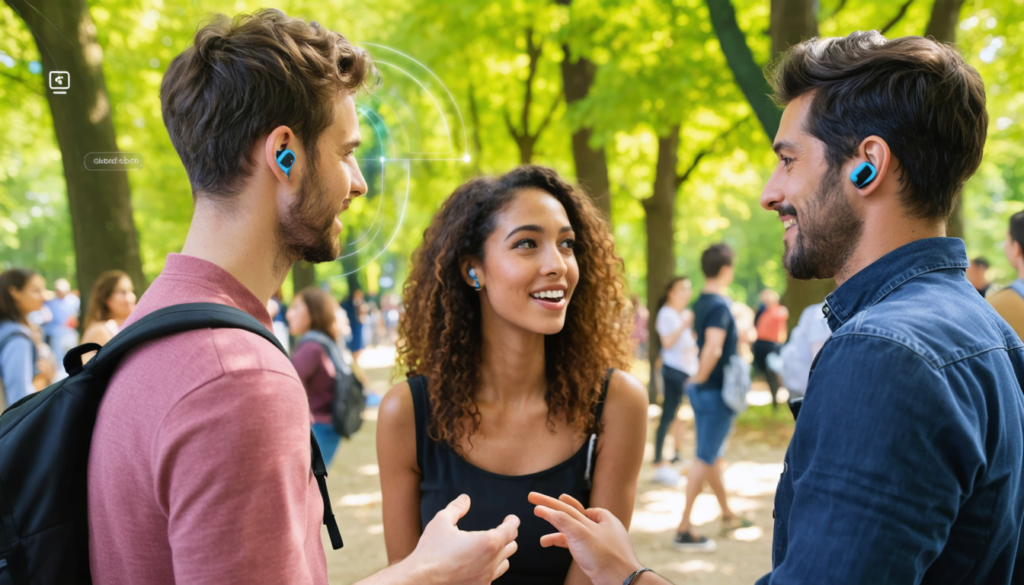
In a world where communication increasingly transcends linguistic borders, technology plays a crucial role in bringing people closer together. Google, always at the forefront of innovation, is taking a new step by making its real-time translation feature accessible to all Android-compatible headphones. Until now reserved exclusively for Pixel Buds users, this advancement, launched in beta at the end of 2025, facilitates a more natural, smooth, and intuitive communication experience during multilingual discussions. This extension aims not only to simplify daily exchanges but also opens up multiple possibilities in professional, educational, and cultural contexts worldwide.
Equipped with the ability to convey not only meaning but also intonation and language-specific nuances, live audio translation democratizes access to a global and instant conversation. It relies on Google’s Gemini artificial intelligence, which ensures a deep understanding of idiomatic expressions, slang, and social context, making the listening and interaction experience closer to reality. Today, more than 70 languages are available, and Google already plans extensions to other platforms, thus promising a future where the language barrier becomes an increasingly surmountable obstacle.
- 1 Real-time translation in Android-compatible headphones: a revolution for audio communication
- 2 How Google uses Gemini to perfect live translation in Android headphones
- 3 Educational possibilities offered by instant audio translation on Android
- 4 Technical challenges behind the deployment of real-time translation on Android
- 5 Cultural and social impacts of widespread live translation via Android headphones
- 6 Extension planned to other platforms and new markets in 2026
- 7 The future of global communication: advantages and limits of connected headphones for instant translation
- 8 Integration of real-time translation in the Android technological landscape: impact on developers and users
Real-time translation in Android-compatible headphones: a revolution for audio communication
With the rise of mobile technologies and voice assistants, uses related to instant translation are witnessing unprecedented popularity. Google introduced its live translation feature a few years ago, but until 2025, it was strictly reserved for Pixel Buds users. This limitation considerably slowed the technology’s spread, confining this advanced experience to a limited circle. The recent rollout of this feature on all Android-compatible headphones marks a decisive turning point.
Practically, thanks to this innovation, users can now wear any model of headphones operating on Android and benefit from simultaneous translation during conversations in multiple languages. Tones, rhythm, and even silences are taken into account in the translation process, making exchanges more natural. Imagine a French traveler talking with a local in Mexico: words are translated in real time, the speaker’s emphasis is preserved, thus avoiding misunderstandings often associated with mechanical translation.
This advancement reflects a major evolution in the voice interface of mobile devices. The integration of live translation is no longer just a gadget; it becomes a key tool that improves the quality and accessibility of international communications. The impacts are multiple, notably:
- Facilitation of exchanges between non-multilingual interlocutors: in professional or tourist environments, the language barrier fades away.
- Improved user experience thanks to faithful rendering of tone and emotions.
- Multiplication of uses in education, cultural events, or even consumption of foreign audio content.
It is understood that this deployment not only promotes interpersonal communication but also paves the way for language learning facilitated by real-time sound immersion. This newfound autonomy for Android users constitutes a genuine technological leap towards communication without borders.
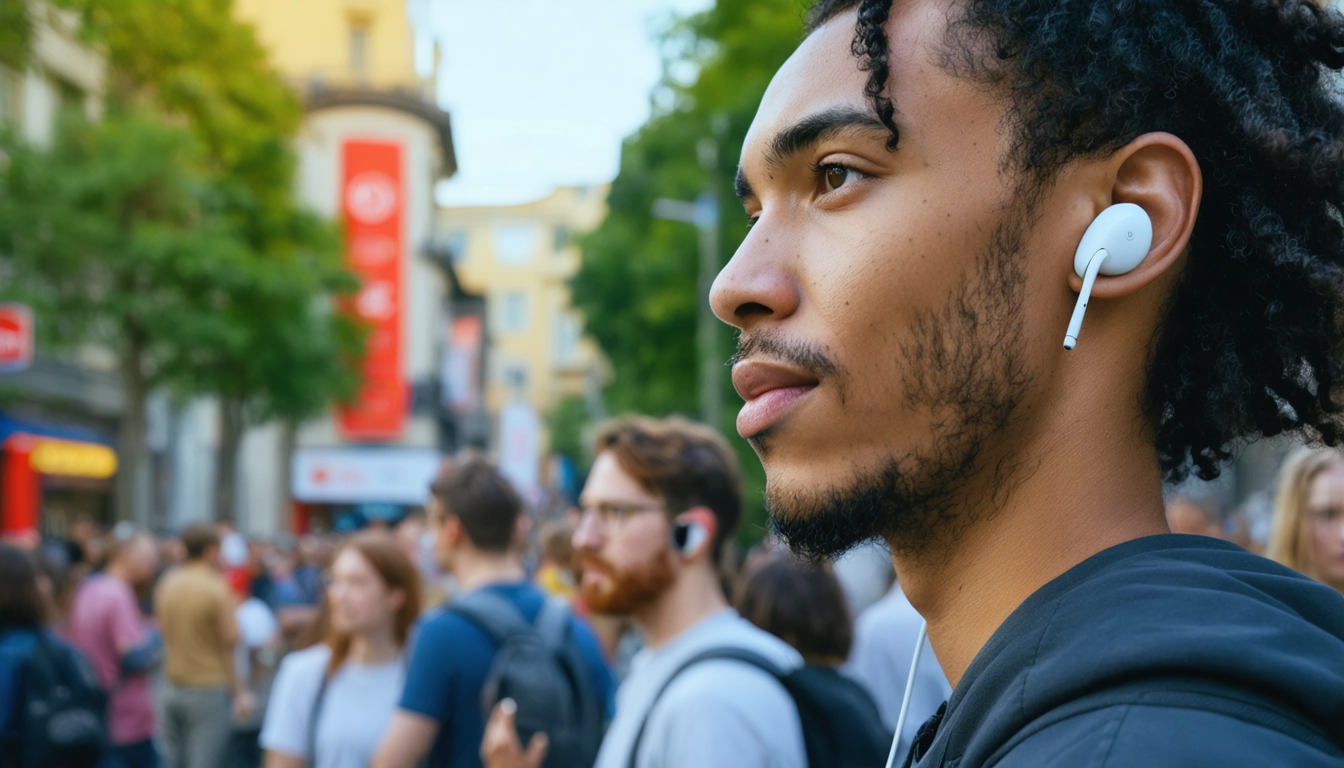
How Google uses Gemini to perfect live translation in Android headphones
At the heart of this technological innovation is Gemini, the advanced artificial intelligence developed by Google. Unlike traditional translation systems that often operate on a literal and segmented basis, Gemini integrates a deep understanding of context, idiomatic expressions, and slang, essential elements for authentic communication.
With Gemini, audio translation no longer focuses simply on words, but on meaning and fluidity. It adapts to the dynamics of conversations, recognizing interruptions, intonation variations, and even cultural nuances specific to each language. For example, a familiar expression in American English used during a conversation can be instantly understood and rendered in the target language with its natural equivalent, rather than a raw translation that might cause confusion.
The integration of Gemini into Android-compatible headphones also concerns the quality of the user experience. Real-time translation preserves the tone and style specific to each speaker, an advance that transforms audio translations into genuine human dialogues. This progress is justified by an AI capable of analyzing not only syntax and semantics but also the emotions behind the words.
This positioning on a lively and dynamic translation distinguishes Google in a sector where most solutions until now had been limited to cold and mechanical exchanges. Gemini is part of a global human artificial intelligence strategy, which goes far beyond simple linguistic mastery and aims at authentic and fluid communication between people speaking different languages.
Currently, this technology is deployed in beta in several countries such as the United States, Mexico, and India, areas with strong linguistic densities and where multilingual interactions are frequent. The success of these initial tests will likely condition its international expansion and adaptation to more devices.
Educational possibilities offered by instant audio translation on Android
Beyond simple communication, this Google innovation also fits into a language learning perspective. Real-time translation, available on Android-compatible headphones, proves to be a powerful tool for students and anyone seeking to improve their oral comprehension of a foreign language.
Until now, language learning through traditional platforms involved predominantly visual and written use. With instant audio recognition and translation, users have at their disposal a new immersive method that allows active listening practice in almost natural conditions. Pronunciation errors can be quickly corrected through personalized feedback, a feature integrated into Google Translate thanks to Gemini AI. This method facilitates regular and more motivating learning.
The 20 new countries added to the platform in 2025 now benefit from a wide range of languages to learn, including English, German, and Portuguese. Students can thus follow complete, even complex, conversations directly via their headphones, enabling genuine linguistic immersion without leaving their daily environment.
It is important to note that this innovation fits into a global ecosystem that brings this experience closer to specialized applications like Duolingo while relying on the power and flexibility of Google Translate. The combined presence of real-time translations and integrated educational tools creates a dynamic learning environment accessible to all.
Here are some concrete benefits of this technology in learning:
- Personalized tracking of progress, with regular pronunciation analysis.
- Real-time assistance to understand idiomatic nuances often difficult to master.
- Opportunity for practice through simulated translanguaging conversations.
- Encouragement of regularity through adapted notifications and reminders.

Technical challenges behind the deployment of real-time translation on Android
The technical success of such an ambitious function relies on several complex challenges to be solved, especially in the context of real-time audio translation on heterogeneous Android headphones. Google had to overcome multiple obstacles to guarantee an optimal experience quality.
First, the variability of Android-compatible headphones constitutes a critical point. Each model has different characteristics in terms of audio quality, transmission latency, and local processing capacity. Ensuring that live translation works with a wide range of devices represents considerable optimization work, combining precise software adjustments with adaptive algorithms.
Next, managing real-time audio flow requires significant computing power coupled with very low latency. The translation must indeed occur almost instantly so as not to disrupt the conversation dynamics. Google has developed sophisticated AI and deep learning algorithms integrated into the Google Translate app to meet this challenge, minimizing the delay between sound emission and translated output.
Another difficulty: maintaining the naturalness of tone and context, which implies complex analysis of vocal data, speed variations, and emotions. This “human” rendering requires fine synchronization between audio processing, translation, and speech synthesis, also taking into account the capacity of the mobile or Wi-Fi network used.
The table below summarizes these challenges as well as the solutions adopted to overcome them:
| Technical challenge | Description | Implemented solution |
|---|---|---|
| Heterogeneous headphone compatibility | Variety of models, different audio quality and hardware capacity | Software adaptation and AI algorithm optimization |
| Low translation latency | Need for ultra-fast processing for smooth conversation | Integrated deep learning algorithms and local processing |
| Maintaining tone and emotional context | In-depth analysis of voice and emotional nuances | Audio-translation-speech synthesis synchronization with AI |
| Mobile network status | Connection variability potentially affecting audio streaming | Adaptive streaming management and temporary local storage |
These advances confirm that Google is betting on strong technical performance so that real-time translation is integrated smoothly into daily life, with a qualitative user experience accessible to all.
The democratization of real-time translation in Android-compatible headphones does not just change the technological landscape; it will profoundly influence our modes of communication, relationships, and our relationship to other cultures. This upheaval thus raises major questions in the cultural and social fields.
Thanks to this technology, language barriers almost instantly disappear, allowing direct interaction between people of different cultures without the need for an intermediary. This new accessibility promotes diversity of exchanges while reducing misunderstandings linked to approximate or incomplete translations. For example, in an international event context, participants can interact in real time without preparing interpreters or translated versions in advance. This stimulates more spontaneous and inclusive communication.
At the same time, live translation inaugurates a deep dialogue with the richness of local languages and specific expressions. By making possible the understanding of literary nuances or slang via Gemini AI, this technology brings a better appreciation of cultural differences. Moreover, it could also revive certain linguistic usages by encouraging their maintenance in daily life, thanks to increased recognition and their integration into global communication.
However, this advancement requires increased vigilance on several fronts:
- Respect for cultural identities: avoiding translation that standardizes or impoverishes specificities.
- Privacy protection in translated conversations.
- Management of technological dependence to avoid devaluing language learning.
These questions will need to be integrated into usage policies while maximizing cultural and social benefits. Technology, when used judiciously, could become a genuine factor for world peace and intercultural cooperation.

Extension planned to other platforms and new markets in 2026
After an initial testing and deployment phase focused on the United States, India, and Mexico, Google plans to extend its real-time translation technology to new territories, with a gradual rollout starting in 2026. This extension will broaden the user base and strengthen the presence of live translation in linguistically diverse areas.
Moreover, even though real-time translation is currently reserved for Android headphones, the American giant announces upcoming availability on iOS, thus extending its impact to an even wider audience. This transition is part of a strategy aiming to make this technology as accessible and universal as possible.
The initially targeted markets will be those with very high linguistic variety and mobility, such as parts of Europe, Africa, and Southeast Asia. For these regions, live translation will greatly facilitate economic and tourism exchanges, as well as interpersonal communications in diverse environments.
In summary, one can anticipate:
- An increase in users thanks to iOS compatibility.
- Linguistic diversification with the integration of new local languages.
- Strengthening of educational features adapted to new uses.
These developments will help reinforce Google’s position as a leader in real-time audio translation and in the democratization of this technology.
The future of global communication: advantages and limits of connected headphones for instant translation
The generalization of real-time translation in Android-compatible headphones opens an unprecedented panorama for human communication. Among the major advantages are easier access to international exchanges, reduced costs related to interpreters, and greater autonomy for all actors involved in multilingual conversations. This technological progress could notably transform tourism, international recruitment, and commercial negotiations.
However, several limitations also deserve consideration. For example, the quality of translation still depends on the algorithms and databases on which the artificial intelligences rely. Less documented languages or those with high dialectal diversity risk suffering from lower accuracy. In some cases, errors or misunderstandings can cause confusion.
Furthermore, the trust placed in technology could unintentionally reduce the effort involved in learning foreign languages, a potential obstacle to developing fundamental intercultural skills. Connected headphones, although efficient, do not replace deep and nuanced knowledge of a culture and language.
Finally, the issue of confidentiality remains central. Transmitting real-time conversations via cloud servers requires solid personal data protection. Google will need to maintain high security standards to reassure its users and prevent any risk of unauthorized listening or hacking.
In summary, the future of this technology will depend on the balance between innovation, reliability, and respect for humans as essential actors of communication. Connected headphones equipped with live translation are set to play a key role in linguistic mobility, provided a qualitative and secure experience is preserved.
Integration of real-time translation in the Android technological landscape: impact on developers and users
The extension of real-time translation to all Android-compatible headphones also changes the technological framework of the Android ecosystem. For developers, this opens new perspectives in terms of integration and innovation around voice applications and intelligent assistants. They can now design richer services that leverage the power of Google Translate APIs, notably in the field of instant audio translation.
Developers thus have access to powerful tools to build multi-language communication applications integrated directly into the Android user experience. They can create platforms dedicated to conferencing, online video games, or distance learning, where the language barrier will no longer be an obstacle.
For users, this progress translates into better accessibility to powerful language services without the need for specific or expensive hardware. Integration into the Google Translate app allows for simple and quick activation, making real-time translation a mainstream feature, useful daily and in various situations.
A list of major benefits for developers and users:
- Simplified access to advanced audio translation APIs.
- Ability to create applications integrating instant translation for multiple interlocutors.
- Unified user experience across different Android devices and services.
- Dynamic feature updates directly via the Google Translate app.
These improvements strengthen Android’s position in the field of voice and language technologies, while offering innovative uses that meet the challenges of global communication.