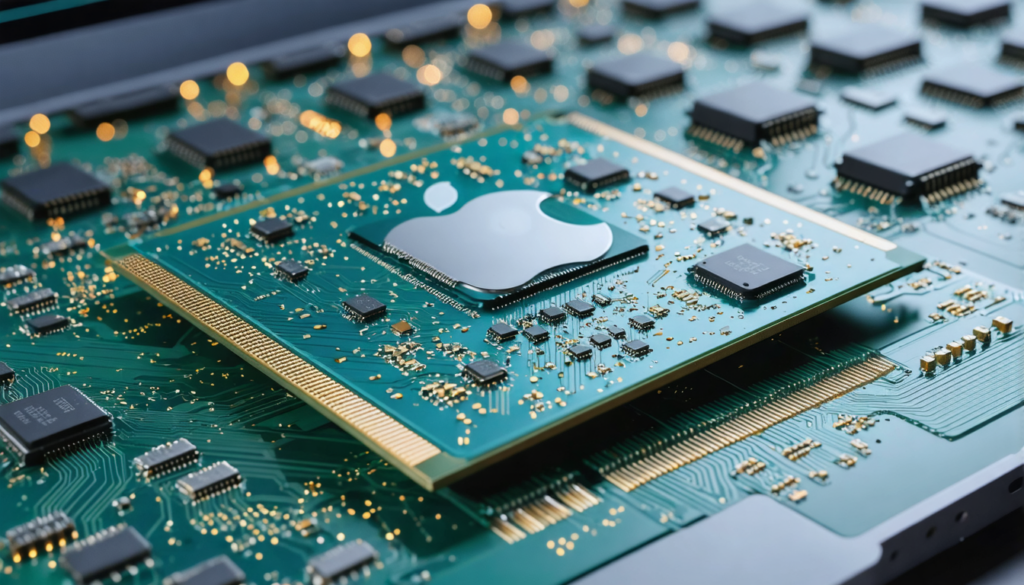
The global RAM crisis reaches a new milestone in 2026, causing a shockwave in the electronics industry and the global supply chain. Random-access memory, an essential component for the fast and smooth operation of connected devices, is now at the heart of an unprecedented shortage. Apple, the undisputed tech giant, long shielded from these fluctuations, now faces a major challenge: the surge in RAM prices threatens its business model and could directly impact the production cost of its flagship products, notably the iPhone. This alert prompts a deep reflection on the balance between innovation, profitability, and accessibility in a strained global market.
While Apple reported exceptional financial results in the fourth quarter of 2025, with net profit climbing to 42 billion dollars thanks to robust sales of iPhone, iPad, and a significant increase in digital services, warning signs related to the component shortage caught the attention of markets and consumers. CEO Tim Cook has, for the first time, acknowledged that rising costs related to RAM could soon be reflected in the pricing grid of upcoming iPhone and MacBook models.
In this expanding crisis environment that could last until 2028 according to some experts, Apple is at a strategic crossroads: absorb cost increases at the risk of reducing margins, or raise device prices, which could dampen demand in an already pressured market. This panorama highlights the tensions and vulnerabilities of a technology industry dependent on complex global supply chains, where even a minor malfunction spreads rapidly, directly affecting consumers.
- 1 The real causes of the global RAM crisis and their impact on Apple
- 2 Apple facing the price surge: absorption strategies and risks for consumers
- 3 Apple’s supply chain facing the crisis: detailed management and forecasts
- 4 Impact of the RAM crisis on consumers and the global technology market
- 5 Prospects for the evolution of the global RAM crisis and its future impact on Apple
- 6 Financial consequences and Apple’s stock market strategies facing the RAM crisis
- 7 Impact of the crisis on technological innovation and product development at Apple
The real causes of the global RAM crisis and their impact on Apple
The global RAM crisis in 2026 is not the result of an isolated incident but rather the outcome of a combination of structural and cyclical factors that have weakened the balance of the global semiconductor market. This shortage hits the entire electronics sector hard, and Apple, despite its dominant position, suffers repercussions with increasing intensity.
Exponential demand facing limited supply
For several years, demand for RAM has exploded due to the rise of connected products and the massive digitization of services. Smartphones, tablets, laptops, connected objects, but also automobiles and network infrastructures, require ever-increasing volumes of RAM and flash memory. This growth has not been accompanied by a proportional increase in production capacities. Building new factories represents a colossal investment requiring several years before producing at large scale, creating a bottleneck effect.
This dynamic inevitably leads to price increases, amplified by speculation and geopolitical tensions. For example, some key suppliers like Samsung and SK Hynix announced price hikes of 80% to 100% starting January 2026, causing a shockwave in the global market.
Apple’s dependence on strategic suppliers
Apple has long benefited from long-term agreements (Long-Term Agreements – LTA) with its memory suppliers, ensuring stable prices and priority supply. However, these contracts are expiring, and the Cupertino firm is facing an inevitable renegotiation context in a tense market. The impact is twofold:
- Increased production cost: Higher prices for RAM and SSDs raise the unit costs of each device.
- Risk of shortage or delay: Difficulty securing sufficient volumes may cause supply delays, notably for recently launched MacBook Pros.
This situation forces Apple to reconsider its procurement strategy and explore new avenues, such as increased use of its own in-house chips to offset part of the price surge by optimizing internal components.
Apple facing the price surge: absorption strategies and risks for consumers
Aware of price sensitivity and committed to its reputation as an innovative but accessible company, Apple is exploring several strategies to manage the increase in production costs without sharply impacting its customers. This approach balances both financial requirements and brand image.
Partially absorbing the cost increase
An option favored by Apple is to cut its margins to keep base prices of its products stable, especially the standard configurations of the iPhone 18 expected in September. This approach relies on optimized supply chain management, innovation in in-house chip manufacturing, and temporary agreements with some strategic suppliers.
For example, the C1 modem of the 16th generation iPhone includes technical innovations saving about 10 dollars per unit. Without these advances, the iPhone’s price would already have experienced a larger surge. Multiplying these micro-savings over millions of devices helps partly offset the increase caused by RAM memory.
Targeted price increases for high-end configurations
However, this absorption policy cannot be extended to all configurations. Models with higher storage capacities or Pro and Ultra versions are expected to see their prices rise, reflecting the actual increase in flash and RAM memory prices. This policy is a compromise aimed at balancing profitability and customer satisfaction.
- The new MacBook Air M5 and MacBook Pro M6 could for example face price increases exceeding 10% on their most equipped versions.
- The iPhone Fold and iPhone 18 Pro will likely be affected by price increases, a direct consequence of the component price surge as well as incorporated innovations.
Apple’s supply chain facing the crisis: detailed management and forecasts
Apple is renowned for excellence in managing its supply chain, a key competitive advantage in a sector as dynamic as technology. Nevertheless, the global RAM crisis imposes new constraints that test this expertise.
Long-term strategic planning
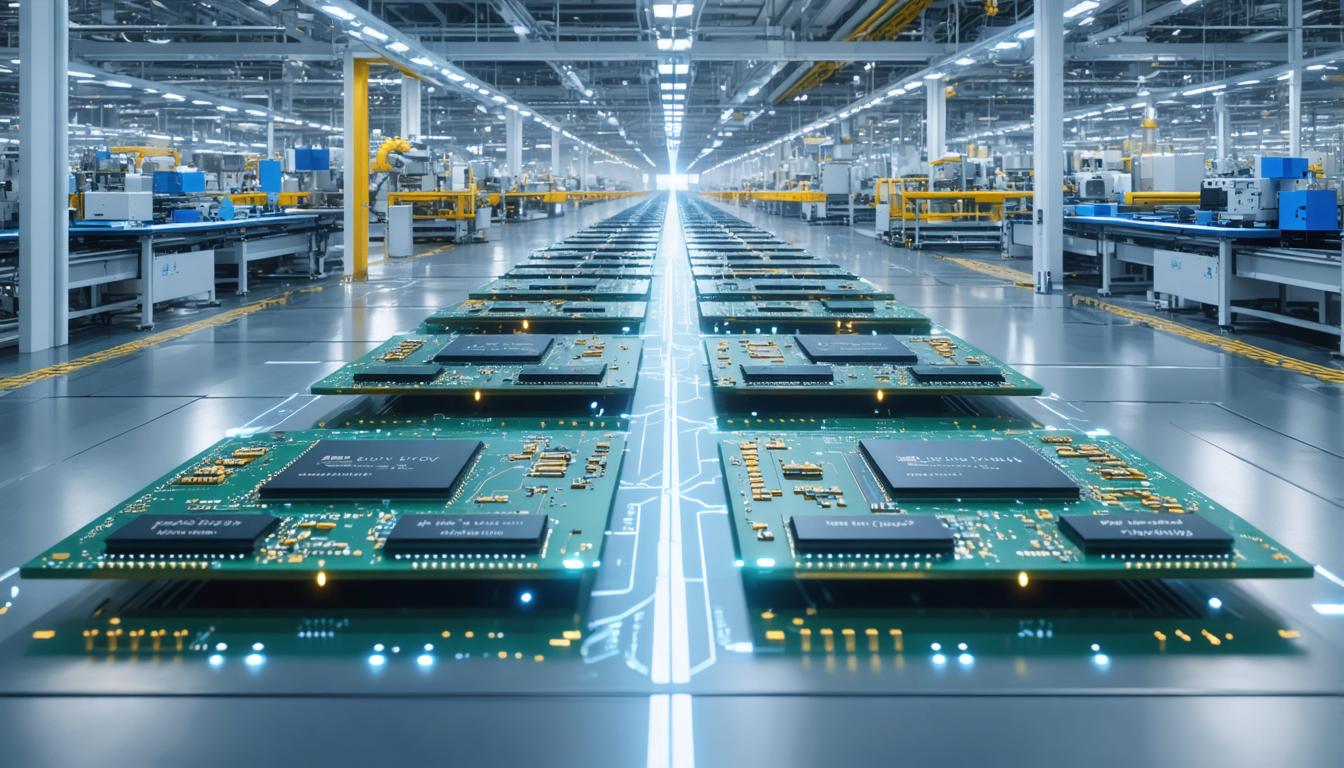
To limit the effects of the shortage, Apple has consolidated its RAM stockpiles, ensuring supply for several months, even one to two years for some key components. This anticipation allows temporary management of the crisis without halting assembly lines or major delays in marketing.
Current stocks leave a temporary margin, especially for laptops, which explains why some market-available products have not yet seen price increases. However, once these reserves are depleted, real inflation will be felt.
Technological optimization and diversification of suppliers
Simultaneously, Apple is diversifying its suppliers and intensifying the use of its own technologies, such as the M5 and M6 chips, to improve performance while reducing dependence on costly external memory. This vertical integration strategy aims to minimize vulnerabilities to global market fluctuations.
Moreover, the company is working on innovations in memory and storage, exploring alternatives such as faster non-volatile memory or advanced compression technologies to reduce physical RAM needs.

Impact of the RAM crisis on consumers and the global technology market
The rise in component prices, particularly RAM, directly affects final prices on the global market. This crisis impacts not only Apple but also all players in the electronics sector, altering consumption and competition dynamics.
Price increases for Apple devices: consequences for the customer?
For the consumer, the prospect of a more expensive iPhone represents a significant change in a context where prices were generally stable from one generation to the next. This evolution could curb purchasing intent, especially among budget-conscious users, and increase the perception of technology as increasingly elitist.
Pro and Ultra products with revised upward prices risk becoming less accessible, while basic configurations could maintain reasonable prices thanks to Apple’s efforts. This segmentation thus highlights a risk of widening inequalities in access to technology.
Consequences on the global market and competition
This crisis accelerates market consolidation around players capable of absorbing these increases, strengthening the weight of large companies like Apple. Smaller manufacturers, often financially more fragile, could suffer more from the price surge, reducing diversity and competition in the market.
| Consequences | Impact on Apple | Effect on the global market |
|---|---|---|
| Increased production costs | Pressure on margins, possible price increase | Widespread rise in the price of electronic devices |
| Supply disruptions and delays | Extended delays for certain key products | Reduced availability of new technologies |
| Increased price segmentation | Higher prices on high-end models | Widening gap between entry-level and premium |
| Innovation in memory and in-house chips | Cost optimization and differentiation | Competitive pressure on traditional suppliers |
Prospects for the evolution of the global RAM crisis and its future impact on Apple
As the global economy tries to adapt to this unprecedented situation, the prospects for the RAM crisis remain uncertain, oscillating between hopes of stabilization and risks of worsening. For Apple, managing this crisis represents a real strategic questionnaire with multiple stakes.
Forecasts on price trends and shortage duration
According to analyses by suppliers like Micron, the global shortage could extend until 2028, or beyond if new bottlenecks emerge. This situation demands constant vigilance and rapid adaptability to prevent the price surge from becoming sustained.
In this context, existing stocks, still significant at Apple, will probably not be sufficient to cover all needs from the end of 2026 or early 2027. Pressure could intensify, pushing the company to revise its pricing policy and technological innovation model.
Expected innovations to mitigate the crisis impact
To face these challenges, Apple is investing in research and development, with projects targeting more efficient, less expensive memories better integrated with in-house chips. Collaboration with suppliers to develop innovative materials and processes is also central to their strategy.
For example, new generations of non-volatile or hybrid memories could significantly reduce dependence on classic RAM. Furthermore, better software management and advanced memory optimization algorithms will also be deployed to improve performance without requiring hardware increases.
Financial consequences and Apple’s stock market strategies facing the RAM crisis
The dilemma Apple faces is also financial. Between preserving profitability and satisfying customers, the Cupertino firm must navigate complex waters. The issue of margins, dividends, and stock valuation lies at the heart of strategic decisions.
Increased pressure on margins and profits
With the RAM price surge, Apple could see its margins decrease if it chooses to absorb the costs without passing on a significant share to consumers. This strategy, while beneficial for customer loyalty, limits the extent of profits returned to shareholders.
This financial tension is reflected in quarterly results evolution and market expectations, which scrutinize any indication of a more lasting financial impact linked to the shortage.
Price adjustment scenarios and strategic communication
Rumors circulate about a possible gradual price adjustment, notably on the most advanced models. Apple seems to adopt a cautious stance, preparing customers for this eventuality through measured communications during conference calls or public events.
- Maintain a stable price policy for entry-level products.
- Slightly increase prices for Pro, Ultra, and high-configuration devices.
- Improve communication to explain the reasons for the increase, highlighting innovations and optimization efforts.
Ultimately, this stock market strategy aims to preserve brand image while ensuring financial balance facing the crisis.
Impact of the crisis on technological innovation and product development at Apple
Beyond economic aspects, the global RAM crisis deeply influences Apple’s innovation trajectory, stimulating deep reflection on design, performance, and durability of future devices.
Redesigned architectures and component optimization
To offset the cost surge, Apple is investing heavily in designing in-house chips capable of reducing RAM consumption without compromising performance. These optimizations not only limit price increases but also strengthen technological independence from external suppliers.
The development of the M5 and M6 chips, for example, illustrates this integration and efficiency commitment, where each component is designed to maximize performance while reducing the weight of external memory on total cost.
Software innovations to maximize RAM usage
Apple is also working on system and software evolutions aimed at optimizing memory management in iOS, macOS, and other environments. This software approach helps mitigate hardware needs and extend device lifespan while offering a smooth user experience.
Additionally, these software innovations can reduce indirect costs related to RAM by lowering hardware requirements, fitting perfectly with the overall strategy to manage the shortage effects.