
On the French energy market, the year 2025 is marked by a proliferation of attractive promotional offers proposed both by the major historic suppliers and by emerging players in the sector. EDF, Engie, TotalEnergies, as well as alternative providers like Ohm Énergie or Planète OUI, are multiplying campaigns to attract new customers. With discounts reaching up to 15% on the kWh price or announced savings of up to 60 euros per year, these offers seem to directly appeal to an audience looking for solutions to lighten their gas and electricity bills. However, behind these promotions displayed in large print, many consumers face hidden traps: limited durations, restricted eligibility conditions, and often incomprehensible complex pricing. In a context where controlling energy expenses is crucial, it becomes essential to understand the subtleties of these offers to avoid unpleasant surprises.
Over the months, several families have reported experiences where initial discounts gave way to higher rates, notably after the first year of the contract. This creates a rapid disillusionment phenomenon, reinforced by a lack of transparent information on contractual clauses. Between “trap discounts” and sometimes hidden additional fees, vigilance is essential. For consumers, the ability to decipher contractual documents and simulate their actual consumption becomes an indispensable tool. This detailed guide presents the main intricacies of suppliers’ promotional offers, the pitfalls to watch out for, and practical advice to protect your energy budget while actually benefiting from savings.
- 1 Energy suppliers’ marketing tactics: understanding promotional offers in 2025
- 2 Simulating your bill: the essential tool to outsmart promotional offer traps
- 3 The most common traps in gas and electricity contracts in 2025
- 4 Practical advice for effective energy management and avoiding unpleasant surprises on your bills
Energy suppliers’ marketing tactics: understanding promotional offers in 2025
Promotional offers made to consumers by energy suppliers in 2025 are characterized by great diversity and particularly aggressive advertising campaigns. These promotions often take the form of percentage discounts, for example –10% or –15% on the kWh price, or global rebates in euros on the final bill. EDF does not hesitate to display a –10% on the kWh, while others, such as Engie, favor a fixed discount, for example 60 euros off the annual subscription. These offers constitute a powerful tool to attract new customers in an increasingly competitive market.
However, it is important to understand that these discounts do not always apply uniformly. For example, the reduction may only concern the subscription and not the entire consumption, or apply only to part of the bill, such as the regulated price at a given moment. Some offers are also conditioned on the use of devices such as the smart meter, which significantly restricts eligibility for consumers with older equipment. Moreover, the validity period of the promotion is often limited to twelve months, after which the rate returns to normal or even increases, sometimes beyond regulated tariffs.
Here is a summary table of promotional offers proposed by some major suppliers in 2025:
| Supplier | Displayed Promotion | Calculation Basis | Discount Duration | Conditions |
|---|---|---|---|---|
| EDF | –10% on the kWh | Regulated tariff | 1 year | New customers |
| Engie | 60 € discount | Annual subscription | 1 year | Smart meter |
| TotalEnergies | –5% on energy | Gas benchmark price | 6 months | Web offer only |
| Ohm Énergie | –15% on the kWh | “Free market” threshold | 12 months | Cancelable at any time |
This typology already reveals potential pitfalls to avoid: a short promotional period, restrictive eligibility conditions, or a calculation basis that does not include all tariff components. The Dubois family, for example, tried an offer at –10%, subscribed following an attractive advertisement. After one year, the discount disappeared and their bill increased due to the evolution of the kWh price and the lack of a commitment over time. This type of feedback is quite common, illustrating the importance of careful reading of the contract and methodical anticipation of real needs.
Simulating your bill: the essential tool to outsmart promotional offer traps
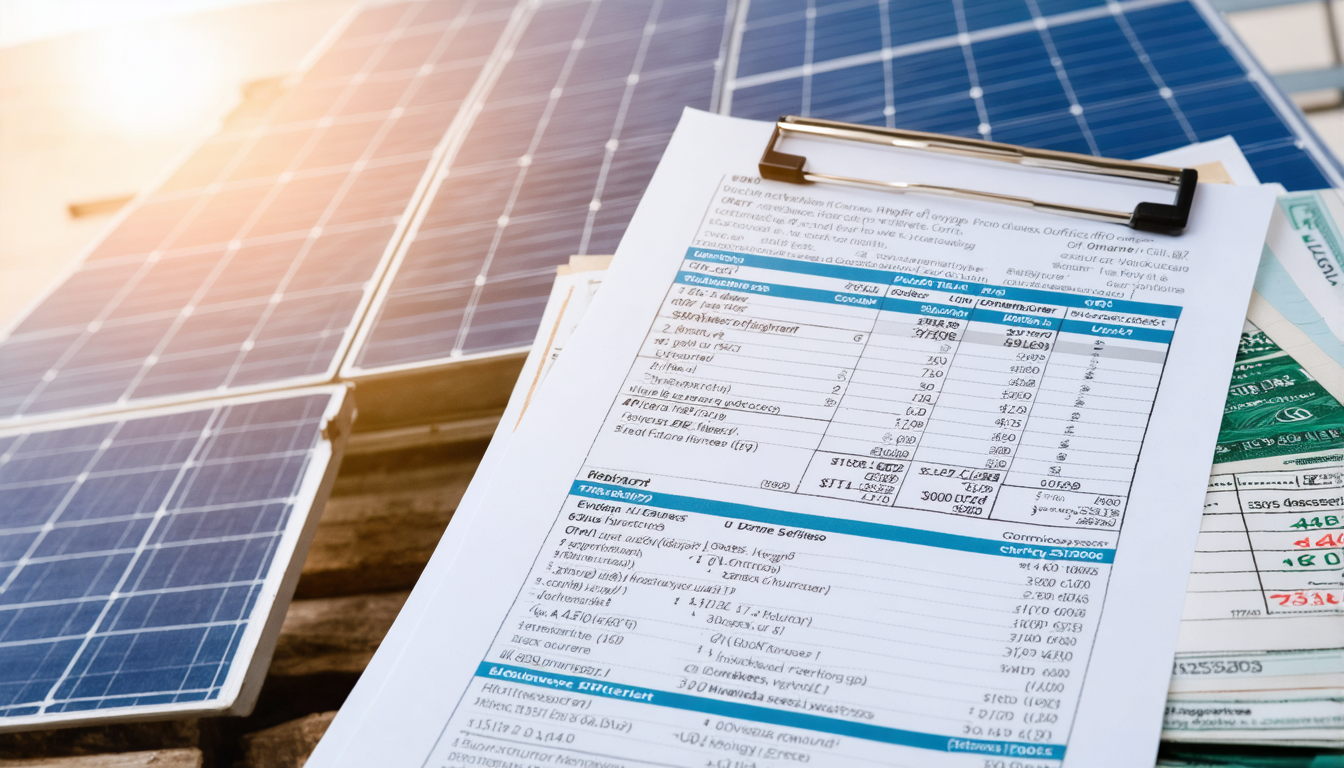
Faced with market complexity and the multiplicity of offers, personalized simulation is a key reflex for anyone wishing to optimize their energy expenses. Online comparators, validated by independent organizations, now integrate all contract parameters: kWh price, subscription, mandatory taxes, and sometimes hidden additional fees. Simulation thus allows to determine the actual cost of an offer compared to the regulated tariff but also to evaluate how much a discount displayed on paper translates into real savings.
For example, for a given consumption profile, an apparent –10% discount can be canceled out by higher subscription fees or by a lack of reduction after the first year. The table below illustrates these disparities by taking three typical household profiles:
| Consumption profile | Displayed Discount | Simulated annual bill | Comparison to regulated tariff | Potential extra costs |
|---|---|---|---|---|
| Low consumption | –5% | 930 € | +15 € | Higher annual subscription fees |
| Medium consumption | –10% | 1,200 € | –10 € | No discount after 12 months |
| High consumption | –15% | 1,760 € | –45 € | Gas price indexed on market |
Simulating this scenario for yourself helps avoid unpleasant surprises and adapt your choice to your own consumption profile. It is also advised to request a written simulation from the supplier before committing, which provides additional protection against surprises at year-end.
The most common traps in gas and electricity contracts in 2025
Many consumers have learned the hard way: promotional offers can hide complex clauses and sneaky price increases. Among the most common traps, the time limitation of the discount is a major cause of dissatisfaction. Once the initial year has passed, prices can revert to a higher level, sometimes even above the regulated tariff, inflating the bill. Some contracts also contain indexing clauses to market prices that escape the notice of less experienced consumers.
It also happens that suppliers tie the promotion to additional paid services, such as insurance or technical assistance, rarely highlighted at the time of subscription. Moreover, some offers exclusive to the Internet or valid during occasional commercial events (Black Friday for example) can mask a complex customer service and a cumbersome cancellation process.
Here is a list of precautions to take to prevent these kinds of traps from affecting your energy management:
- Carefully read the clause on price increases after the promotional period.
- Check for hidden fees or mandatory ancillary services.
- Ask if the tariff remains indexed to the market after the first year.
- Avoid offers conditioned on the purchase of complementary services.
- Protect yourself against complicated or costly termination conditions.
The following table highlights the differences between types of offers often confused:
| Offer type | Base tariff | Hidden conditions | Actual cost after promotion | Contract alerts |
|---|---|---|---|---|
| Promotional period (Black Friday, Christmas…) | Discounted price 6 months | Automatic increase | Above regulated tariff | Unclear renewal clause |
| Exclusive web offer | –15% on the kWh | Online customer service only | In case of problem, complex procedures | No phone mediation |
| Dual contract (gas + electricity) | Discount on one energy only | Current price on the other | Few real savings | Discount calculation not detailed |
Practical advice for effective energy management and avoiding unpleasant surprises on your bills
To prevent promotional offers from turning into financial traps, a number of good practices must be adopted. First of all, it is advisable to be wary of offers that are too attractive and not to be guided solely by the marketing “knockout” effect. Supplier transparency must be a primary selection criterion, which notably includes requesting a written document clearly explaining the application conditions of the promotion and the validity period.
Regularly analyzing your bills, ideally at each contract renewal period, allows you to verify that the applied tariffs correspond to the initial commitments. It is also recommended to use accredited comparators to track the evolution of available offers on the market, especially during seasonal promotion phases.
Finally, some technological solutions now allow improvements in energy control at home. For example, a small connected device costing less than 15 euros can be installed to analyze consumption in real time and quickly identify waste sources. These tools enable better personal energy management and increased control over expenses.
Here is a summary list of advice to better manage your contracts and achieve sustainable savings:
- Demand a clear written document for all tariff commitments.
- Simulate your bill before switching suppliers.
- Carry out an annual energy assessment to measure real savings.
- Renew your contract with vigilance, not forgetting the end dates of promotions.
- Use domestic management tools to reduce your consumption.
- Consult independent sources and consumer associations.
- Do not hesitate to cancel if conditions become unfavorable.