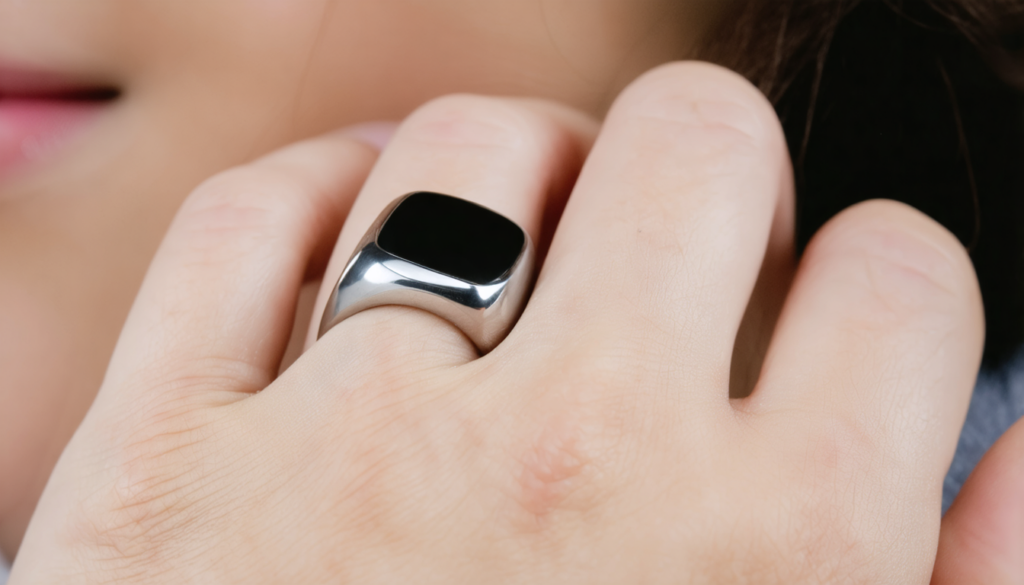
As he was about to embark on a trip, tech YouTuber Daniel Rotar experienced a worrying incident with his Galaxy Ring, a connected ring by Samsung. This ring, designed to track various health indicators, suddenly began to swell to the point of becoming painful and impossible to remove. Faced with this unexpected incident, the wearer was forced to cancel his flight to go to the emergency room. This case raises important questions about the safety of wearable connected devices, of which the Galaxy Ring is a striking example. Between abnormal swelling, localized inflammation, and health danger, this misadventure highlights the potential risk of batteries integrated into accessories of this type.
Attempts made at the airport to free the finger using soap and lotion proved futile, and the pain increased as the finger swelled. Emergency hospitalization was then the only option to avoid serious injuries. After various medical attempts, the finger was finally freed without physical sequelae, but the experience left a lasting mark on the influencer. Samsung assures that this type of incident remains an exception, but the incident underscores the necessity for increased vigilance and a clear protocol to manage this kind of medical emergency related to wearable connected objects worn on the finger.
- 1 The mechanisms of swelling related to the Galaxy Ring: understanding the risks of a swollen ring
- 2 How to recognize a skin reaction or inflammation caused by a connected ring?
- 3 Management of a medical emergency related to a swollen ring: hospital procedures
- 4 Official responses and Samsung’s recommendations in response to the Galaxy Ring crisis
- 5 Maintenance and precautions to avoid dangers related to the Galaxy Ring
- 6 The future of connected rings: innovations and challenges in safety
- 7 How users can protect themselves against risks related to smart rings?
The Galaxy Ring stands out for its advanced real-time health tracking features, integrating a compact battery in its ring. However, what was supposed to be a wellness tool became a health hazard for its wearer when the battery swelled, causing abnormal bulging and visible deformation of the ring.
This phenomenon, known as battery swelling, is often due to a chemical or thermal defect in the lithium-ion battery. In the case of the Galaxy Ring, several factors may promote this reaction:
- Exposure to excessive heat: The episode occurred during a trip to Hawaii, where the hot and humid environment accelerates the deterioration of the ring’s internal components.
- Prolonged contact with salt water: Repeated exposure to seawater can compromise waterproofing, despite Samsung’s specifications regarding controlled resistance to salt water.
- Natural aging and wear: After about a year of daily wear, the internal structure may become more fragile, making the battery more susceptible to swelling.
Swelling is not limited to a material risk: it causes a painful inflammation of the finger, with skin swelling and a risk of allergy or skin reaction due to pressure exerted by the ring. These signs should alert the wearer quickly to limit complications.
| Possible factors of Galaxy Ring swelling | Effects on the ring | Consequences for the wearer |
|---|---|---|
| Excessive heat | Material alteration, deformation | Heat release, pain, inflammation |
| Repeated contact with salt water | Loss of impermeability, corrosion | Skin reactions, swelling, irritation |
| Battery aging | Risks of internal overpressure, swelling | Finger compression, risk of hospitalization |
Galaxy Ring wearers must be aware of these risks and learn to recognize the symptoms of a swollen ring to act promptly. Ignoring this situation can lead to worsening inflammation and require a medical emergency.
How to recognize a skin reaction or inflammation caused by a connected ring?
Swelling of a Galaxy Ring may be accompanied by a skin reaction or localized inflammation, signs that the wearer should not ignore. They can manifest as:
- Persistent redness around the ring
- Pain or burning sensation in the finger
- Visible swelling or sensation of intense pressure
- Itching, sometimes associated with slight discharge or peeling of the skin
- Increased sensitivity to touch with thickening of the skin
These symptoms may worsen into more serious situations if the ring remains stuck:
- Appearance of local necrosis due to prolonged compression
- Sharp pain limiting finger mobility
- Risk of infection from bacteria entering through irritated skin
- Formation of wounds if the ring is forcibly removed instead of undergoing medical intervention
In all cases, it is recommended to immediately stop wearing the ring and consult a healthcare professional if symptoms persist. Daniel Rotar’s experience shows that even advanced technology can cause a condition warranting hospitalization.
| Skin reaction symptoms related to the ring | Recommended actions |
|---|---|
| Visible redness and swelling | Remove the ring, apply cold compresses |
| Severe pain and pressure | Consult a doctor immediately |
| Itching and skin flakes | Avoid scratching, monitor progression |
| Numbness or loss of sensation | Go to the emergency room without delay |
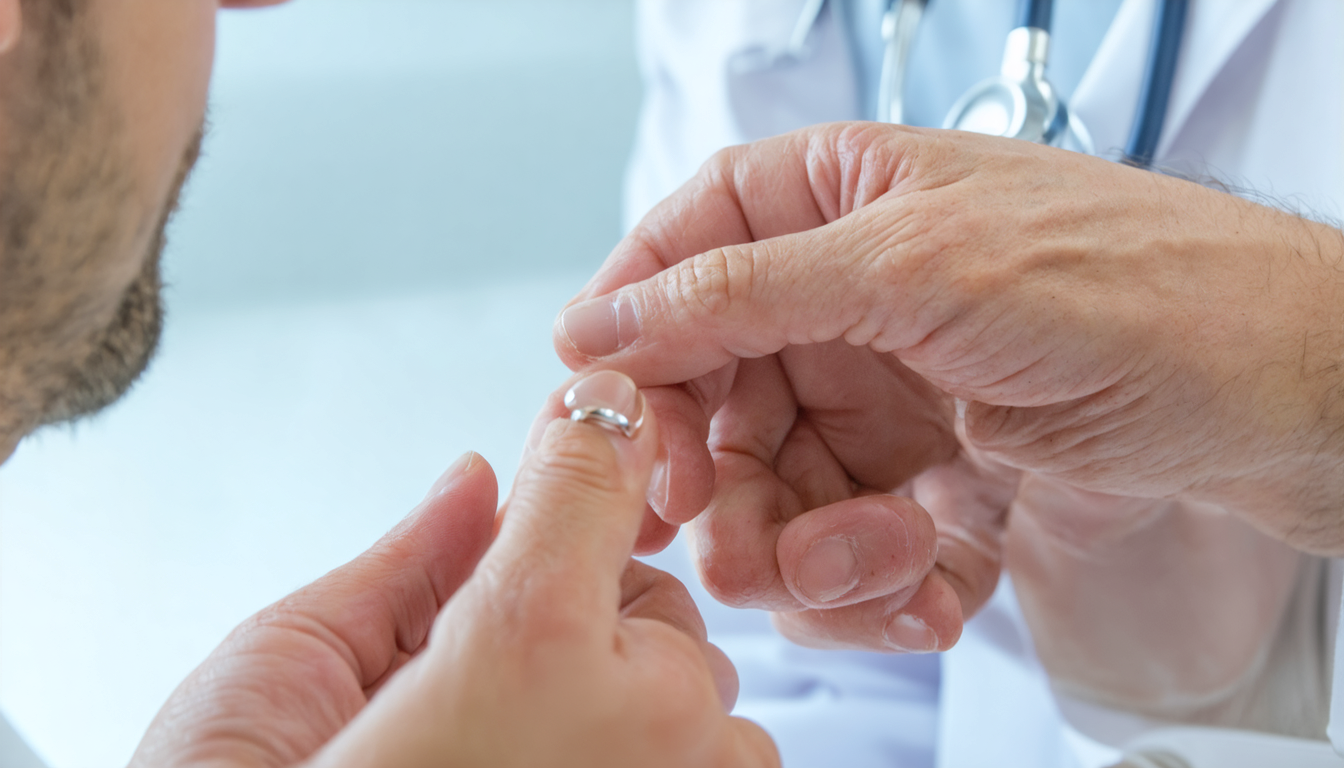
Daniel Rotar’s hospitalization illustrated the methods used by professionals to remove a swollen Galaxy Ring while protecting the wearer. Faced with a stuck ring and a swollen finger, doctors often deploy several techniques:
- Application of ice: to reduce swelling and local inflammation, thus facilitating removal.
- Use of medical lubricants: specific gels reduce friction between the skin and the ring.
- Special cutting techniques: if the ring does not yield, it can be carefully cut at a designated point to avoid damaging the potentially dangerous battery.
- Follow-up after removal: cleaning, disinfection, and monitoring the finger’s condition to prevent infection or post-intervention complications.
These methods prevent serious complications and protect the wearer’s health. Medical experience shows that despite apparent technological sophistication, safety can only be ensured with prompt and appropriate care.
| Medical approaches to remove a swollen ring | Advantages | Risks |
|---|---|---|
| Ice and lubricants | Reduction of pain and swelling | Low risk if properly applied |
| Controlled cutting | Reliable removal without worsening swelling | Must be carried out by a professional to avoid injury |
| Gentle handling | Preserves skin integrity | May require more time |
Official responses and Samsung’s recommendations in response to the Galaxy Ring crisis
Following Daniel Rotar’s public incident, Samsung spoke out to calm concerns and reassure potential Galaxy Ring users. Samsung’s UK branch notably replied directly to the influencer, inviting him to a private dialogue to examine the specific case.
In a statement to Tom’s Guide, the company recalled that incidents of swollen batteries remain rare and that it makes every effort to ensure product safety. Samsung reiterates its usage advice to prevent any problems:
- Avoid prolonged exposure to extreme heat or very humid environments
- Follow cleaning instructions after contact with salt water
- Do not force removal of the ring in case of swelling or pain
- Immediately consult a healthcare professional if there is a problem
- Use only the recommended maintenance procedures to preserve waterproofing and the battery
These recommendations aim to reduce the risk of a new incident and ensure that users can safely enjoy the advanced capabilities of the Galaxy Ring. At the same time, Samsung is exploring technological improvements to strengthen battery reliability and avoid any future swelling.
| Samsung recommendations for Galaxy Ring use | Objectives |
|---|---|
| Avoid excessive heat and humidity | Prevent deformation and internal damage |
| Cleaning and drying after use in salt water | Maintain waterproofing, prevent corrosion |
| Do not attempt to forcibly remove the ring | Limit risk of injury |
| Consult a professional at the first sign of pain | Ensure appropriate and rapid intervention |
| Regular maintenance and precautions when wearing | Extend device lifespan |
For users wishing to continue wearing a smart ring despite the risks, strict adherence to maintenance instructions is essential. Samsung’s recommended methods include:
- Gentle rinsing with clear water after any exposure to salt water
- Complete drying with a soft cloth to avoid residual moisture
- Avoid shocks and scratches that could compromise battery integrity
- Regular visual monitoring of the ring to detect any abnormalities
- Do not wear the ring during prolonged activities in humid or hot environments such as spas or tropical beaches
Proper maintenance helps maintain functionality and prevents premature wear that could cause swelling or inflammation. Thus, attention to the Galaxy Ring is also a key element in preventing hospitalizations.
| Maintenance instructions for Galaxy Ring | Expected effects |
|---|---|
| Rinsing and drying after salt water exposure | Maintain waterproofing and prevent corrosion |
| Avoid shocks and scratches | Protect battery and internal components |
| Regular inspection | Quick detection of deformities or wear |
| Temporary removal in hostile environments | Reduce risk of premature damage |
| Follow manufacturer’s instructions | Optimize lifespan and safety |
The future of connected rings: innovations and challenges in safety
The Galaxy Ring incident highlights the challenges the connected accessories industry must face in 2025. While these devices promise major advances in health and well-being, they must also guarantee impeccable safety for users.
Upcoming innovations include:
- Enhanced safety batteries: alternative solutions to classic lithium-ion batteries, more stable and less sensitive to environmental factors.
- Antibacterial and hypoallergenic materials: to minimize skin reactions and avoid allergens.
- Integrated alert systems: capable of detecting overheating, swelling, or malfunction before the wearer suffers consequences.
- Automatic removal protocols: such as expandable mechanisms or easy disassembly in emergencies to ensure quick release.
However, the balance between innovation and safety remains fragile. Developers must also consider the diversity of usage conditions and respond to unforeseen cases like the one experienced by Daniel Rotar.
| Future innovations in connected rings | Expected benefits | Associated challenges |
|---|---|---|
| Reinforced batteries | Less risk of explosion or swelling | High production costs |
| Hypoallergenic materials | Reduction of skin reactions | Durability to be tested |
| Alert systems | Possible preventive intervention | Sensor accuracy |
| Facilitated removal mechanisms | Increased safety in medical emergencies | Technical complexity |
For the general public, awareness of potential dangers and best practices is essential to avoid hospitalization or medical emergencies related to a swollen ring or skin reaction.
Here is a list of advice to follow:
- Ensure proper sizing: a ring that is too tight promotes compression and finger swelling if a problem occurs.
- Avoid wearing the ring continuously: alternate with periods without wearing to allow the skin to breathe.
- Regularly inspect the skin: detect inflammation or redness early.
- Follow manufacturer’s instructions: maintenance, cleaning, and usage conditions.
- Do not hesitate to remove the ring in case of discomfort: prevent aggravation.
- Consult a professional promptly in case of pain or abnormal swelling.
These simple yet rigorous rules can greatly limit exposure to risks associated with wearing connected rings.
| Best practices for connected ring wearers | Impact on safety |
|---|---|
| Proper fit to finger size | Reduced risk of compression |
| Rest periods without ring | Improved skin health |
| Frequent inspection | Early detection of abnormalities |
| Respectful cleaning and maintenance | Maintain functionality |
| Responsiveness in case of discomfort | Prevention of emergencies |