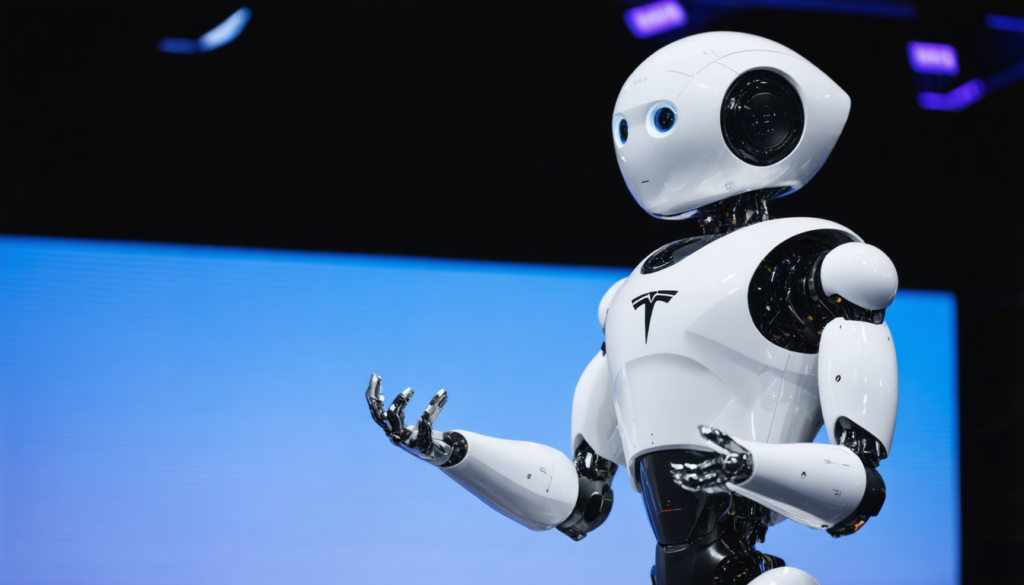
On the occasion of the 2026 World Economic Forum in Davos, Elon Musk once again captured international attention by discussing the promising future of the humanoid robot Optimus. The Tesla CEO, accustomed to spectacular announcements, stated that this robot could be marketed as early as 2027, marking a potentially decisive milestone in the field of domestic and industrial robotics. This prospect fuels hope for a technological revolution where artificial intelligence combined with advanced robotics would disrupt the daily lives of households and businesses.
However, behind the enthusiasm of the public stage lie the technical and human challenges of a long-awaited project that has been beset by delays and controversies since its launch several years ago. While Tesla continues to push its limits, the question remains: will Optimus finally meet the stated ambitions? Or will it remain a still premature technological dream? The current economic context, advances in innovation, and market reactions intensify the debate around this technology that could redefine the future.
- 1 Elon Musk in Davos 2026: a new era for robotics with Optimus
- 2 The tumultuous journey of Optimus: from promise to proof
- 3 Technical and safety challenges for a mass-market humanoid robot
- 4 Economic impact and repercussions on financial markets
- 5 Technical expectations for a mass-market product: price, features, and targeted uses
- 6 Cybercab and other Tesla innovations presented at Davos 2026
- 7 Societal challenges of deploying Optimus in households
- 8 Future prospects: a look towards the rise of domestic and industrial robotics
Elon Musk in Davos 2026: a new era for robotics with Optimus
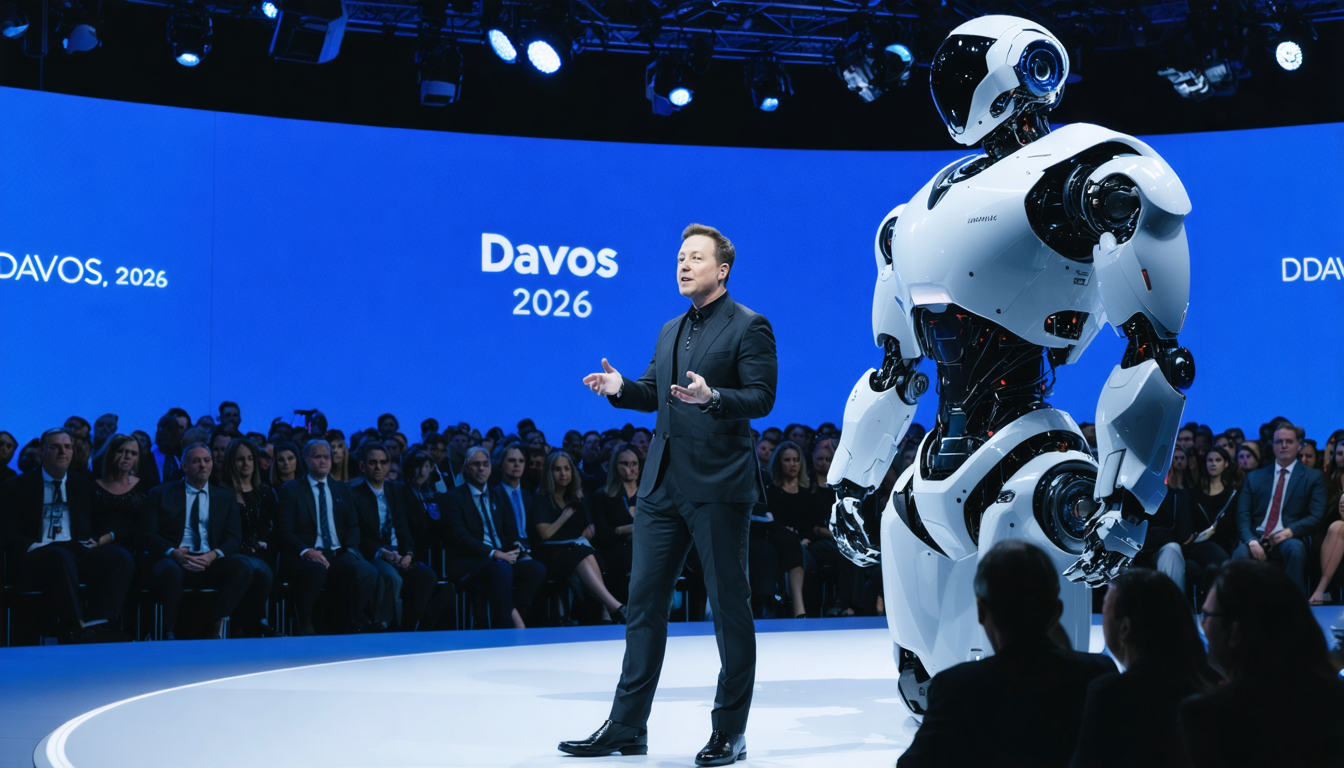
At the 2026 World Economic Forum in Davos, Elon Musk did not disappoint his admirers nor the players in the technology sector. True to his style, he highlighted his bold vision of the future through the robot Optimus, presented as a true assistant capable of intervening in a multitude of tasks, both in the industrial and domestic environments. This intervention confirms Tesla’s determination to unveil a major innovation in the field of robotics.
The Optimus robot promises to embody a significant advancement by combining advanced artificial intelligence with human physical capabilities. According to Musk, it is designed to free humans from repetitive chores as well as dangerous tasks. This vision is part of a continuity of a stated will for several years at Tesla to advance technology in the service of users’ comfort and safety.
On stage, Elon Musk announced a window for the market launch in 2027 which, although ambitious, illustrates a desire to place Tesla among the pioneers capable of reaching a new stage of robotic technology. This announcement comes in a context where AI and innovation define major economic and societal challenges, notably in Europe and North America.
This declaration sparked keen interest among the investors and decision-makers present in Davos, having a direct impact on financial markets. The Tesla CEO’s testimony indeed boosted confidence in the potential of the Optimus robot, despite lingering doubts about its real ability to deliver on the promises made.
The tumultuous journey of Optimus: from promise to proof
The Optimus robot, also called Tesla Bot, does not come out of nowhere. This project was presented in August 2021 during Tesla’s AI Day with strong ambitions: to create a humanoid capable of managing household and industrial tasks with surprising intelligence and agility. From the start, Elon Musk advised to imagine a robotic assistant designed to facilitate humans’ daily lives, emphasizing that this project could surpass the very importance of the automobile in Tesla’s future.
However, the journey of Optimus has been marked by many setbacks over the years. The first public demonstrations, especially in 2022, revealed a robot still too clumsy, unable to efficiently perform simple movements without external help. In 2023, Tesla tried to restore the project’s image by releasing videos where Optimus appeared capable of sorting objects, holding complex postures like yoga, or performing smoother gestures, but some pointed out the dependence on remote human assistance during key sequences.
In 2024, the company presented an improved version named Optimus Gen 2, equipped with a slimmer silhouette, more agile hands, operating in industrial environments such as Tesla factories to handle batteries and avoid obstacles. Tesla emphasizes self-learning enabled by onboard AI, thus highlighting a notable improvement in the robot’s adaptability. Nevertheless, many questions remain, especially since the departure of the head of the program, Milan Kovac, which fuels speculation about internal difficulties in the project.
This rollercoaster evolution presents the major challenge companies face when developing cutting-edge technology. The promise of a revolutionary product can still only be validated by rigorous reliability tests and use imbued with real autonomy, two points still under development at Tesla.
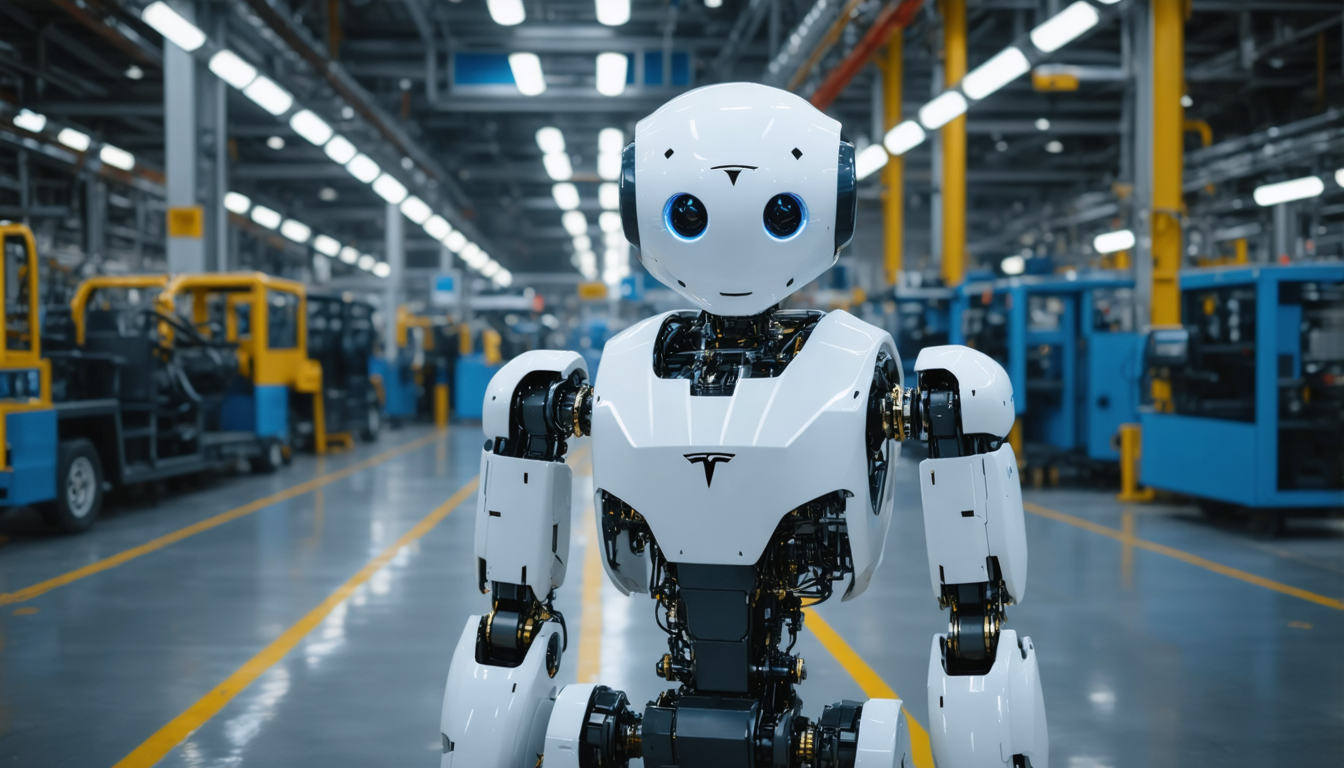
Technical and safety challenges for a mass-market humanoid robot
The prospect of a robot like Optimus in homes or factories inevitably raises crucial questions about its safety and reliability. Elon Musk clearly specified that its commercial deployment will only be launched when Tesla is fully convinced of the robot’s very high reliability, maximum safety, as well as the significant variety of its features. This triple imperative conditions the very future of the project and imposes a phase of rigorous validation.
For a humanoid robot to be accepted on a large scale, several barriers must be overcome. These technical obstacles include managing interactions with a varied and changing environment, preventing domestic or industrial accidents, and the ability to respond to unforeseen events with intelligent and safe behaviors.
Moreover, the very nature of the robot raises ethical and regulatory issues. What degree of autonomy can reasonably be granted to an artificial intelligence without constant human control? How to ensure privacy and data protection in an environment where a robot operates close to users?
These questions are not merely theoretical: they are an integral part of the design and tests conducted today by Tesla. The development of AI algorithms, the securing of sensors and motor systems, resilience against failures are all areas where Tesla must demonstrate full mastery to prevent the project from collapsing under its own technical complexities.
For example, handling fragile objects or navigating cluttered spaces requires fine sensory perception and outstanding coordination. However, optimizing these capabilities relies on constant advances in artificial intelligence and machine learning, a field where the margin of error must be almost zero to avoid any incident.
Main technical challenges of Optimus
- Long-term mechanical reliability
- Advanced detection system to avoid collisions
- Failure management and autonomous reset
- Safe interaction with humans
- Real-time adaptation algorithms
- Data protection and privacy
Economic impact and repercussions on financial markets
Elon Musk’s announcement in Davos had an immediate and tangible effect on the economy and the stock market. Tesla’s share recorded an increase of more than 3% as soon as the news broke, demonstrating investors’ enthusiasm for a product they hope will become revolutionary. This market response reflects persistent confidence in Tesla’s ability to realize its promises, but it also reflects the current trend to bet on robotics and artificial intelligence as major growth drivers in a rapidly changing world.
However, this euphoria must contend with a complex industrial and competitive reality. After several years of delays, many financial analysts remain cautious about Tesla’s ability to mass-produce a reliable humanoid robot within the announced timeframe. Meanwhile, other tech giants are investing in the same sector, multiplying proposals and innovations, which intensifies the pressure on Tesla.
The gamble is risky but not without meaning. If Optimus achieves its commercialization goal in 2027, it could open the way to a completely new sector, with diverse applications and enormous potential demand. We could then witness a disruption of economic models, both in factories and households, with a direct impact on productivity and lifestyles.
The table below presents a comparison of the key economic prospects related to the arrival of Optimus on the market, juxtaposed with the main risks and expectations:
| Aspect | Opportunities | Risks |
|---|---|---|
| Market | Access to a new segment of consumer and industrial products | Delays in production and commercialization |
| Investment | Increased valuation and investor confidence | Doubt about technological viability |
| Technology | Advances in AI and large-scale robotics | Technical complexity and safety challenges |
| Competition | Leader position in an emerging sector | Multiplication of offers and parallel innovations |
| Social impact | Improvement of quality of life through robotic assistance | Concerns about employment and social integration |
Technical expectations for a mass-market product: price, features, and targeted uses
Elon Musk also mentioned practical aspects that fuel anticipation around Optimus. One major element concerns the sales price, which the CEO announced between 20,000 and 30,000 dollars, an aggressive positioning aiming to democratize domestic robotics. This pricing would be lower than the cost of a traditional car, a strong commercial argument to attract a wide audience.
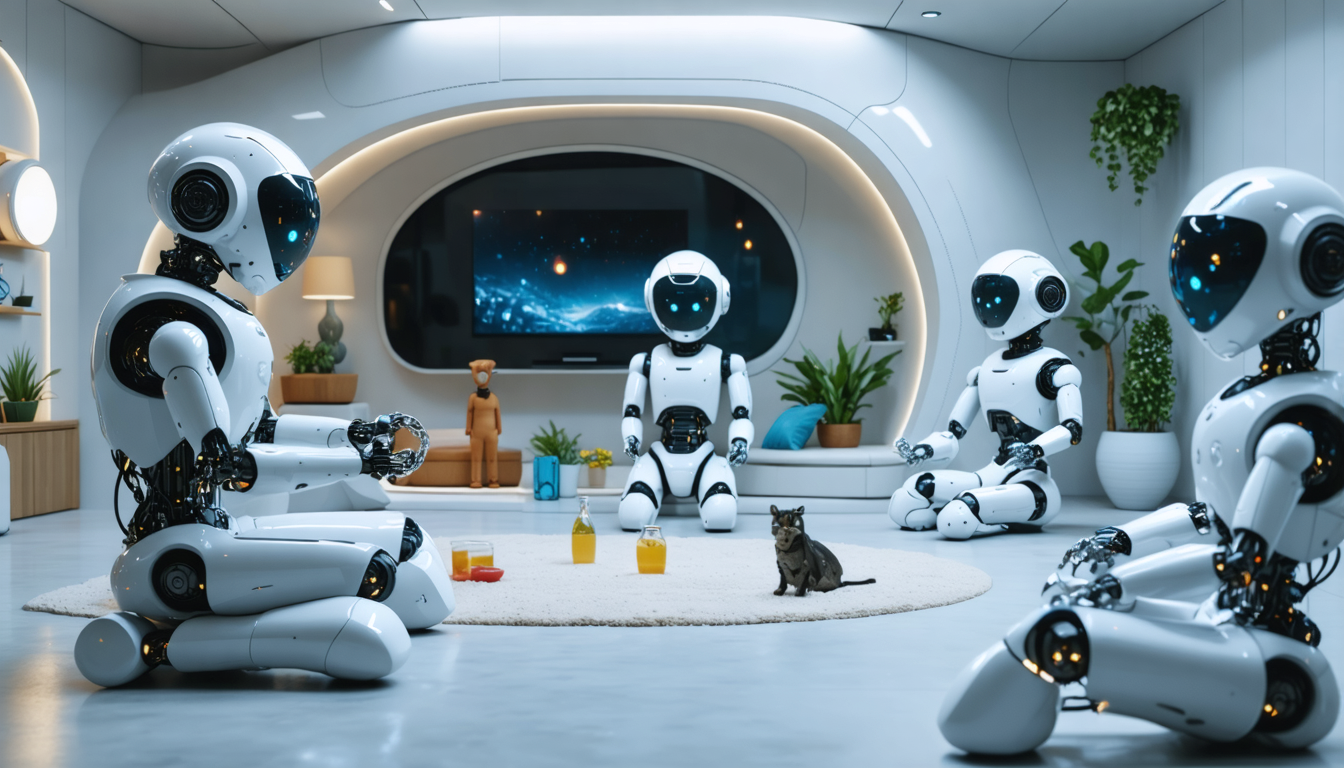
In terms of features, Optimus is intended for a wide range of applications. Whether it is assistance in household management, such as meal preparation or tidying up, or in an industrial setting performing repetitive operations, this robot wants to demonstrate its versatility and adaptability.
This range of features relies on an artificial intelligence capable of continuous learning. Thus, Optimus should be able to evolve with the environment where it is placed, acquire new skills, and respond flexibly to the changing needs of users. This adaptability is a key asset to convince a public often still wary of humanoid robots.
Here is a list of the main intended uses for Optimus:
- Assistance with common household chores
- Help with logistics and handling in industrial environments
- Surveillance and security of private and professional spaces
- Basic social interaction and aid for the elderly
- Support for leisure and domestic activities (cooking, cleaning)
- Autonomous learning and updating of features
If these promises are kept, Optimus could truly revolutionize how robots integrate into daily life, offering both comfort and efficiency. Nevertheless, these prospects require thorough technical validation as well as broad social and regulatory acceptance.
Cybercab and other Tesla innovations presented at Davos 2026
Beyond Optimus, Elon Musk took advantage of Davos to present another major project: the Cybercab. This autonomous vehicle without a steering wheel is scheduled for production in April 2026 with an ambitious target of two million units per year. Musk describes it as the cheapest autonomous vehicle per kilometer, a major asset to attract a market in full transition towards shared and autonomous mobility.
However, the reaction to the Cybercab was mixed. Several analysts pointed out that this target might be overly optimistic, especially after growing impatience from investors at the end of 2025 who demanded concrete progress on robotaxi technologies. Despite this, Elon Musk persists in his bold strategy, presenting these innovations as complementary in the vision of an integrated technological future.
This dual announcement, Optimus for 2027 and Cybercab in 2026, demonstrates Tesla’s desire to occupy the field both in robotics and autonomous mobility, two sectors at the forefront of innovation today. It also reflects Elon Musk’s confidence in an imminent major technological acceleration.
Societal challenges of deploying Optimus in households
With the potential arrival of a humanoid robot like Optimus in most households by 2027, many ethical and social questions naturally arise. The role of these robots in human support raises passionate debates about the place of technology in private life, employment, and even social relationships.
Beyond gains in productivity and comfort, it is essential to assess the impact of this innovation on the labor market. Increased automation could reduce some repetitive tasks but also destabilize certain traditional professions. This raises the need to consider support mechanisms for workers to avoid too abrupt a social shock.
Moreover, integrating Optimus into daily life entails a cultural adaptation to the presence of intelligent machines with nearly human interactions. Trust, friendliness, but also confidentiality of personal data are essential elements to ensure harmonious adoption.
Also, legislation will have to evolve quickly to regulate these new uses, guarantee strict safety standards, and define responsibilities in case of incidents. Governments and international bodies are already beginning to address these issues to support this technological turning point carefully but vigilantly.
Finally, it will be interesting to follow the feedback from early adopters who will have taken the plunge, thus providing a concrete basis to guide future developments and lift cultural reservations.
Future prospects: a look towards the rise of domestic and industrial robotics
As the 2027 deadline approaches, the case of Optimus symbolizes a turning point for the entire robotics sector. The combination of artificial intelligence with sophisticated mechanics could open the way to still unimaginable applications, profoundly changing interactions between humans and machines.
Many companies are closely following Tesla’s evolution, seeking to draw inspiration from its advances and multiply innovations in fields such as logistics, healthcare, and education. The democratization of humanoid robots could also generate a new entrepreneurial and scientific ecosystem.
One of the major concerns remains the management of resources associated with this technological revolution: energy, raw materials, recycling. Tesla and its competitors will have to address these challenges to ensure sustainable and responsible development.
Finally, the impact of artificial intelligence will not be limited to technical performance. It will also need to include the human dimension in the design of interactions, favoring harmonious coexistence. The future of this sector will therefore depend as much on technology as on the collective capacity to integrate these innovations within an acceptable and ethical social framework.