In the rapidly changing landscape of Industry 4.0, the emergence of advanced technologies is revolutionizing traditional production methods. Among these innovations, the UBTECH Walker S2 stands out as an innovative humanoid robot, designed to meet the rigorous demands of modern industrial automation. This industrial robot, the product of advanced robotics and artificial intelligence, promises to redefine operational continuity by eliminating interruptions related to human breaks and energy constraints.
This autonomous model embodies a major industrial innovation thanks to its unique ability to replace its own battery in less than three minutes, thus ensuring 24/7 availability. This technological feat paves the way for an industrial transformation where collaboration between humans and robots is seamless, optimizing the efficiency of smart factories. The integration of the UBTECH Walker S2 into the production line perfectly illustrates the evolution towards an industry where robotic technology is not only an automation tool but also a proactive player in productivity and safety.
- 1 Origin and disruptive design of the UBTECH Walker S2 humanoid robot for Industry 4.0
- 2 Physical capabilities and advanced mobility of the UBTECH Walker S2 industrial robot for industrial transformation
- 3 Stereoscopic vision and intelligent perception: the visual brain of the UBTECH Walker S2 industrial robot
- 4 Co-Agent and collective intelligence: the future of industrial automation with the Walker S2
- 5 Revolutionary autonomous energy management: the UBTECH Walker S2 industrial robot innovates with automatic battery replacement
- 6 Concrete industrial applications: the UBTECH Walker S2 at the heart of the advanced robotic revolution
- 7 Technical challenges and limitations of the Walker S2 in the face of growing industrial robotics demands
- 8 Future perspectives and impact of the UBTECH Walker S2 on global industrial transformation
Origin and disruptive design of the UBTECH Walker S2 humanoid robot for Industry 4.0
UBTECH Robotics, listed on the Hong Kong Stock Exchange since December 2023, launched the Walker S2 in mid-2025, further advancing industrial robotics through a strategy focused on intelligent automation. In less than nine months, this successor to the Walker S1 was designed specifically to meet the growing needs of smart manufacturing, logistics, and automated warehousing.
The anthropomorphic design of the Walker S2 is intentional. Its height of 1.76 meters and weight of 43 kilograms allow it to move easily within environments designed for humans, without the need for deep modifications to existing infrastructure. For example, its dimensions facilitate smooth access to workstations and passage through standard industrial doors, thus easing its insertion into operational factories.
UBTECH Robotics’ innovative approach is also based on a transition from individual intelligence to a collective system thanks to Co-Agent technology and the Brainnet 2.0 network. This dual innovation creates swarms of robots capable of communicating and cooperating in real time, contributing to the harmonious functioning of an entire robotic fleet. The company aims to produce 5,000 to 10,000 units as early as the following year, demonstrating a clear ambition for large-scale industrial transformation.
To illustrate this revolution, consider the example of a Chinese automotive factory that integrated Walker S2s into its assembly lines. The robots’ ability to work without interruption, notably due to their energy autonomy, enabled a productivity increase of over 30% on operations requiring high dexterity and repetitiveness.
The technological approach represented by the Walker S2 is not just a one-off innovation but a clear sign of a shift towards a much more connected, flexible, and resilient industry. In this context, the UBTECH Walker S2 plays a pioneering role that will surely pave the way for other robotic solutions in the automation of complex industrial tasks.
Physical capabilities and advanced mobility of the UBTECH Walker S2 industrial robot for industrial transformation
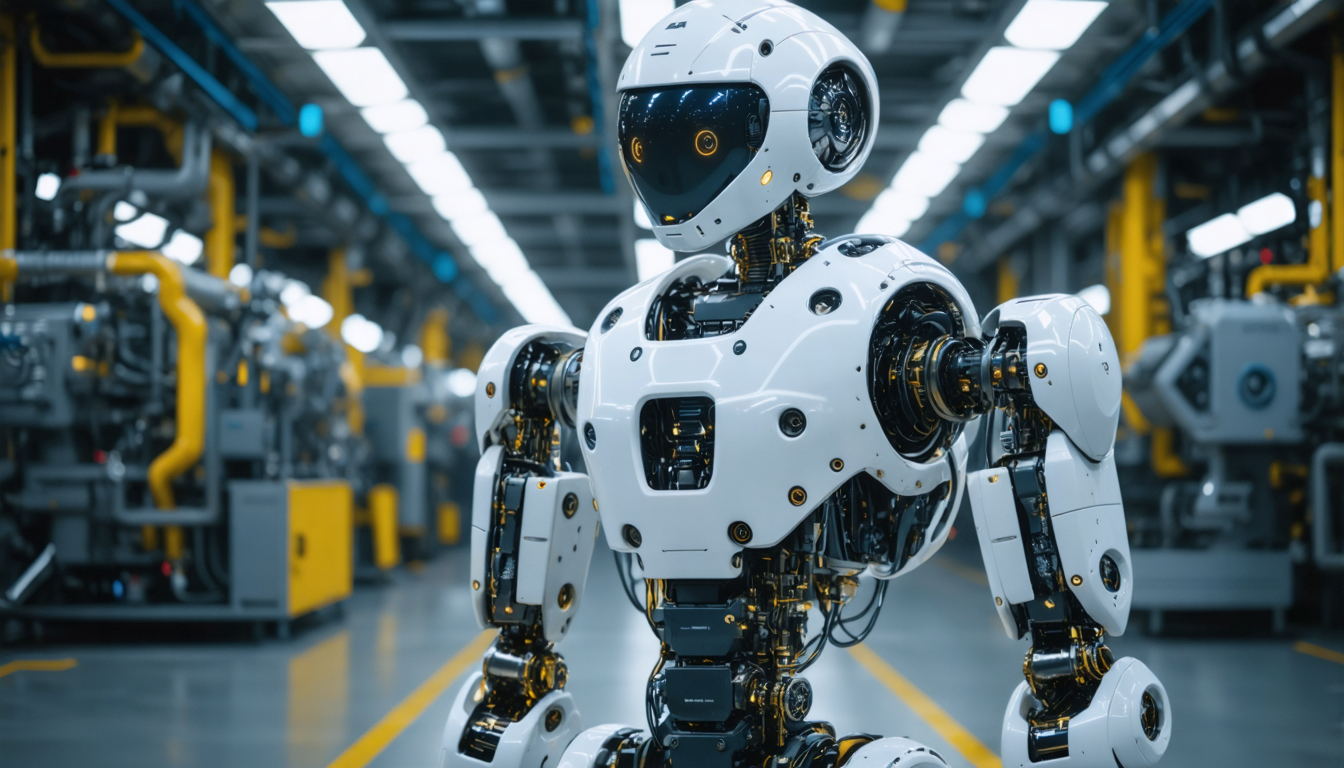
The Walker S2 is an exceptional example of advanced robotics thanks to its physical characteristics and mobility adapted to the demands of modern industry. With its 52 degrees of freedom (DOF), it mimics human kinematics, offering remarkable agility to manipulate various objects and move within confined spaces typical of industrial environments.
Its lightweight structure, weighing only 43 kilograms, is made from heterogeneous composite materials that combine robustness and lightness. This means the Walker S2 withstands the stresses of intensive work without sacrificing speed or precision. The robot’s two arms can each lift a maximum payload of 15 kg, covering a wide range of tasks, from delicate assemblies to the transport of tools or heavy parts.
One of the fundamental aspects of its advanced mobility lies in the high-torque servo motor integrated in the waist, allowing smooth and efficient rotation, thus facilitating the handling of objects in hard-to-reach areas. The ability to bend, squat or even perform precise manipulation gestures thanks to fourth-generation hands with 11 DOF per hand illustrates the extent of incorporated biomechanical skills.
The Walker S2 can thus reproduce complex and precise movements, as demonstrated by its ability to bend its torso up to 170°, while maintaining balance and stability. This last point is ensured by a dynamic balancing algorithm using a six-axis Inertial Measurement Unit (IMU), distributed in the torso and feet for optimal control.
These physical innovations allow the robot to excel in varied tasks such as delicate handling of fragile equipment, ground-level intervention, or safe transport of materials within complex warehouses, thus providing robust support to Industry 4.0 operations.
For illustration, a logistics company equipped its warehouses with Walker S2 robots to manage the daily reorganization of pallets and parcel sorting. The mobility of the robots greatly reduced accidents related to manual handling while increasing the order processing speed.
Comparative table of the physical capabilities of the Walker S2
| Characteristic | Walker S2 | Competing robots (average) |
|---|---|---|
| Height | 1.76 m | 1.70 m |
| Weight | 43 kg | 50 kg |
| Degrees of Freedom (DOF) | 52 | 45 |
| Payload per arm | 15 kg | 20 kg |
| Pitch angle | 170° | 140° |
Stereoscopic vision and intelligent perception: the visual brain of the UBTECH Walker S2 industrial robot
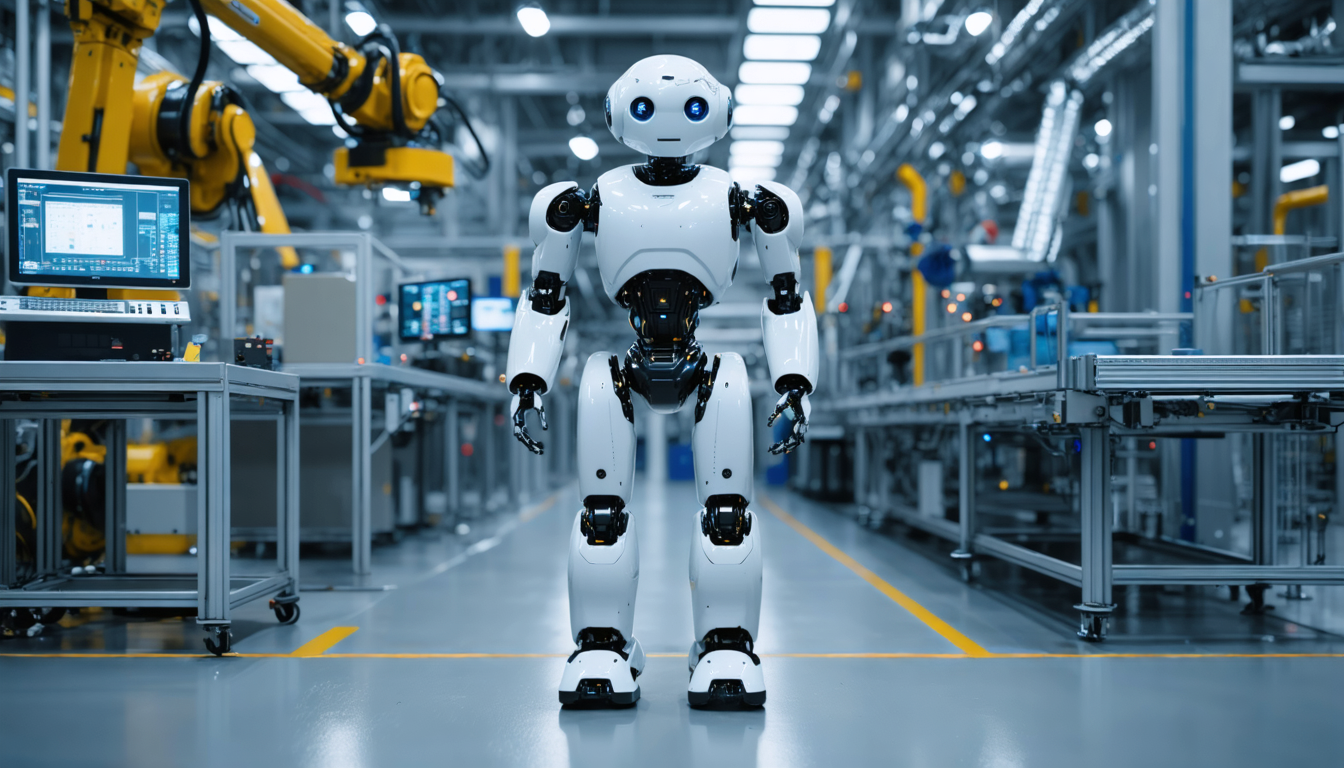
One of the pillars of the UBTECH Walker S2 is its ability to perceive its environment with extreme precision, thanks to binocular RGB stereoscopic vision integrated into its head. This technology, directly inspired by human vision, allows the real-time reconstruction of a depth field for finer manipulation and interaction with surrounding objects in an industrial setting.
Unlike other robots equipped with costly hardware depth sensors, the Walker S2 relies on a sophisticated software solution developed in-house. This involves the use of deep learning algorithms that constantly recalculate spatial geometry and estimate depth with great accuracy. This technical choice is strategic: it reduces hardware cost and complexity while offering scalable adaptability through software updates.
This approach allows the robot to recognize and differentiate a wide variety of objects with nuances, essential in processes such as automotive assembly, logistics sorting, or automated maintenance. For example, during autonomous battery replacement, stereoscopic vision detects the charge status of the modules and adjusts the grip for perfect alignment.
This high perception fidelity thus optimizes operational safety, reduces human errors, and opens the way for integrating robots into non-standardized production lines where environmental conditions vary.
As an example, an electronics factory using the Walker S2 reported a 25% reduction in component placement errors thanks to its visual system, thereby enhancing overall manufacturing quality.
Co-Agent and collective intelligence: the future of industrial automation with the Walker S2
Robotics is no longer limited to the isolated execution of tasks. The UBTECH Walker S2 notably integrates the Co-Agent system, a next-generation collective intelligence for industrial humanoid robots. This smart technology coordinates actions, optimizes productivity, and manages complex interactions in automated production environments.
Co-Agent enables robots to collaborate in swarms, sharing data and feedback to adapt to variations in the industrial process. This innovation not only facilitates the synchronization of operations such as screwing, adhesive application, or software configuration but also increases the overall resilience of the production chain.
Replacing hardware depth sensors with pure RGB vision, the Walker S2 maximizes its potential thanks to embedded computing power, making the platform more flexible and less costly. This intensification of software capabilities enables quick updates and adaptation to new tasks without hardware modifications.
In a major automotive factory in Shanghai, Co-Agent increased coordination among the Walker S2 robot fleet, reducing downtime by 18% and improving the quality of work on body panels thanks to better task distribution.
This advancement marks a milestone in industrial transformation towards connected factories, where advanced robotics fosters increased synergy between machines and humans.
Revolutionary autonomous energy management: the UBTECH Walker S2 industrial robot innovates with automatic battery replacement
One of the most remarkable innovations of the UBTECH Walker S2 is its ability to replace its own battery in under three minutes, thereby eliminating the main obstacle to continuous use of industrial robots: downtime related to recharging.
The robot uses its stereoscopic vision to position itself precisely in front of an exchange station, then rotates its torso. Thanks to tools integrated into its arms, it unlocks and removes the depleted battery module by itself to place it in a dedicated charging unit. Afterwards, it automatically inserts a full battery into its dorsal bay, allowing immediate resumption of its operation.
This self-maintenance feature is a turning point in robotic technology, offering unprecedented autonomy and unrivaled operational availability. The fact that this system is fully automated, without human intervention, reduces operating costs while improving facility productivity.
The Walker S2’s battery exchange function is made possible by a dual 48 V lithium-ion battery architecture. During the operation, the robot maintains active power on one of the modules, ensuring no power interruption during the exchange, which is crucial for operational continuity.
Here is a list of the major advantages of this autonomous energy system:
- Reduced downtime thanks to rapid and unattended battery replacement.
- Increased productivity by enabling uninterrupted 24/7 operation.
- Cost optimization by minimizing human maintenance and on-site interventions.
- Enhanced safety by reducing the need for human intervention in potentially hazardous environments.
- Operational flexibility with intelligent load and fleet management via Brainnet 2.0.
This energy advancement marks a major step in automated industrial transformation, positioning the UBTECH Walker S2 as a benchmark in autonomous robotics.
Concrete industrial applications: the UBTECH Walker S2 at the heart of the advanced robotic revolution
The versatility and autonomy of the Walker S2 make it suitable for a variety of industrial operations, notably in manufacturing, logistics, and warehousing sectors. Its ability to naturally integrate into human-designed environments facilitates its adoption without requiring heavy infrastructure investments.
An exemplary use case is its deployment at Nio Automotive and BYD, two leading Chinese automotive industry players, where the robots increase the speed and quality of assembly and sorting processes. Several indicators confirm the positive impact: a 120% improvement in sorting rates and a significant reduction in interruptions related to human breaks or machine recharging.
Beyond automotive, logistics warehouses now use the Walker S2 to manage parcel sorting and stock organization, contributing to better flow management and significant time savings.
These initial successes confirm that the UBTECH Walker S2 is at the core of industrial transformation thanks to its ability to deliver efficient, reliable, and continuous automation in a variety of contexts while remaining adaptable to future sector evolutions.
Technical challenges and limitations of the Walker S2 in the face of growing industrial robotics demands
Despite many advances, the Walker S2 has limitations that UBTECH Robotics strives to overcome to remain competitive in a rapidly evolving market. The payload of 15 kg per arm, although suited to many tasks, remains lower than some competitors targeting 20 to 25 kg, which restricts its application domain in handling particularly heavy loads.
The finesse of the bionic hands, with their 11 degrees of freedom, remains imperfect, notably for fine motor skills essential in certain complex operations requiring great manual precision. The current compromise between the robustness needed for self-maintenance and the delicacy of gestures is a major technological challenge.
Moreover, mastering Co-Agent in a dense RF environment poses another difficulty. The smooth, latency-free coordination of multiple robots in dense spaces is a technical challenge the company must address to deploy large, robust fleets. Industrializing the thousands of planned units also demands higher component reliability and rapid intervention capability in case of malfunction.
Facing these constraints, UBTECH prioritizes short-term commercial viability by adapting industrial production without seeking to break all performance records, thus ensuring a product ready for current Industry 4.0 challenges while laying the groundwork for future improvements.
Future perspectives and impact of the UBTECH Walker S2 on global industrial transformation
The UBTECH Walker S2 embodies a major advance in the dynamics of contemporary industrial automation. With its ability to operate 24/7 thanks to its autonomous battery exchange system, it paves the way for an industry without interruptions, where operational continuity is optimized beyond traditional human limits.
The progressive integration of the Walker S2 into intelligent industrial networks via Brainnet 2.0 promises smooth management of robotic fleets, ensuring dynamic task allocation, energy optimization, and intelligent predictive maintenance. The convergence between advanced robotics and artificial intelligence envisions a future where robots and humans will work in symbiosis to maximize productivity and safety in an innovative collaborative environment.
For example, the collective Co-Agent approach could evolve toward even more sophisticated models, where humanoids will not only share data but will learn collectively from their field experiences, continuously improving their performance. This trajectory illustrates the profound potential of the UBTECH Walker S2 to become a cornerstone of global industrial transformation.
In a world in search of efficiency and innovation, this humanoid robot represents not only a technical tool but also a bold vision of the industry of the future, capable of facing the challenges of sustainable development, flexibility, and responsiveness using the most advanced robotic technology.