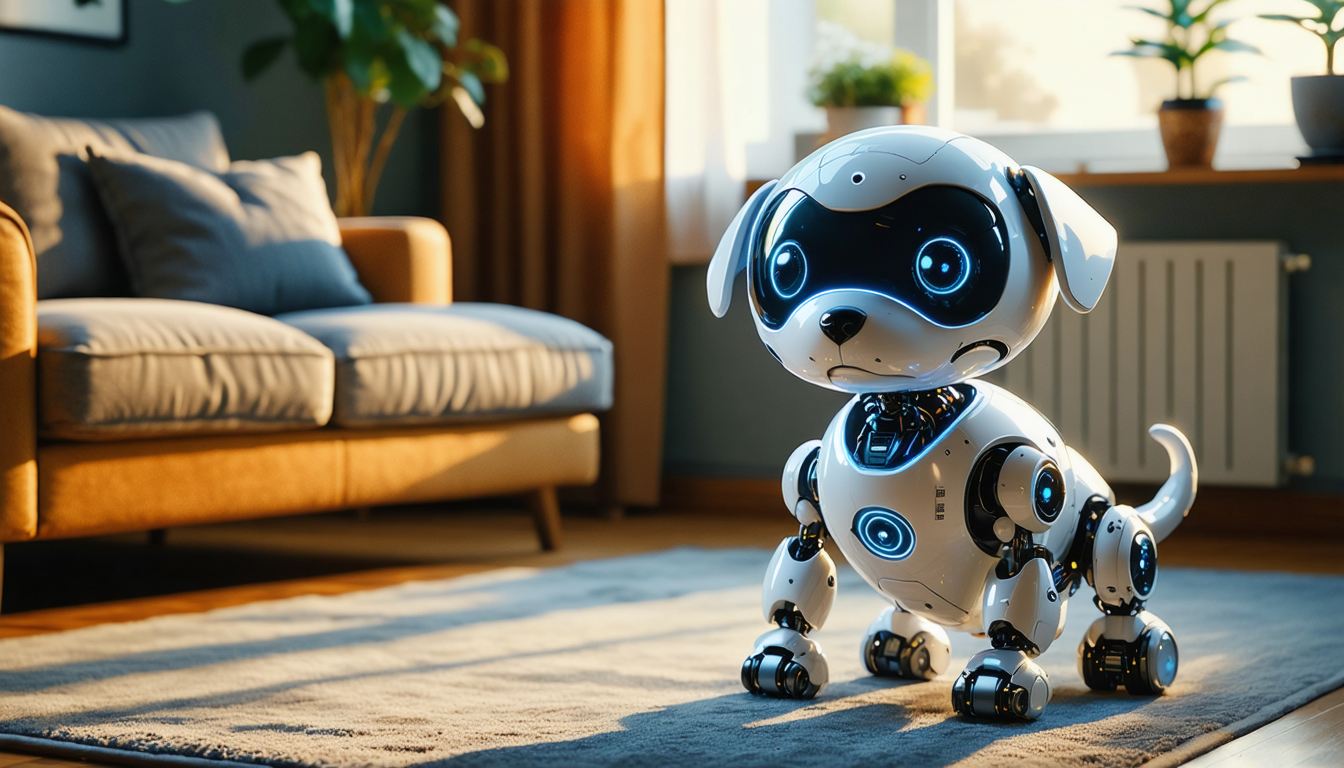
In a world where loneliness affects more and more people, especially seniors and chronic patients, a technological innovation stands out for its incredible ability to offer unprecedented emotional comfort. Tombot Jennie, a robotic animal designed to emotionally accompany its users, presents itself as a revolution in the field of social robots and emotional well-being. This interactive robot, inspired by a Labrador puppy, cleverly combines artificial intelligence and advanced sensory design to become much more than a simple machine: a true personalized emotional companion, capable of recreating the warmth and tenderness of a living pet.
This prototype, the result of years of work and extensive research, is not limited to a simple gadget. Jennie fits into a strong trend where robotic technology aims to meet deep psychological needs, especially those of isolated people or those suffering from cognitive disorders. Its highly realistic appearance, interactive behavior, and ability to adapt to its users’ preferences make it an unprecedented device, redefining the boundary between human and machine. As the global population ages and the need for emotional support grows, Tombot Jennie affirms itself as an innovative and accessible solution.
- 1 Tombot Jennie: Cutting-edge animatronic robotic technology
- 2 Sensory interaction: the secret of the emotional bond with Tombot Jennie
- 3 A robotic animal designed for the emotional well-being of seniors and vulnerable people
- 4 Clinical evidence highlights the therapeutic effectiveness of Tombot Jennie
- 5 A secure and adapted design for daily use at home
- 6 Customization and management of the emotional companion via dedicated mobile app
- 7 Distribution, pricing, and commercial prospects of the Tombot Jennie robot dog
Tombot Jennie: Cutting-edge animatronic robotic technology
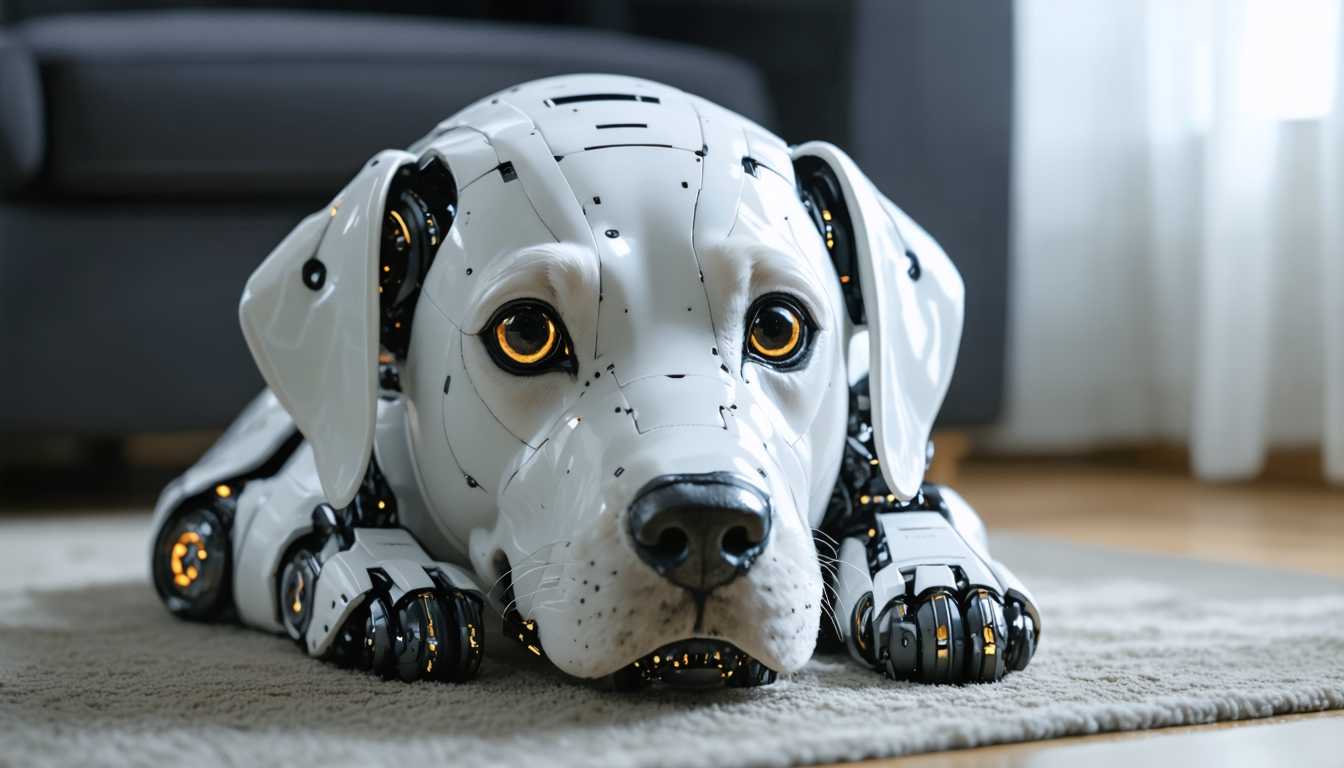
At the heart of this innovation, the robot’s aesthetic and mechanical realization impresses by its fidelity to the living. The design was entrusted to the famous Jim Henson’s Creature Shop, renowned for its expertise in advanced animatronics. Jennie takes on the physical appearance of a Labrador retriever puppy, with mechanics carefully developed to bring this unique companion to life.
Thanks to a series of silent servomotors positioned under its synthetic skin, Jennie can perform over 1,500 realistic movements that reproduce the subtle gestures of a real dog, from the gentle tilting of the head to the natural wagging of the tail. The ears, animated by miniaturized springs, contribute to these fascinating expressions that avoid the rigid impression of classic automatons. When at rest, the robot can simulate light breathing, further enhancing the illusion of a living and endearing presence.
The high-density synthetic fur is not only visually convincing: it offers a very pleasant tactile sensation, designed to invite touch and caress. This soft and durable covering withstands intense daily use without deteriorating, which is crucial for elderly or fragile people who will make it a permanent companion. Beneath this layer, a robust metal structure protects the delicate electronic components, ensuring lasting durability.
The robot’s eyes, the centerpiece of its expressiveness, consist of deep pupils topped with soft silicone eyelids, which move naturally and make Jennie’s gaze moving and credible. This precision in manual work gives the product a rare artistic dimension in the world of domestic robotics.
Sensory interaction: the secret of the emotional bond with Tombot Jennie
The artificial intelligence embedded in Tombot Jennie goes far beyond simple programmed movements. A sophisticated network of capacitive tactile sensors is hidden beneath its fur, capable of precisely detecting the contact zone as well as the intensity of the touch. This innovation allows Jennie to differentiate a gentle stroke from a firmer tap to trigger an appropriate response, thus creating a fluid and natural interaction.
An advanced voice recognition system complements this sensory palette. Jennie responds only to her name, which the user can personalize via the dedicated app. She detects sound location thanks to a microphone array and instinctively turns her head toward the source of the voice, reinforcing the impression of attentive and lively listening.
The robot also emits a very realistic range of sounds, based on authentic recordings of Labrador puppies aged 8 to 12 weeks. These whimpers, small barks, and heartbeat sounds audible nearby contribute to a deep and soothing emotional immersion. Moreover, the intelligent software management ensures that Jennie does not react to ambient disruptive noises and remains silent at night, thus avoiding any disturbance to her owners’ sleep.
The built-in battery provides up to 12 hours of autonomy, allowing whole days of uninterrupted exchanges. Charging is easily done by induction, simplifying handling for the most fragile users. This combination of tactile, auditory, and visual interactivity makes Tombot Jennie a genuine interactive robot serving emotional well-being.
List of Tombot Jennie’s main sensory and interactive features:
- Capacitive sensors for precise touch detection and reaction adjustment
- Voice recognition system for simple commands and personalized name
- Automatic gaze direction toward the voice thanks to sound localization
- Authentic reproduced sounds for emotional immersion (whimpers, barks, heartbeat)
- Intelligent stimulus management to avoid untimely reactions
- Battery autonomy of about 12 hours with wireless charging
A robotic animal designed for the emotional well-being of seniors and vulnerable people
Tombot Jennie mainly targets an often vulnerable audience facing loneliness and cognitive disorders: isolated seniors, patients with dementia, Alzheimer’s, autism, or those suffering from stress and depression. This interactive robot becomes a soothing emotional companion capable of providing comfort and reassurance, in an easy-to-use format without the responsibilities involved with a living animal.
The positive effects are confirmed in several clinical studies and hospital contexts. For example, in specialized Alzheimer units, the introduction of Jennie showed a significant reduction in agitation and anxiety. The gentle contact with the robot stimulates endorphin release and promotes calm. Furthermore, her expressive gaze and reactions to voice facilitate a reinvestment in social bonds, resulting in better communication with relatives and medical staff.
Psychologists emphasize the importance of this non-invasive support, which helps reduce feelings of isolation and enriches the daily life of people in difficulty. Through constant tactile interaction, Jennie offers a sensory awakening particularly beneficial to autistic children, helping stabilize their behavior and reduce stress.
Finally, a major advantage lies in the simplicity of use: no treatment, feeding, walks, or veterinary care are necessary, relieving caregivers and families. Jennie’s daily presence offers personalized support, adapted to each person’s emotional state, without the usual material burden.
Clinical evidence highlights the therapeutic effectiveness of Tombot Jennie
Beyond its appealing technological aspect, Tombot Jennie benefits from strong scientific validation that legitimizes its use in medical and social settings. Several recent studies have measured its real impacts on user well-being, notably in geriatric and psychiatric environments.
These researches notably observed:
- A measurable decrease in salivary cortisol, a direct indicator of physiological stress
- A reduction in episodes of agitation and anger in patients with neurodegenerative disorders
- A notable improvement in sleep quality thanks to the calming effect provided by the presence of the robot
- An increase in verbal and non-verbal communication with the environment, facilitating social exchanges
- A positive stimulation of old memories, as evidenced by post-intervention behavioral analyses
These observations have convinced many institutions to integrate Tombot Jennie into their care protocols, on par with traditional therapies. Caregivers highlight the practicality and safety of this tool, which enriches their practices without invasive acts.
A secure and adapted design for daily use at home
One of the essential points in Tombot Jennie’s success lies in its design focused on user safety and comfort, often fragile or mobility-impaired. Unlike a real animal, Jennie has no movable paws, which eliminates any risk of falling or tripping at home. The object is stable and light, able to be placed on a user’s lap or gently moved on a flat surface such as a bed.
The energy system relies on a lithium battery offering twelve hours of autonomy, sufficient for a whole day of interaction. Charging is easily done via a wireless induction station, avoiding any difficult handling for elderly people. The charging port is cleverly concealed so as not to compromise the aesthetics or safety.
Moreover, all materials used comply with strict standards: the synthetic fur is hypoallergenic to protect sensitive users, while the internal structure prevents any leakage or deterioration. The secure shell resists shocks and repeated handling. Jennie remains cool to the touch even after several hours of use to avoid any discomfort.
Comparative table of Tombot Jennie’s safety features
| Feature | Description | Benefit for the user |
|---|---|---|
| Absence of movable paws | Stable and non-risky structure | Eliminates risks of falls or domestic accidents |
| Hypoallergenic fur | Non-irritating and soft materials | Suitable for sensitive skin of seniors |
| Rechargeable lithium battery | 12-hour autonomy with wireless charging | Easy use adapted to fragile people |
| Shock-resistant shell | Robust protection of internal components | Longevity and resistance to daily handling |
| Constant temperature to the touch | Does not heat up during use | Comfort for the user |
Customization and management of the emotional companion via dedicated mobile app
To offer personalized support, the use of Tombot Jennie relies on a companion app available on smartphones. This intuitive interface allows caregivers or users to control and adjust the robot’s settings daily.
Among many possibilities, sound personalization is particularly appreciated. One can modify the volume of barks, breathing, or even activate a silent mode for the night. The choice of the robot’s given name is stored in a secure cloud, guaranteeing a tailor-made experience.
The software offers different behavioral modes, adapted to times of the day: calm mode for resting phases, more dynamic interactive mode to stimulate exchanges. Frequent updates downloaded via the app regularly enrich Jennie’s capabilities, thanks to continuous artificial intelligence and machine learning work.
The platform also offers a complete dashboard to monitor interaction intensity, frequency of caresses, or even battery status in real time. This information helps relatives and caregivers monitor the person’s emotional activity, enabling better adaptation of care.
Distribution, pricing, and commercial prospects of the Tombot Jennie robot dog
Sold at a price around $1,500 (approximately €1,380), Tombot Jennie represents a significant but justified investment for the psychological support it provides. Only online orders via the official website guarantee the product’s authenticity and quality. The brand ensures delivery to several countries, with variable deadlines depending on stock availability.
Medical facilities and retirement homes sometimes benefit from specific offers for bulk acquisition. This strategy promotes broader distribution in places where the need for emotional support is critical. Production, entrusted to specialized factories, guarantees a high standard for each manufactured unit.
Early feedback from users and professionals is very positive, highlighting the quality of manufacture and the benefits brought. Tombot Jennie is gradually establishing itself as a reference in the social robot market dedicated to emotional well-being. The company plans to expand its range with new options and accessories that could further enrich personalized support.