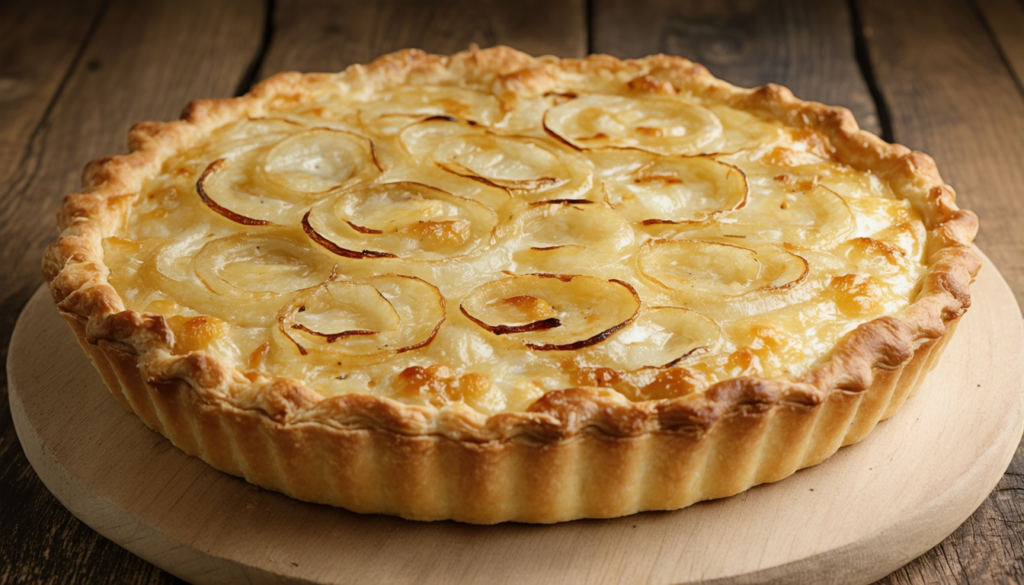
At the heart of French cuisine, the onion tart stands out as an authentic traditional dish, celebrated for its simplicity and richness in flavors. This preparation, both indulgent and convivial, appeals to both beginners and seasoned enthusiasts thanks to its easy-to-make recipe at home. With simple ingredients like puff pastry, caramelized onions, and a touch of crème fraîche flavored with Parmesan, it embodies the art of homemade cooking and culinary comfort. Whether served as a starter during a meal with friends or as a main course accompanied by a salad, this tart offers a delicious taste experience where sweetness and character blend. In 2025, its success continues notably because it fits into a return to the classics of French cuisine, valuing seasonality and local products.
Making a perfect onion tart does not require being a professional chef. This dish highlights a simple technique: slow cooking the onions to achieve optimal caramelization and preparing a perfectly crispy crust. The recipe, although traditional, gladly adapts to desires and available ingredients, offering different variations that always promise a tender and flavorful result. Follow the thread of this article to discover all the secrets, tips, and essential methods to succeed in making a generous and refined onion tart, ideal for brightening your table whatever the season.
- 1 Mastering the preparation of the onion tart: easy recipe for incomparable flavors
- 2 The secrets to successfully making shortcrust or puff pastry in a gourmet onion tart
- 3 The nuances and variations of the traditional flavorful onion tart recipe
- 4 Essential utensils and practical tips for a perfect onion tart at home
- 5 The place of the onion tart in French cuisine and its role in convivial meals
Mastering the preparation of the onion tart: easy recipe for incomparable flavors
The key to a successful onion tart lies first in the quality of the ingredients and a simple but precise know-how. To start making this traditional dish, once the oven is preheated to 180 degrees Celsius, begin by choosing high-quality puff pastry or a homemade shortcrust pastry according to your preference. The choice of pastry will impact the final texture: puff pastry brings a light crispness, while shortcrust pastry offers a denser, more rustic base typical of French cuisine.
Next, the preparation of the onions is a crucial moment. They must be peeled and then finely sliced to ensure even cooking. Then, in a non-stick pan, heat two tablespoons of olive oil and gently fry the onions until they take on a beautiful golden color. This caramelization process, long but essential, releases all the sweetness of the onions and gives them a melting texture that makes this easy recipe absolutely irresistible.
To enhance everything, a well-creamy crème fraîche will be mixed with grated Parmesan, dried thyme, salt, and pepper, thus bringing depth of flavor and perfect balance. This binding will reinforce the indulgence of the dish while enhancing the flavor of the caramelized onions. It is also possible to add a pinch of grated nutmeg, a chef’s tip for an extra subtle aromatic touch that makes all the difference.
Once your tart pan is lined with pastry, don’t forget to prick the bottom to prevent it from puffing up during baking, then evenly spread the onions. Pour the cream-Parmesan mixture on top before baking for about 30 minutes. The tart is ready when the surface is nicely golden, a sign that all the elements have blended in perfect harmony.
This traditional method clearly shows how an onion tart, simple in its execution, transforms into a comforting dish, full of indulgence, with a melting texture and pronounced flavors. You can confidently serve it both for a quick dinner or as a convivial starter during a family meal.
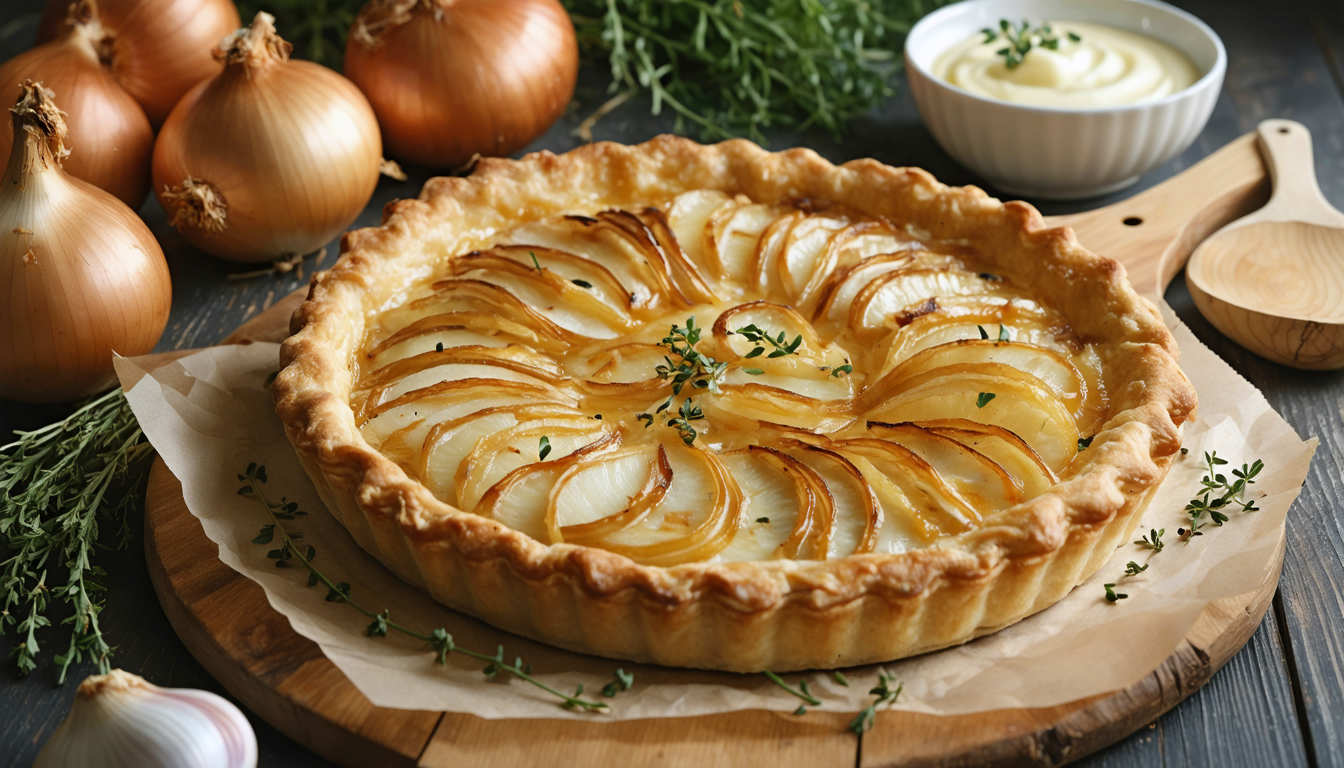
The secrets to successfully making shortcrust or puff pastry in a gourmet onion tart
The choice and preparation of the pastry are crucial for the success of an onion tart. Puff pastry is often preferred for its light and crispy side, providing a pleasant contrast with the sweetness of caramelized onions. However, shortcrust pastry, with its firmer yet tender texture, is popular in several regions of France for traditional dishes. Making your own shortcrust pastry allows full control over ingredient quality and final texture. It usually consists of flour, butter, water, and a pinch of salt, worked quickly to preserve flakiness.
To succeed with your pastry, you need to pay attention to several points:
- Cold butter: It must be very cold, almost frozen, to allow flakiness during baking.
- Quick handling: To prevent the pastry from warming under your fingers, working quickly ensures better texture.
- Resting: Letting the pastry rest in the fridge before rolling allows the gluten to relax and ensures more even baking.
- Pricking: Pricking the pastry with a fork before adding the filling prevents air bubbles from forming during baking.
Of course, nothing prevents buying ready-to-use pastry, but homemade remains always recognized for its unmatched flavor and freshness. This extra effort guarantees a perfect tender and crispy balance that will enhance your tart. By adapting the texture of the pastry to your liking, you control the balance between crunch and softness, essential for a gourmet dish renowned in households of northern France.
In 2025, many favor an artisanal approach to home cooking, promoting homemade and the use of simple, healthy, and local ingredients. This approach helps preserve French culinary identity while offering a truly authentic taste experience.
The nuances and variations of the traditional flavorful onion tart recipe
The classic recipe for a tender and flavorful onion tart admits many variations that allow the dish to be adapted according to tastes and seasons. For example, some cooks add a splash of dry white wine to the pan after caramelizing the onions to deglaze and enhance the flavor with finesse. This subtlety brings a tangy balance that pleasantly contrasts with the natural sweetness of the caramelized onions and the richness of the cream.
Two other common options are adding fresh herbs such as thyme or rosemary, which infuse a strong aromatic note, or varying the cheeses by incorporating Gruyère, Mimolette, or even blue cheese for stronger versions. Likewise, crème fraîche can be replaced by plant-based cream, especially in more contemporary recipes or those catering to specific diets. This wide range of alternatives reflects the gradual modernization of this traditional recipe while maintaining the charm of authentic French cuisine.
Another interesting aspect lies in the presentation and format of the tart. Beyond the large family dish, it is possible to make individual portions in the form of tartlets or mini quiches, ideal for a gourmet appetizer or buffet. Their quick and practical preparation fits perfectly with the spirit of an easy recipe recommended for all levels of cooks.
Finally, the importance of food and wine pairings should not be forgotten. A dry white wine, such as a Chardonnay, pairs ideally with this tart thanks to its freshness that compensates for the creamy richness and sweet softness of the onions. These choices help reveal all the taste subtleties, optimizing the overall experience during a meal. In summary, the basic recipe is enriched with little personal touches that make all the difference in a culinary culture in constant evolution.
Essential utensils and practical tips for a perfect onion tart at home
To prepare this flavorful onion tart, having the right utensils greatly facilitates the process and ensures optimal quality of the final dish. A tart pan is obviously necessary, and there are several types: non-stick metal, ceramic, or glass. Each has its advantages, but for even baking and easy unmolding, a metal pan with a removable bottom is highly recommended.
The non-stick pan is the other key piece, especially to cook the onions without burning or sticking. Slow and controlled cooking is essential to obtain melting caramelized onions, the key to the recipe’s success. Setting a low heat and stirring frequently prevents overcooking while preserving intense aromas.
Finally, the oven must be perfectly preheated to 180 degrees Celsius before baking the tart. The even temperature allowed by a conventional oven ensures balanced browning both on top and at the base of the pastry, thus avoiding a doughy center or an overcooked crust. A timer is recommended to not exceed the 30-minute baking time, when the tart reveals a golden crust and an enticing aroma.
These few practical tips, combined with careful preparation, increase gustatory satisfaction and allow you to fully enjoy this indulgent dish, typical of homemade cooking. By varying shapes and adopting chef’s tips, you can make this recipe not only delicious but also a true celebration for the senses with every tasting.
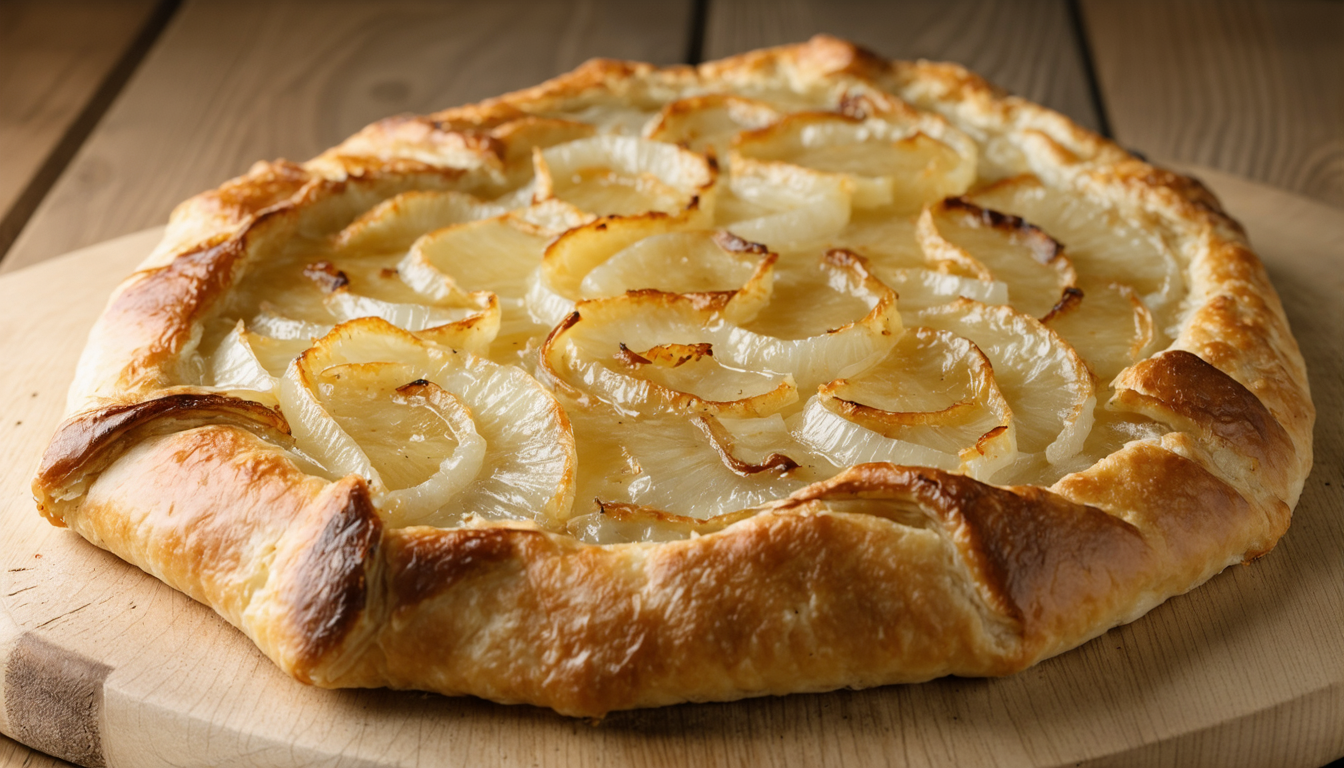
The place of the onion tart in French cuisine and its role in convivial meals
The onion tart is an integral part of traditional French dishes, especially in northern regions where it is particularly appreciated for its generous flavors and melting texture. It is an emblematic dish that easily combines rusticity and refinement and is part of a family culinary heritage passed down from generation to generation. Its charming simplicity and accessible preparation make it a staple of homemade meals, bringing together young and old around the table.
In 2025, the renewed interest in traditional cuisine and homemade dishes also explains the growing popularity of the onion tart. The time devoted to cooking is valued as a moment of sharing and well-being, while authentic flavors provide comfort in a constantly changing world. Served as a starter in convivial meals or as a main course accompanied by a crisp green salad, this tart suits all occasions and all seasons.
Moreover, the onion tart perfectly adapts to a responsible and sustainable diet. It relies on simple, minimally processed products, offering a balanced, tasty, and economical meal. In a context where homemade cooking is promoted as a primary culinary value, it becomes an ideal alternative to industrially prepared dishes. In restaurants or at home, it continues to enchant with its unique taste and authenticity, making every meal a warm and indulgent moment.
| Element | Role in the tart | Tip for success |
|---|---|---|
| Puff pastry | Provides crispness and lightness | Use very cold pastry, prick before baking |
| Onions | Gives sweetness and caramelized flavor | Cook slowly on low heat to caramelize without burning |
| Crème fraîche | Binds ingredients and adds creaminess | Mix well with Parmesan and spices |
| Parmesan | Adds flavor and depth | Prefer freshly grated Parmesan |
| Thyme | Gives an aromatic touch | Use dried or fresh thyme depending on availability |