The boundary between reality and fiction is gradually fading in our digital world, profoundly redefining our relationship to images and trust. In 2025, deepfakes are no longer mere technological curiosities but tools of unprecedented power that disrupt the global media, social, and political landscape. Thanks to the ultra-realism now achieved, it becomes extremely difficult to distinguish truth from falsehood, making ethical and security issues more critical than ever. In this context, artificial intelligence asserts itself as a central player, offering video manipulation capabilities that surpass anything previously imagined. Facing these advances, the challenge is notably to preserve the authenticity of information and to combat disinformation that threatens social cohesion and digital security on a global scale.
The digital future is thus being shaped between innovative promises and major risks, prompting an urgent reflection on necessary regulations, but also on the evolution of our behaviors in the face of an advanced technology capable of simulating the accuracy of the smallest details, including micro facial expressions. Whether it concerns malicious manipulations or creative uses, mastering these tools and raising awareness of the threats remain at the heart of debates, illustrating to what extent the very perception of authenticity is being tested today like never before.
- 1 The deepfake revolution: Ultra realism and artificial intelligence at the service of video manipulation
- 2 Real-time interaction: Deepfake becomes a tool for relational fraud
- 3 Democratization of deepfake tools: A world where seeing is no longer believing
- 4 Authentication and digital watermarks: The technological response against disinformation
- 5 Deepfakes and disinformation: A threat to democracy and social cohesion
- 6 Creative use of deepfakes: New horizons for entertainment and advertising
- 7 Towards a new definition of authenticity in a world saturated with perfect copies
- 8 Media education: The key to navigating the era of deepfakes
The deepfake revolution: Ultra realism and artificial intelligence at the service of video manipulation
In less than three years, deepfake technology has made a prodigious leap, moving from approximate images and videos to creations capable of deceiving both the human eye and automated detection tools. This evolution was catalyzed by artificial intelligence, particularly by deep neural networks capable of generating faces, meticulously reproducing voices, expressions, and gestures. This sophistication now goes beyond simple editing: deepfakes in 2025 embody video manipulation of unprecedented precision.
This level of ultra-realism no longer corresponds only to a technical exercise but deploys tangible consequences in the field of ethical issues and security. For example, certain disinformation campaigns used these technologies to influence electoral processes, spread false accusations, or create powerful emotional shocks. Fake videos can show political leaders or public figures in invented situations, thereby exacerbating social tensions and weakening trust in traditional media.
Beyond the political sphere, ultra-realistic deepfake also affects the private sphere, with cases of cyberbullying and fraud based on the creation of video avatars indistinguishable from the originals. The scale of potential damage illustrates how artificial intelligence transforms digital security into a crucial issue for the coming years. The rapid evolution also drives the development of technological, legislative, and educational responses to regulate this now commonplace practice.
Real-time interaction: Deepfake becomes a tool for relational fraud
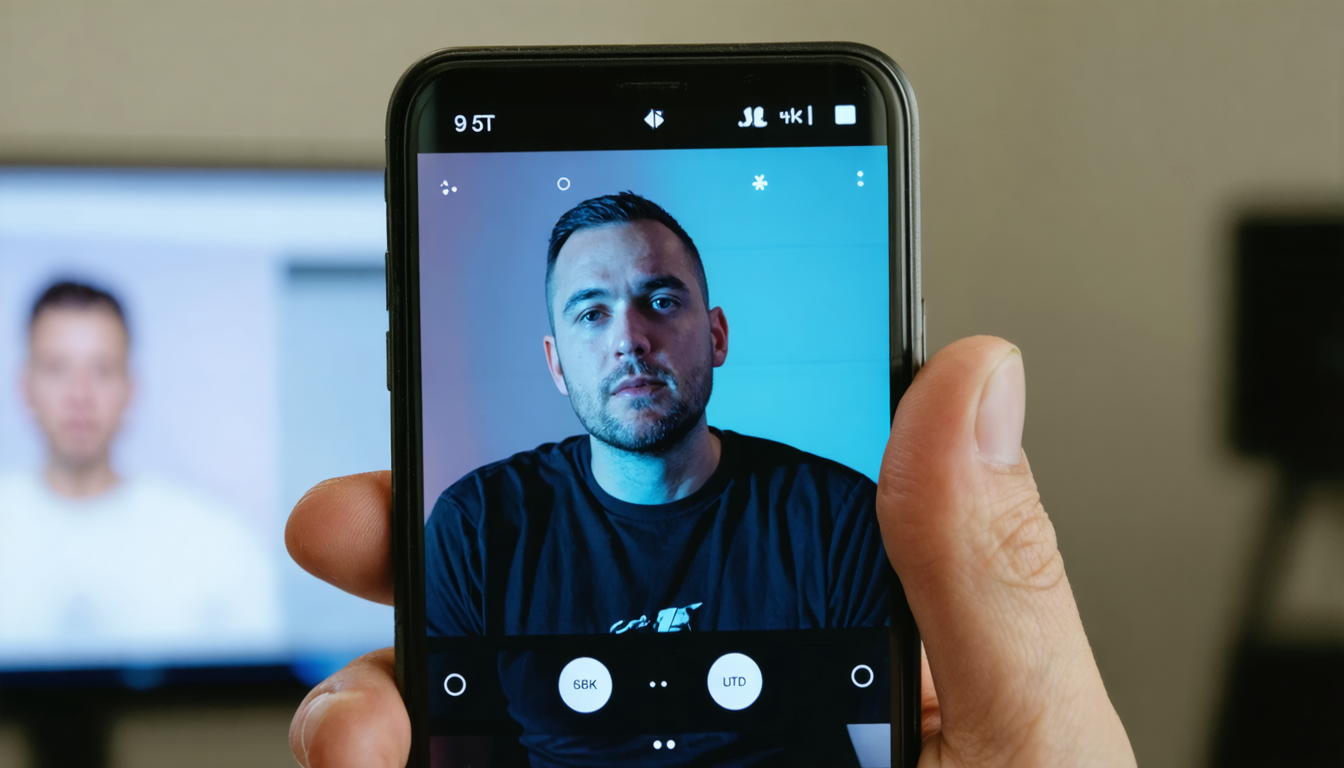
While previously deepfakes were limited to static videos or recorded files, 2025 marks a turning point towards a new dimension: real-time bidirectional interaction. This advance revolutionizes the very notion of manipulation by introducing the possibility of exchanging with a dynamic synthetic model that instantly responds and adapts to human stimuli.
Imagine a FaceTime or Zoom video call in which the apparent interlocutor is actually a deepfake controlled by artificial intelligence capable of understanding your questions, adjusting its speech, and even simulating believable emotions. This technological leap makes deepfake no longer a simple static disinformation tool but a vector of intimate relational fraud, with devastating potential for digital security and interpersonal trust.
In this context, risks extend well beyond the usual public spheres. Romance scams, psychological manipulations, or identity impersonations take on a new face, literally. This new ability requires extreme vigilance and pushes for a reconsideration of verification and authenticity mechanisms in all digital communications.
Democratization of deepfake tools: A world where seeing is no longer believing
The total democratization of deepfake technologies is undoubtedly one of the most remarkable developments in recent years. Where specialists once had complex equipment and skills to generate synthetic images, now consumer applications available on smartphones make the instant creation of ultra-realistic digital avatars accessible to all.
This revolution raises a major social dilemma. Indeed, while the production of high-quality synthetic content is within anyone’s reach, trust between individuals is corroded. The simple sharing of a credible video falsely accusing, ridiculing, or harming someone shakes the very foundations of social bonds.
For example, a compromising video fabricated in a few clicks could be shared on social networks, triggering an unjustified media crisis. This reality pushes us to rethink our relationship to images and questions society on new standards of evidence and authenticity in the digital age.
- Immediate accessibility of deepfake creation tools on mobile
- Amplified risks of mass manipulation
- Increasing difficulty in verifying content veracity
- Negative impact on reputation and privacy
- Need for enhanced digital media education
Authentication and digital watermarks: The technological response against disinformation
Faced with this worrying proliferation, the fight against deepfakes is organized around advanced authentication and traceability methods. One of the most promising avenues is the integration of tamper-proof digital signatures at the moment of capturing real images or videos to guarantee their origin and authenticity.
These cryptographic watermarks, applied at the source, are designed to be undetectable by forgers while remaining verifiable by appropriate software. This creates a standard that clearly distinguishes original content from manipulations made by AI, thus constituting a key weapon in the protection against disinformation and malicious uses.
However, this technological battle is multidimensional. It also includes the development of increasingly sophisticated AI detectors capable of scrutinizing the slightest anomalies in videos and detecting telltale signs of deepfakes. This unending game between synthetic image generators and detectors is now a large-scale fight that determines the future of global digital security.
| Process | Objective | Advantages | Limitations |
|---|---|---|---|
| Digital signatures (watermark) | Guarantee authenticity at the source | Hard to falsify, reliable traceability | Requires massive adoption linked to devices |
| AI detector | Spot deepfake videos | Automated real-time analysis | Ongoing technological race |
| Education and awareness | Train users to recognize deepfakes | Strengthens social resilience | Depends on individuals’ acceptance and vigilance |
Deepfakes now constitute a tangible threat to large-scale disinformation, especially in political and media contexts. In 2025, their ability to simulate compromising statements or gestures of public figures has already generated major crises, worsening mistrust towards institutions and reinforcing social divisions.
Manipulative campaigns produced with deepfakes are part of a broader strategy of destabilization, where the objective is to subversively influence public opinion. This situation exacerbates the challenge of preserving digital security and democratic debate, making it imperative to implement measures combining technological expertise, legal frameworks, and citizen vigilance.
The growing complexity of deepfakes also forces media outlets to revise their verification methods and invest heavily in analytical tools, even as they face increasing distrust themselves. In this sense, the fight against disinformation linked to advanced technologies requires a global and concerted approach to guarantee the robustness of informational foundations in society.
Creative use of deepfakes: New horizons for entertainment and advertising
While most discussions around deepfakes highlight their risks and abuses, the technology also opens unprecedented prospects in creative fields. In 2025, synthetic performance becomes an artistic horizon: actors, musicians, and influencers can now sell their digital image to participate in multiple projects simultaneously, thus optimizing production while maintaining impressive emotional nuance.
This trend also disrupts the advertising sector, which is becoming increasingly hyper-personalized. Imagine a campaign where consumers see an avatar that looks like them, captures their attention through its gaze, or inspires trust thanks to an almost perfect resemblance. The boundary between standardized advertising and immersive experience shrinks to the individual level, thanks to advanced deepfake technology.
Some creators even use these tools to produce experimental works, blending reality and fiction in narratives where human unpredictability is mimicked but also elevated. This new artistic field embodies a hybridization between technique and emotion, pushing the notion of authenticity into yet unexplored territories.
Towards a new definition of authenticity in a world saturated with perfect copies
The technical victory of deepfakes over human appearance raises a fundamental question: what is authenticity when the copy reaches near-perfect perfection? In 2025, this philosophical and sociological debate takes a concrete dimension in digital, artistic, and even legal spheres.
Faced with the multiplication of perfect copies, humans find themselves confronted with the need to value what cannot be duplicated: unpredictability, errors, and imperfections now stand as markers of authenticity. This new norm could well redefine our criteria of trust and our ways of consuming information, entertainment, or even social relations in the digital future.
Paradoxically, deepfake paves the way for an unprecedented hybridization between real and virtual, where digital identities become more complex and fragmented. The question of what is truly “human” or “real” becomes more essential than ever, inviting collective reflection on the role of advanced technology in building our relationship to the world.
Faced with the proliferation of synthetic content and the rise of sophisticated video manipulations, media education appears as an essential necessity. In 2025, a new skill is emerging: developing a reflexive vigilance towards any information, especially when it is emotionally charged or unusual.
The learning of the “digital sixth sense” aims to arm individuals against the complexity of the digital world and the constant threat of disinformation. This involves integrating specific educational programs from an early age, encouraging critical curiosity, cross-checking, but also understanding the technical stakes behind video and photo content creation.
This pedagogical transformation is indispensable to build social resilience, allowing not only to recognize deepfakes but also to preserve trust in human relationships and institutions. Without this enhanced training, society risks a gradual collapse of shared truth, profoundly impacting democratic and cultural futures.
What is a deepfake?
A deepfake is a video or audio content modified or generated by artificial intelligence, capable of accurately reproducing a person’s appearance or voice.
How to detect a deepfake?
There are AI-based tools that analyze videos to identify anomalies, but human detection remains crucial. Additionally, digital watermarks applied to original content help verify their authenticity.
What are the risks associated with deepfakes?
Deepfakes can be used for disinformation, harassment, fraud, and psychological manipulation, endangering digital security and social trust.
Can deepfakes be used for creative purposes?
Yes, this technology is also employed in entertainment, advertising, and digital art to create personalized and innovative experiences.
How to protect oneself against deepfakes?
The best protection combines the use of detection tools, digital signatures, adapted legislation, and enhanced media education.