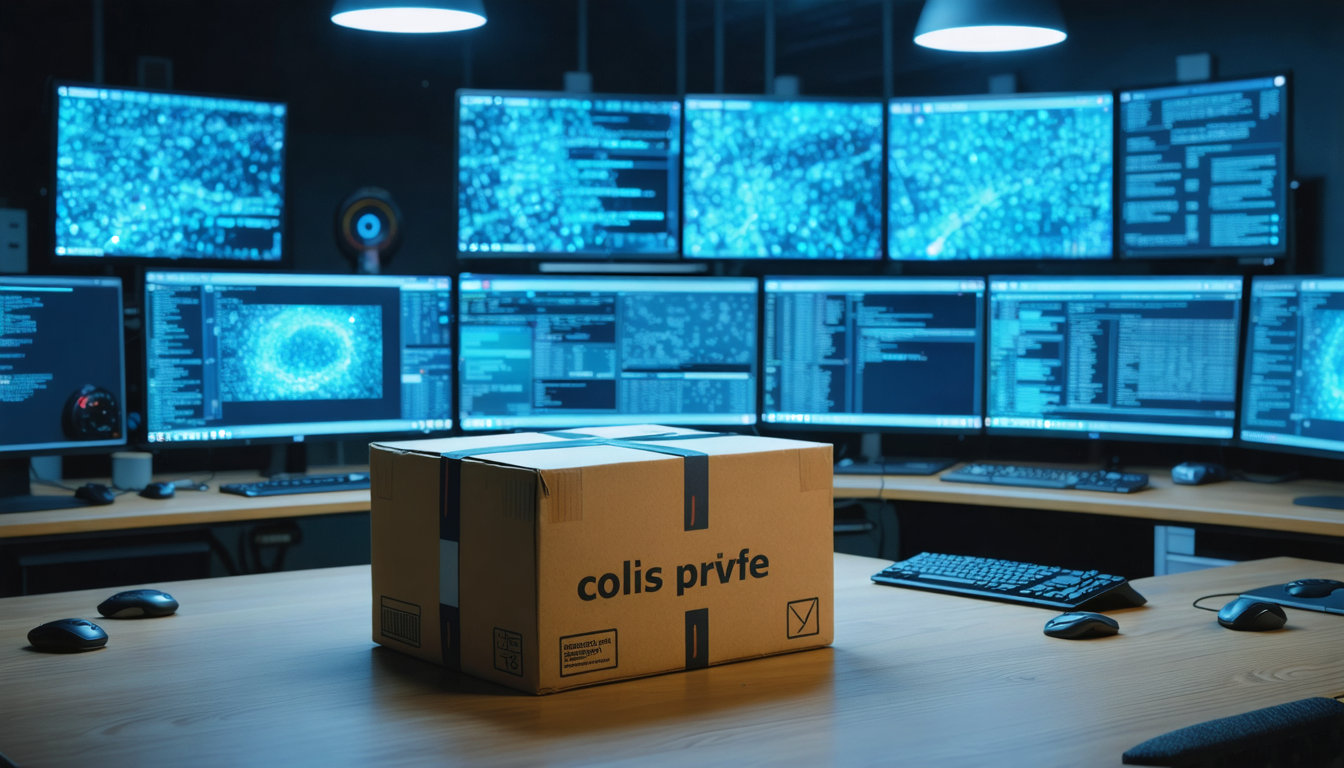
French cybersecurity is once again plunged into uncertainty following the revelation of a massive personal data leak linked to the carrier Colis Privé. More than 22 million records containing highly sensitive information, including names, postal addresses, emails, and phone numbers, are now freely available on the Dark Web. This data exposure weakens millions of French citizens, including agents from sensitive public institutions. Since last autumn, when the cyberattack was initially confirmed, the consequences have continued to intensify with cybercriminals actively exploiting the data for delivery scam campaigns, amplifying the threat to consumers and businesses. This case highlights the major challenges that French companies must face to ensure the protection of confidential information in a context of ever-evolving cyber threats.
- 1 Detailed analysis of the data leak at Colis Privé and its implications in 2026
- 2 Mechanisms of personal data exposure on the Dark Web and their practical consequences
- 3 Specific risks faced by public agents and sensitive services following the Colis Privé hack
- 4 Data protection strategies and prevention after a major cyberattack: lessons to be learned
- 5 Future perspectives: the evolution of hacking and the growing importance of personal data protection in France
Detailed analysis of the data leak at Colis Privé and its implications in 2026
Last autumn, Colis Privé admitted to having suffered a severe cyberattack, resulting in an unprecedented personal data leak in the French delivery sector. Hackers, including a French group named Dumpsec, revealed nearly 15 million profiles, but the actual scale now exceeds 22 million pieces of exposed information thanks to the recent release of the directory on a Dark Web forum. This database includes not only French data but also Belgian and Luxembourgish data, making it one of the largest data leaks in Europe to date.
The compromised information includes basic but critical elements such as names, first names, postal addresses, emails, and phone numbers, enabling cybercriminals to mount targeted attacks with a high degree of credibility. A worrying feature of this leak is the presence of more than 500 clearly identifiable public agents from sensitive institutions such as the Ministry of the Interior, the DGFiP, or the National Gendarmerie. This intrusion thus endangers not only individuals but also the integrity of certain state services.
The impact of this leak goes far beyond a simple breach of confidentiality. By exposing this mass of information, the hackers provide leverage for particularly sophisticated phishing scam attacks. Fraudsters send phishing SMS messages simulating delivery problems, directly exploiting the stolen data to persuade victims to provide additional information or banking data via fraudulent websites. These methods perfectly illustrate how a cyberattack can lead to real, strategic, and financial risks for millions of individuals, but also for the reputation and security of the companies involved.
Mechanisms of personal data exposure on the Dark Web and their practical consequences
The Dark Web is a digital space where illegally obtained information freely circulates, making data that victims thought protected accessible to the widest audience. In the case of Colis Privé, the leak culminated with the public availability of a colossal volume of records that any malicious actor can access. This phenomenon illustrates the main issue of modern cybersecurity: the protection of personal data once it has left the secure environments of companies.
To understand this dynamic, several phases must be distinguished: the initial attack, the data theft, then their dissemination and exploitation. From the intrusion into Colis Privé’s systems, the hackers copied entire databases of sensitive information. While the company is racing to repair and secure its systems post-attack, the data is already circulating on obscure online platforms. Their distribution is accompanied by monetization in the cybercriminal environment or direct use for fraud purposes.
The complexity of this exposure is doubled by the multiple risks incurred by the victims:
- Phishing and identity theft: The information allows precisely targeting users with credible messages, greatly increasing the success rates of scams.
- Extortion and blackmail: The combination of personal data and physical addresses facilitates financial or intimidating threats.
- Invasion of privacy: The revelation of confidential information can cause lasting relational and professional damage.
The major problem is that even after patching the flaws, the impact persists as long as this information circulates. In 2026, this situation reminds us that confidentiality no longer depends solely on internal measures but on the ability to anticipate and respond to the consequences of already perpetrated hacks. The massive exposure on the Dark Web is a glaring illustration of this and calls for increased vigilance regarding data management within French companies.
Specific risks faced by public agents and sensitive services following the Colis Privé hack
One of the most alarming aspects of this leak is the presence of data belonging to more than 500 clearly identifiable public agents. They come from strategic administrations such as the Ministry of the Interior, the Directorate General of Public Finances (DGFiP), the National Gendarmerie, or several prefectures. The exposure of this information carries particularly critical security stakes.
In the current context of cross cyber threats and digital espionage, the compromise of public agents’ personal data can serve several malicious purposes:
- Targeted espionage and compromise of services: The data enables hostile actors to identify and target specific agents for social engineering operations aimed at accessing strategic information.
- Destabilization of institutions: The publication of personal addresses or contacts can create an atmosphere of insecurity, risking weakening trust in public services.
- Increase in advanced phishing attempts: These professionals may receive finely personalized attacks due to the level of detail of the exfiltrated data.
This situation raises major questions regarding the protection of civil servants in the digital domain, calling for dual vigilance from both employers and the agents themselves. Beyond Colis Privé, it challenges the overall framework of data protection within administrations.
The leak also highlights the need for strengthened collaboration between the private and public sectors to ensure coherent cybersecurity, taking into account the overlaps between logistic services and sensitive government data. Ultimately, the digital security of public agents is an unavoidable link for the stability of all institutional systems.
Data protection strategies and prevention after a major cyberattack: lessons to be learned
The Colis Privé leak has become a case study on how companies must approach data protection in the digital age. Faced with the growing complexity of threats, having traditional firewalls or antivirus software is no longer enough. Here are some essential strategic teachings:
- Regular and robust audit: Early detection of vulnerabilities limits the scope of a leak. Frequent penetration testing and system monitoring are essential.
- Extended data encryption: Even in case of illicit participation, data must not be exploitable without a secure cryptographic key.
- Staff training and awareness: The human factor remains the major vulnerability. Learning to recognize phishing and signs of intrusion is a critical part of protection.
- Rapid response plans: A coordinated reaction in case of cyberattack can reduce damage by limiting data dissemination.
- Collaboration with authorities: Rapid reporting to regulatory and cybercrime control bodies optimizes post-incident management.
Additionally, transparency with clients and users is fundamental to restoring trust. In a digital environment where confidentiality is constantly threatened, implementing an integrated and dynamic security policy becomes an absolute imperative.
| Cybersecurity Measure | Objective | Expected Impact |
|---|---|---|
| Vulnerability audit | Identify flaws and risks in systems | Reduction of entry points for hackers |
| Data encryption | Protect data even in case of theft | Inability to exploit without key |
| Staff training | Raise awareness of cyber threats | Reduction of human errors |
| Incident response | Intervene quickly after an attack | Damage limitation |
| Collaboration with authorities | Ensure coordinated intervention | Improvement in the fight against cybercrime |
Future perspectives: the evolution of hacking and the growing importance of personal data protection in France
The Colis Privé case serves as a serious warning for the entire French digital sector. Cyberattacks are becoming more complex and widespread, making the protection of personal data more crucial than ever. In 2026, at a time when rapid delivery technologies are multiplying, the risks associated with customer databases lie at the heart of cybersecurity in e-commerce.
Faced with the rise of hacker groups, France must strengthen its efforts on several levels:
- Strengthening regulations: Stricter standards require companies to better protect data and react more effectively in case of attack.
- Development of cybersecurity skills: Recruiting and training digital experts is essential to anticipate threats.
- Citizen involvement: Raising public awareness about personal data protection becomes a major democratic issue.
The leak at Colis Privé underscores that information security no longer depends solely on technical systems but also on overall governance involving private actors, public institutions, and users. By integrating these perspectives, France will be better able to counter cyberattacks and guarantee the confidentiality essential to preserving trust in the digital economy.