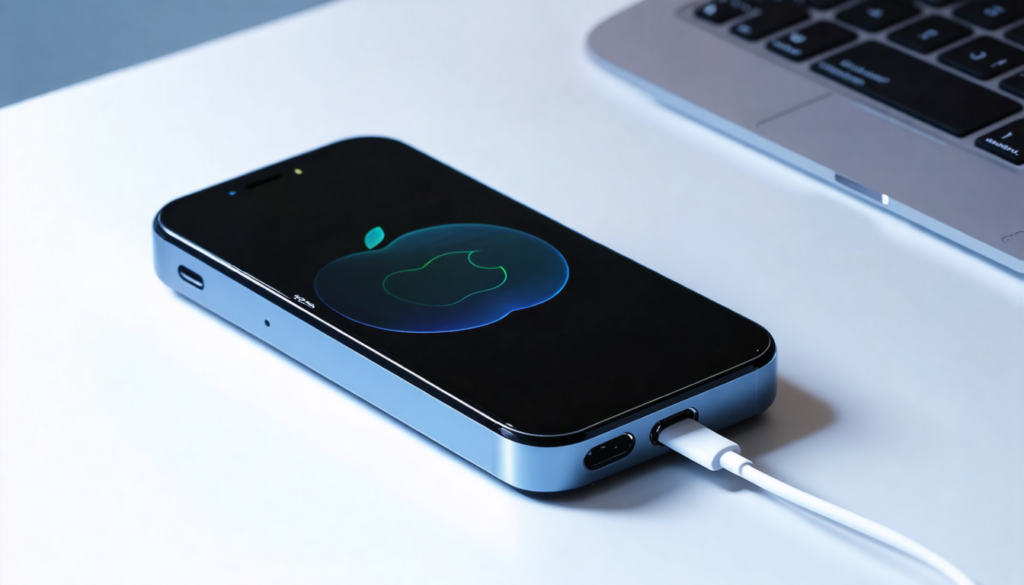
On September 19, 2025, a major revelation shakes the world of mobile technology: OpenAI, the undisputed leader in conversational artificial intelligence with ChatGPT, has sealed a strategic partnership with two heavyweights in Apple’s supply chain, Luxshare and Goertek. This unprecedented collaboration aims to design a smart pocket device, natively conceived for AI, capable of radically transforming our digital interactions. The alliance between OpenAI and Apple, which goes beyond simple software integration, paves the way for a device blending hardware and artificial intelligence, like an advanced voice assistant without a main screen, ready to be launched on the market between late 2026 and early 2027.
At the heart of this strategy is the desire to leverage Apple’s recognized expertise in design and ergonomics, as well as the massive production capabilities offered by its Chinese suppliers. The advanced integration of ChatGPT technologies promises to democratize a smooth and contextual AI experience, relying on an audio-first interaction. This announcement marks a new milestone in the collaboration between two major players in tech, redefining mobile uses, between hardware innovation and omnipresent artificial intelligence.
- 1 A strategic partnership between OpenAI and Apple’s suppliers to transform mobile technology
- 2 The key role of Apple talents in the development of the ChatGPT Phone
- 3 From design to production: how Luxshare and Goertek turn vision into reality
- 4 Hardware and software innovations of the ChatGPT Phone: a concentrate of artificial intelligence
- 5 Potential impacts on the mobile technology market and users
- 6 Security and privacy issues related to the integration of ChatGPT in a native mobile device
- 7 Analysis of future perspectives: towards a complete ecosystem of native AI devices
- 8 Technical and commercial challenges for the launch of the ChatGPT Phone
- 9 Practical applications and concrete impacts of the ChatGPT Phone for users in daily life
A strategic partnership between OpenAI and Apple’s suppliers to transform mobile technology
The partnership between OpenAI and Apple’s major suppliers, Luxshare and Goertek, constitutes an alliance of unprecedented scope in the mobile technology sector. It is no longer just a simple integration of ChatGPT into existing services but a co-design of a native AI device, intended to revolutionize interactions between users and artificial intelligence.
This strategic collaboration rests on several essential pillars:
- Use of highly specialized skills: OpenAI relies on former Apple talents recruited following the major acquisition of the startup io Products, led by Jony Ive, Apple’s former chief designer.
- Large-scale manufacturing: Luxshare, already Apple’s partner for many components, ensures the industrial capacity necessary to transform a prototype into millions of marketable units.
- Integrated hardware innovation: The device is designed to fully exploit the advanced capabilities of GPT models, without being limited by the constraints of traditional smartphones or computers.
The realization of this partnership thus transforms the traditional relationship between Apple and OpenAI, with advanced integration of suppliers to guarantee perfect coherence between hardware and software.
| Partner | Role in the partnership | Key contribution |
|---|---|---|
| OpenAI | AI developer and software designer | Provision of GPT-4o models & expertise in artificial intelligence |
| Luxshare | Main manufacturer | Mass assembly and large-scale production |
| Goertek | Audio components supplier | Audio modules for voice interactions and recognition |
Thanks to this synergy, technological innovation on mobile takes a new step forward, facilitating access to advanced artificial intelligence through a device originally designed for this purpose.
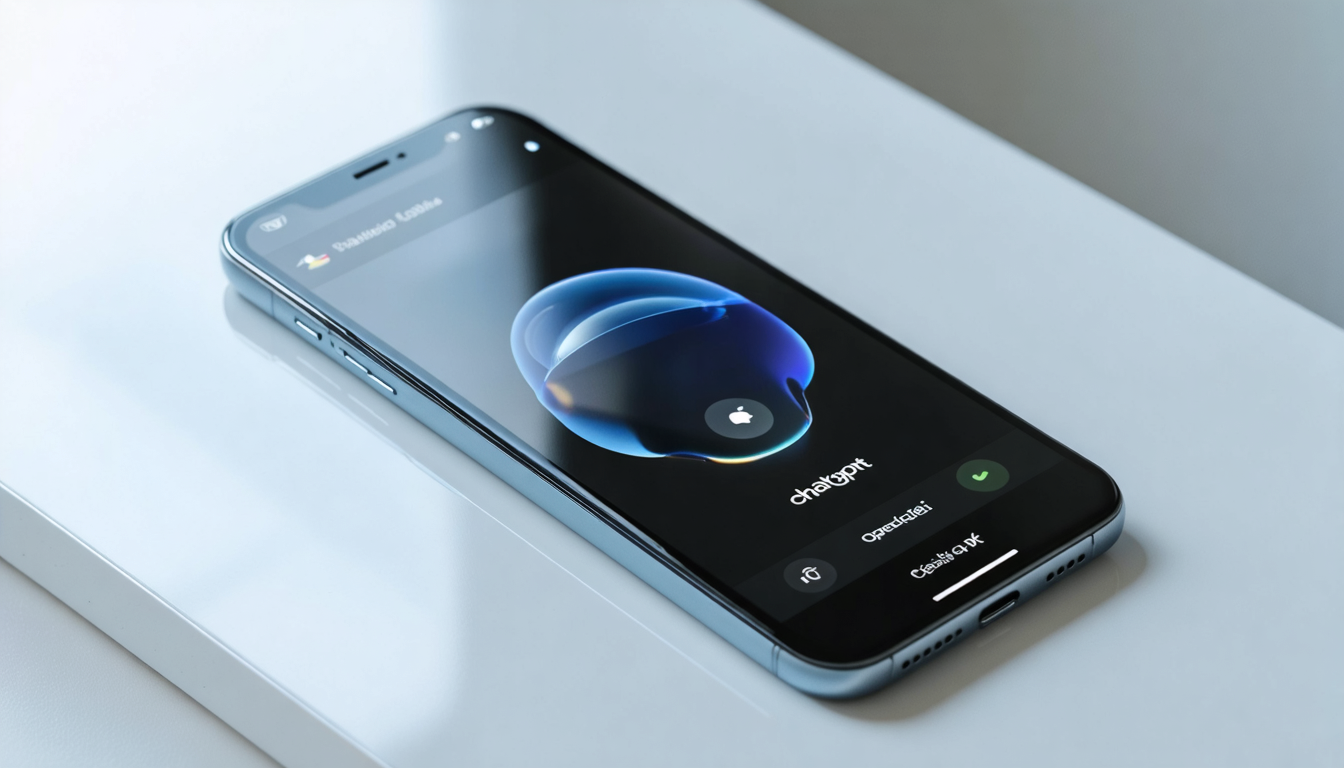
The key role of Apple talents in the development of the ChatGPT Phone
The success of a revolutionary product often arises from the quality of its creators. OpenAI, by strengthening its team with iconic figures from Apple design, invests in rare expertise to conceive a device thought from the start for mobile artificial intelligence.
In May 2025, the acquisition of io Products, Jony Ive’s startup, symbolizes this decisive step. Valued at 6.5 billion dollars in stock, this operation attracts emblematic Apple collaborators:
- Jony Ive: Responsible for design and overall product vision.
- Evans Hankey: Expert in industrial design, former pillar at Apple.
- Tang Tan: Architect of Apple interface and hardware design.
They are now accompanied by more than twenty-five engineers and designers coming directly from Cupertino, notably:
- Cyrus Daniel Irani: Former head of the Human Interface Design team.
- Matt Theobald: Industrial design veteran with seventeen years of experience at Apple.
- Erik de Jong: Co-director of Apple Watch hardware, specialist in wearables.
This multidisciplinary team is working on creating a hardware ecosystem integrating ChatGPT smoothly, in a device that exceeds the limits of traditional smartphones. For example, this device is designed to:
- Capture ambient context and adapt in real-time.
- Ensure a naturally vocal and intuitive interaction.
- Combine sleek design with advanced functionality.
This alliance between Apple’s excellence and OpenAI’s innovation heralds a new era where mobile technology will become truly intuitive and integrated from its foundations.
| Recruited Apple personality | Former position | Expected contribution on ChatGPT Phone |
|---|---|---|
| Jony Ive | Apple Chief Designer | Artistic direction, product design |
| Evans Hankey | Apple Industrial Design Director | Aesthetics, ergonomics |
| Cyrus Daniel Irani | Head of Human Interface Design | User interface and voice experience |
| Matt Theobald | Senior Industrial Designer | Hardware design and integration |
In the development of such an innovative product as the ChatGPT Phone, moving from idea to prototype, then to mass production, is a major challenge. Luxshare and Goertek play a fundamental role in this ecosystem by making large-scale production possible without compromising on quality.
Luxshare has been a key player in Apple’s supply chain for many years. Its assembly expertise, combined with remarkable industrial capacity, allows it to quickly transform prototypes into millions of devices ready for worldwide distribution.
Goertek, an audio components specialist, brings its know-how in providing essential modules for voice interaction. Its expertise is notably leveraged in AirPods, HomePods, and Apple Watch technologies, ensuring optimal sound quality and microphone sensitivity for a high-performance voice assistant.
- Rapid and high-precision assembly capabilities enabling maintenance of Apple’s high standards.
- Integration of advanced audio technologies to capture sound context and improve voice recognition.
- Production cost optimization to ensure commercial accessibility for a revolutionary product.
Together, Luxshare and Goertek ensure that the vision developed by OpenAI and its Apple designers is embodied in a tangible, reliable product ready for a competitive market.
| Supplier | Specialty | Contribution |
|---|---|---|
| Luxshare | Assembly and production | Manufacturing of components and device assembly |
| Goertek | Audio and microphone components | Integrated microphone modules and speakers for voice interaction |

Hardware and software innovations of the ChatGPT Phone: a concentrate of artificial intelligence
The ChatGPT Phone promises to disrupt current mobile technology standards thanks to a native integration of ChatGPT directly in the hardware. The device is designed to operate without a main screen or traditional keyboard, offering a user experience centered on voice recognition and contextual intelligence.
The innovations are organized around several axes:
- “Audio-first” voice assistant: natural interaction, active listening to ambient context, immediate response capability.
- Environmental sensors: recognition of sounds and atmospheres to adjust AI responses.
- Integrated GPT-4o models: providing information, recommendations, and real-time actions.
This innovative approach deviates from traditional devices by placing AI at the very heart of the process, rather than as a mere additional feature. The goal is to create an intelligent companion capable of adapting to personal and professional needs, offering unprecedented understanding and interaction capabilities.
| Feature | Description | User benefit |
|---|---|---|
| Audio-first design | Preferred voice interaction without touchscreen | Simplified, hands-free and natural use |
| Context awareness | Real-time analysis of acoustic and situational environment | Responses adapted to the user’s precise context |
| GPT-4o integration | Advanced language processing and content generation | Fluent communication with a smart and relevant assistant |
This architecture also ensures optimal power management and data security, two crucial challenges in 2025 for an intelligent mobile device.
Potential impacts on the mobile technology market and users
The imminent arrival of the ChatGPT Phone on the market by 2026-2027 already arouses many expectations. This product could profoundly transform how users interact with their devices and more broadly how AI infiltrates daily life. The potential fallouts are numerous:
- Reinvention of mobile interactions: leaving aside the touchscreen for voice communication focused on fluidity and immediacy.
- New use cases: enriched contextual assistance, instant translation, help with writing, or even intelligent automation.
- Enhanced accessibility: opening up to a broader audience, particularly people with reduced mobility or visual impairments.
- Transition to an integrated hardware-software ecosystem: a giant leap toward omnipresent and coherent AI in all aspects of mobile life.
| Expected effect | Description | Beneficiaries |
|---|---|---|
| Smoother usage | Natural and intuitive interaction through voice | General public and professional users |
| Increased accessibility | Alternative interfaces for people with disabilities | People with specific needs |
| Integrated ecosystem | Seamless hardware and software combination | Developers and hardware manufacturers |
Beyond technological performance, this product ushers in a new era where dialogue between humans and machines will occur more naturally and constantly, thus transforming the digital lives of millions of users.
The omnipresence of embedded artificial intelligence in a device as personal as the ChatGPT Phone raises fundamental questions about security and data confidentiality. Apple, recognized for its high standards in this field, remains a key player to ensure user protection.
Several challenges have been identified:
- Protection of voice data: securing exchanges and limiting risks of leaks or malicious use.
- Local data management: prioritizing local processing to minimize transmissions to the cloud.
- User consent: ensuring strict control of permissions and transparency in data usage.
- Advanced encryption mechanisms: integrated into hardware and software frameworks.
Apple and OpenAI are working jointly to implement robust solutions, notably:
- Use of secure hardware security modules (enhanced Secure Enclave).
- Advanced decentralized processing techniques (edge computing).
- Clear interfaces for privacy management aimed at users.
| Issue | Proposed solution | User impact |
|---|---|---|
| Data protection | Hardware encryption and local control | Enhanced trust |
| Privacy | Edge computing processing | Less data sent to the cloud |
| Transparency | Clear user interfaces | Better understanding and control |
Analysis of future perspectives: towards a complete ecosystem of native AI devices
If the release of the ChatGPT Phone is a major milestone, it is only the first building block of a much larger ecosystem envisioned by OpenAI and Apple. The deep integration of artificial intelligence in hardware opens unprecedented perspectives for new form factors and experiences.
The explored avenues include:
- Connected smart glasses: combining voice assistant and augmented reality display.
- Advanced wearables: portable devices capable of interpreting the user’s physical and psychological context.
- Connected home: integration of contextual AI in smart domestic devices.
This vision is based on a coherent strategy aiming to:
- Create a unified user experience around AI.
- Offer natural and continuous interactions.
- Provide full compatibility between different native devices.
| Device type | Main functionality | Expected benefits |
|---|---|---|
| ChatGPT Phone | Native mobile voice AI assistant | Simplified and personalized interaction |
| Connected glasses | Augmented reality and contextual assistance | New immersive uses |
| Wearables | Contextual and biometric analysis | Improved wellbeing and productivity |
The future looks rich in innovations, thanks to this strategic collaboration between OpenAI and Apple’s suppliers, which could position Cupertino as the undisputed leader in the mobile AI market.
Technical and commercial challenges for the launch of the ChatGPT Phone
The ambitions of the ChatGPT Phone are vast, but they come with considerable challenges, both technical and commercial. The success of the launch in an ultra-competitive market remained an unknown until 2025, notably due to integration complexity and high consumer expectations.
The main challenges identified are:
- Energy optimization: deploy a powerful AI while maintaining comfortable autonomy.
- Fluid user experience: guarantee natural and responsive interaction, without perceptible latency.
- Pricing positioning: balance high production cost and commercial accessibility.
- Personal data management: meet strict regulatory requirements while ensuring transparency.
To overcome these obstacles, OpenAI and its partners rely on:
- A custom hardware design integrating intelligence and energy efficiency.
- Optimized software to reduce response times.
- Targeted marketing strategies to attract both early adopters and the general public.
- Clear and differentiating privacy policies.
| Challenge | Description | Envisioned solutions |
|---|---|---|
| Energy autonomy | Maintain long battery life | Advanced hardware and software optimization |
| UX fluidity | Latency reduction | AI accelerators and software optimizations |
| Pricing | High cost versus sales volume | Mass production and economies of scale |
| Data protection | GDPR compliance and security | Local encryption and transparency |
These challenges, while significant, are at the core of the strategy to make the ChatGPT Phone a benchmark in mobile technology by the end of the decade.
Practical applications and concrete impacts of the ChatGPT Phone for users in daily life
The native integration of ChatGPT in a mobile device opens the way to a multitude of practical uses, fostering a natural, intuitive, and enriching interaction with technology. The daily benefits are numerous:
- Increased productivity: contextual assistance in writing emails, taking notes, and organizing tasks.
- Facilitated communication: instant translation and conversation summarization for universal understanding.
- Decision support: contextual recommendations based on preferences and specific situations.
- Personalized support: vocal coaching in mental health, fitness, or stress management.
These features notably offer a true compact of artificial intelligence accessible anywhere, effortlessly and in natural conversation.
| Use | Description | User benefit |
|---|---|---|
| Writing and organization | Help generating content and structuring days | Time saving and efficiency |
| Multilingual communication | Instant translation | Facilitated access to international exchanges |
| Personalized recommendations | Advice tailored to the user | Informed and relevant decisions |
| Personal coaching | Vocal follow-up and motivation | Improved wellbeing and balance |
The arrival of the ChatGPT Phone thus marks a key step, offering pervasive technology that supports its users throughout their days, turning the potential of AI into a true daily ally.