
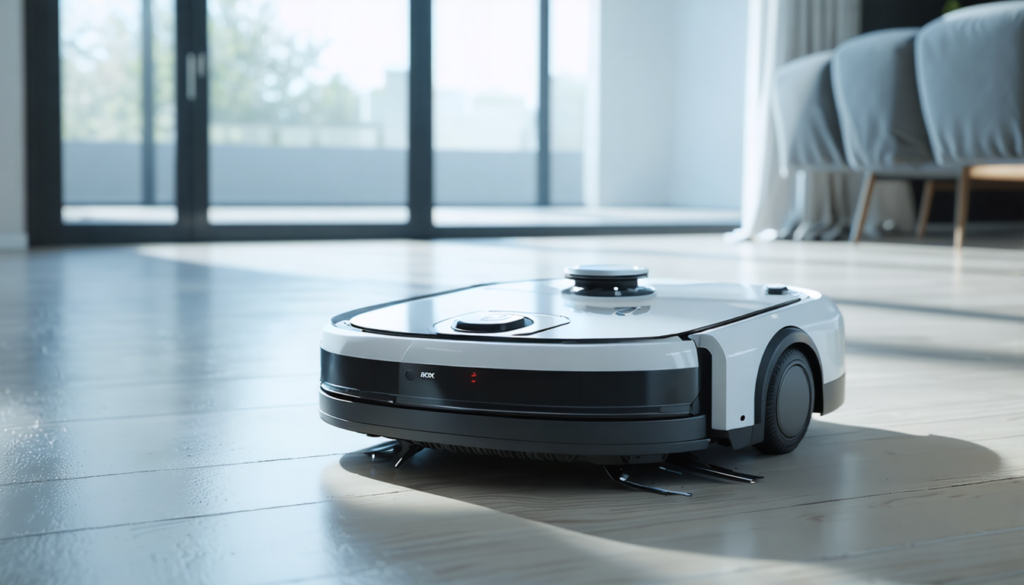
At the heart of CES 2026, the unmissable global consumer technology show, Roborock makes a big splash with an innovation that redefines robotic mobility for the home. No more machines confined to the floor, welcome a robot vacuum cleaner that climbs, jumps, and above all walks thanks to extendable legs. A surprise that opens new horizons in the field of autonomous cleaning and highlights Roborock’s ability to combine technical performance and boldness. This technological feat demonstrates how the brand continues to push the limits of artificial intelligence embedded in its household robots.
But the innovation of the Saros Rover is not limited to its legs: this prototype, although not yet marketed, illustrates a new approach to domestic navigation, capable of climbing stairs and various obstacles with unprecedented agility. At the same time, classic but greatly improved models are appearing, promising increased performance and ease of use. Roborock thus showcases an expanded range meeting a growing demand for smart devices, capable of ensuring thorough and efficient cleaning in increasingly complex spaces.
- 1 Roborock Saros Rover: the first walking robot vacuum pushing the boundaries of autonomous cleaning
- 2 A closer look at the AdaptLift Chassis 3.0 technology of the Saros 20 to easily cross thresholds
- 3 The Saros 20 Sonic: innovation in domestic washing with a semi-circular vibrating head
- 4 Roborock Qrevo Curv 2 Flow: hybrid design for targeted cleaning of hard floors
- 5 Technological innovations redefining the uses of household robots
- 6 Interconnection and artificial intelligence at the core of domestic robotics with Roborock
- 7 Comparison of technical specifications of the Roborock models presented at CES 2026
- 8 Evolution and challenges ahead for domestic robotics according to Roborock
Roborock Saros Rover: the first walking robot vacuum pushing the boundaries of autonomous cleaning
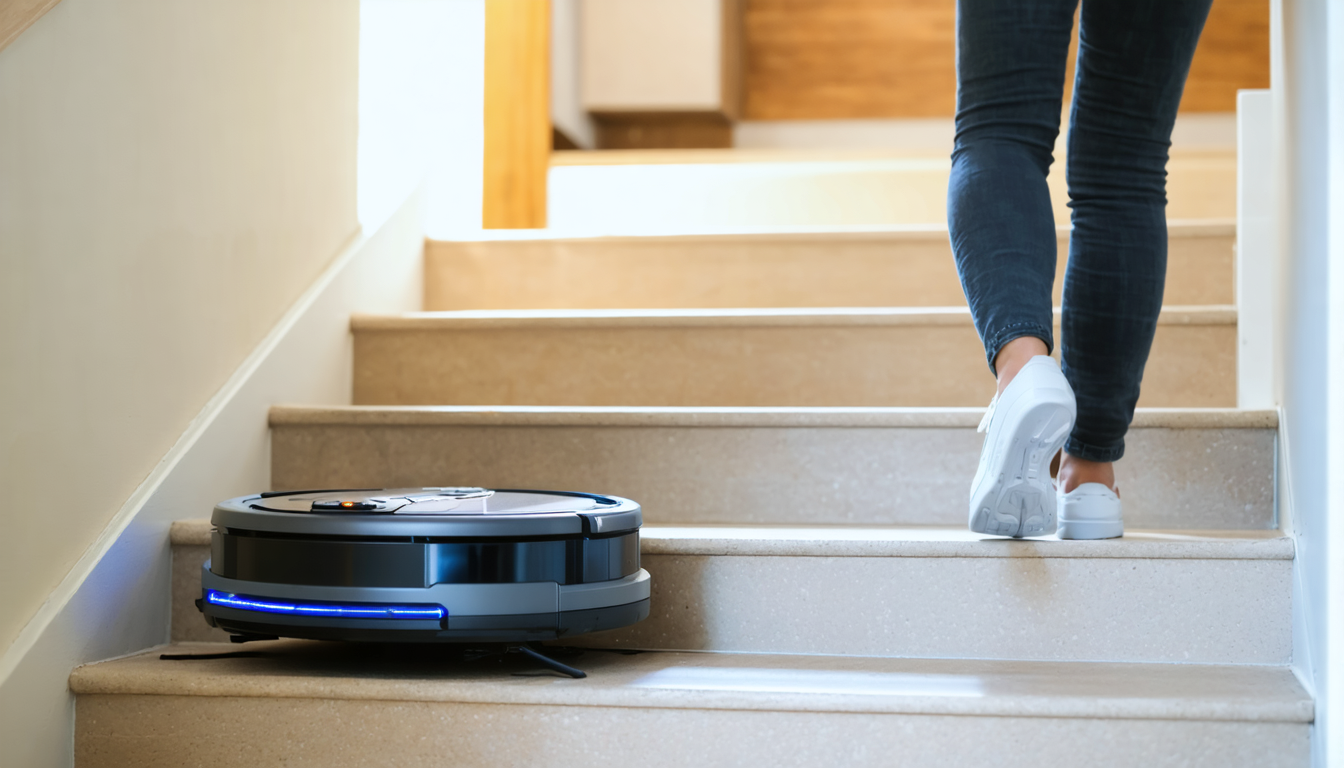
With the presentation of the Saros Rover at CES 2026, Roborock achieves a major breakthrough in domestic robotic mobility. Unlike traditional circular robot vacuums, this model adopts a rectangular silhouette equipped with two sturdy wheels complemented by telescopic legs. This unprecedented system allows the Saros Rover to perform complex movements: going up and down stairs, overcoming obstacles, even making slight jumps to avoid some debris.
The engine behind such innovation is based on a dynamic balance comparable to that of a hoverboard, ensuring stability even when the device rests only on its two wheels, operated in perfect coordination with its extensible legs. Thus, this walking robot transforms the maneuverability of autonomous vacuums, whose agility until now had significant limitations in multi-level interiors.
Concrete example: imagine a living room on the ground floor, connected to a mezzanine cluttered with objects and strewn with rugs. The Saros Rover can adjust its height, navigate stairs without human intervention, and maintain a continuous cleaning route, ensuring effective dust removal everywhere, including in areas usually out of reach of standard robots.
This innovation paves the way for a redefinition of domestic uses. It also raises the question of spatial safety and intelligent environment management, areas in which Roborock has integrated an advanced system of sensors and artificial intelligence algorithms. This promising prototype illustrates the in-depth thinking about the future of household robots, beyond simple cleaning, toward a more autonomous and adaptive role in our homes.
A closer look at the AdaptLift Chassis 3.0 technology of the Saros 20 to easily cross thresholds
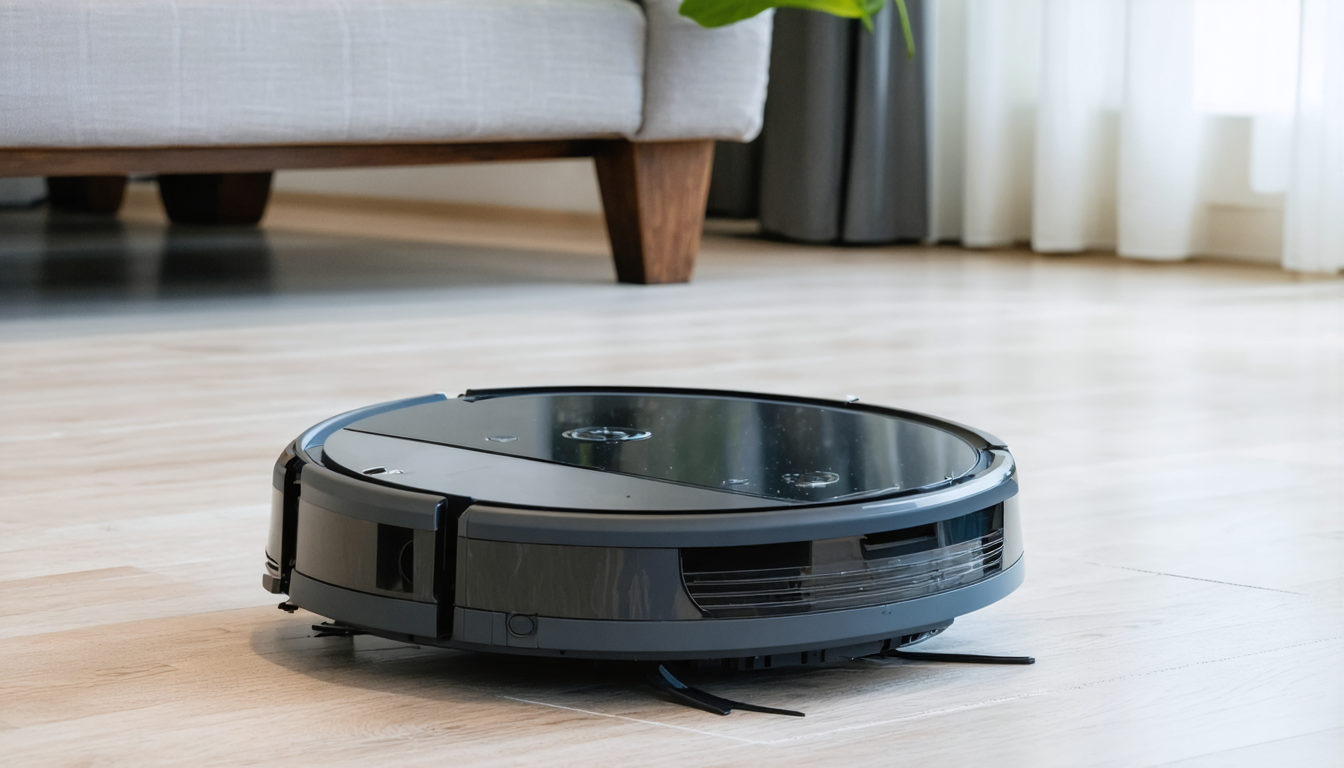
The Roborock range is not limited to the Saros Rover. Indeed, the Saros 20, successor to the Saros 10 known for its efficiency, introduces an improved version of the patented AdaptLift Chassis 3.0 system. This innovative mechanism allows the robot to easily overcome obstacles up to 4.5 centimeters for a single threshold, and 4 centimeters for double thresholds, frequently encountered in modern homes.
Concretely, a compact set of rollers temporarily lifts the chassis when an obstacle is detected, thus facilitating passage without risk of blockage. This technology is not limited to simple mechanical force; it relies on a form of adaptive learning: the robot memorizes successful crossings to optimize future crossings, making movement smoother and faster over the long term.
Use case: in a home alternating tiled floors and rugs, as well as doors with thick thresholds, the Saros 20 manages to navigate smoothly. This eliminates human interaction to manually reposition the device, greatly increasing autonomy and ease of use — essential criteria for the most demanding users.
Adding to this system is a powerful motor reaching 35,000 pascals of suction, placing this model among the most powerful on the market. The features remain of course available: combined vacuuming and floor washing, reflecting increasingly comprehensive and versatile home technology.
The Saros 20 Sonic: innovation in domestic washing with a semi-circular vibrating head
The Saros 20 Sonic, the latest addition to Roborock’s robots, particularly innovates in the field of floor washing thanks to its semi-circular vibrating washing head. This technical specificity stands out due to a pressure reaching 14 newton-meters and a vibration frequency that can peak at 4,000 times per minute, offering deep cleaning even in corners thanks to the lateral deployment of the mop.
This innovation, surpassing traditional systems by simple friction, acts with the precision of controlled vibrations, resulting in more effective removal of ingrained dirt while respecting sensitive surfaces. Another notable advantage is that the mop cleans itself automatically thanks to the base station, which heats the water used for rinsing to 100 degrees, thereby limiting deposits and improving material durability.
Furthermore, in terms of navigation and environment detection, this model is equipped with a 360-degree LiDAR system, offering precise mapping of the home and allowing optimized routes to reduce cleaning time. Its innovative design includes a retractable dome enabling the robot to circulate through very narrow passages of about 20 centimeters, opening up previously unseen possibilities.
Two stations are offered to accompany this robot: a traditional station with clean and dirty water reservoirs, and another compatible with direct connection to pipes, for increased autonomy. These features make the Saros 20 Sonic particularly suitable for demanding households where floor cleanliness is a constant priority.
Roborock Qrevo Curv 2 Flow: hybrid design for targeted cleaning of hard floors
In the same vein of innovation, Roborock presents the Qrevo Curv 2 Flow, a robot vacuum specifically designed for hard floors, with a hybrid and sophisticated approach. This model relies on a rotating mop capable of reaching 220 revolutions per minute, applying a pressure of 15 newtons on the surfaces to be treated. This power guarantees an effective mechanical action to remove dirt and stains in a single pass.
The mop can also deploy laterally to reach edges and corners, areas often neglected by classic vacuums. The integrated squeegee limits residual moisture, thus reducing the risk of annoying water marks on floors. Moreover, to protect rugs and other nearby sensitive surfaces, the mop features a 15-millimeter elevation function.
Regarding suction, although less powerful than models in the Saros range with its 20,000 pascals, it remains efficient for fine dust and common debris. However, this robot does not have threshold-crossing capabilities, making it suited for well-adapted interiors without major architectural challenges.
Scheduled for release on January 19, 2026, this hybrid model is offered at a promotional price of $849 before reaching $999 from February 1. Its value for money positions it as an interesting alternative for consumers seeking a concentrate of technology dedicated to hard surfaces.
Technological innovations redefining the uses of household robots
Roborock does not limit itself to producing powerful robot vacuums; all the new products showcased at CES 2026 illustrate a strong desire to provide more than just a cleaning device. The combination of innovative mechanical systems, LiDAR sensors, automated stations, and evolving algorithms highlights an intelligent ecosystem serving the connected home.
Among the key criteria, mention:
- Adaptability of robots to complex environments: climbing stairs, navigating narrow spaces, crossing high thresholds.
- Energy optimization and increased autonomy: with automatic cleaning stations and dust bags with extended capacity, some models offer up to 65 days of autonomy without emptying.
- Quality of floor washing: controlled vibrations, rotating mops, and heating systems for deep sanitization.
- Smart interfacing: via mobile apps, voice recognition, and customization of cleaning cycles.
- Respect for materials and surfaces: automatic elevation of mops above rugs to avoid inappropriate moisture.
These advances contribute to the democratization of household robots, which are no longer simple assistants but truly versatile allies contributing to the improvement of living conditions.
Interconnection and artificial intelligence at the core of domestic robotics with Roborock
A major trend in 2026 is confirmed: the intensive use of artificial intelligence to make home robots ever more autonomous and adaptive. Roborock’s new devices integrate dedicated processors capable of real-time analysis of their environment, learning specific home layouts, and anticipating actions to be taken.
Thanks to machine learning, some robots not only memorize repeated routes but also adapt their suction power and washing modes according to the type of floor detected. This level of customization allows precise cleaning, without waste of energy, and respecting different surfaces.
A striking example is the extension of the AdaptLift Chassis system, which evolves with each use, making threshold crossing increasingly fast. This self-optimization capability is expected to become widespread in the coming years, promising a simplified user experience without intervention.
Finally, intelligent management of charging and cleaning stations further reduces necessary maintenance, making usage smoother and connecting these devices to a complete home automation environment.
Comparison of technical specifications of the Roborock models presented at CES 2026
To better grasp the diversity of innovations, here is a table summarizing the main technical specifications unveiled at CES 2026 by Roborock:
| Model | Mobility | Suction power | Washing functions | Threshold crossing | Dust bag autonomy | Special station | Release date |
|---|---|---|---|---|---|---|---|
| Saros Rover | Two wheels + extendable legs (stair climbing, jumps) | Not disclosed (prototype) | To be confirmed | Stair climbing | Not disclosed | N/A (prototype) | To be defined |
| Saros 20 | Classic wheel | 35,000 pascals | Vacuum + washing | Thresholds up to 4.5 cm | Up to 65 days | RoboDock washes and dries mop | 2026 (exact date not disclosed) |
| Saros 20 Sonic | Classic wheel with retractable LiDAR dome | Not specified | Semi-circular vibrating washes | Narrow passage 20 cm | Not specified | Two possible stations | 2026 |
| Qrevo Curv 2 Flow | Classic wheel | 20,000 pascals | Rotating mop at 220 rpm | No threshold management | Not specified | Standard | January 2026 |
Evolution and challenges ahead for domestic robotics according to Roborock
The innovation presented by Roborock at CES 2026 opens the way to a new era in the integration of domestic technologies. While most household robots still struggle with geographical limitations imposed by stairs and thresholds, Roborock chooses to broaden the scope of action, pushing boundaries until now set by ergonomics and safety.
However, despite these spectacular advances, challenges remain. The robustness of the extendable leg mechanisms, the safe management of movements to avoid hitting objects and inhabitants, as well as the lifespan of complex mechanical components, will be elements to monitor during prolonged use tests. Interaction with a variety of different floors, thick rugs, or coexistence with pets will add variables to validate the overall effectiveness of these innovations in everyday life.
Roborock seems aware that the introduction of such a walking robot vacuum must be accompanied by perfect software and hardware mastery, a guarantee of trust for users. The brand therefore relies on rigorous validation phases before making its prototype accessible to consumers.
Moreover, this technological breakthrough marks a step in the way household robots can extend their skills beyond simple cleaning: the future could reveal multifunctional devices, capable of monitoring, interacting, and intelligently adapting to our homes.