
Building a house is a major adventure, blending dreams of an ideal home with technical or regulatory constraints. In 2025, as construction safety and energy performance requirements become more stringent, choosing the right professional to realize your project becomes crucial. Among the most common options, the builder, the architect, and independent craftsmen represent three distinct paths. The builder appeals with comprehensive management and legal guarantees, the architect with a tailor-made approach and limitless creativity, while craftsmen offer the possibility of direct economic management but demanding involvement. Understanding the nuances of each expert and their implications on work quality, adherence to deadlines, and guarantees is essential to build your individual house with confidence. This expert choice has a lasting impact on the success of the site and the durability of the dwelling, hence the need for thorough consideration before signing.
- 1 The distinct role of the builder, architect, and craftsmen for a reliable construction plan
- 2 Guarantees and construction safety: why the builder reassures future owners
- 3 Architect: the guarantee of a personalized and technically mastered individual house
- 4 Managing your craftsmen yourself: an economic bet but under high vigilance
- 5 Simply comparing builder and project manager: table of guarantees and responsibilities in 2025
The distinct role of the builder, architect, and craftsmen for a reliable construction plan
Before harmonizing expectations between creativity, budget, and safety, it is essential to understand the missions and responsibilities of each professional involved in a residential project. The builder acts as a unique conductor, taking full charge of the project, from the development of plans to the handing over of keys. Generally, he offers standard models from customizable catalogs, which simplifies the choice for the client. This formula is regulated by the individual house construction contract (CCMI), guaranteeing a fixed price and a respected contractual deadline. The builder is the single point of contact who coordinates all trades, which reduces friction points and limits the risk of errors.
On the other hand, the architect offers an exceptional intellectual service. Graduated and recognized, he creates a truly personalized architectural project, adapted to the specificities of the land and the wishes of the client. The architect does not perform the work; he acts as the project manager by directly supervising craftsmen engaged by the client, who remains responsible for the contracts. This approach promotes a high degree of customization but requires greater involvement from the owner, who must oversee various participants and manage several contracts.
Finally, the direct management of craftsmen implies that the client becomes the project manager himself, handling recruitment, negotiating quotes, ordering materials, and coordinating the site. While this method promises substantial potential savings, it is very time-consuming and carries high risks, especially for novices in technical and administrative management of the works. For example, a delay by one craftsman can cause a domino effect, creating deadline overruns and possible defects. Thus, choosing the most suitable option largely depends on your availability, skills, and appetite to manage a complex project.
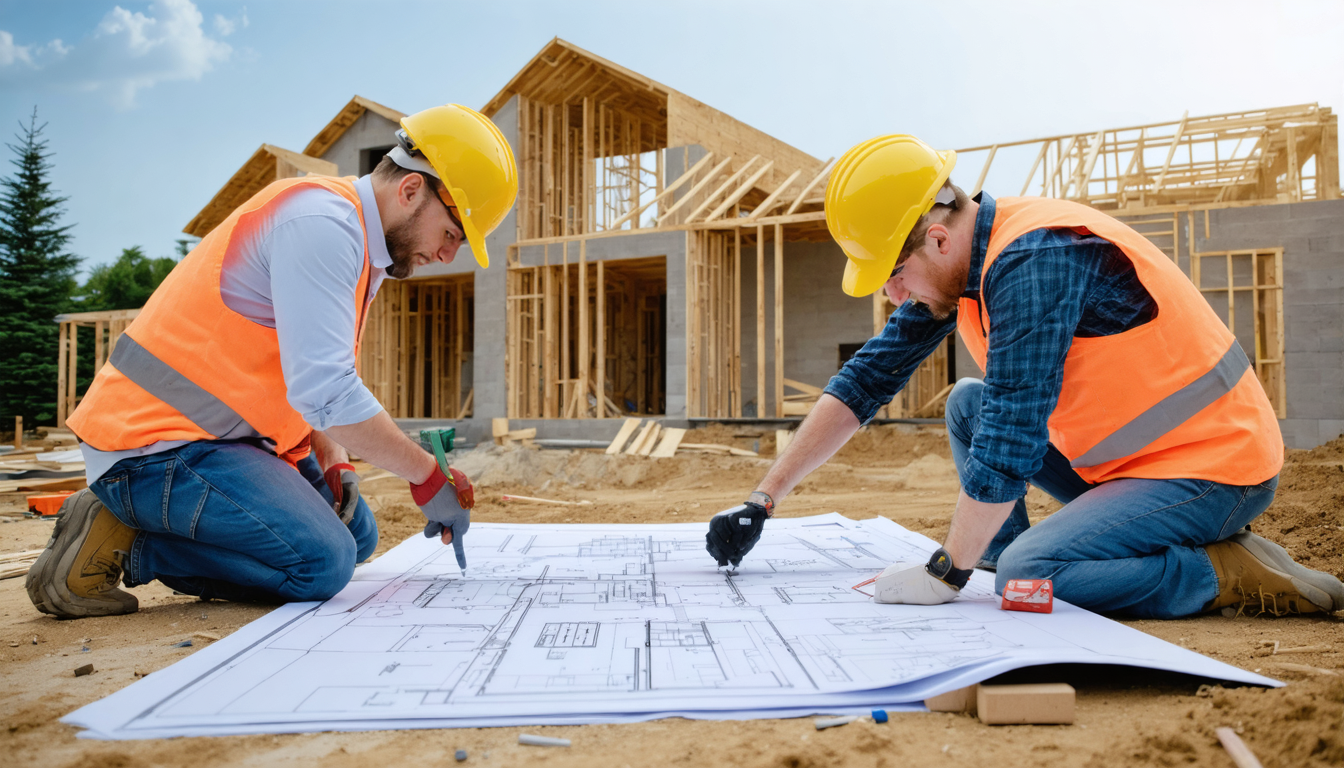
Guarantees and construction safety: why the builder reassures future owners
If peace of mind remains a priority for many future owners, choosing the builder often proves attractive thanks to the specific guarantees associated with the CCMI. This contract, governed by the 1990 law, offers a strict legal framework that protects the buyer. The first guarantee is the guarantee of delivery at agreed price and deadlines. Thus, in case of builder failure, a third-party guarantor (insurance or bank) takes over the continuation of the works without extra cost or delay.
The perfect completion guarantee ensures correction of any disorder reported during the first year after the work reception. Next comes the two-year guarantee, covering an additional two years the removable building equipment, such as faucets or shutters, which might experience malfunctions.
One of the most important is the ten-year guarantee, which insures the owner against damages compromising the solidity or structural quality of the house for ten years. The builder remains the only contractual party responsible, facilitating quick handling in case of claim.
Beyond the guarantees, the builder’s site manager plays a key role by centralizing all decisions and technical follow-up. This organization drastically reduces the owner’s mental load, who does not have to directly manage conflicts between craftsmen or logistical problems. The fixed price set in the contract also allows ideal budget control, avoiding unpleasant surprises.
In summary, for a buyer seeking simplicity and safety, the builder model is undoubtedly advantageous, even if this peace of mind often imposes a constraint on freedom of customization.
Architect: the guarantee of a personalized and technically mastered individual house
Choosing an architect means opting for a unique project, created with respect for the environment, your aspirations, and new standards such as RE2020. The architect’s strength is to design a home specifically thought out for you, integrating optimal orientation, the use of innovative and sustainable materials, as well as volumes adapted to your lifestyle.
Cost transparency is another advantage. Indeed, the architect issues calls for tenders for each work package, allowing comparison of several quotes from specialized craftsmen. You retain full control over technical and financial choices, unlike a turnkey solution. Moreover, the management of the ten-year guarantee and other insurances is ensured via direct contracts with each craftsman, freeing the architect from builder liability but keeping you as the owner.
Throughout the site, his expertise provides rigorous monitoring both technically and regulatory: building permit submission, compliance with the local urban plan (PLU), conformity with the latest environmental standards… This follow-up guarantees work quality and avoids inconsistencies or defects. The architect’s support is particularly valuable in complex land contexts or for those who want a “custom-made” house design from construction plan to finish.
This customization and rigor come at a cost, generally higher than the builder’s price, often ranging between 1,500 and 2,000 euros/m², or more for ambitious projects. The client’s involvement is also greater, with time to devote to various choices, follow-ups, and approvals. But for many, originality and technical quality fully justify this investment.
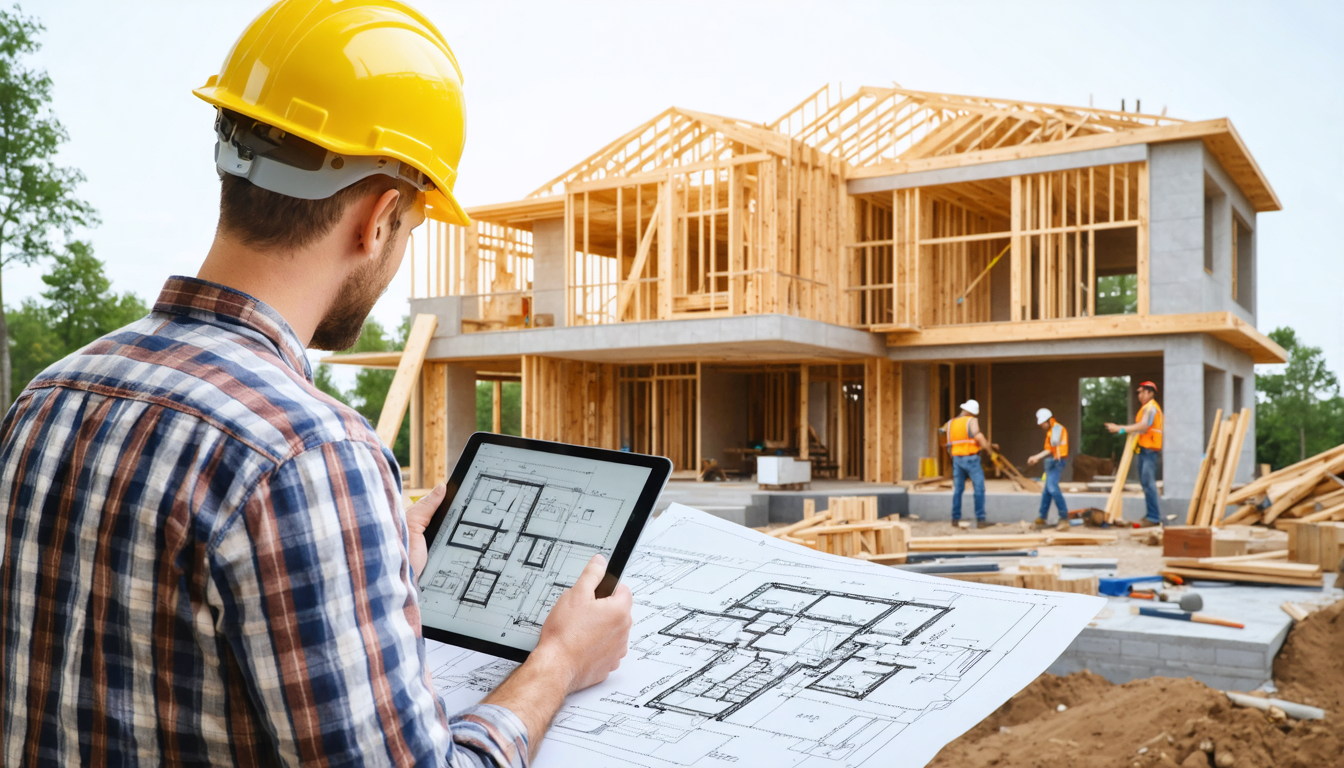
Managing your craftsmen yourself: an economic bet but under high vigilance
More and more owners consider coordinating craftsmen themselves, attracted by the prospect of substantial savings of 10 to 20%. This approach avoids builder margins or architect fees by negotiating quotes directly and precisely choosing materials.
However, as project owner and project manager, significant technical and organizational expertise is required. The slightest error in planning or follow-up can cause cascading delays, block the chain of works, and increase indirect costs. The risk of defects also increases, as it is difficult for a non-expert to detect faults or non-conformities before reception.
Another delicate point is the management of responsibilities. In case of problems between craftsmen — for example, a plumber damaging an electrical installation — the client must resolve conflicts and seek solutions, which can become a source of stress and tension. Moreover, it is up to you to rigorously verify the insurance of each professional, notably the ten-year guarantee, essential to be protected over time.
This management mode therefore requires availability, even a near full-time commitment, to frequently communicate with teams, coordinate various trades, and anticipate unforeseen events. Thus, this option is more suitable for people experienced in construction or ready to invest considerable time and energy to fully master the project.
Simply comparing builder and project manager: table of guarantees and responsibilities in 2025
| Criteria | Builder (CCMI) | Project manager (Architect) |
|---|---|---|
| Type of contract | Single contract (CCMI) | Project management contract + separate contracts with craftsmen |
| Price | Fixed, firm, and definitive | Estimated, depends on craftsmen’s quotes |
| Delivery guarantee | Mandatory, guaranteed by guarantor | No, owner assumes the risk |
| Project flexibility | Limited to catalog models | 100% custom, customizable |
| Overall responsibility | Falls to the builder | Shared between project manager and craftsmen |
| Cost transparency | Low (global price) | High (detailed quote for each craftsman) |
- A CCMI project guarantees safety, deadlines, and fixed costs, ideal for those seeking peace of mind and simplicity.
- The architect enables complete creativity, essential to build a truly personal house.
- Coordinating craftsmen yourself offers savings, provided you have solid skills and time to dedicate.
- Always verify craftsmen’s ten-year guarantees to ensure the building’s durability.
- Hiring an expert professional remains key to avoid unpleasant surprises and ensure quality construction.