
As the race for artificial intelligence intensifies, the major players in the technology sector are mobilizing like never before. Alphabet, Amazon, Meta, and Microsoft together plan to inject nearly 650 billion dollars into AI-related projects this year, an unprecedented amount on a global scale. These massive investments, revealed by Bridgewater Associates’ analysis, illustrate these giants’ deep commitment to dominate an expanding market. The financial power deployed far exceeds the projections for 2025, when 410 billion had been anticipated. This development marks a strategic turning point, with stakes commensurate with the sums involved.
Beyond the impressive figures, this surge in investments raises major questions about the long-term sustainability of such growth and the financial risks involved. Greg Jensen, co-chief investment officer at Bridgewater, warns against the increasing exposure to financial market fluctuations, exacerbated by a growing dependence on external funding and strong pressure on infrastructure development. These large-scale projects obviously affect key sectors such as data centers, specialized hardware, and optimization software, inseparable from the booming growth of artificial intelligence.
The challenge for these giants now is to balance technological innovation with rigorous cost management. In a context where demand for computing power is exploding and technologies are evolving rapidly, every investment decision will take on critical strategic importance. This dynamic marks a major milestone for global technology, which could have a lasting impact on the economic landscape and financial markets in the coming years.
- 1 The main reasons behind the massive artificial intelligence investments by tech giants
- 2 The essential role of data centers in the race for artificial intelligence
- 3 Financial risks related to the massive rise of AI investments by tech giants
- 4 Macroeconomic impacts of AI investments on the U.S. economy
- 5 Financial optimization strategies in the face of colossal AI investments
- 6 Implications for startups and the technology ecosystem around artificial intelligence
- 7 How the race for AI investments is revolutionizing the global financial market
- 8 Future prospects: innovations and regulations in the post-AI investment technological landscape
The main reasons behind the massive artificial intelligence investments by tech giants
Digital giants such as Alphabet, Amazon, Meta, and Microsoft are investing heavily in artificial intelligence mainly to maintain a competitive advantage in an ultra-competitive market. This investment race is explained by three fundamental reasons.
First, intense rivalry forces each of these players to strengthen their infrastructures and capacities, lest they see their position diluted. AI, with its disruptive potential, is a strategic zone where the first to offer cutting-edge technologies can capture a large market share. Indeed, the absence of large-scale deployment would represent a monumental loss of market share and vulnerability to competitors. This constant pressure thus drives these groups to plan colossal expenditures to anticipate future demands.
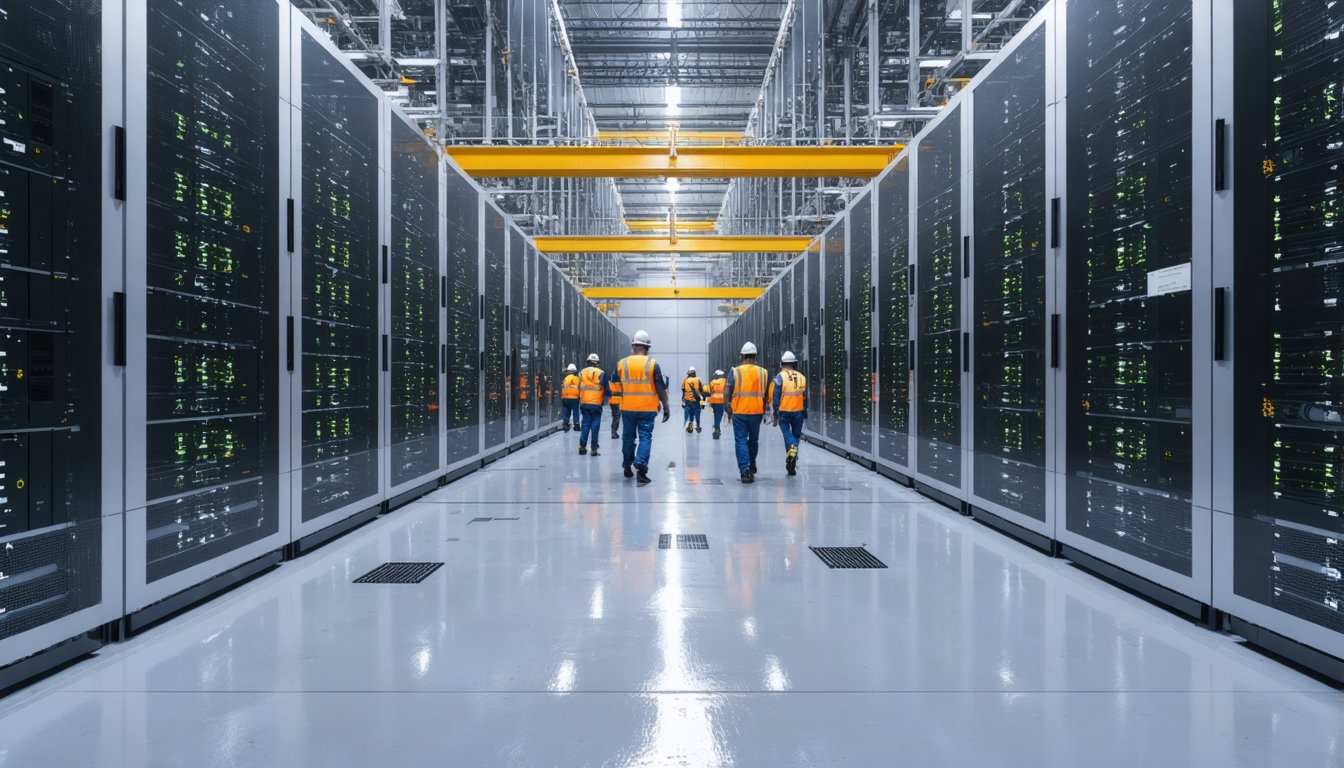
Second, technological necessity demands the construction of data centers on an unprecedented scale. These infrastructures, often called “gigawatt data centers,” exceed traditional facilities’ power by 20 to 100 times. This multiplied capacity is essential to process the exceptional volumes of data required to train advanced AI models. To illustrate, Amazon recently inaugurated several of these gigantic centers, both in the United States and Europe, thereby highlighting the new standard to be reached.
These data centers require not only massive resources in computing hardware but also sophisticated systems for energy management, security, and maintenance. Thus, investments concern not just storage or computing but an integrated set of vital technical elements to ensure AI service availability and efficiency.
Third, investment in software and hardware innovation reflects the growing complexity of artificial intelligence systems. Customized chips, such as high-performance graphics processors (GPUs), as well as calculation optimization software, represent assets that are both costly and subject to rapid obsolescence. For example, Meta does not simply adopt existing technologies but also develops its own embedded chips to optimize large-scale processing.
Beyond the mere accumulation of hardware, these companies also invest in optimization software to maximize every watt consumed and minimize latency. This dual hardware and software shaping creates an often verticalized ecosystem, an indispensable condition to support the exponential growth of artificial intelligence.
The sum of these factors partly explains why Bridgewater and other analysts see these investments as an unprecedented phenomenon, driven by a combination of strategic urgency, continuous technological innovation, and major economic stakes.

The essential role of data centers in the race for artificial intelligence
Data centers form the foundation on which the colossal AI infrastructure investments announced by tech giants rest. Their role is much more than simple storage; they are the operational engine of large-scale artificial intelligence.
To give an order of magnitude, these new data centers respond to unprecedented computing power needs. For example, Google is experimenting with centers capable of processing data volumes that were unimaginable just a few years ago. Indeed, a single AI center may require electrical consumption equivalent to that of a small town to operate at full capacity. This consumption is among the challenges that these companies must address by combining energy efficiency and performance.
This requirement also pushes companies to adopt innovations in facility cooling, often using low-energy conductive liquids to prevent overheating of thousands of processors. Every improvement in this supply chain translates into cost optimization and a direct competitive advantage.
Investments for “gigawatt” centers:
- Computing capacity 20 to 100 times greater than traditional data centers
- Energy consumption equivalent to a small town, driving innovations in cooling and efficiency
- Modular infrastructure to integrate AI-specific chips and optimization software
- Strategic locations to reduce latency and ensure geographic resilience
The stakes linked to these infrastructures are crucial because they determine companies’ ability to develop artificial intelligence on a large scale, particularly for language models, computer vision, and predictive applications. Without these data centers with gigantic capacities, technological advances could not keep up with explosive demand.
Finally, a factor often underestimated is the economic impact of these expenditures. Bridgewater notes that the expansion of data centers contributed 50 basis points to U.S. GDP growth in 2025 and is expected to continue on this trajectory, representing a pillar of national technological growth. However, this growth can also fuel inflationary pressures, notably on energy prices in certain regions.
Despite encouraging prospects, the surge in AI spending is far from risk-free. Bridgewater, notably through Greg Jensen, warns about increasing exposure to financial risk faced by these companies engaged in a ruthless race where every delay can prove fatal.
A first risk lies in the growing dependence on external financing. Indeed, to support these monumental expansions, companies like Microsoft or Meta have reduced their share buyback policies to preserve liquidity and fund internal projects. This reallocation reflects a strategic priority but increases vulnerability to market fluctuations or capital contraction.
Next, financial market volatility directly affects company valuations as well as their ability to raise funds. For example, important AI startups such as Anthropic or OpenAI must quickly demonstrate tangible results to justify their fundraising and potential IPOs. Their success will partly condition investor confidence in the sector.
Moreover, these risks are not limited to cloud behemoths. Other players, including software publishers and data providers, see their financial health affected by the pressure created by AI expenditures. The recent decline in tech stocks reflects a market worried about a possible “tech bubble.”
The main identified risks are:
- Over-indebtedness linked to massive use of external financing
- Rapid obsolescence of costly infrastructures and equipment
- Strong dependence on rapid progress in AI products, under threat of not generating expected benefits
- Increased volatility in financial markets, impacting stock value and fundraising capability
In this context, caution becomes essential. A major correction could drastically slow growth momentum and reduce companies’ ability to finance their ambitions, as during the bursting of the Internet bubble in the early 2000s, even if the current situation differs in maturity and scale.
Macroeconomic impacts of AI investments on the U.S. economy
Beyond market stakes, these massive investments in artificial intelligence play a major role in American economic dynamism. According to Bridgewater, infrastructure spending contributed 50 basis points to GDP growth in 2025, and this figure could almost double in 2026.
This influence is explained notably by the integration of technological value chains and the stimulation of ancillary sectors such as construction, semiconductor production, and energy. These massive expenditures create not only direct jobs around data centers and new facilities but also a multiplier effect in associated services, from transportation to technical maintenance.
However, this growth can also have negative effects on certain economic variables. The rapid increase in demand for technological equipment can generate inflationary pressures, especially in the communication equipment and electricity sectors. Certain regions experience significant increases in energy costs due to the high consumption of AI infrastructures.
Moreover, this accelerated dynamic requires adapted policies to regulate both energy consumption and investments, to avoid sectoral overheating that could weaken the overall economic fabric.
Table: Estimated impact of AI investments on U.S. economic growth
| Year | AI Investments (in billion USD) | Contribution to GDP growth (in basis points) | Notable side effects |
|---|---|---|---|
| 2025 | 410 | 50 | Start of inflationary tensions on equipment and energy |
| 2026 | 650 | 95 | Increased pressure on electricity prices, rise in logistics costs |
Financial optimization strategies in the face of colossal AI investments
In the face of soaring expenses that test the financial services of tech giants, a transformation of strategic approaches becomes indispensable. With 650 billion dollars mobilized, it is no longer a matter of spending massively without control but of investing wisely, maximizing economic returns.
First, rigorous project selection has become a priority. Spending is now focused on infrastructures capable of generating a sustainable revenue stream. For example, Microsoft concentrates its efforts on data centers that directly support its cloud and commercial AI offerings rather than purely experimental facilities. This refocusing allows better resource allocation and minimizes waste risks.
Second, improving operational efficiency in data centers is also a major lever. This involves integrating cutting-edge technologies to reduce electrical consumption, make optimal use of existing resources, and reduce ecological footprint. This approach is also oriented towards reducing fixed and variable costs linked to infrastructures.
Finally, financial management must also reduce dependence on external capital. Bridgewater stresses this point: growth through debt or successive fundraising increases vulnerability and exposes to market downturns. Companies strive to optimize their balance sheets, seek alternative or innovative financing, and create strategic partnerships to share risks.
List of key financial strategies adopted:
- Prioritization of investments with measurable medium-term ROI
- Energy and logistics optimization of data centers
- Reduction of share buybacks to strengthen cash flow
- Development of integrated hardware-software solutions to boost efficiency
- Strategic partnerships to pool investments
- Exploration of alternative financing sources outside stock markets

Implications for startups and the technology ecosystem around artificial intelligence
This explosion of investments by the four giants injects strong momentum into the entire ecosystem of startups and emerging technology players. On one hand, these behemoths open a huge market, offering unprecedented opportunities to many innovative companies. On the other hand, pressure to deliver results quickly pushes young companies at a frantic pace.
Moreover, technical dependencies and financing become a delicate issue. As Greg Jensen explains, some players like OpenAI or Anthropic must show significant progress to justify their heavy fundraising and prepare possible IPOs. Uncertainty about short-term profitability directly influences investor appetite.
Faced with these conditions, startups often have to choose between technological autonomy and strategic alignment with the giants, in order to access critical resources such as computing infrastructures or AI talents. This ecosystem structuring sketches a landscape where tech leaders partly dictate the pace of innovation.
The concentration of investments around these giants also creates a form of resource centralization, making the entry of new independent players more complex. However, this trend also stimulates the emergence of regional or specialized initiatives seeking to fill specific niches, notably in ethical domains, regulation, or cybersecurity.
Example of impact on the startup ecosystem:
- Priority access to technological resources through partnerships with the giants
- Pressure to accelerate development and rapid product delivery
- Increased difficulties in raising capital without concrete results
- Multiplication of initiatives around regulation and AI ethics
How the race for AI investments is revolutionizing the global financial market
The scale of planned investments deeply changes the dynamics of the international financial market. These 650 billion dollars planned by Alphabet, Amazon, Meta, and Microsoft concentrate a significant share of global financial flows dedicated to technology, generating major upheavals.
There is a capital reallocation, where investors now favor companies demonstrating a clear AI strategy. The market rewards those who manage to transform these expenditures into concrete and profitable innovations. Those struggling to align their projects with expectations see their shares pressured, impacting the entire financial chain around technologies.
Moreover, a new challenge involves managing the risks linked to this concentration of investments in a sector still in learning and maturation phases. Any reversal could have systemic effects affecting both capital markets and industries dependent on advanced technologies.
To illustrate, there is an increased correlation between companies’ AI results and their stock performances, complicating the work of financial analysts and fund managers. In other words, the rise of artificial intelligence is redefining the rules of the game, transforming financial markets into a ground for both innovation and economic and strategic challenges.
Table: Main impacts of AI investments on the financial market
| Impact | Description | Consequences |
|---|---|---|
| Capital reallocation | Massive financial flows towards innovative AI companies | Increased pressure on non-aligned companies |
| Stock market volatility | High level of fluctuations linked to dependence on AI results | Risk of sudden corrections |
| Systemic risks | Concentration of investments in a maturing sector | Impacts across all financial markets |
Future prospects: innovations and regulations in the post-AI investment technological landscape
The coming decade will be largely influenced by the consequences of these massive AI investments. This new era brings an acceleration of technological innovations but also raises essential questions around regulation, ethics, and governance.
As technological power concentrates, a major challenge lies in developing rules that govern the responsible use of artificial intelligence. International bodies are collaborating to define standards that will ensure safety, transparency, and respect for human rights.
Another axis concerns the evolution of business models. With the expected stabilization of infrastructure costs, companies will have to provide high value-added services while controlling operating costs. Software innovation will become a key to offering efficient, modular, and adaptable solutions.
Finally, the regulatory landscape could see a rise in controls, notably in data privacy, cybersecurity, and military or commercial uses. This evolution requires increased vigilance from stakeholders, who must anticipate changes to avoid heavy sanctions or penalties.
In summary, the massive deployment of artificial intelligence investments opens up a realm of possibilities while imposing rigorous frameworks and deep strategic reflection to make the most of it.