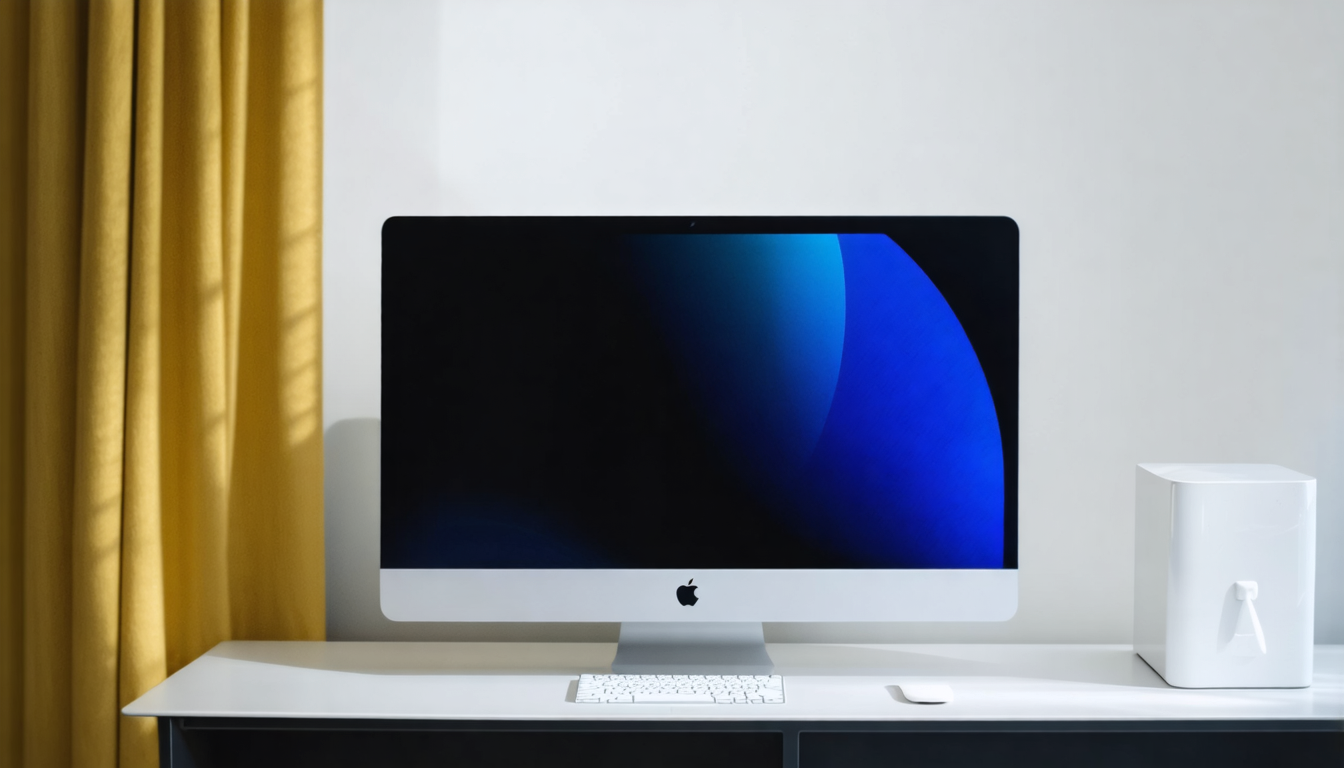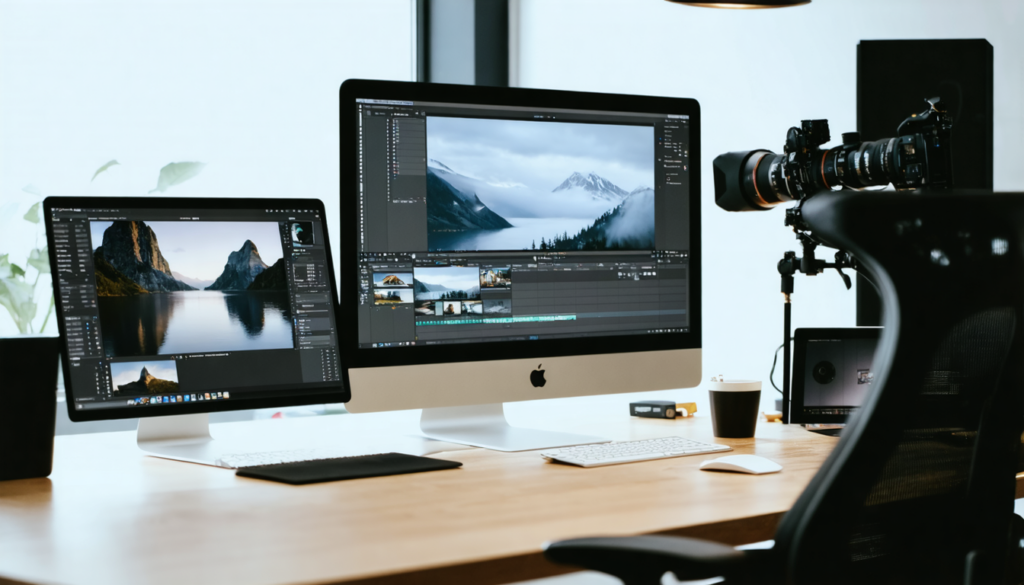
The arrival of the Apple Studio Display XDR marks a decisive turning point in the landscape of professional displays dedicated to Mac. More than just a screen, it is a promise of excellence and visual precision, designed to meet the needs of creatives, engineers, and specialists seeking to fully exploit the capabilities of their machine. With a 27-inch 5K Mini-LED panel, an adaptive refresh rate of 120 Hz, and an HDR brightness peaking at 2,000 nits, this display presents itself as a true revolution in display technology. Apple here emphasizes not only image quality but also versatility, integrating, for example, a medical imaging calibrator that opens new perspectives in the healthcare sector.
For several years, Apple was expected to renew its displays aimed at professionals, a segment where competition is fierce, between Dell, LG, and Eizo. The Californian company chooses a high-end positioning with a price exceeding $3,299, justified by advanced technologies and deep integration into the Mac ecosystem. This new display does not limit its ambitions to the classic use of graphic design or high-definition video: it also targets users working with heavy workflows, especially those deploying artificial intelligence tools for content production or image analysis.
The Apple Studio Display XDR thus embodies a strong response to the growing demand for visual performance and advanced ergonomics, a strategic choice both aesthetic and functional. Its redesigned design offers better flexibility while maintaining compatibility with VESA mounts, promoting adaptation to varied professional environments. Thus arises the question: is the Apple Studio Display XDR the ultimate reference for Mac users seeking excellence? The following sections deeply explore the elements that make this display a serious contender for the title of best reference on the market in 2026.
- 1 Advanced Retina Technology and Unmatched Visual Performance of the Apple Studio Display XDR
- 2 In-Depth Comparison Between Apple Studio Display XDR and Classic Studio Display
- 3 Design and Ergonomics: A Display Designed for Demanding Professional Environments
- 4 Integration of a Medical Image Calibrator: A Step Towards Innovative Professional Uses
- 5 Audio and Communication: Toward Complete Immersion with the Studio Display XDR
- 6 Next-Generation Connectivity to Manage the Most Demanding Workflows
- 7 Price and Positioning: A Premium Offer for a Demanding Clientele
- 8 User Experience and Integration in the Mac Ecosystem: A Winning Duo
- 9 Apple Studio Display XDR: A Professional Display, but Exactly for Whom?
Advanced Retina Technology and Unmatched Visual Performance of the Apple Studio Display XDR
Apple’s investment in Retina technology has reached new heights with the Studio Display XDR. This 27-inch 5K Mini-LED panel embodies one of the most impressive evolutions in visual rendering in recent years. The heart of this performance lies in its 2,304 local dimming zones, allowing precise backlight control for exceptional contrast and brightness. This technology ensures extreme rendering finesse, especially in images where subtle nuances are crucial, such as gradients in video editing or photo retouching.
HDR (High Dynamic Range) also benefits from a major advance. With peak brightness reaching 2,000 nits, the display delivers a richer visual experience, where bright areas shine without losing detail while blacks remain deep and perfectly rendered. This level of brightness is exceptional, especially for a consumer and professional display alike, creating a real gap with previous models or classic competitors that often plateau well below.
Beyond brightness, the shift to an adaptive refresh rate of 120 Hz provides remarkable dynamism to the display. This high frequency is particularly appreciated for smooth animations and reduced blur during fast movements, benefiting both creatives and professionals who handle rich and complex interfaces daily. Contrast, sharpness, and fluidity combined create a visual experience that naturally integrates with the excellence of high-end Macs.
For example, a video editor working on 8K projects will notice unprecedented color fidelity and linearity, with consistent display across the most delicate lighting ranges. Details in shadows and reflective surfaces gain depth, enabling more precise color correction without the artificial extrapolation often encountered on other screens. The Studio Display XDR becomes an indispensable tool for any production where image quality is at the core of the profession.
The choice of Mini-LED technology, combined with the exceptional pixel density typical of a Retina display, addresses an imperative of ultimate image quality. Unlike OLED panels, widely used in some competing displays, Mini-LED avoids screen burn-in issues and extends longevity, essential conditions for long professional sessions. This technical robustness brings this new display closer to the reliability worthy of demanding creative environments.
Technical Innovations of the Studio Display XDR in a Few Points
- 5K Mini-LED with a density of 218 pixels per inch
- 2,304 local dimming zones for ultra-precise contrast
- HDR brightness peak at 2,000 nits, guaranteeing unmatched luminous rendering
- 120 Hz adaptive for perfect fluidity even in dynamic flows
- Factory image calibration optimized for strict color fidelity
In-Depth Comparison Between Apple Studio Display XDR and Classic Studio Display
The launch of the Studio Display XDR naturally raises the comparison with the classic Studio Display, until now the preferred reference by Mac users. Although the two displays share several attributes, the evolution in terms of technology and performance clearly places the XDR in another category.
To begin with, the 5K Retina resolution remains an essential common point, ensuring very high image quality on a 27-inch screen. However, only the Studio Display XDR benefits from Mini-LED backlighting with its 2,304 dimming zones, whereas the classic model remains with a traditional LED panel with less HDR power. The brightness gap is striking: 2,000 nits versus an average around 500 nits on the standard model.
The refresh rate is another key factor. While the classic Studio Display is limited to a traditional 60 Hz, the XDR largely doubles this capacity with its adaptive 120 Hz, optimizing clarity in fast movements and improving visual response. For professionals in graphic design, 3D, or video games, this difference translates into a smoother and less tiring user experience.
In terms of additional features, Apple has integrated a 12-megapixel camera on the Studio Display XDR with optimized Center Stage technology for Desk mode, significantly enhancing video conference experience with intelligent automatic framing. The audio system is also revised, offering 30% more bass with a total of six spatial speakers and three studio microphones, ensuring exceptional sound immersion, a key factor in multimedia production.
The connectivity widens the gap further: two ultra-fast Thunderbolt 5 ports and two USB-C ports capable of delivering up to 96 W power ensure smooth management of peripherals and optimal support for automated workflows. The focus on speed and power of connections illustrates Apple’s willingness to offer a complete environment to professionals, where every detail matters.
| Features | Classic Studio Display | Apple Studio Display XDR |
|---|---|---|
| Screen Size | 27 inches | 27 inches |
| Resolution | 5K Retina | 5K Retina Mini-LED |
| HDR Brightness | ~500 nits | 2,000 nits |
| Backlight Type | Classic LED | Mini-LED with 2,304 dimming zones |
| Refresh Rate | 60 Hz | Adaptive 120 Hz |
| Camera | 12 MP, without enhanced Desk mode | 12 MP with Center Stage and Desk mode |
| Audio System | Standard speakers | 6 spatial speakers, 3 studio mics (bass boost +30%) |
| Connectivity | Thunderbolt 3, USB-C | Thunderbolt 5 (2 ports), USB-C (2 ports, 96W) |
| Starting Price | $1,599 | $3,299 |
The differences translate concretely into a smooth, coherent, and more immersive experience with the Apple Studio Display XDR, thus justifying a premium price positioning.
Design and Ergonomics: A Display Designed for Demanding Professional Environments
The design of the Studio Display XDR represents a notable evolution compared to previous Apple displays. Abandoning the characteristic lattice of the Pro Display XDR, the new chassis opts for clean, modern lines integrated into the Studio range, proven and recognized for its sobriety and elegance. This aesthetic change is not just a stance; it accompanies a noticeable improvement in robustness and modularity.
This model is thicker than the classic version, allowing integration of advanced components necessary for managing Mini-LED backlighting and thermal dissipation. Despite these additions, the Studio Display XDR maintains full compatibility with VESA mounts, an essential element for professional installers wishing to attach the display to articulated arms or in specific production environments. This flexibility is a guarantee of considerable adaptability.
The adjustable stand supplied as standard significantly improves user comfort. It offers precise height adjustment as well as tilt suitable for multiple working positions, enhancing ergonomics during long sessions. This aspect responds to the growing demand for visual and postural comfort in creative and technical professions, where time spent in front of the screen often represents several hours daily.
Another innovation concerns the included one-meter Thunderbolt 5 cable, which simplifies setup and management of workstations. This advanced connectivity ensures fast data transmission while efficiently powering connected devices, drastically simplifying installation, especially for complex workflows.
The choice of materials and the refined finish also contribute to the premium feel of the product. The thickness needed to integrate XDR technologies does not detract from aesthetic finesse, and typical Apple manufacturing quality is fully present, guaranteeing solidity and durability. The Studio Display XDR thus confirms that successful ergonomics also pass through industrial design quality.
Integration of a Medical Image Calibrator: A Step Towards Innovative Professional Uses
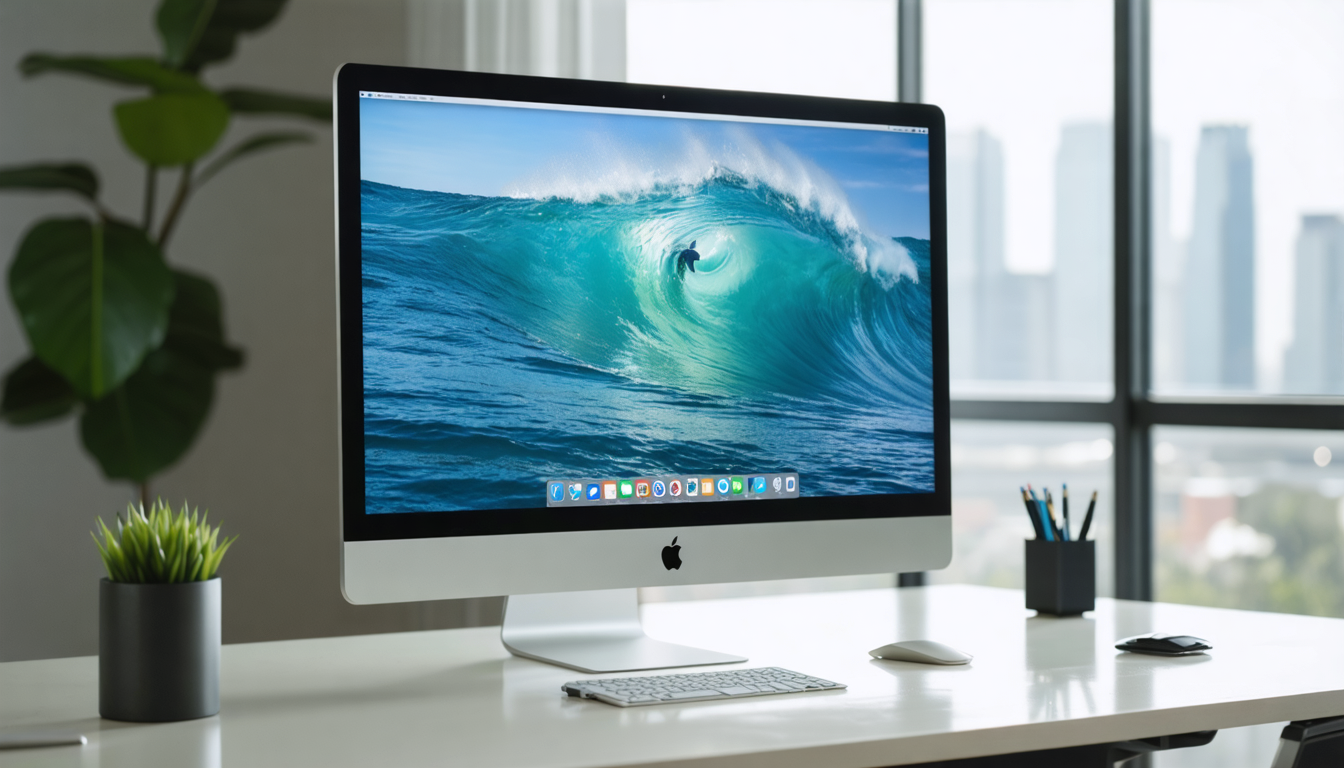
One of the most striking elements of the Studio Display XDR is undoubtedly the integration of an embedded medical imaging calibrator. This device, still rare on consumer displays, places Apple at the forefront of innovation in sectors where visual precision is a question of life or death, such as radiology.
This calibrator offers DICOM (Digital Imaging and Communications in Medicine) presets, allowing optimized and standardized display of radiological images, essential for reliable diagnoses. Upon immediate connection, the display automatically adjusts its settings, thus avoiding errors due to manual or approximate calibrations. It is a tool that can transform practices, especially in telemedicine where precision at a distance is critical.
Beyond radiology, this innovation paves the way for use in other medical disciplines requiring faithful image rendering: dermatology, endoscopy, and pathology. The democratization of this technology on a high-end consumer screen signals a major evolution in the convergence between professional computing and medical applications.
For illustration, imagine an outsourced radiology office equipping its workstations with the Studio Display XDR. Practitioners benefit not only from a screen with superior visual capabilities for any creative task but also from a guarantee of precision for their image readings, thus reducing the risk of errors and optimizing the quality of diagnosis. This dual functionality embodies the versatility and sophistication now required by contemporary digital work.
Concrete Advantages of the Integrated Medical Image Calibrator
- Automatic DICOM presets adapted to medical diagnostics
- Reduction of interpretation errors thanks to faithful and calibrated display
- Time savings during medical imaging sessions
- Extension of high-fidelity professional medical uses on a consumer display
- Support for telemedicine with unchanged precision even at a distance
Audio and Communication: Toward Complete Immersion with the Studio Display XDR
Beyond image quality, Apple raises the bar for audio and communication on its Studio Display XDR, a device now indispensable in a context where remote work and video conferencing have become widespread. The 12-megapixel camera with Center Stage technology automatically frames according to user movement, significantly improving video exchange quality.
The integrated audio system is also a masterpiece of sophistication. Composed of six spatial speakers and three studio microphones, it pushes audio experience into realms rarely reached by a display alone. Bass depth increases by +30%, giving more body to the voice while preserving treble clarity and sound spatialization. This quality is crucial for professionals producing audiovisual content where sound plays a role as important as the image.
This configuration enables true immersion, whether during post-production sessions, client presentations, or simple remote meetings. The entire communication toolset is designed to minimize auditory fatigue, increase intelligibility, and facilitate concentration in often multitasking environments.
For example, a team of developers using the Studio Display XDR for their conferences and client feedback will benefit from clear, immersive sound, while enjoying the camera ensuring perfect framing even in motion. This harmony between image and sound significantly enhances the overall quality of remote collaboration.
Next-Generation Connectivity to Manage the Most Demanding Workflows
In a market where data exchange speed is crucial, the Studio Display XDR stands out for its exceptional connectivity. Two Thunderbolt 5 ports ensure throughput of up to 120 Gbps, doubling the performance of previous standards. This capacity allows simultaneous use of bandwidth-heavy equipment, such as managing multiple 4K/8K peripherals, fast storage stations, or real-time processing interfaces.
Added to this are two USB-C ports capable of delivering up to 96 watts, a major asset for efficiently powering peripherals like laptops, external hard drives, or graphics stations without multiplying adapters. This ease of powering and connecting devices optimizes workflows, allowing complex professional setups to be organized simply and compactly.
Professionals intensively using video analysis or artificial intelligence tools particularly benefit from this fast connectivity. The fluidity of data exchange significantly reduces downtime between rendering, exporting, or manipulating very large files. The display is no longer a simple display but becomes a hub at the heart of the workstation.
In summary, this advancement in connectivity illustrates Apple’s vision of full integration between hardware and software, where every element is optimized to offer a coherent user experience without compromise.
- 2 Thunderbolt 5 ports (up to 120 Gbps)
- 2 USB-C ports (up to 96 W)
- Fast transmission and optimized power supply
- Simplified management of professional peripherals
- Support for real-time 4K/8K streams without latency
Price and Positioning: A Premium Offer for a Demanding Clientele
Above $3,299, the Apple Studio Display XDR is not half-measured. Its price positioning is justified by embedded technologies, extreme color accuracy, exceptional brightness, and ergonomics designed for professional use. In comparison, the classic Studio Display starts at $1,599, aimed at demanding but less specialized users.
Apple’s choice seems clear: it responds to very specific needs, particularly those of creatives working on 4K/8K projects, 3D professionals, video post-production specialists, as well as specialized medical fields. The price reflects a desire to offer the ultimate reference on Mac, with deep integration into a broader ecosystem, especially with the latest generations of Mac Pro and Mac Studio requiring display performance to match.
However, it should be noted that some competitors on the PC market offer monitors with close or even more specific characteristics at lower prices. For example, displays like the Dell UltraSharp 32 4K PremierColor or LG UltraFine are praised for their precise calibration, although their software integration cannot rival the Apple Mac environment.
Professionals already owning a high-end Mac and seeking perfect synergy with their hardware will find the Apple Studio Display XDR a relevant investment, guaranteeing uncompromising quality. Conversely, for generalist use or more limited budgets, the value for money may seem less attractive.
User Experience and Integration in the Mac Ecosystem: A Winning Duo
One of the undeniable strengths of the Apple Studio Display XDR lies in its seamless integration within the Apple ecosystem. Factory calibration, direct compatibility with macOS, and software optimizations allow immediate handling and unmatched stability. For example, the display is automatically recognized with compatible Macs, adjusts its color profiles without manual intervention, and fully exploits the graphic performance of the latest Apple Silicon chips.
For users of professional software such as Adobe Photoshop, Final Cut Pro, or Autodesk Maya, this harmony means reduced adaptation times as well as absence of complex color profile management. Color management is also optimized with advanced Retina technology, guaranteeing consistent rendering across multiple Apple devices.
Moreover, regular updates offered by Apple enrich the display’s features over time, including improvements in HDR mode, camera settings, or audio. This strategy ensures the longevity of the investment and guarantees durable compatibility with future macOS versions.
A striking example is support for adaptive synchronization at 120 Hz, which works perfectly with system animations, improving visual comfort even in an office environment. The display also automatically changes mode depending on usage: gaming style, photo editing, or video playback, creating a dynamic and versatile interface.
Apple Studio Display XDR: A Professional Display, but Exactly for Whom?
While the classic Studio Display addresses a wide range of demanding users, the Studio Display XDR targets a narrower audience, focused on professionals seeking uncompromising quality. Among this clientele, there are mainly experts in audiovisual creation, 3D professionals, advanced photo retouchers, as well as actors in specialized medical sectors.
These users leverage the XDR’s technical innovations to improve their productivity, benefit from faithful color rendering, and reduce errors linked to the limitations of standard displays. Furthermore, the integration of functions such as the medical calibrator extends the field of applications to medical professionals requiring absolute precision.
A post-production studio, for example, juggling 8K rushes, demanding visual effects, and meticulous color correction, will find a strong ally in the Studio Display XDR. This machine offers flawless visual fluidity, fine brightness control, and broad support for professional peripherals, making every task more efficient and intuitive.
Conversely, individuals and even professionals mainly using Macs for advanced office work or classic graphics might prefer the more accessible classic model. Some users in the audiovisual field might also choose multi-display setups combining several models adapted to their budgets and specific needs.
- Professionals in 4K/8K video editing
- Advanced artists and graphic designers
- 3D technicians and special effects artists
- Specialists in medical imaging and radiology
- Demanding audio-video producers and editors