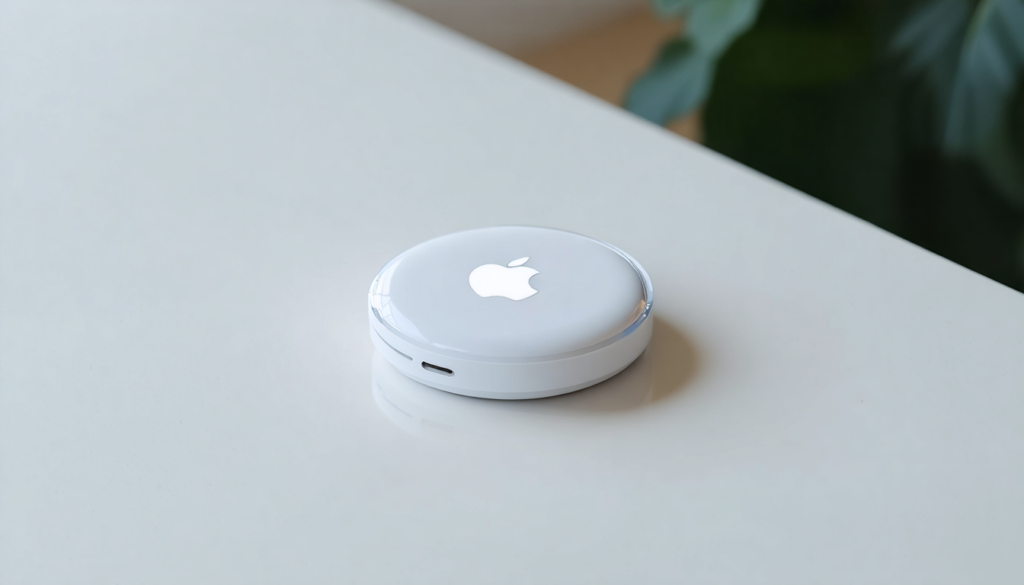
After a long wait and five years without real innovation, Apple marks the beginning of 2026 with the official launch of the AirTag 2, an awaited evolution of its famous item tracker. Discreet but effective, the AirTag has established itself in the daily lives of Apple users, facilitating the locating of personal items thanks to the Find My network and advanced Bluetooth technology. However, changes in usage related to object searching and growing expectations in terms of accuracy and range made a redesign of this accessory necessary. The AirTag 2 thus meets these needs with notable hardware and software improvements, without increasing the price.
Thanks notably to its new second-generation Ultra Wideband chip, the AirTag 2 optimizes localization, increasing accuracy by 50%, particularly noticeable at short distance. This increased precision makes searching easier in complex environments, such as finding a keyring under a sofa or in a cluttered room. Furthermore, the Bluetooth range has been extended, which improves detection at long distances in larger spaces.
Apple also relies on a redesigned, more powerful speaker capable of delivering sounds twice as loud. This advancement allows the object to be located more easily, even in noisy or congested environments. On the software side, the integration of the Precision Finding feature on Apple Watch Series 9 now offers the flexibility to check the position of objects directly from the wrist, without needing the smartphone. This seamless experience strengthens the Apple ecosystem for ever more efficient tracking.
Finally, the possibility to share the AirTag’s location with third parties, such as airlines, brings a new concrete and secure use case in a collaborative approach. All this is added to an unchanged design but whose manufacturing was conceived with the environment in mind: the device uses up to 85% recycled plastic and recycled rare earths for its magnets, confirming Apple’s commitment to sustainable production.
- 1 AirTag 2: major differences with the first generation and their concrete impacts
- 2 Second-generation Ultra Wideband technology: a leap forward in localization
- 3 Sound and sharing improvements to simplify tracking
- 4 Extended Bluetooth and battery life: how Apple improves the experience without compromise
- 5 Sustainable manufacturing: a major Apple commitment for the AirTag 2
- 6 Enhanced integration into the Apple ecosystem for optimized tracking
- 7 Price and availability: an attractive launch for the AirTag 2
- 8 The impact of the AirTag 2 on personal item management and security
AirTag 2: major differences with the first generation and their concrete impacts
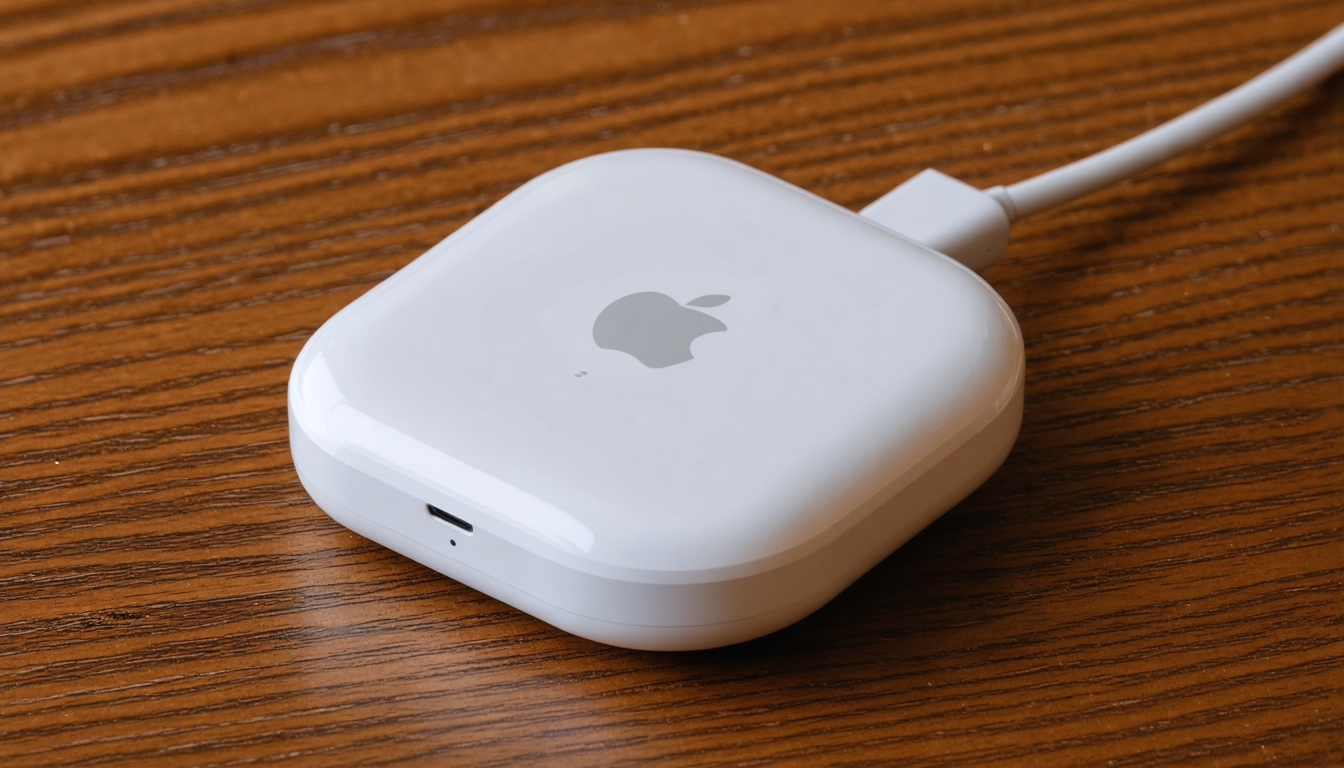
The AirTag 2 does not revolutionize the iconic design of its predecessor, but introduces improvements that significantly enhance the user experience. The latest generation of Ultra Wideband chips, aligned with those used in the iPhone 17 and Apple Watch Series 11 and Ultra 3, plays a crucial role in achieving better localization accuracy. This technical improvement reaches a gain of approximately 50%, with a particularly noticeable impact in immediate proximity, where movements of a few centimeters make a difference.
This increased performance translates into everyday usage scenarios: imagine looking for your keyring under a piece of furniture. With the first generation, localization could be approximate and required several attempts. With the AirTag 2, visual, sound, and haptic feedback are amplified, guiding you with increasing precision toward the object, greatly reducing search time. This is made possible thanks to a combination of improved algorithms and redesigned hardware.
Furthermore, the extension of the Bluetooth range has a direct effect on the ability to find distant or hidden objects in large areas such as a parking lot or a park. The first AirTag already worked well thanks to the mysterious network of Apple devices capable of discreetly detecting and relaying a signal. With increased range, the AirTag 2 extends this efficiency, covering greater distances, which is a real plus for those who tend to lose their equipment in open spaces.
Finally, another aspect often criticized in the first version concerned the speaker’s overly discreet nature, making the sound signal sometimes difficult to hear in noisy environments. Apple corrected this by doubling the speaker volume on the AirTag 2. Concretely, this means locating an object in a car, a cluttered bag, or even in a room where several people are talking will be much easier. The synergy of improvements on the chip, Bluetooth, and speaker forms a coherent whole that addresses user issues encountered since 2021.
Second-generation Ultra Wideband technology: a leap forward in localization
The past five years have seen a significant rise in short-range geolocation technologies, notably thanks to Ultra Wideband (UWB), a radio technology that allows extremely precise and reliable detection. The second generation of UWB chips integrated into the AirTag 2 marks an important step forward in the field of connected accessories.
Concretely, UWB allows measuring the distance and direction of objects with unparalleled accuracy. Compared to the first UWB chip adopted by Apple, the new generation improves not only the range but also the speed of detection. This offers a smooth experience in object searching, as the user receives refined visual cues accompanied by vibrations and coordinated sound signals that adapt in real time.
A relevant use case is that of a user looking for their suitcase at an airport. Thanks to the AirTag 2, they can follow a directional arrow displayed on their iPhone or Apple Watch, guiding them to within a few centimeters of their luggage. This precision is especially useful in cluttered environments, where approximate locating becomes ineffective. Apple also leveraged the power of the second-generation UWB to improve energy management, thus optimizing battery life without sacrificing tracking quality.
The benefits of integrating Ultra Wideband into other Apple products
The AirTag 2 integrates a UWB chip similar to those in iPhone 17, Apple Watch Series 11, and other new devices, strengthening the coherence of the Apple ecosystem. This means localization no longer depends on a single device but benefits from the synergy of all compatible devices. For example, you could start the search on your iPhone, then continue on your Apple Watch, continuing to receive haptic cues directly on your wrist.
This multi-device integration offers a more natural, discreet, and adaptable experience for various situations. Whether in the city or on a trip abroad, the network of Apple devices sharing UWB technology enables continuous and reliable detection, meeting the expectations of modern users always on the move.
Sound and sharing improvements to simplify tracking
The AirTag 2 offers an improved speaker, a seemingly minor change but with a considerable impact when searching for objects in the field. By doubling the sound volume, Apple allows better audibility of the signal, eliminating one of the frustrating elements of the first version where the subtle sound could become a major handicap in deaf or very noisy environments.
This new sound clarity complements the accuracy improvements to make tracking even more intuitive. It is now easier to hear your item ring in situations where it was previously difficult to locate. For example, in a crowded sports bag or a cluttered office space, the sound is distinct and saves you from spending too much time fumbling around.
But the AirTag 2 is not limited to the hardware dimension. Apple introduces a logical innovation regarding location data sharing. It is now possible to share an AirTag’s position with third parties such as airlines, a crucial feature in case of lost or delayed luggage. This new capability, long awaited, frames a practice already indirectly widespread, reinforcing security and transparency in collaborative tracking.
The benefits are obvious: imagine that when dropping off your bags at the airport, you can allow the airline to track your luggage in real time via the AirTag 2, thus reducing losses and speeding up deliveries. At the same time, this new feature remains simple to activate and manage via the Find My app.
List of the AirTag 2’s sound and sharing improvements
- Speaker 50% more powerful for better audibility in noisy environments.
- New ringtone sound clearer and more distinctive.
- Location sharing with certified third parties, such as airlines.
- Access to Precision Finding from the Apple Watch Series 9 and later models.
- Secure and simple management via the Find My app.
Extended Bluetooth and battery life: how Apple improves the experience without compromise
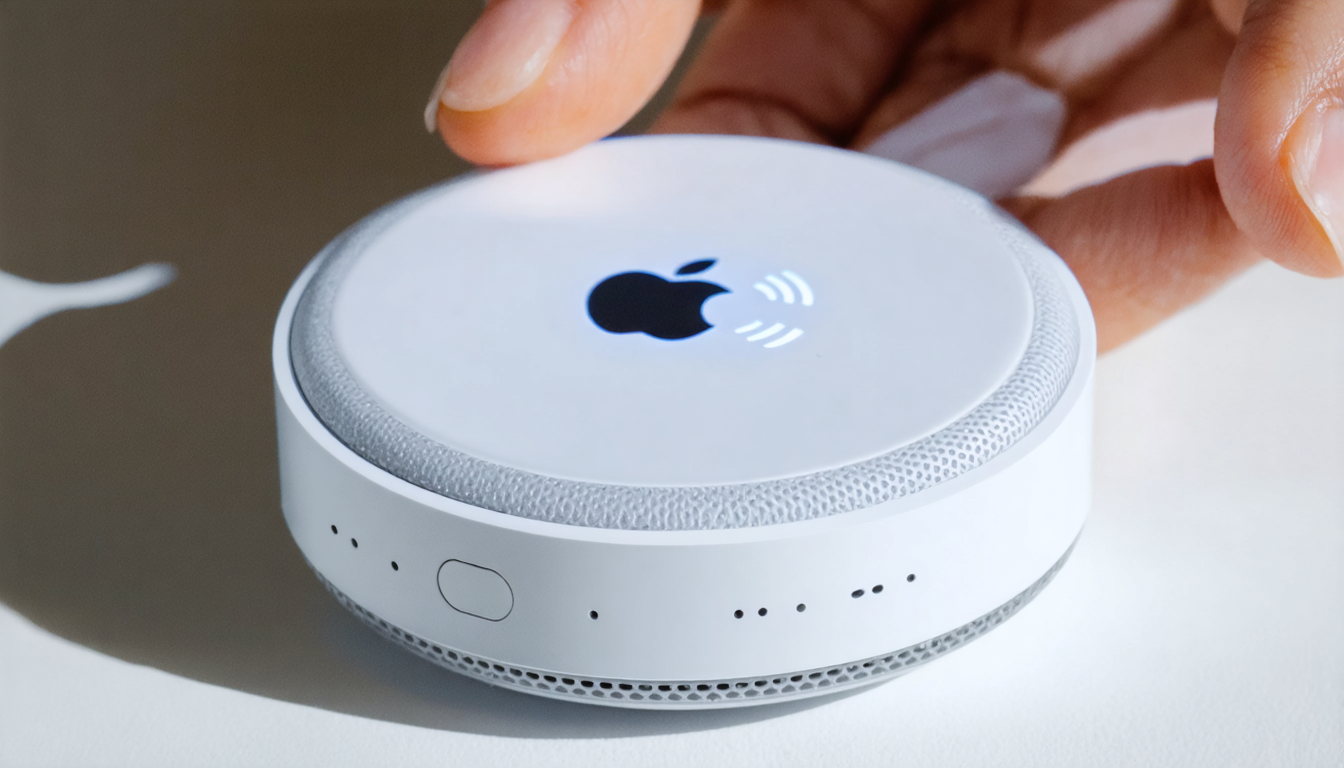
The Bluetooth network remains a cornerstone of AirTags’ operation. To extend the range and reliability of the signal, Apple updated the AirTag 2’s Bluetooth chip. This strategic choice amplifies the distance at which a device can detect the tracker while ensuring a stable connection over longer distances.
In practice, this Bluetooth range extension changes the game in several contexts: when an object is lost in a public park, parking lot, or simply in a large house, the likelihood of being detected by a nearby Apple device is increased. The result is a denser “mesh” of the Find My network, guaranteeing more efficient tracking and faster localization.
Regarding battery life, Apple has worked not to sacrifice battery longevity despite these technical additions. The AirTag 2’s battery, easily replaceable like its predecessor, benefits from hardware and software optimizations aimed at limiting consumption. Thus, usage duration is comparable to the first model, ensuring long use without constraints while enjoying the latest localization and sound broadcasting features.
| Feature | AirTag 1st generation | AirTag 2 | Improvement |
|---|---|---|---|
| Localization accuracy | Standard Bluetooth + 1st gen UWB | 2nd gen UWB + extended Bluetooth range | +50% accuracy |
| Bluetooth range | About 10-15 meters | Up to 25 meters | Almost doubled range |
| Speaker volume | Low sound, hard to hear | 50% louder sound | Improved audibility |
| Location sharing | Unavailable feature | Sharing with third parties (airlines) | New feature |
| Battery | Replaceable, ~1 year life | Replaceable, similar lifespan | Energy optimization |
Sustainable manufacturing: a major Apple commitment for the AirTag 2
Beyond technical improvements, Apple took advantage of the update to deeply renew the AirTag 2’s hardware design with a strong environmental focus. While the production of electronic accessories often generates a significant ecological footprint, the California company decided to adopt a more responsible approach.
Concretely, the AirTag 2 is composed of about 85% recycled plastic, and the magnets essential to its structure use rare earth elements from 100% recycled sources. This approach is not limited to a simple material change. Apple claims strict control to ensure recycled materials maintain the quality and durability needed for the product.
Moreover, even the finishes, such as gold plating on certain models or accessories offered, benefit from a certified recycled source, a particularly remarkable approach in a sector often criticized for its consumption of non-renewable resources.
This transition to sustainable materials fits into a broader context where Apple seeks to drastically reduce its carbon footprint across its entire supply chain and production, a priority that became central in 2026, facing global climate challenges.
An inspiring example for consumer electronics
The AirTag 2 illustrates a growing trend where innovation and ecological responsibility converge. This approach particularly appeals to consumers sensitive to environmental issues while maintaining high performance standards. Other manufacturers have begun to follow this model, convinced that eco-design does not harm quality.
Enhanced integration into the Apple ecosystem for optimized tracking
One of the great strengths of the AirTag 2 lies in its enhanced integration with the Apple ecosystem, which facilitates a homogeneous and intuitive user experience. With iOS 18.6 and watchOS 11, Precision Finding has extended to Apple Watch Series 9 and later, allowing users to track their objects directly via their watch.
This feature frees the hands, makes quick and discreet tracking possible, convenient in emergencies or when the smartphone is not easily accessible. In the city, during a jog, or at the airport, the watch vibrates and guides its wearer, offering increased comfort and responsiveness.
Moreover, the new software feature of sharing AirTag with third parties is fully supported within the Find My app. It allows managing permissions, securing access, and tracking shared objects in real time, giving a collaborative dimension to a product initially designed for individual use.
This software coherence is essential in a world where connected objects are numerous. It differentiates Apple by offering simple interaction between multiple devices, once a major challenge of tracking technology.
Price and availability: an attractive launch for the AirTag 2
What pleasantly surprises with the AirTag 2 is that Apple has kept the product price at its initial level of $29 despite multiple new features and improvements. This pricing strategy keeps it accessible for an accessory that has become essential in the daily lives of millions of users.
For customers wishing to equip several objects or offer technological gifts to their loved ones, Apple also offers a pack of four AirTags 2 at $99, an economically interesting offer for extended use at home, work, or on the go.
The new model is available to order on Apple’s official website and authorized points of sale. General availability is effective by the end of the week following the announcement, guaranteeing a quick transition for users eager to update their equipment without delay.
This price retention, combined with increased presence in points of sale, is strategically relevant in a context where connected accessories have become standard daily items. By proposing concrete improvements without increasing cost, Apple asserts its desire for wide deployment and democratization of this technology.
The impact of the AirTag 2 on personal item management and security
As everyday objects multiply and mobility increases, personal asset management becomes a major issue. The AirTag 2, thanks to its innovations, plays an essential role in ensuring traceability, security, and peace of mind for users.
In a world where losing belongings—keys, bags, suitcases—can cause stress and financial losses, the AirTag 2 acts as a powerful assistant. This evolution makes the accessory more reliable and intuitive, adapted to new uses where speed and accuracy are key. For instance, a professional frequently traveling can better track their business briefcase with confidence, knowing that improved localization and extended Bluetooth range maximize chances of quickly finding a lost item, even in dense urban environments.
The sharing functionality with third parties adds an additional layer of security, useful especially during travel or family item management. It enables collaborative tracking that limits the risk of permanent loss and offers better responsiveness in case of problems.
Regarding privacy, Apple continues to strengthen protections: data is encrypted, and shared access remains strictly controlled. Thus, users can benefit from collaborative tracking without sacrificing their privacy, an essential balance in trust toward these technologies.
The AirTag 2 thus embodies an effective response to current challenges in locating personal items, combining technological improvement, respect for privacy, and ecological commitment.