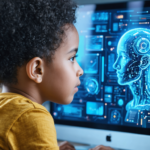
Apple has just completed a major strategic acquisition with the purchase of Q.ai, an Israeli startup that developed artificial intelligence technology capable of decoding facial expressions to interpret emotions and intentions without the need for speech. This advancement marks a significant turning point in the field of facial recognition and emotional analysis, promising a more natural and intuitive interaction between humans and connected devices. By integrating this technology, Apple hopes not only to strengthen its existing tools like Siri but also to pave the way for unprecedented innovations for its future products, notably AirPods, Vision Pro glasses, and iPhones.
As technological competition intensifies, particularly against giants like Google or Microsoft investing heavily in machine learning, Apple’s takeover of Q.ai highlights its determination to dominate the field of artificial intelligence applied to non-verbal signals. In 2026, this acquisition, reportedly around 2 billion dollars according to the Financial Times, fits within a dynamic where the fine interpretation of micro facial movements becomes a key vector to reshape digital interactions and user interfaces.
- 1 Q.ai: cutting-edge technology in facial analysis thanks to artificial intelligence
- 2 The acquisition of Q.ai: a strategic move by Apple to dominate facial expression AI
- 3 How facial expression recognition could transform the use of Apple technologies
- 4 Technical and human challenges of this emotional analysis technology through machine learning
- 5 Economic and strategic repercussions of the Q.ai acquisition for Apple
- 6 Future outlook: how Q.ai could transform the Apple ecosystem in the coming years
Q.ai: cutting-edge technology in facial analysis thanks to artificial intelligence
Since its founding four years ago, Q.ai has stood out in the world of artificial intelligence for its unique ability to detect micro-facial expressions using advanced machine learning technologies. This startup, born from the Israeli technological cradle, focuses its efforts on analyzing micro facial movements — such as blinking, subtle smiles, or even frowning — to translate these signals into emotional data that can be exploited by AI algorithms.
This innovative method goes far beyond simple classical facial recognition, which often only identifies an individual. Q.ai offers, through its model, a “silent reading” of underlying emotions, thus providing immense potential in terms of human-machine interactions. This technology opens the door to a new generation of devices capable of reacting instantly to our emotions, offering a personalized and seamless experience.
A concrete example of this innovation lies in the possible integration of such systems into smart glasses or audiovisual headsets. Imagine a device capable of detecting a simple blink or a subtle frown to automatically adjust its operation: a volume that lowers when the user is focused, or a notification that activates upon detecting a smile. This level of intuition represents a major breakthrough in the field of applied artificial intelligence.
Beyond its applications in consumer markets, Q.ai has also sparked interest for professional uses, notably in mental health, where analyzing expressions can provide indispensable clues for the early detection of emotional or cognitive disorders. The accuracy of the captured data would allow patients to be supported through intelligent interfaces, adapted in real time to their psychological state.
This dual ability to analyze with finesse and speed makes Q.ai a key player in the current landscape of artificial intelligence, fully justifying Apple’s interest, which sees in this innovation an important leverage for differentiation vis-à-vis competitors.
The acquisition of Q.ai: a strategic move by Apple to dominate facial expression AI
With the acquisition of Q.ai valued at around 2 billion dollars, Apple is making the second-largest purchase in its history after Beats in 2014. This deal reflects Cupertino’s clear intention to consolidate its position in the field of artificial intelligence by betting on a technology that transcends traditional facial recognition by becoming a true emotional interpreter. This purchase is not limited to technological expansion; it is a key piece in Apple’s innovation strategy for its future products and services.
A crucial element in this context is the past experience of Aviad Maizels, co-founder of Q.ai, who had already collaborated with Apple via PrimeSense. This company contributed to the development of Face ID, the iconic facial recognition of iPhones, before its acquisition by Apple in 2013. This continuity demonstrates valuable expertise that the Californian firm now aims to capitalize on again to create more advanced and successful applications.
Q.ai’s technology will also improve Apple’s existing voice assistants like Siri. Faced with the rapid rise of conversational chatbots developed by other major digital players, this facial micro-movement analysis technology offers the possibility of giving Siri more subtle, adaptive, and personalized interaction capabilities. For instance, a simple frown could trigger a request, or non-verbal intonation could modulate the assistant’s response according to the user’s mood.
The recent partnership between Apple and Google, aiming to integrate certain artificial intelligence models into Siri, envisions an era where AI technologies will merge to provide richer user experiences. In this framework, Q.ai’s unique expertise in reading facial expressions is an irreplaceable asset for Apple, destined to enhance innovation in its ranges of connected devices such as Vision Pro or AirPods.
This acquisition also fits into a broader context of geopolitical and technological rivalries. The purchase of an Israeli AI-specialized company also symbolizes an increased openness to talents and innovative technologies coming from the Middle East, a region gradually establishing itself as a global hub for AI technology.
Apple and Q.ai: an alliance to revolutionize interfaces and interactions
The integration of this technology goes far beyond mere cosmetic improvements. With Q.ai, Apple is aiming for a radical transformation of its interfaces, giving its products the ability to perceive, understand, and respond to emotions with unprecedented subtlety. Imagine AirPods capable of detecting vocal frustration or fatigue and automatically adjusting notifications or recommendations accordingly. This quasi-human interaction between user and machine relies on intensive machine learning that Apple now intends to fully master.
Moreover, the startup is applauded by investors like Google Ventures, who emphasize that Q.ai symbolizes a new era where computers will no longer be mere remote tools but integrated extensions of our daily lives, capable of interpreting in real time what we express, even unconsciously.
How facial expression recognition could transform the use of Apple technologies
The possibilities offered by advanced facial expression recognition thanks to Q.ai are vast and open unprecedented perspectives for users of Apple products. By processing these micro-details invisible to the naked eye, artificial intelligence capable of decoding non-verbal language promises a smoother, more adapted, and intuitive user experience.
The implementation in connected glasses like Vision Pro nicely illustrates this potential revolution. These glasses could continuously analyze micro-expressions to detect, for example, inattention, surprise, or annoyance. Based on this, AI could adjust displayed content in real time or suggest certain actions, such as refocusing attention or changing brightness.
Similarly, AirPods could interpret the wearer’s voice and facial expressions to determine whether they are stressed or tired. This emotional analysis would not only enable the adaptation of digital interactions (reducing notifications or activating relaxing music) but also integrate this data into personalized wellness tools.
More broadly, this Apple technology prompts ethical and social reflection on how our private emotions might be used or protected. It will be essential to establish privacy frameworks ensuring that this sensitive data is not exploited for intrusive purposes. Without these guarantees, the risk of excessive surveillance or emotional manipulation would become tangible.
List of concrete advantages of advanced facial recognition for Apple users
- More natural interactions: devices respond directly to emotions not verbally expressed.
- Enhanced personalization: AI adapts sounds, visuals, notifications according to detected mood.
- Improved accessibility: useful for people with difficulties in verbal communication.
- Support for mental health: discreet monitoring of emotional states for proactive assistance.
- Reduction of cognitive fatigue: interface adjustment based on stress or concentration levels.
Technical and human challenges of this emotional analysis technology through machine learning
The technology developed by Q.ai largely relies on machine learning algorithms capable of interpreting a multitude of micro facial movements in real time. This capability requires not only an immense database of faces, expressions, and human emotional contexts but also high computing power to ensure precise and latency-free interpretation.
Apple will have to face several technical challenges, both to integrate this technology into its devices and to guarantee a smooth user experience. The management and securing of sensitive data related to facial expressions will need to be central priorities, with advanced encryption protocols.
Widespread deployment also demands fine software optimization so that devices can operate in real time, regardless of the usage environment, notably in low light or in motion conditions. Thanks to its mastery of hardware and software through its in-house chip, Apple is particularly well positioned to meet this challenge.
On the human side, this novelty raises numerous questions around privacy, trust, and ethics. Indeed, automated emotional analysis presents potential for misuse, notably in advertising or mass surveillance. An intense debate took place in 2026 regarding AI regulation in these fields, and Apple commits to respecting strict standards to ensure responsible and transparent use of this innovation.
Summary table of challenges and integration solutions of Q.ai AI at Apple
| Technical and ethical challenges | Solutions considered by Apple |
|---|---|
| Protection of sensitive user data | Implementation of end-to-end encryption and data anonymization |
| Real-time performance in varied environments | Hardware optimization via Apple Silicon chips dedicated to AI |
| Management of algorithmic biases and fairness | Continuous training of models on diverse datasets |
| Social acceptance and transparency | Clear communication on features and opt-out options |
Economic and strategic repercussions of the Q.ai acquisition for Apple
Beyond the purely technological aspect, Apple’s takeover of Q.ai marks a milestone in the economic and commercial strategy of the Californian giant. The launch of products equipped with enhanced facial recognition and artificial intelligence capabilities could open new markets and prolong the group’s growth, already well underway in the world of connected objects and digital services.
The 2 billion dollar investment, although substantial, is justified by potential gains in product innovation but also in differentiation in an extremely competitive market. It also highlights Apple’s focus on machine learning as the engine of its digital future, alongside its developments in augmented reality or mixed reality through Vision Pro.
This acquisition takes place amid ongoing tensions about electronic components. Rising prices of memory chips and production constraints affecting suppliers such as TSMC impact the entire global technological value chain. Despite this, Apple remains confident thanks to its economic diversification and services that stabilize its margins.
At the same time, the increased mastery of proprietary technologies from Q.ai will allow Apple to secure its software and hardware supply chain, limiting its external technological dependency in the crucial field of artificial intelligence and facial recognition.
Future outlook: how Q.ai could transform the Apple ecosystem in the coming years
Looking beyond the acquisition itself, it envisions a future where predictive artificial intelligence and emotional analysis will be integral components of the Apple user experience. One can imagine that in a few years, human-machine interfaces will become so intuitive that they anticipate needs, emotions, and preferences of each individual.
A plausible scenario is one where an iPhone or Mac could detect a state of stress just before a video conference and automatically trigger soothing features or adjust displayed content to optimize concentration. This technology could also become widespread in sectors like education, with adaptive tools that modify educational materials according to learners’ emotional reactions.
Moreover, combined with the growth of wearable devices like AirPods, this facial expression analysis technology will fit into a digital wellbeing logic, guiding users toward healthier and more balanced device usage.
Finally, mastering these innovations will help strengthen Apple’s position in the global technological competition, especially against players like Google or Microsoft, where artificial intelligence is a development priority.