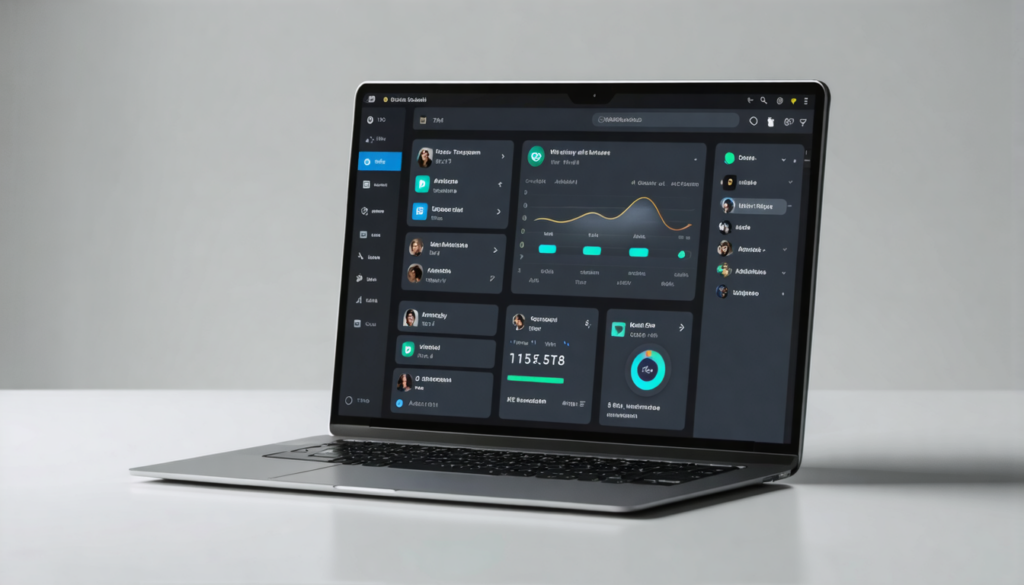
An unexpected leak has revealed a major step in the evolution of PC operating systems. Google, the undisputed tech giant, is preparing to shake up the computing landscape with Aluminium OS, a new version of Android for PC that promises to offer a unique user experience. Far from being a simple update, this operating system aims to merge the best of Chrome OS and Android into an optimized environment for personal computers. Intended to compete with the giants in the field such as Windows and macOS, Aluminium OS positions itself as a serious and multifunctional alternative.
This accidental revelation, through screenshots and a video leaked on Chromium’s tracking tool, provides a first visual and functional glimpse of this new user interface. It deeply reworks the Android experience on large screens, adopting ergonomics designed for mouse, keyboard, and widescreen displays. The project embodies a clear ambition: to provide Android with all the necessary power to establish itself sustainably in the PC market, with an integrated, flexible, and high-performance system.
Beyond mere aesthetics, Aluminium OS incorporates cutting-edge technologies, notably an advanced use of artificial intelligence, central to its design. This major innovation could not only redefine how users interact with their machines but also pave the way for a more homogeneous application ecosystem between mobile devices and desktop computers. Let’s explore together the multiple facets of this new version of the operating system that is set to transform personal computing.
- 1 A detailed overview of Aluminium OS’s user interface: Next-generation Android for PC
- 2 Towards a gradual disappearance of Chrome OS: Aluminium OS as the natural heir
- 3 Artificial intelligence at the heart of Aluminium OS: A system designed for tomorrow
- 4 Compatibility and ecosystem: The bet on a unified Android on PC and mobiles
- 5 Exploring technical differences between Aluminium OS and Chrome OS
- 6 The commercial strategy behind Aluminium OS: Positioning and target market
- 7 The future outlook for Aluminium OS and the operating system market
A detailed overview of Aluminium OS’s user interface: Next-generation Android for PC
Thanks to a leak on a Chromium bug report, Aluminium OS has just been exposed to the public, unveiling a bold user interface adapted to modern PC usage. On a high-end Chromebook like the HP Elite Dragonfly, this system stands out with an interface that escapes the simple copy of mobile Android, to offer an experience fully designed for large screens and devices with keyboard and mouse.
We first notice a wider and more readable status bar, designed to offer increased accessibility on a larger display surface. Icons are rearranged and optimized for a productive working environment. Multitasking windows are resizable, evoking a more traditional layout of desktop-oriented systems. This multitasking panel comes with fine application management, now capable of displaying side by side without major constraints.
A key element is the Chrome browser, always at the heart of the experience, which takes back the sleek design dedicated to large screens while incorporating an “Extensions” button similar to that of Chrome OS. This continuity reflects a strategic choice to maintain familiarity while fully exploiting Android’s potential. Adapted context menus, smoother interactions between applications, and integration with the Google ecosystem reinforce this approach.
Aluminium OS could be compared to an evolved form of Chrome OS, much more permissive and efficient, adopting Android elements previously reserved for mobile devices. The continuous back-and-forth between these two environments promises a future where boundaries between mobile and PC gradually fade, offering true cross-device compatibility.
Towards a gradual disappearance of Chrome OS: Aluminium OS as the natural heir
Chrome OS, launched several years ago as a lightweight, cloud-oriented solution for entry-level devices and education, is now seeing its mission transformed. Google does not seem to want to simply replace this system but rather give it a new life through Aluminium OS. This evolution comes with a clear upgrade, aiming at targeting a much broader range of users.
In its orientations, Aluminium OS targets both users seeking affordable PCs and professionals and enthusiasts looking for power and versatility. Google is preparing segmented versions, as evidenced by job offers targeting profiles for the categories “AL Entry,” “AL Mass Premium,” and “AL Premium.” This implies a varied range of devices, from accessible laptops to premium machines capable of competing with MacBooks and other high-end Windows PCs.
The integration of Aluminium OS within Google’s product strategy reflects a claimed ambition: to move away from the image of an educational or secondary system for Chromebooks and to fully invest in the traditional PC market. This dual dynamic could lead to a real industrial shift, where the Chrome OS brand would persist to serve certain use cases, while Aluminium OS would become the benchmark for a truly complete and modern Android Desktop experience.
This strategic shift is reminiscent of changes observed in the operating system sector, such as the transition from Windows 10 to Windows 11, where the focus on modernity and ergonomics clearly redefined the offering. Aluminium OS could regain this role of an intermediary system between simplicity and power, but with unprecedented capabilities linked to Android and Google services.
Artificial intelligence at the heart of Aluminium OS: A system designed for tomorrow
Aluminium OS boasts an advanced integration of artificial intelligence, placed at the center of its operation. Google notably relies on Gemini, its most advanced AI platform, to equip this system with unprecedented capabilities. On a PC, this translates into proactive features, anticipating users’ needs and speeding up interactions.
This integrated AI aims to simplify system use through real-time aids, such as assisted writing, intelligent notification management, or better organization of routine tasks. AI also optimizes resource consumption, making Aluminium OS smoother and more responsive even on less powerful devices.
Rick Osterloh, head of devices at Google, stated that their goal is to bring the full power of Google AI to the PC, without compromise. This ambition fits into a broader trend where operating systems are no longer just execution platforms but become smart assistants, accompanying the user in each of their actions.
A concrete example of this technology could be the integration of contextual voice assistants capable of executing complex commands or providing real-time information as needed, almost invisible but omnipresent. Aluminium OS’s potential also lies in the synergy between Google services and AI, thus boosting users’ productivity and creativity.
Compatibility and ecosystem: The bet on a unified Android on PC and mobiles
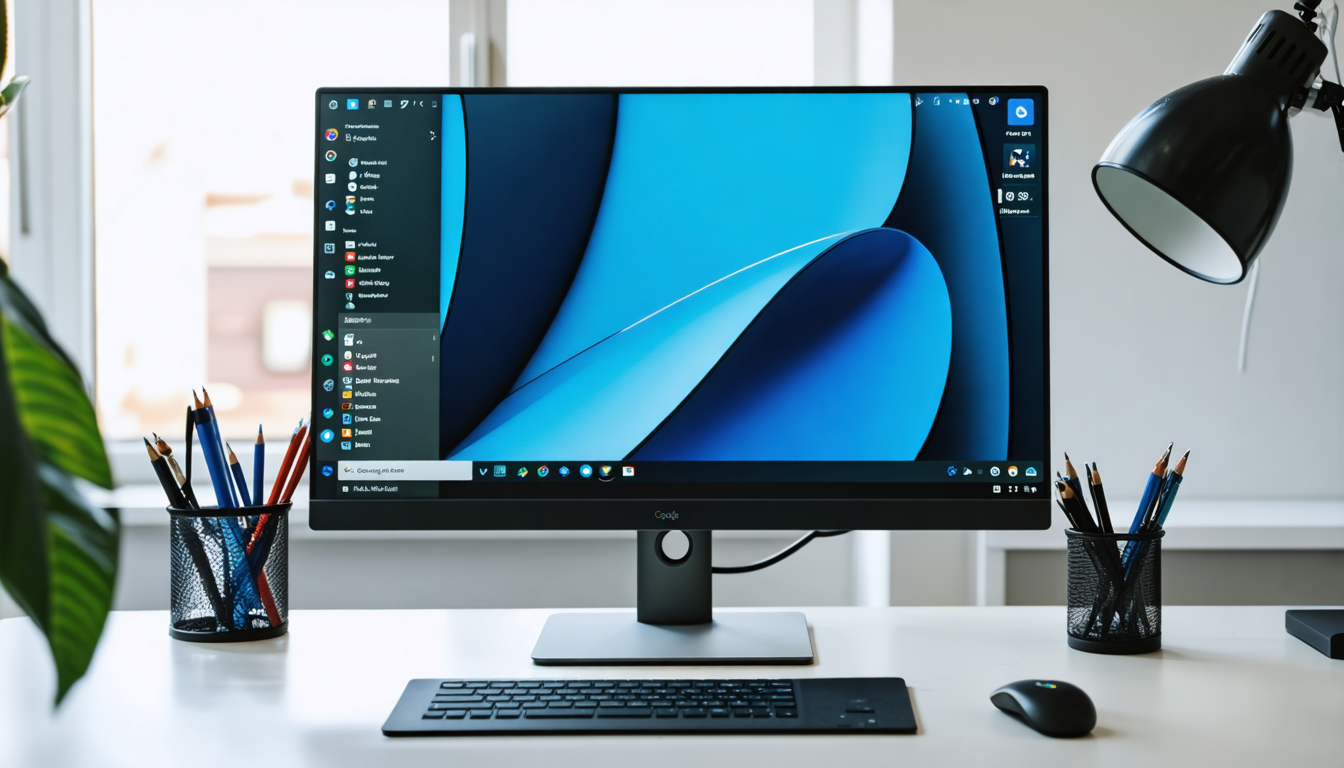
One of Aluminium OS’s major challenges is to offer a system perfectly compatible with the huge existing library of Android applications. Unlike Chrome OS, which offers limited management of mobile apps, Aluminium OS relies on a native model to run Android applications on desktop machines without compromise.
This compatibility also means that users can find their favorite tools, settings, and data in a unified environment. Developers themselves benefit from a more robust platform to adapt their applications with advanced features such as native multitasking support or more complex interactions.
The ability to install and run full Android applications also opens the door to a better multimedia, professional, and gaming experience. Whether it is creative apps, games, or management tools, Aluminium OS announces a new era where the boundary between mobile and desktop becomes almost imperceptible.
In addition to traditional hardware compatibility, Aluminium OS is designed to run on several types of devices, including convertible tablets, hybrid PCs, and compact Chromeboxes. This flexibility shows that Google aims to build a truly cross-cutting ecosystem, where every device shares the same software DNA.
| Device type | Main features | Key benefits |
|---|---|---|
| Mainstream laptops | Fluid interface, advanced multitasking, native Android applications | Performance and versatility suited for daily use |
| Hybrid PCs and tablets | Touch support, smooth switching between tablet and desktop modes | Flexible use for work and leisure |
| Chromebox and mini-PC | Optimized interface for large screens, efficient resource management | Compact solution for multimedia and office use |
This device catalog underlines Google’s broad vision: Aluminium OS is not limited to a particular format or use but aims for widespread and diverse adoption.
Exploring technical differences between Aluminium OS and Chrome OS
This new version of Android for PC relies on a technical foundation mixing elements of Chrome OS with innovations from Android development. Rather than starting from scratch, Google seems to have chosen an intelligent fusion, retaining the best of its two platforms.
At the heart of the system, the Linux kernel still forms the base, guaranteeing stability and performance. However, Aluminium OS introduces an approach focused on managing Android applications in a desktop environment, with a more dynamic resource optimizer and a more advanced window manager. This results in better responsiveness and smooth multitasking, even on machines with moderate specifications.
Notable differences compared to Chrome OS include:
- A more customizable and extensible user interface, designed for keyboard-mouse interactions.
- Native support for Chrome extensions with an integrated dedicated button.
- Advanced integration of productivity tools and native AI features.
- Better management of external peripherals, including multiple displays and storage systems.
- A more flexible update system, allowing faster development cycles.
These innovations clearly indicate that Google is investing to position Aluminium OS as a robust platform, capable of supporting both intensive professional use and multimedia consumption.

The commercial strategy behind Aluminium OS: Positioning and target market
Behind this technical evolution lies a well-calculated commercial strategy. Google no longer hides its desire to capture a significant share of the PC operating system market, historically dominated by Microsoft and Apple. Aluminium OS is thus designed to meet the expectations of various segments, from the general public to high-end professional users.
According to available information, Google plans a clear segmentation of its offer:
- AL Entry: Affordable, price-competitive machines, ideal for students and basic users.
- AL Mass Premium: A mid-range segment, combining high performance and accessibility, intended for mixed professional and personal use.
- AL Premium: High-end devices, capable of competing with MacBook Pros and the latest professional Windows PCs.
This range allows Google to reach a wide audience while promoting the Aluminium OS brand as synonymous with innovation and quality. Hiring a product director specifically dedicated to this project in Taiwan also confirms the strategic importance of Aluminium OS in the American giant’s roadmap.
By simultaneously targeting several segments, Google hopes not only to expand the Android base to PCs but also to create a coherent ecosystem where brand loyalty is built around the combined software and hardware experience.
The future outlook for Aluminium OS and the operating system market
Looking ahead to the coming months and years, Aluminium OS could mark a decisive turning point in OS history. The increased presence of artificial intelligence combined with a compatible and high-performance multi-device system creates a new dynamic. By establishing itself on PC, Android could finally surpass its role as the dominant mobile system to become an essential player in personal computing.
The likely presentation during the next Google I/O in May should clarify Google’s ambitions, with an official launch that could disrupt both professional and general user habits. This desktop market reconquest also fits into a broader strategy to reduce software and hardware fragmentation, where gamers, creators, and businesses will find a more powerful common base.
Finally, the transition to Aluminium OS would allow better integration of Google services and applications, highlighting a smoother and smarter experience. Partnerships with manufacturers such as HP or Lenovo, as well as Qualcomm’s declared support, give this project all the credibility needed to consider a significant breakthrough.
It is therefore important to closely follow upcoming developments, as Aluminium OS could well redefine the way we conceive personal computing, linking mobile portability and desktop power more than ever before.