Every day, artificial intelligence and cryptocurrencies push the boundaries of their own universes, shaping a technological future where information and digital trust intertwine in unprecedented ways. These two innovations, born in different eras but propelled by constant acceleration over the past decade, are now experiencing a marked convergence. At the heart of this fusion, blockchain offers an immutable and transparent foundation, ready to feed artificial intelligence’s insatiable appetite for data, while AI deploys its capabilities to analyze, automate, and secure increasingly complex cryptographic ecosystems.
The essential role of Bitcoin as the cornerstone of the crypto ecosystem attests to the importance of understanding this foundation before addressing interactions with artificial intelligence. Behind the media hype, this is indeed a multifaceted technical, economic, and philosophical convergence, often misunderstood or drowned out by marketing promises.
As recent advances unfold, special projects and tokens are emerging, merging AI and cryptocurrencies to implement disruptive innovations: decentralized AI service markets, algorithmic investment optimization, and even autonomous agents capable of making economic decisions in real-time. In this article, we will explore these closely linked dimensions, offering an in-depth and practical reading of this alliance that is reshaping the contours of decentralized finance and emerging technologies.
- 1 Why the association between artificial intelligence and cryptocurrencies stands as a lasting phenomenon
- 2 Bitcoin: the essential reference to know to understand the AI-cryptocurrency synergy
- 3 Blockchain data exploitation by artificial intelligence: a revolution in market understanding
- 4 Automation and smart algorithms: AI serving crypto management 24/7
- 5 AI Tokens: the new generation of cryptographic assets integrating artificial intelligence
- 6 Concrete contributions of AI for security and ergonomics in the cryptosphere
- 7 The current limits and risks to integrate into the AI-cryptocurrency alliance
- 8 The future of convergence between AI and cryptocurrencies: towards a sustainable and innovative symbiosis
Why the association between artificial intelligence and cryptocurrencies stands as a lasting phenomenon
The association between artificial intelligence (AI) and cryptocurrencies is not a mere superficial trend or a fad. It corresponds to deep affinities, nourished by shared visions and similar objectives in technological and economic spheres. First of all, these two domains share a strong aspiration for decentralization, seeking to reduce the hold of central powers by redistributing control to distributed networks.
This ambition coincides with the need to automate complex processes, which AI facilitates by relying on advanced machine learning algorithms capable of analyzing vast amounts of data with speed and precision. Cryptocurrencies, via blockchain, produce immutable, transparent, and public ledgers. These elements constitute the ideal raw material to feed AI models, where the quality, reliability, and quantity of data are crucial.
Conversely, AI finds in the crypto universe a fertile and dynamic testing ground, where continuous and chaotic flows evolve. This richness in signals opens the door to digital intelligence capable of analyzing, anticipating, and even automating decisions in highly volatile environments. For example, AI can estimate market behaviors, detect early signs of attacks on decentralized finance (DeFi) platforms, or optimize the performance of smart contracts thanks to adaptive algorithms.
This convergence creates a virtuous circle where blockchain makes data reliable and verifiable, and AI maximizes their exploitation. The phenomenon is amplified by strong financial attractiveness, drawing capital and talent, which propels the rapid evolution of these technologies. This convergence thus goes beyond mere juxtaposition to assert itself as a major partnership in the digital ecosystem.

Bitcoin: the essential reference to know to understand the AI-cryptocurrency synergy
Before venturing into the complexity of uses and projects mixing artificial intelligence and cryptocurrencies, it is essential to revisit the fundamental role of Bitcoin in this universe. More than a cryptocurrency, Bitcoin represents the first globally accepted digital asset, often referred to as “digital gold” for its capacity to serve as a stable store of value in an otherwise turbulent market.
Bitcoin also helped demonstrate the operational viability of blockchain by providing a decentralized ledger that is secure, transparent, and censorship-resistant. Its monetary policy, limited by design (a fixed number of bitcoins created), gives it an essential characteristic: a non-inflationary digital standard that attracts investors and users seeking stability. In this respect, Bitcoin’s capitalization far exceeds 1.5 trillion euros in 2026, a clear sign of its predominant weight in the cryptocurrency market.
Its influence exceeds the simple economic sphere because the Bitcoin price also serves as a psychological barometer. For example, when BTC price exceeds €78,900, optimism and liquidity spread to other cryptocurrencies and tokens, including projects more specialized around artificial intelligence. In periods of correction or high volatility, altcoins and AI tokens experience amplified impact, complicating portfolio management but reinforcing the need for AI-based decision support tools.
Within this framework, precisely monitoring the Bitcoin price via specialized platforms like Kraken has become indispensable for all actors in the sector, from independent traders to institutional funds. Mastery of this financial leitmotif guides strategies and fosters a more enlightened approach to the significant volatility of crypto.
Blockchain data exploitation by artificial intelligence: a revolution in market understanding
One of the most tangible contributions of artificial intelligence to the cryptocurrency sector lies in its ability to decrypt and exploit the millions of transactions recorded daily on public blockchains. These open ledgers, which record all operations, represent an unprecedented mass of information but also raw and disordered data, requiring sophisticated treatment to extract strategic value.
Machine learning, a pillar of AI, excels at extracting hidden patterns from these big data, revealing correlations or weak signals undetectable to the human eye. For example, advanced algorithms can detect the activity of large entities called “whales” that accumulate or redistribute assets, thus influencing market trends before any generalized movement.
The most advanced analytical platforms also incorporate real-time audit capabilities of smart contracts, verifying their security, quickly identifying potential vulnerabilities, thus limiting the risk of flaws that can have dramatic consequences for decentralized finance.
This enhanced analysis, combining algorithmic precision and computational speed, brings a new balance between anticipation and risk management, indispensable in a sector where uncertainty remains high. It also offers better readability to users and investors, allowing them to navigate with more serenity in an environment traditionally perceived as chaotic.
Automation and smart algorithms: AI serving crypto management 24/7
Beyond market understanding, artificial intelligence is revolutionizing the very practice of trading and management of crypto assets through its integration into automated and adaptive systems. Trading bots, already popular in traditional markets, now use machine learning models to design and execute sophisticated strategies on the blockchain.
These algorithms are capable of operating continuously, 24/7, a necessity in a cryptocurrency market that never pauses. Their technical endurance allows them to react instantly to drastic trend changes, adjust portfolios according to well-defined scenarios, and finely control risk parameters.
By integrating sentiment analyses from social networks and real-time news flows, these systems leverage the variety of available information to anticipate movements, sometimes well before human actors become aware. This intelligent automation significantly reduces the mental load of traders and investors while offering a dynamic adjustment capacity indispensable in a volatile context.
But despite these advances, it is crucial to remember that automation remains a decision-support tool, not a guarantee of success. Technology amplifies capabilities, but caution and risk management remain essential human skills in this shifting domain.
AI Tokens: the new generation of cryptographic assets integrating artificial intelligence
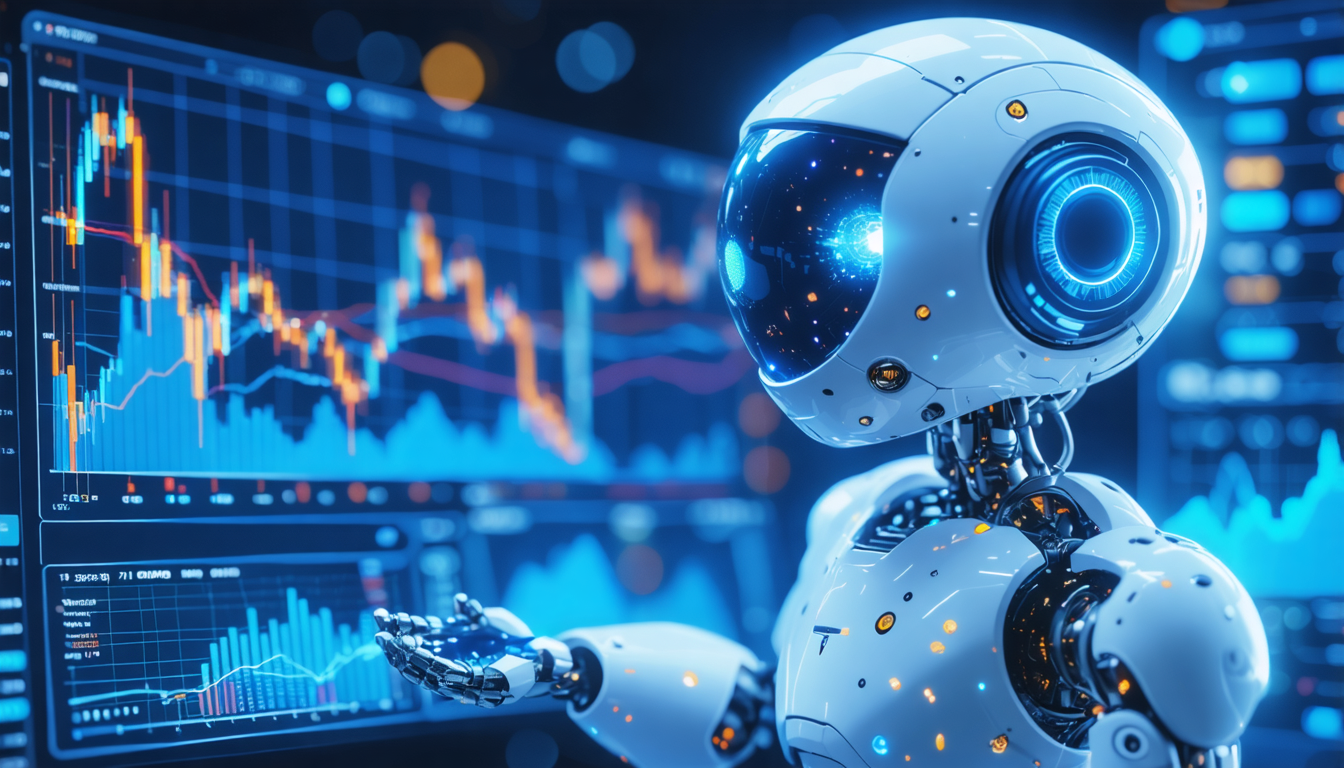
At the intersection of AI and blockchain appears a class of innovative digital assets, the AI tokens. These projects do not merely use AI as a simple tool but embed it directly into their protocol’s operation, ranging from decentralized service offerings to collaborative computing networks.
Among notable examples, Fetch AI (FET) develops intelligent software agents capable of carrying out targeted tasks such as smart booking or logistical optimization. These agents interact autonomously and negotiate via blockchain, offering concrete and innovative applications. Bittensor (TAO), for its part, proposes a network where the artificial intelligences themselves are rewarded based on their contribution, encouraging an open and economically incentivized AI.
NEAR Protocol (NEAR) is preparing the ground for smooth AI integration into fast decentralized applications, serving as a key infrastructure for future services at the crossroads of both fields. Other dedicated tokens target the decentralization of intensive computations necessary for machine learning, seeking to provide a viable alternative to cloud giants by pooling unused GPU power.
This diversity shows a maturing sector, promising an increase in real use cases and economic utility, far beyond the mere speculative effect often reproached to the crypto market. The expected growth thus rests as much on technological innovation as on the structuring of functional and useful ecosystems for a broad audience.
List of main characteristics of AI tokens
- Integrated AI functionality within the blockchain protocol.
- Creation of decentralized markets for AI services and applications.
- Monetization of unused GPU computing power in a network.
- Rewarding artificial intelligences according to their effective utility.
- Support for decentralized finance through optimized decisions and forecasts.
Concrete contributions of AI for security and ergonomics in the cryptosphere
Beyond analysis and automation functions, AI plays an increasingly important role in digital security for cryptographic projects. For example, decentralized finance protocols, often exposed to complex attack attempts, now benefit from automated fraud detection systems and early warnings.
By improving the ability to recognize malicious behaviors and anticipate vulnerabilities, AI significantly relieves security teams, thus reducing stress and the risk of human errors. Moreover, it facilitates the management and customization of user interfaces, with virtual assistants capable of making the often complex world of wallets and exchange platforms more accessible.
AI-based chatbots thus help novice users navigate, learn, and operate in an environment generally perceived as technical and opaque. In some cases, AI also optimizes investment strategies in decentralized finance, seeking the best yield opportunities while helping to manage the associated risk.
This interaction simplifies access and promotes the democratization of cryptographic technologies, while improving the quality of the user experience, a key factor for widespread adoption.
The current limits and risks to integrate into the AI-cryptocurrency alliance
Despite undeniable promises, the symbiosis between artificial intelligence and cryptocurrencies also entails challenges and limits that must be approached rigorously. From a technical point of view, predictive models, even sophisticated ones, remain subject to high error margins, especially in a market as unstable as crypto, strongly influenced by irrational factors, manipulations, and often-changing new regulations.
Moreover, algorithmic opacity, or “black box,” constitutes a major issue particularly for regulators. Without transparency on certain internal AI mechanisms used in trading or management, compliance becomes more complex, and it is hard to ensure that these tools meet increasing legal and ethical requirements.
A common misconception persists that AI could guarantee systematic success in trading or financial management, which is false. Artificial intelligence remains a powerful lever but does not eliminate risk or the inherent uncertainty of these markets. Human management, diversification, and vigilance thus remain imperative to navigate this evolving universe.
The future of convergence between AI and cryptocurrencies: towards a sustainable and innovative symbiosis
The current trajectory demonstrates that the convergence between artificial intelligence and blockchain goes beyond passing trends. The mutual necessity is too strong: cryptocurrency needs AI to strengthen its security, efficiency, and accessibility. Conversely, artificial intelligence requires blockchain to ensure decentralization of its data, trace their origin, and certify their use openly.
In the long term, several projects aim to create DAOs (decentralized autonomous organizations) partly managed by artificial intelligences, paving the way for innovative economic models where governance relies on distributed intelligence. This vision also prepares the ground for verifiable data markets, crucial for machine learning in an ethical and transparent context, and for self-regulated monetary systems governed by smart algorithms.
These perspectives nevertheless integrate the need for collective vigilance around trust issues. Building a reliable ecosystem relies on progressive and rigorous adoption, balancing technological opportunities and responsibilities. Thus, the two revolutions, AI and cryptocurrency, could well significantly contribute to the ongoing societal transformation, where distributed trust and machine intelligence combine to create a fairer and more efficient digital future.