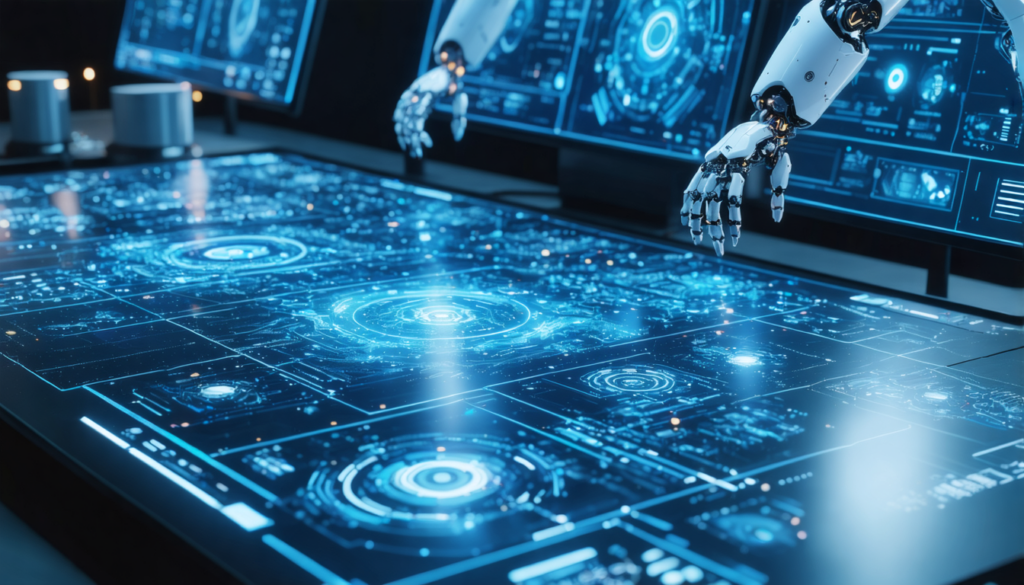
Technological advances in the field of humanoid robotics are reaching a new major milestone thanks to Agibot presenting Genie Sim 3.0, its innovative simulation platform. On the occasion of CES 2026, this revolutionary system was unveiled as a tool designed to transform the way artificial intelligence and robotics interact. Genie Sim 3.0 promises to significantly accelerate the training and validation of the cognitive abilities of humanoid robots, thus opening the way to a new era of innovation and modeling. By integrating advanced technologies such as NVIDIA Isaac Sim and an integrated open-source framework, this platform aims to reduce dependence on physical hardware while providing a rich, complex, and highly realistic learning environment.
Humanoid robots benefit from intensive training based on simulated scenarios that faithfully reproduce real-world situations. Genie Sim 3.0 offers a unified workflow combining digital asset creation, automatic scene generation, multi-sensor data collection, physical simulation, and standardized validation. This orchestration represents a true break, as it enables scientists and engineers to quickly and efficiently test embodied intelligence models in controlled and reproducible conditions. This product thus establishes itself as a technological revolution for driving advanced robotics, offering unprecedented possibilities for innovation.
- 1 Genie Sim 3.0: A Cutting-Edge Simulation Platform for Humanoid Robots
- 2 The Key Role of Simulation to Accelerate Training of Robotic Artificial Intelligences
- 3 Genie Sim Benchmark: The Evaluation Reference for Embodied Intelligences
- 4 Scene Generation by Natural Language Serving Robotic Modeling
- 5 Advanced 3D Reconstruction Integration for Ultra-Realistic Simulations
- 6 Agibot’s Open Source Ecosystem to Strengthen Innovation in Robotics
- 7 The Challenges of Simulation in Driving Humanoid Robotics
- 8 Future Prospects for Simulation and Robotic Intelligences
Genie Sim 3.0: A Cutting-Edge Simulation Platform for Humanoid Robots
At the heart of Agibot’s new offering, Genie Sim 3.0 stands out for its innovative architecture based on tight integration with NVIDIA Isaac Sim. The latter is itself built on NVIDIA Omniverse, a framework promoting virtual collaboration and the creation of highly realistic 3D environments. This symbiosis allows Genie Sim 3.0 to combine several major stages of robotic simulation into a single smooth pipeline: from digital asset modeling to the execution of complex scenarios in physical simulation.
The system notably includes:
- Automatic scene generation: based on natural language commands, the environment is created with semantic variations allowing exploration of a wide range of usage contexts.
- Automated data collection and annotation: thanks to RGB-D sensors, stereo, and body kinematics information, the captured data are labeled in real time, facilitating their use in learning.
- Complete benchmark: with over 200 tasks and 100,000 simulated scenarios, Genie Sim Benchmark paves the way for standardized measurements to rigorously assess the embodied intelligence capabilities of robots.
Through this integrated approach, Agibot provides a powerful solution to the growing complexity of robotic AI testing and training. This significantly reduces reliance on costly physical trials while accelerating research and development.
The Key Role of Simulation to Accelerate Training of Robotic Artificial Intelligences
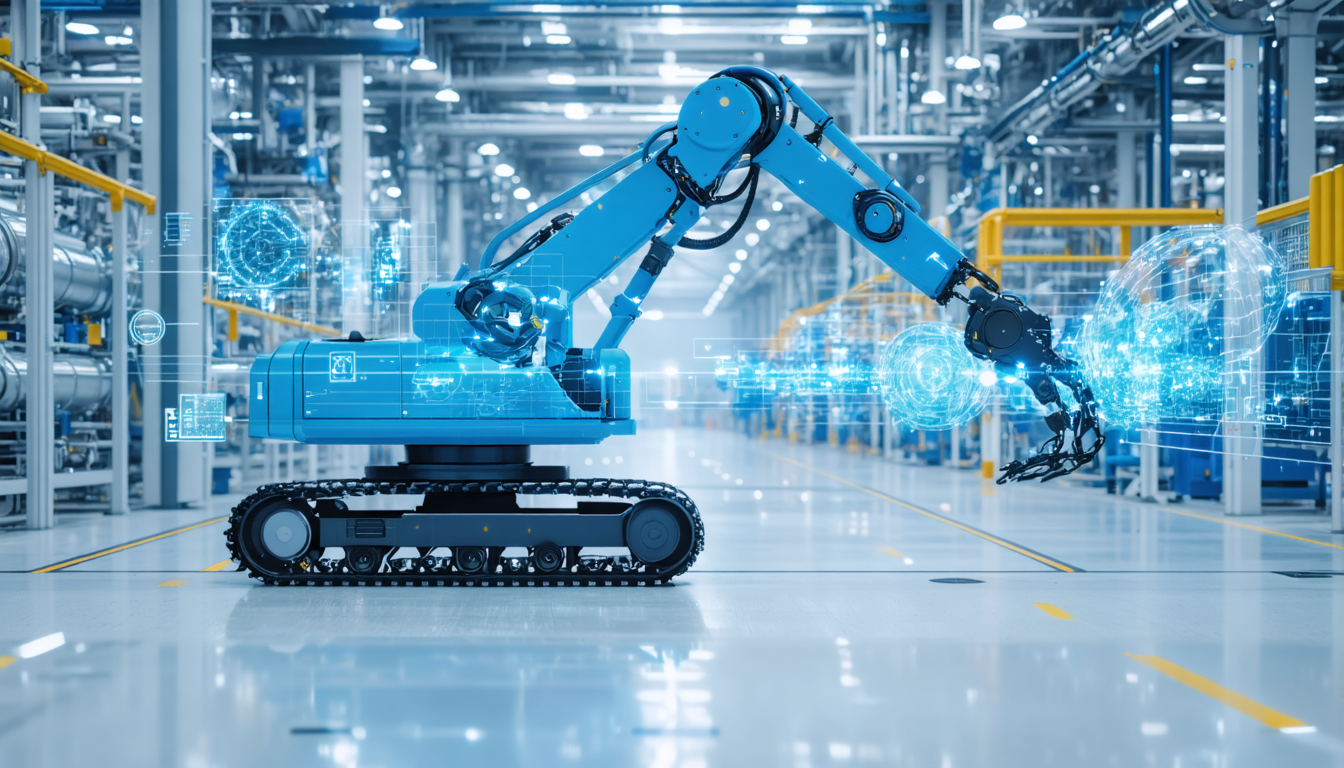
The complexity of humanoid robotics requires rigorous and extensive training processes, often major hindrances due to the slowness of physical tests and high costs. Genie Sim 3.0 addresses this challenge with an extremely faithful virtual environment that allows thousands of hours of learning to be executed in reduced time.
Thanks to the integration of multiple sensors and the richness of scenarios, these simulations very realistically reproduce the physical, sensorimotor, and environmental conditions to which robots are exposed. These factors are crucial for artificial intelligence to acquire solid and generalizable experience.
For example, robotic models can practice manipulating various objects, respond to complex instructions, and navigate various logistical or industrial environments. The automated training program offers scripted tasks as well as low-latency teleoperation sessions to refine and correct behaviors in real time.
The platform also optimizes the production of essential synthetic datasets, with automated incident management and rapid recovery of interrupted simulations, which significantly reduces the costs and delays in building these training bases.
This acceleration through simulation is a genuine innovation lever for researchers and industrial players. It opens the door to rapid iteration cycles, a broader exploration of the robots’ capabilities, and better quality assurance before real deployment.
Concrete Benefits of Simulation-Based Training
- Acceleration of development cycles: reduction of the time needed to test and improve models thanks to virtual simulation.
- Reduction of hardware costs: decrease in dependence on physical prototypes for initial validation phases.
- Standardization of tests: more rigorous and reproducible evaluation thanks to integrated benchmarks.
- Scenario variability: automatic generation of diverse environments with varied tasks to strengthen adaptability.
Genie Sim Benchmark: The Evaluation Reference for Embodied Intelligences
One of the cornerstones of Genie Sim 3.0 is its evaluation module, Genie Sim Benchmark, designed to finely and objectively measure the performance of embodied intelligences in humanoid robots. This innovation goes beyond simple technical evaluation to offer a true profile of a model’s overall capabilities.
The benchmark includes over 200 diverse tasks simulating concrete situations, ranging from precise object manipulation to navigation in complex environments, as well as recognition and social interaction. These tasks are spread over more than 100,000 varied scenarios, covering both domestic and industrial environments.
The richness of the benchmark also stems from its ability to standardize evaluation metrics, which is a key issue for comparing different models and advances in robotic artificial intelligence. Research teams thus benefit from a common tool, providing clear visibility on the strengths and weaknesses of each approach.
This approach also supports the growth of an open ecosystem, where innovations can be shared, experimented with, and validated under homogeneous conditions, contributing to defining new standards in intelligent robotics.
Some Examples of Task Categories Present in Genie Sim Benchmark:
| Category | Description | Concrete Example |
|---|---|---|
| Object Manipulation | Grasping test, moving and assembling parts | Stack cubes in a precise order |
| Autonomous Navigation | Movement in complex and dynamic environments | Avoid obstacles in an industrial setting |
| Social Interaction | Gesture recognition and appropriate responses | Respond to voice commands in a household |
| Multi-Sensory Perception | Integration of visual, auditory, and kinesthetic data | Distinguish moving objects from static ones |
Scene Generation by Natural Language Serving Robotic Modeling
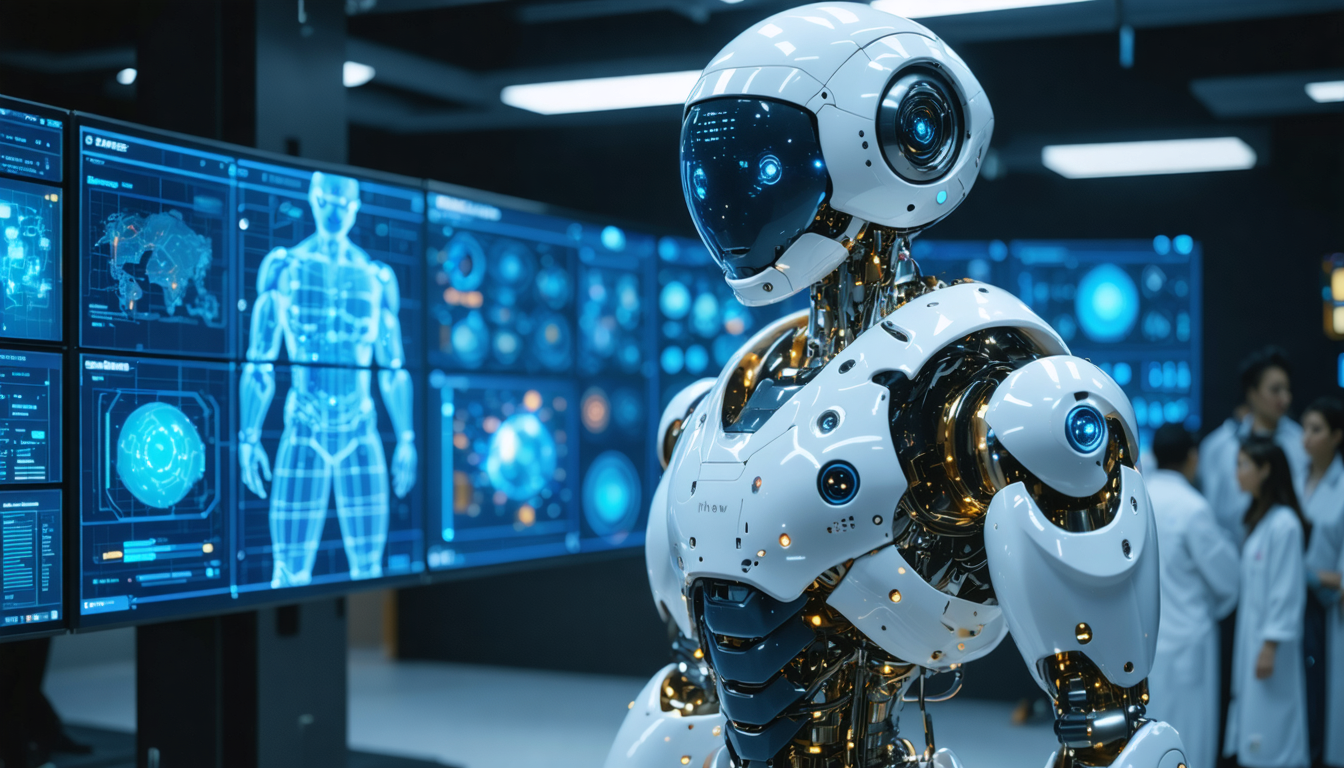
One of the most innovative aspects of Genie Sim 3.0 is its advanced use of natural language models to quickly generate complex simulation environments. This technique significantly reduces the need for manual coding while ensuring great diversity in the proposed scenes.
Users describe their needs in simple sentences, for example: “Create a kitchen with a sink, a refrigerator, and a work table,” and the platform interprets these instructions to produce a structured set composed of coherent, visual, and interactive elements. This functionality relies on advanced algorithms combining language models and visual models to refine details.
Moreover, generation is accompanied by visual previews and multiple semantic variations, allowing researchers to quickly test different scenarios. This approach facilitates customization of environments according to the particular requirements of robotic projects.
This also opens the door to more adaptive trainings, where robots learn in varied and evolving settings, thereby strengthening their ability to generalize their skills in the real world.
Advantages of Generation by Natural Language
- Ease of use: intuitive design without the need for 3D programming expertise.
- Flexibility: rapid creation of diverse environments without complete reconfiguration.
- Richness of variations: exploration of multiple scenarios to foster robust learning.
- Time optimization: acceleration of modeling and testing phases.
Advanced 3D Reconstruction Integration for Ultra-Realistic Simulations
The fidelity of environments plays a crucial role in the quality of simulation for humanoid robots. Genie Sim 3.0 integrates cutting-edge 3D reconstruction technologies allowing easy conversion of real spaces into usable models for simulation.
A simple portable laser scan equipped with a system combining RGB imaging, 360° LiDAR, and precise positioning is enough to capture a location. One minute of orbital video around an object allows transforming it into a 3D asset ready to integrate the platform. This speed and precision provide a decisive advantage for creating digital twins faithful to reality.
These 3D environments can concern homes, warehouses, industrial or logistical platforms, faithfully reproducing topography, textures, and present objects. Thus, teams can evolve their robotic models taking into account an accurate and concrete representation of the playground.
This full integration promotes the development of more robust and precise algorithms capable of better anticipating and adapting to real-world constraints. It also facilitates end-to-end validation of robots without requiring their physical presence on site.
Major Industrial Applications of 3D Reconstruction
- Creation of digital twins for automated production lines.
- Virtual inspection and maintenance of complex infrastructures.
- Optimization of logistics management through warehouse simulation.
- Immersive training of operators and robots in environments identical to real sites.
Agibot’s Open Source Ecosystem to Strengthen Innovation in Robotics
Agibot has adopted a decidedly collaborative approach by making all elements of Genie Sim 3.0 available as open source. This strategic choice facilitates the emergence of a dynamic ecosystem around advanced simulation of humanoid robots and their embodied intelligence.
Researchers, engineers, and industrial teams can freely access datasets, evaluation tools, simulation engines, and diverse libraries. This openness encourages sharing of best practices, stimulates co-creation, and accelerates the dissemination of technological standards.
Agibot’s initiative responds to an urgent sector need: having a common reference to measure and compare the performance of robotic artificial intelligences. This framework promotes interoperability between tools, strengthens model reliability, and fuels collective progress.
Moreover, open source ensures indispensable transparency, notably for industrial applications where reliability and safety are crucial issues. This strategy paves the way for broad collaboration between academia, startups, and large industrial groups, thus catalyzing the next wave of innovations.
Key Benefits of Open Source for Genie Sim 3.0:
- Acceleration of scientific progress through resource pooling.
- Reduction of development costs thanks to collaborative work.
- Facilitation of standardization and performance validation.
- Promotion of an engaged community around embedded robotics.
The Challenges of Simulation in Driving Humanoid Robotics
Humanoid robotics faces fundamental challenges: environmental variability, complexity of interactions, and autonomy requirements. Advanced simulation, as proposed by Genie Sim 3.0, constitutes a fundamental lever to overcome these barriers.
The ability to train artificial intelligences in rich virtual worlds accelerates robots’ adaptation to real-world unforeseen events. It also allows exploring extreme or rare situations, difficult to reproduce in physical contexts.
Furthermore, increased simulation accuracy contributes to improving operational safety by anticipating failures or erratic behaviors. This anticipation is crucial, especially as robots operate in direct contact with humans in numerous fields: health, services, industry.
For industrial players, having realistic and integrated simulation tools represents a strategic investment in cost control, product innovation, and time-to-market. Genie Sim 3.0 therefore presents itself as an essential catalyst enabling the transformation and sustainable growth of intelligent robotics.
Future Prospects for Simulation and Robotic Intelligences
As humanoid robotics continues to grow in complexity and versatility, platforms like Genie Sim 3.0 lay the foundations for a future where artificial intelligence and virtual simulation merge to create systems that are ever more performant and autonomous.
One can envision a future where models continuously self-improve through simulated feedback loops, where multi-robot collaboration is tested and optimized on a large scale before deployment, and where predictive modeling precisely anticipates needs and constraints.
Innovation driven by Agibot also illustrates the rise of open source and collaborative technologies that will become a standard in robotic research and industry. This will allow faster sharing of advances, adapting tools to multiple needs, and accelerating the dissemination of practical applications.
Finally, the convergence between realistic simulation, automated environment generation, and sophisticated artificial intelligence will undoubtedly open new horizons in fields as varied as personal assistance, health, logistics, or security. Genie Sim 3.0 is thus at the forefront of a true technological revolution that will propel robotics into a new dimension.