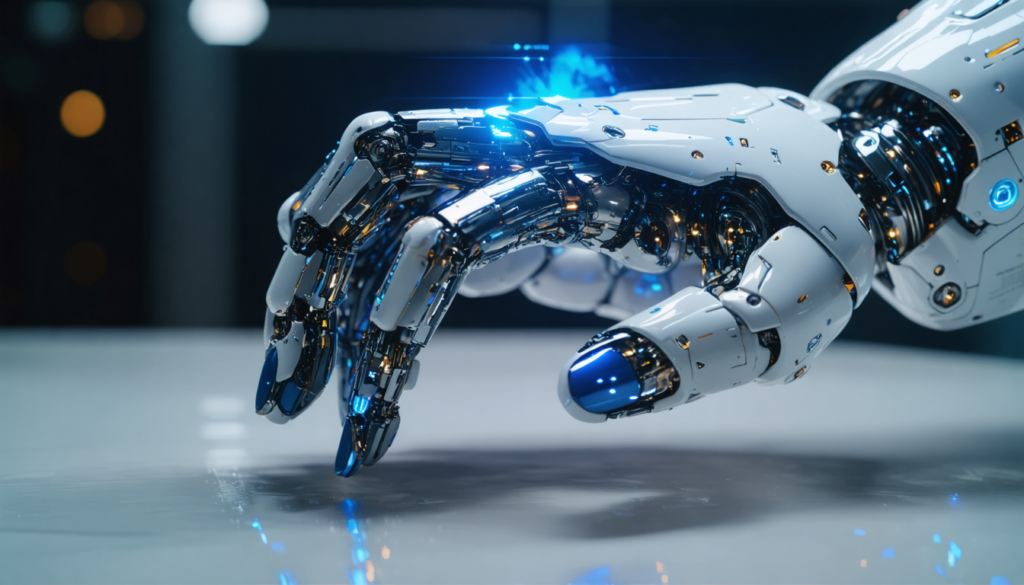
The field of advanced robotics takes a major step forward today with the development of a robotic hand capable of sensing pressure and adapting in real time to the gestures of its user, thanks to artificial intelligence. This breakthrough embodies a true tactile revolution, where integrated tactile sensors, combined with sophisticated machine learning algorithms, offer unprecedented tactile sensitivity. The applications range from medical robotics to human-machine interfaces, profoundly transforming our approach to robotic prosthetics and paving the way for futuristic technology where machines and humans collaborate more closely than ever.
This new technological horizon is not limited to improving mechanical dexterity. It is a revolution in how robotic objects can “feel” their environment, automatically adapt, and deliver realistic sensations. Researchers from the University of Utah and TASKA Prosthetics have thus developed a prototype robotic hand that not only captures the force exerted but also interprets sensory data to adjust its movements. This innovative combination completely renews the notion of human-machine interaction in 2025.
- 1 The sensitive robotic hand: a major turning point for advanced robotics
- 2 Tactile sensors: the key to unprecedented sensitivity
- 3 Human-machine interaction: toward a more intuitive fusion
- 4 Medical applications: revolution in the field of robotic prosthetics
- 5 Technical challenges in designing a sensitive robotic hand
- 6 Development prospects and future impact on robotics
- 7 Innovations in artificial intelligence serving the tactile revolution
- 8 Promising prospects in robotics and robotic prosthetics
The sensitive robotic hand: a major turning point for advanced robotics
The development of a robotic hand equipped with fine tactile sensitivity is a significant advancement in advanced robotics, a constantly evolving discipline. Until now, robotic prostheses, though mechanically efficient, were limited in their ability to reproduce the subtlety of human gestures, particularly in terms of touch. This tactile revolution, made possible by the integration of high-precision tactile sensors and machine learning algorithms, reduces this functional gap.
Each finger of the robotic hand is equipped with a series of sensors that detect the pressure and texture of objects with impressive finesse. Whereas traditional prostheses often imposed a constant cognitive effort on users to master the grasp of delicate objects, this new generation adapts instantly. Thanks to artificial intelligence, the robotic hand automatically adjusts the gripping force, thus avoiding crushing a fragile glass or dropping a light object.
The results of recent clinical tests offer concrete insight into this advance. Four amputee participants were able to perform everyday tasks—such as grasping a plastic cup or handling small objects—with remarkable fluidity and precision. This achievement is all the more significant as the prosthesis corrects in real time small involuntary movements that would have made these tasks tedious or even impossible with previous technologies.
Tactile sensors: the key to unprecedented sensitivity
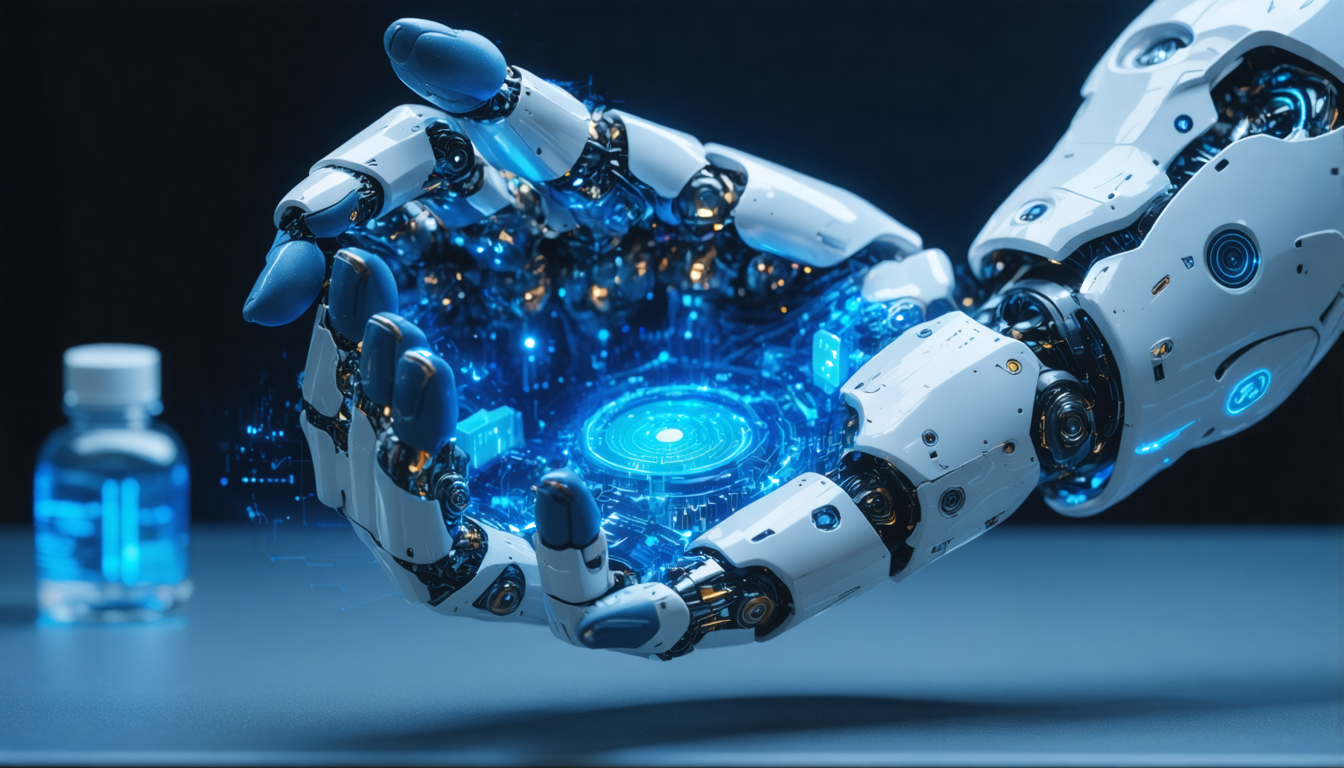
At the heart of this sensitive robotic hand, tactile sensors play a crucial role. Their sophisticated design allows precise measurement of the pressure applied on each finger, detection of texture, and even differentiation between materials, ranging from a heavy object to a mass as light as a cotton ball. The principle is based on a combination of pressure and optical sensors that continuously collect data on the tactile environment.
This ability to perceive complex information is enhanced by a machine learning system that interprets this data to produce an appropriate response. Real-time processing is essential, as adjustments must occur instantly so that the user experiences natural and intuitive control. Artificial intelligence thus acts as an additional brain, anticipating needs and automatically correcting movements without the user having to think about it.
- Pressure sensors: measure the applied force and distribute it evenly across contact points.
- Optical sensors: detect the texture and shape of objects relying on light and imaging.
- Adjustable sensitivity: enables the robotic hand to modulate grip according to the fragility or hardness of the object.
- Real-time integration: thanks to sophisticated algorithms, all these sensors work simultaneously for smooth adaptation.
This advanced integration of tactile sensors fundamentally redefines our notion of sensitivity in the field of robotics. It provides a more natural interaction between humans and machines, essential for the development of future technologies.
Human-machine interaction: toward a more intuitive fusion
One of the major ambitions of contemporary projects in advanced robotics is to establish smooth and natural human-machine interaction while minimizing the cognitive effort required to control robotic prostheses. The new sensitive robotic hand is a striking illustration of this goal. Thanks to artificial intelligence and machine learning, the machine anticipates and adapts to the user’s intentions in real time.
In practice, this means that handling objects, even complex or fragile ones, no longer requires constant concentration. Micro-adjustments are made automatically, thus relieving the user. This technology opens the door to richer interactions, where the machine no longer merely obeys commands but becomes an active partner. Future implanted neural interfaces could even allow direct brain control, with tactile feedback capable of restoring real sensations.
This upheaval, now on the horizon, reflects a profound evolution in how humans will use bionic extensions. By eliminating the barriers between intention and action, human-machine interaction reaches an unprecedented level, fostering complete and natural integration.
Medical applications: revolution in the field of robotic prosthetics
Advances in the tactile sensitivity of robotic hands particularly impact the medical sector, notably robotic prosthetics. Beyond restoring functional mobility to amputees, these intelligent prostheses now offer a novel sensory experience that brings their use closer to the sensation of a biological hand.
For example, by integrating tactile sensor technology linked to artificial intelligence algorithms, prostheses greatly improve the precision and speed of grasping. For users, this results in a noticeable decrease in cognitive fatigue and greater confidence in daily movements. Furthermore, the prospect of prostheses coupled with brain-machine interfaces represents a true revolution, enabling direct neural control while providing tactile feedback to perceive, for example, texture or temperature.
This new generation of robotic prostheses thus offers a dual function: restoring both mechanical strength and tactile sensitivity, which represents a colossal step toward personalization and adaptability. Feedback from early clinical trials is both encouraging and promising, demonstrating improved quality of life for patients and true therapeutic advancement.
Technical challenges in designing a sensitive robotic hand
Despite these tremendous advances, designing a sensitive robotic hand remains a complex undertaking, marked by numerous technical challenges. The main obstacle lies in the need to combine miniaturization, robustness, and precision within the same system. Tactile sensors must be sensitive enough to detect low pressures while withstanding the mechanical stresses of daily use.
Another major challenge concerns the instant processing of collected data. Indeed, for the hand to adapt in real time, data streams must be interpreted and translated into instantaneous mechanical actions, which demands significant computing capacity and highly efficient machine learning algorithms.
Finally, the integration of neural interfaces represents a delicate step requiring perfect synchronization between the human brain and the machine. This final aspect, essential to move toward a truly intuitive prosthesis, is the subject of intensive interdisciplinary research among neuroscience, engineering, and materials science.
| Technical challenge | Description | Proposed solutions |
|---|---|---|
| Sensor miniaturization | Integrate sensitive sensors without adding weight to the robotic hand. | Use of flexible materials and advanced microtechnologies. |
| Real-time data processing | Manage and interpret numerous tactile data quickly. | Implementation of dedicated processors and optimized machine learning algorithms. |
| Neural integration | Synchronize brain signals with mechanical actions. | Development of ultra-precise brain-computer interfaces. |
Development prospects and future impact on robotics
As advanced robotics integrates these evolved sensory capacities, the range of possibilities expands considerably. The sensitive robotic hand is a cornerstone toward robots capable of performing increasingly complex tasks with dexterity and precision, while interacting intuitively with humans.
Imagine a future where technology is not limited to mere mechanical movements but includes fine sensory responses and continuous learning. Robots capable of sensing could operate in sensitive environments, adapting their gestures according to context, whether in robotic surgery, industry, or even domestic services.
This evolution marks a paradigm shift in our relationship with machines, making them full partners in our daily lives. It also paves the way for cross-disciplinary innovations combining robotics, artificial intelligence, and neuroscience to design intelligent and sensitive systems.
Innovations in artificial intelligence serving the tactile revolution
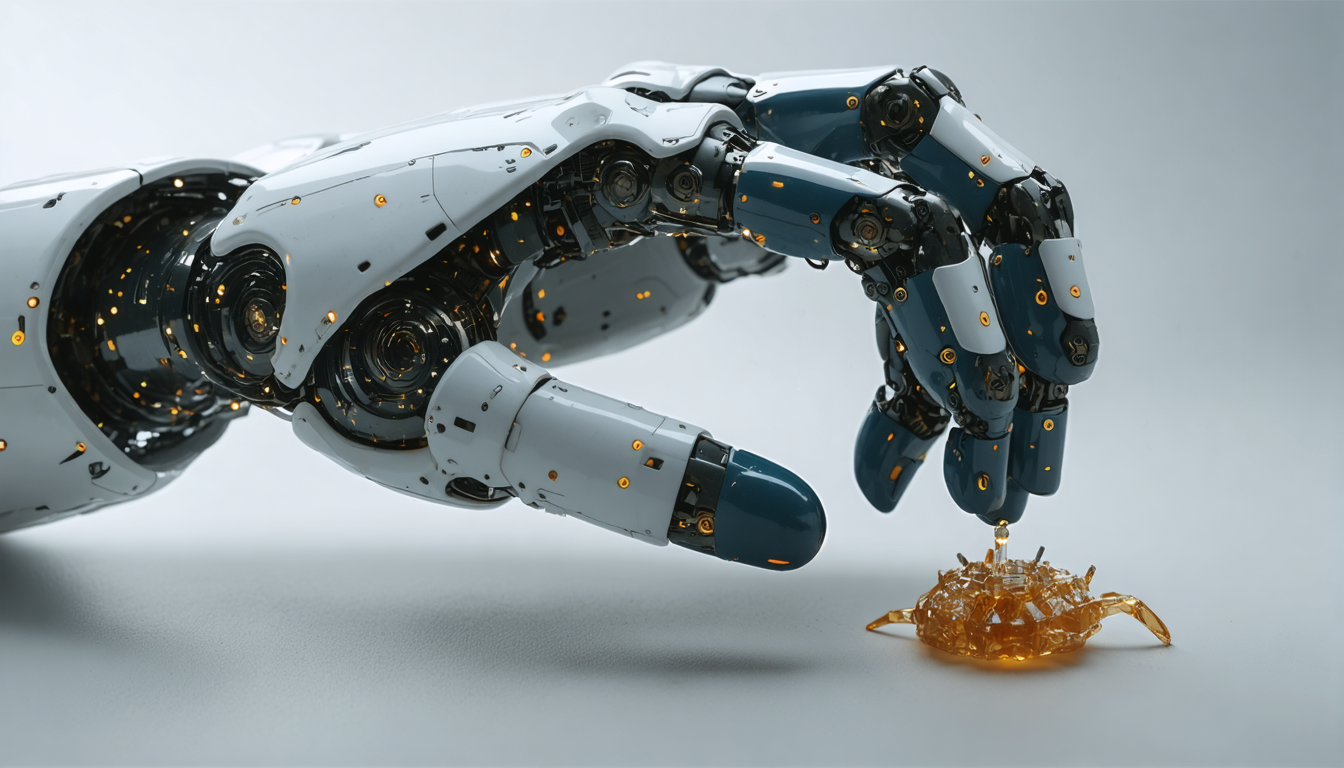
Artificial intelligence is not simply a computing tool but a founding engine of the tactile revolution in robotics. Machine learning algorithms enable the robotic hand to evolve based on user experiences, continuously improving the quality and precision of transmitted sensations.
Thanks to machine learning, the robotic hand also becomes capable of anticipating needs, adjusting force and posture without direct intervention. This form of embedded intelligence resembles a functional memory that stores and reuses sensory data to refine the interaction between machine and human.
For example, a user who regularly handles fragile objects will see the robotic hand automatically adjust its grip with each use, even with a new object. This dynamic adaptation capability, made possible only by AI, is a revolutionary advance in the development of sensitive robot-human interfaces.
Promising prospects in robotics and robotic prosthetics
Advances related to the sensitive robotic hand pose a real challenge for future technologies in robotic prosthetics. The ability to sense and adapt transforms these devices into true biomimetic tools, offering comfort and functionality previously unmatched. This integration of tactile technology and machine learning heralds a revolution in rehabilitation approaches.
Beyond medical uses, this innovation also generates growing interest in industrial and domestic fields, where sensitive robots could operate with dexterity and caution. The tactile revolution in robotics thus illustrates a perfect synergy between artificial intelligence, advanced sensors, and human needs, laying the foundation for a future where the boundary between humans and machines becomes increasingly subtle.