
European consumers accustomed to the unbeatable prices offered by platforms like Shein or Temu now see their shopping experience disrupted by a new, often unknown financial charge: a flat tax of 3 euros on their parcels. This measure, which will come into effect in July 2026, is not just an additional fee. It embodies a profound transformation of customs and tax rules within the European Union and directly impacts how online purchases are made, especially those coming from China. Understanding this tax and its mechanisms is essential to grasp the economic, logistical, and even environmental challenges related to international online trade. This evolution also forces major platforms to revise their shipping strategies and consumers to rethink their shopping habits.
At the heart of this reform, the removal of the VAT exemption on low-value parcels triggers a domino effect. Each imported parcel is now subject to customs declaration, generating customs clearance fees charged by carriers. This mechanism is particularly visible in the case of low-value orders, typical of the ultra-fast fashion model embodied by Shein or Temu, which encourages multiplying small orders. Although these fees may seem minimal, their integration into the total price significantly changes the consumer’s economic calculation, especially on small amounts. At the same time, this tax raises questions about competitive fairness between local and international players and raises concerns about sustainable practices in a sector with a high carbon footprint.
- 1 The origins and implications of the 3 € tax on Shein and Temu parcels
- 2 Shein, Temu: how the ultra-fast fashion economic model triggers the parcel tax
- 3 What is the concrete impact of the tax on orders and consumers’ purchasing power?
- 4 How to anticipate and minimize additional import fees on Shein and Temu?
The origins and implications of the 3 € tax on Shein and Temu parcels
The 3-euro tax applied on imported parcels, notably those from platforms like Shein or Temu, stems from a major regulatory development within the European Union aimed at harmonizing VAT collection and regulating imports.
Since July 1, 2021, the VAT exemption on imports valued under 22 euros was abolished. This removal means that every imported product, regardless of its value, is now subject to VAT, a measure designed to establish fairer competition between European merchants and their foreign counterparts. This change entails a new administrative process for carriers, who must now declare each parcel to customs authorities, whatever its value. This additional administrative management, which helps improve product traceability and compliance, has led logistics providers to charge flat fees, often around 3 euros, to cover customs formalities processing.
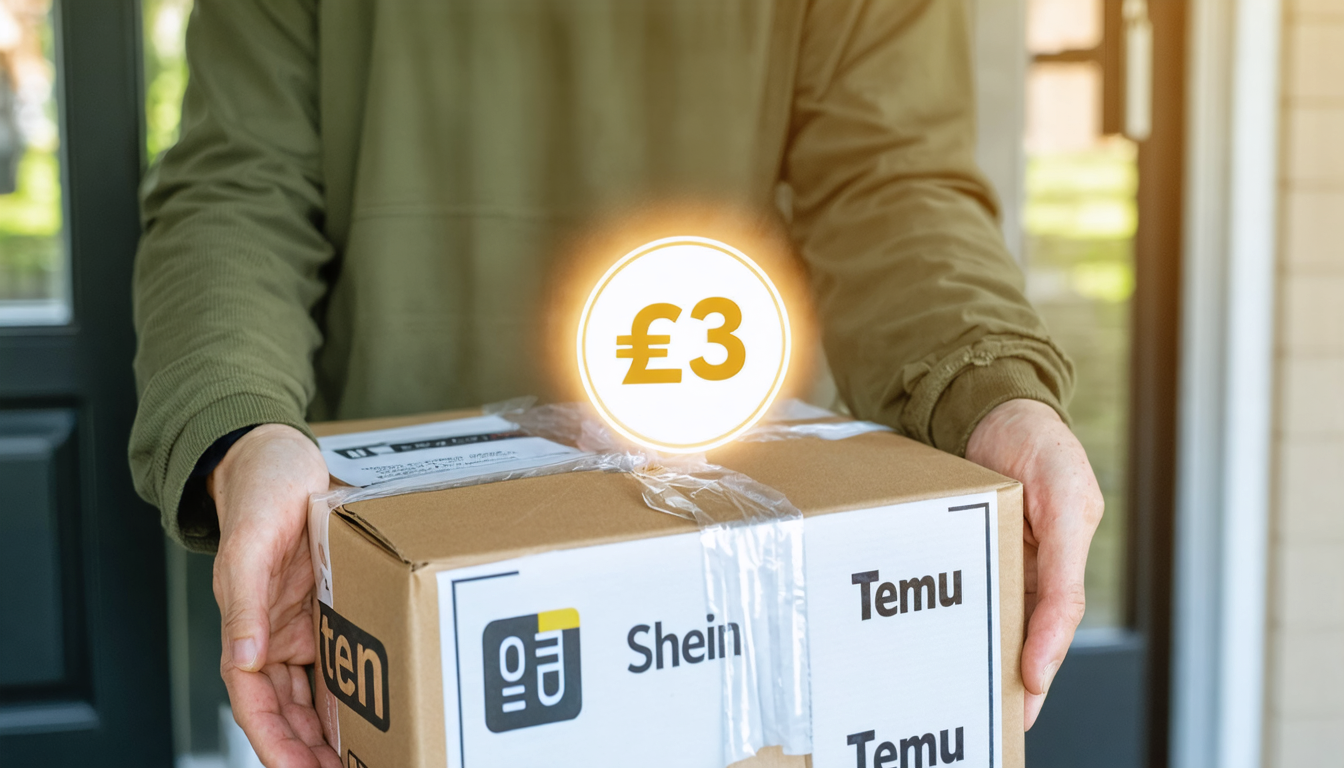
It is important to note that these fees do not constitute a direct tax collected by the state, but rather a fee for services provided by the logistics operator at the time of delivery. For example, when your parcel arrives in France, La Poste or other services must carry out customs formalities, including the payment of VAT, before ensuring its delivery. It is at this moment that the consumer is applied this often unknown surcharge before receipt.
This tax particularly targets small cross-border orders that make up the main business model of ultra-fast fashion giants like Shein and Temu. These platforms ship most of their items from warehouses located in China, making each shipment an import act subject to European rules. In comparison, other platforms like Amazon or Zalando primarily ship from stocks already in Europe, thus avoiding these additional fees.
This regulatory change reflects an increased awareness by European authorities about controlling imported goods. It serves not only to protect European economic players but also to ensure better health and environmental safety by strictly controlling the origin and compliance of imported products. However, this process complicates the shopping experience, especially for less informed consumers, who sometimes discover these fees only at the time of delivery.
Shein, Temu: how the ultra-fast fashion economic model triggers the parcel tax
The specific features of the low-price e-commerce giants’ economic model explain why Shein and Temu orders are particularly affected by this taxation.
The ultra-fast fashion concept is based on extremely low prices and constant collection turnover, with thousands of items renewed daily. This strategy encourages consumers to multiply small, low-value orders rather than making bulk purchases. However, with the disappearance of the VAT exemption for small parcels, every individual shipment from China is subject to mandatory declaration and customs handling fees. This situation amplifies the final bill, especially when the ordered article is cheap.
The place of shipment is crucial in the origin of the fees. Platforms whose products transit from Asian warehouses, such as China, generate imports that automatically trigger customs formalities. In contrast, platforms storing their goods in Europe benefit from simplified processing, since their shipments are regarded as intra-community exchanges, without additional formalities at delivery.
| Platform | Main shipping location | Application of handling fees | Explanation |
|---|---|---|---|
| Shein / Temu | China (outside EU) | Very frequent | Each small parcel is an individual import requiring customs declaration and associated fees. |
| Amazon (EU stock) | Warehouses in Europe | Never | Products are already cleared upstream and shipped from the EU, without additional customs fees. |
| Zalando | Warehouses in Europe | Never | European storage avoids any additional taxation at delivery. |
| Vinted | Individuals (mainly EU) | Rarely | Intra-EU exchanges do not systematically trigger customs fees. |
Ultimately, the location of the items and the individual order model constitute the determining factor exposing consumers to these additional charges. It is both a logistical and economic issue, placing the consumer at the center of a broader problem concerning international trade and its hidden costs.
What is the concrete impact of the tax on orders and consumers’ purchasing power?
The introduction of flat fees of 3 euros on each small imported parcel profoundly changes the game for online buyers, especially those who favor extremely low-priced items.
This increase in the final bill does not have the same weight depending on the order amount. For a basket of around fifty euros, this tax represents about 6% of the total, a visible but often tolerable percentage. However, on an item purchased for less than 10 euros, the same charge amounts to nearly 40% increase, completely distorting the idea of a “good deal.”
Beyond the financial aspect, this tax also changes consumers’ perception of cost transparency. Many are not warned at the time of purchase and discover this surcharge upon receipt, causing mistrust and frustration. This situation can ultimately push some to refuse the parcel, complicating logistics procedures and generating economic losses for all parties involved, from the seller to the carrier.
The consequences of this tax are therefore felt on several levels:
- Variation in purchasing power: The increase in the final price, especially for impulsive or low-margin purchases.
- Change in buying behaviors: Encouragement to group orders to better distribute fixed fees.
- Loss of trust: Negative effect on the customer experience due to hidden costs.
- Potential reduction of excessive consumption: Fewer impulsive purchases and a decrease in the overall volume of imported parcels.
How to anticipate and minimize additional import fees on Shein and Temu?
Faced with this new reality, consumers can adopt several strategies to reduce the tax’s impact on their budget and continue enjoying online shopping without unpleasant surprises.
Group purchases to limit customs clearance fees
Since customs handling fees are generally flat per parcel, it is advisable to favor grouped orders rather than multiple small purchases spread over time. Gathering several items in a single order increases the overall amount without multiplying the tax, making the additional cost proportionally more reasonable.
Check shipping and taxation conditions before finalizing an order
Careful reading of information related to fees and VAT is essential. Platforms compliant with European regulations clearly display whether VAT is included in the price at purchase via the IOSS (Import One-Stop Shop) system, which avoids extra fees at delivery. Conversely, the absence of precise information or the announcement that taxes are the recipient’s responsibility should act as a warning.
Explore local and sustainable alternatives
This tax also encourages rethinking the origin of purchases. Favoring European or local platforms, or even turning to secondhand, helps avoid customs fees and often provides products with better traceability and a reduced ecological footprint.
- Shopping on e-commerce sites based in Europe
- Secondhand via specialized platforms
- Supporting local artisans and merchants
These good practices allow balancing savings, transparency, and environmental impact while adapting to a changing commercial landscape.