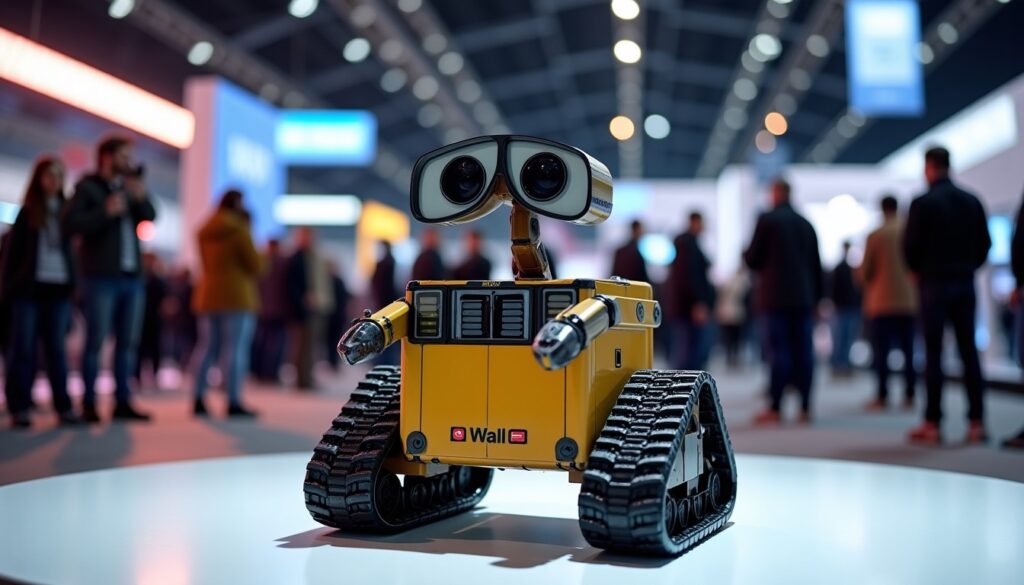
Every year, the Consumer Electronics Show (CES) unveils innovations that defy our imagination and herald our future daily lives. In 2026, the undisputed star is a robot that captivates as much by its design as by its technological promise: the W1 from Zeroth Robotics. Inspired by Pixar’s iconic Wall-E, this robot with an endearing appearance has captured the attention and hearts of visitors in Las Vegas.
It is not only its appearance that fascinates, but the combination of advanced engineering and a user-centered approach proposed by Zeroth Robotics. Yet, behind this retro-futuristic charm, a small technical imperfection raises questions about its widespread adoption. Capable of moving across various terrains thanks to its robust tracks, the W1 can carry heavy loads, but its lack of functional arms limits its interaction capabilities.
Domestic robotics, with its promises of intelligent assistants, often evokes a science fiction imagination. The W1 brings this vision into reality, combining technology and design to create a tangible companion. However, the gap between the dream and everyday use clearly appears in some of its features, notably its price and autonomy.
In this article, we explore the world of the W1 through its design, technical specifications, pricing positioning, and its place among the major innovations at CES 2026. From comparing it with its counterparts to highlighting its limitations, each aspect is dissected to understand how this robot could transform our living and working spaces.
- 1 A design inspired by Wall-E: how the W1 captures attention at CES 2026
- 2 The technical performance of the W1: between robustness and functional limits
- 3 The price of the W1: a barrier to the democratization of domestic robotics
- 4 The M1: a companion robot combining artificial intelligence and mobility
- 5 The current limits and challenges of domestic robots at CES 2026
- 6 Complementary innovations at CES 2026: an overview of robotic advances
- 7 Comparison between W1 and other domestic robots presented at CES 2026
- 8 Evolution prospects for the W1 and domestic robotics in 2026
A design inspired by Wall-E: how the W1 captures attention at CES 2026
The W1 robot from Zeroth Robotics stands out at first glance with its evocative aesthetics reminiscent of the famous Wall-E character. This resemblance is no accident; it expresses a desire to touch emotions and nostalgia while remaining anchored in functionality.
Measuring 57 centimeters and weighing 20 kilograms, the W1 is based on a dual-track locomotion system. This technical choice offers robustness and adaptability to varied surfaces like gravel, grass, or even slippery indoor floors. The overall design conveys a sense of solidity without forsaking a certain softness in shapes, playing with the codes of the friendly domestic robot.
The creators also equipped the W1 with cutting-edge technological equipment: several RGB cameras as well as LiDAR sensors allow for precise environmental mapping. These devices facilitate autonomous navigation and ensure optimal safety during movement. This type of integration reflects a desire to combine aesthetics and performance, two crucial criteria for the acceptability of a robot within the home or in a professional setting.
This alliance of style and technology resonates particularly at a time when the appearance of a connected object is often as important as its functions. For example, the enthusiasm sparked by companion robots in smart homes often passes through instant identification facilitated by a charming and familiar look. In this, Zeroth Robotics perfectly exploits the emotional bond Wall-E has built with the global audience.
Beyond simple aesthetic admiration, the W1 is seen as an innovation carrying hope to make robotics more accessible and less intimidating. This marriage between the nostalgia of an emblematic character and current robotic advances contributes to better cultural integration of these machines, often still perceived as cold or complex.
In short, the design of the W1 at CES 2026 shows how aesthetics in robotics is not just a superficial layer but a fundamental strategic element to capture attention and facilitate the adoption of new technologies. This visual success establishes a promising first contact between the user and their future robotic assistant.
The technical performance of the W1: between robustness and functional limits
The technology embedded in the W1 robot impresses with its ability to operate in heterogeneous environments. With its tracks inspired by all-terrain vehicles, it can easily overcome modest obstacles and move over rugged terrains. Its weight of 20 kg provides significant stability, essential for carrying loads.
Equipped with LiDAR sensors and RGB cameras, it builds a real-time 3D map of its environment. This mapping enables the detection of obstacles and people, ensuring safe travel. It is worth noting that this combination of sensors has become a standard in high-end mobile robotics, confirming Zeroth Robotics’ intention to target a demanding market in terms of autonomous navigation.
A remarkable aspect is its ability to move heavy objects, reaching up to 50 kilograms. Imagine a robot that can bring groceries from the garage or transport equipment in a garden effortlessly. This functionality meets a strong practical demand in modern households where physical assistance remains valuable.
However, the W1 has a major flaw: it does not have manipulator arms. Unlike its cinematic counterpart, which skillfully stacked and sorted waste, this robot is limited to carrying loads passively. This absence greatly restricts its range of action and usage scenarios. For example, it is impossible to pick up a fallen object or interact directly with household items.
Another weakness is its speed, capped at 0.5 meters per second (about 1.8 km/h). This pace is reminiscent of a snail and disappoints if one expected a fast and dynamic companion, able to keep up with a person on the move. On this point, compared to a human walking at an average speed of 5 km/h, it poses a serious constraint on its efficiency.
This technical table summarizes the key characteristics:
| Characteristic | Detail |
|---|---|
| Size | 57 cm |
| Weight | 20 kg |
| Locomotion system | Dual all-terrain tracks |
| Sensors | LiDAR and RGB cameras |
| Payload | Up to 50 kg |
| Maximum speed | 0.5 m/s (1.8 km/h) |
| Manipulation | No manipulator arms |
These elements illustrate a design choice focused on robust mobility and load capacity, but neglecting interactivity and speed. This technical asymmetry raises questions about the robot’s suitability for real user needs, especially in domestic or professional contexts.
The price of the W1: a barrier to the democratization of domestic robotics
Marketed at a price of 5,599 dollars (approximately 4,800 euros before taxes), the W1 clearly positions itself in the high-end segment of domestic robots. This price reflects not only the embedded technology but also the care given to design and user experience, two essential pillars for Zeroth Robotics.
This pricing, however, raises several questions. For the average consumer, an investment of this magnitude is significant and demands careful consideration regarding real usefulness and the benefits provided. Indeed, at this price, the robot must offer tangible assistance and a real improvement to daily life.
Yet, the reduced speed and lack of arms severely limit the W1’s concrete support capabilities. Moreover, in a market where competition multiplies more affordable offers sometimes with more extensive features, the W1 must justify its added value through distinctive innovations and impeccable design.
Another factor impacting the purchase decision is the current absence of a date for commercialization in Europe. Zeroth Robotics is aiming for a launch in the United States in the first quarter of 2026, but no precise schedule or guarantee concerning European expansion has been communicated yet. This uncertainty may discourage enthusiasts and professionals eager to adopt innovation quickly.
Finally, it is important to note that the price does not always include essential complementary services, such as maintenance or software updates, which may incur additional costs.
In summary, the W1 offers an appealing but costly formula, where design and robustness are not enough to compensate for some functional limitations, posing a major challenge to its rapid democratization.
The M1: a companion robot combining artificial intelligence and mobility
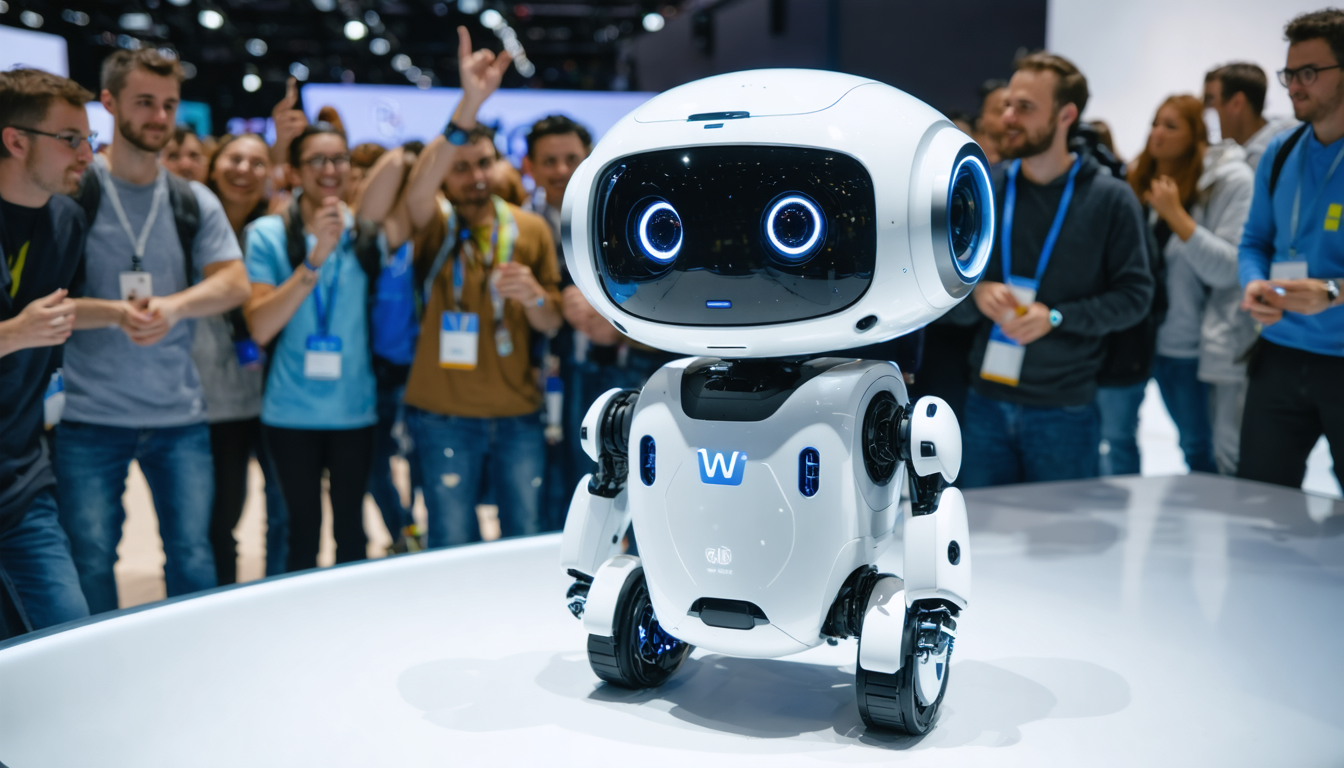
Alongside the W1, Zeroth Robotics exhibited at CES 2026 a second model, the M1. Less imposing, measuring 38 centimeters, it targets a more intimate and mobile use, notably in the homes of users requiring daily support, such as the elderly.
This robot on two self-balancing wheels is capable of righting itself in the event of a fall, a crucial function to guarantee reliability and limit frequent human intervention. Its reduced weight and size promote ease of movement in confined spaces, such as apartments or small offices.
But the real strength of the M1 lies in its integrated artificial intelligence. Zeroth Robotics chose to implement Gemini, a Google model recognized for its advanced understanding and dialogue capabilities. This technology allows the M1 not only to respond to voice commands but also to engage in more natural and context-adapted conversations.
The M1 can also provide discreet monitoring to ensure the well-being of its users. This feature is particularly aimed at seniors, who thereby benefit from reassuring presence and potential support in case of incident. The artificial intelligence grants it a form of digital empathy, capable of detecting certain distress signals or unusual behaviors.
Despite its promises, the M1 is constrained by limited autonomy. Capable of operating for about two hours before needing to return to its base to recharge, this reduced usage time can become a major hindrance to its mission as a reliable and permanent companion. In contexts such as nighttime watch or prolonged assistance, this constraint risks eroding user confidence.
This technical and functional assessment places the M1 as an advanced product in personal artificial intelligence, but still requiring practical improvements to fully assert itself on the domestic robotics market.
The current limits and challenges of domestic robots at CES 2026
CES 2026 offers a fascinating overview of advances in domestic robotics, but also reflects the obstacles still to be overcome. The robots presented, despite impressive technological feats, often suffer from important functional compromises.
Among these major challenges, energy autonomy is a critical point. Whether it is the W1 or M1, the duration of use often remains insufficient to meet expectations of continuity and efficiency. This limitation imposes frequent returns to the charging station, reducing freedom of use.
Object manipulation is also a crucial issue still poorly resolved. While one easily imagines a robot capable of performing complex household tasks, mechanical and safety constraints often limit these capabilities. For the W1, the absence of arms drastically reduces possible scenarios and confines its role to simple carrying.
Simultaneously, pricing poses an accessibility problem. Prices generally oscillate within a high range, complicating mass adoption. For domestic robots to become the norm, a balance must be found between cost, performance, and practicality.
Finally, CES 2026 highlights that software integration and contextual understanding remain major areas for progress. Artificial intelligence models must still evolve to offer truly intuitive and personalized interaction, going beyond simple execution of basic tasks.
These critiques illustrate a tension between conceptual ambitions and technical realities. The path toward a versatile, autonomous, and efficient domestic assistant remains fraught with pitfalls, despite visible progress.
Complementary innovations at CES 2026: an overview of robotic advances
Alongside the W1 and M1, CES 2026 highlighted other innovative projects that amplify the richness of the robotics field. Among them, specialized surveillance robots, embedded voice assistants, and models equipped with refined contextual artificial intelligence.
There is growing interest in robot waterproofing, a feature essential to extend their use outdoors and in all weather conditions. The W1, with its all-terrain tracks, thus inaugurates a new generation of robots capable of operating in varied environments, a major innovation compared to models previously confined indoors.
Moreover, the integration of sophisticated AI systems, like Gemini in the M1, paves the way for more natural and fluid interaction with robots. This should ultimately allow surpassing simple voice commands to create a true human-machine companionship.
To better visualize these advances, here is a list of notable innovations spotted at CES 2026 in the robotics sector:
- Waterproof all-terrain robots: able to work in hostile environments, rain, mud, or dust.
- Improved contextual intelligence: AIs capable of understanding and anticipating user needs.
- Increased modularity: robots with some parts interchangeable or evolvable depending on usage.
- Better energy autonomy: durable batteries and fast charging systems.
- Multi-sensory interfaces: integrating voice, gesture, and sensory recognition for natural interactions.
Each of these trends heralds a constantly evolving domestic robotics, more integrated and adapted to the expectations of modern households and professionals.
Comparison between W1 and other domestic robots presented at CES 2026
CES 2026 unveiled a plethora of robots with varied profiles addressing diverse needs. Zeroth Robotics’ W1 mainly stands out by its strongly inspired aesthetics and its load capacity. To better understand its market position, it is appropriate to compare it with competing models.
| Robot | Size | Mobility | Manipulation | Autonomy | Estimated price | Main use |
|---|---|---|---|---|---|---|
| W1 (Zeroth Robotics) | 57 cm | All-terrain tracks | No arms, max load 50 kg | Not specified | $5,599 | Transport and basic assistance |
| M1 (Zeroth Robotics) | 38 cm | Two self-balancing wheels | Limited manipulation | 2 hours | $2,899 | AI companion for seniors |
| Robot A | 45 cm | Classic wheels | Simple manipulator arms | 3 hours | $3,200 | Versatile domestic help |
| Robot B | 60 cm | Thinner tracks | Advanced manipulation | 4 hours | $6,000 | Surveillance and rescue |
This comparison highlights a strong trend: the W1, although robust, sacrifices some aspects of interactivity in favor of increased mobility. While other robots opt for different compromises, notably improving manipulation or autonomy at the expense of design or load capacity.
Evolution prospects for the W1 and domestic robotics in 2026
With the W1, Zeroth Robotics offers a promising vision of a domestic assistant capable of moving through varied and challenging spaces. Nevertheless, some technical choices hint at improvement paths for the next generation.
The addition of manipulator arms would act as a qualitative leap, transforming the robot from a simple carrier to a manual assistant capable of undertaking various tasks. However, this evolution requires advances in fine mechanics and safety to avoid domestic accidents.
Furthermore, rethinking the maximum speed would be essential for the user to see their robot as an efficient and fast contributor. Higher mobility would also broaden use scenarios, especially in professional environments where time is precious.
On the software side, extended autonomy and interactions based on increasingly contextual artificial intelligence could transform the very nature of the user-robot relationship. The M1 already offers a glimpse of this path, but balancing computing power, energy, and weight remains an open challenge.
Finally, for domestic robotics to firmly establish itself in consumers’ daily lives, the economic challenge is equally crucial. Lowering costs through production innovations and technical modularity will open the door to much-needed democratization.
With these improvements, the W1 could fully renew its offering by combining design, robustness, and multifunctionality, becoming an essential component of connected homes and modern work environments.