
The municipal campaign in Guéret was shaken by an unexpected controversy linked to artificial intelligence. Several local elected officials found themselves at the center of a media storm after the distribution on social networks of compromising images entirely generated by AI. These fake images, evidently made to destabilize the candidates, quickly caused an outcry in the political sphere and among the residents of this town in Creuse. Faced with this increasingly widespread manipulation in the digital landscape, the current mayor, Marie-Françoise Fournier, chose to respond firmly by initiating legal proceedings.
This case reveals the new challenges faced by electoral campaigns in a context where artificial intelligence technology can be used to create misleading visual content, difficult to distinguish from reality. The impact on the reputation of elected officials, on local democratic debate, and on citizens’ trust deserves deep reflection, both from a legal and societal perspective. The Guéret case also illustrates the speed and scale with which such images can spread on digital platforms and influence public opinion.
- 1 Visual manipulation: how AI is transforming the municipal campaign in Guéret
- 2 The local context: which elected officials are targeted in Guéret and why?
- 3 The mayor of Guéret’s reaction to the controversy: legal proceedings initiated
- 4 The impact of fake AI-generated images on local political trust
- 5 Social networks at the heart of the circulation of compromising images
- 6 Ethical and societal challenges of manipulated images in local politics
- 7 Concrete measures to protect the reputation of elected officials against fake AI-generated images
- 8 Future stakes: how to prevent abuses of AI-generated images in politics
- 8.1 Summary of avenues to prevent abuse
- 8.2 What are the consequences of the dissemination of compromising AI-generated images?
- 8.3 How can elected officials protect themselves against these manipulations?
- 8.4 What challenges do AI-generated images pose in the political field?
- 8.5 Why did the Guéret city hall decide to file a complaint?
- 8.6 What long-term solutions are envisioned to limit these abuses?
Visual manipulation: how AI is transforming the municipal campaign in Guéret
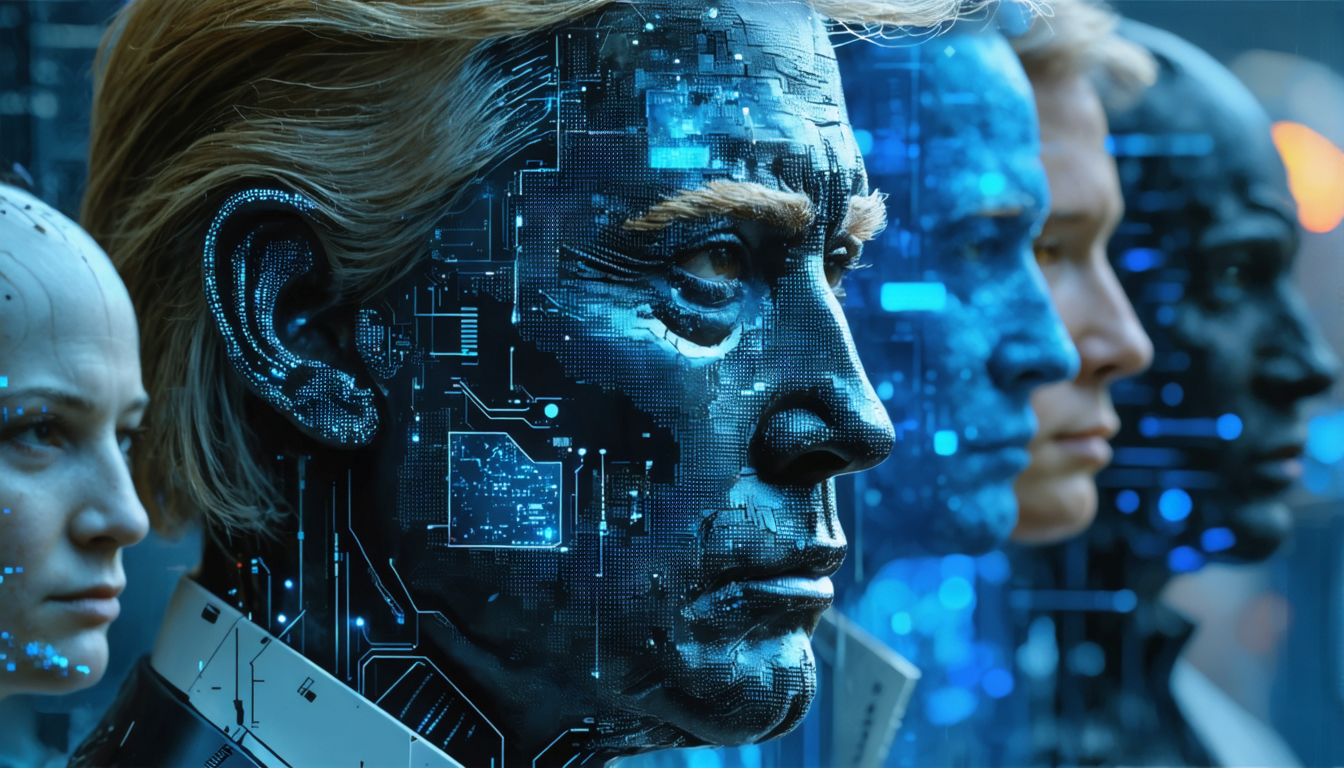
The technique used relies on artificial intelligence algorithms capable of generating hyper-realistic images from simple photos or digital information. In the case of Guéret, several local elected officials were plunged into fabricated montages showing them in compromising and artificial situations, for example in swimsuits or in intimate postures that never took place.
These images were quickly spread on heavily trafficked social networks, which amplified their reach and dissemination potential. The virality of this content illustrates a growing problem: the boundary between authenticity and fake becomes increasingly blurred, and the average user struggles to discern truth from falsehood. This visual manipulation damages the reputation of the elected officials and endangers the sincerity of the electoral debate, which is already sensitive during such a crucial period as a political campaign.
Legal actions, particularly initiated by Mayor Marie-Françoise Fournier and other victimized personalities, aim notably to stop the dissemination of these contents but also to punish the perpetrators of these manipulations. They also highlight the legal gap concerning this type of harm in electoral campaigns and the necessity to adapt legislation faced with these new technological challenges. The mayor stressed the importance of a campaign based on exchanges of ideas, real projects, and not on digital provocations that distort reality.
The local context: which elected officials are targeted in Guéret and why?
The municipal campaign in Guéret, a medium-sized town located in Creuse, pits several emblematic candidates against each other, some of whom were directly targeted by these AI image manipulations. Among them are Didier Hoeltgen, leader of the Socialist Party in Creuse, Michel Vergnier, former mayor of the town, as well as Thierry Delaître and Yvan Guillemet, both right-wing diverse candidates, not to forget Guillaume Viennois, the current first deputy, and of course, the current mayor Marie-Françoise Fournier.
These personalities were victims of fabricated images showing them in situations that have no basis in reality. Beyond harming their image, these contents caused an outcry in the local community as they were perceived as an abusive political destabilization attempt. The dissemination of these images during the election period is not accidental: it is part of a malicious logic aimed at influencing voters by spreading false information, which raises serious questions about ethics and fairness in political competition.
Popular support for these elected officials experienced some temporary destabilization, notably because of the speed with which these images circulated on social networks. However, the quick reaction of the mayor and some candidates, filing complaints and alerting public opinion about the manipulation they were victims of, allowed to rectify the situation and refocus attention on the real stakes of the campaign. This tense context illustrates how the use of artificial intelligence can become a double-edged political weapon.
The reasons for such manipulation
- Destabilize political adversaries: The main objective is to discredit certain candidates by creating an atmosphere of suspicion and doubt.
- Attract media attention: Shocking images often become viral more easily, increasing the content’s visibility.
- Manipulate public opinion: These montages distort the voters’ perception by creating an alternative reality that is difficult to correct.
- Create an atmosphere of distrust toward the democratic system by showing the fragility of political actors.
The mayor of Guéret’s reaction to the controversy: legal proceedings initiated
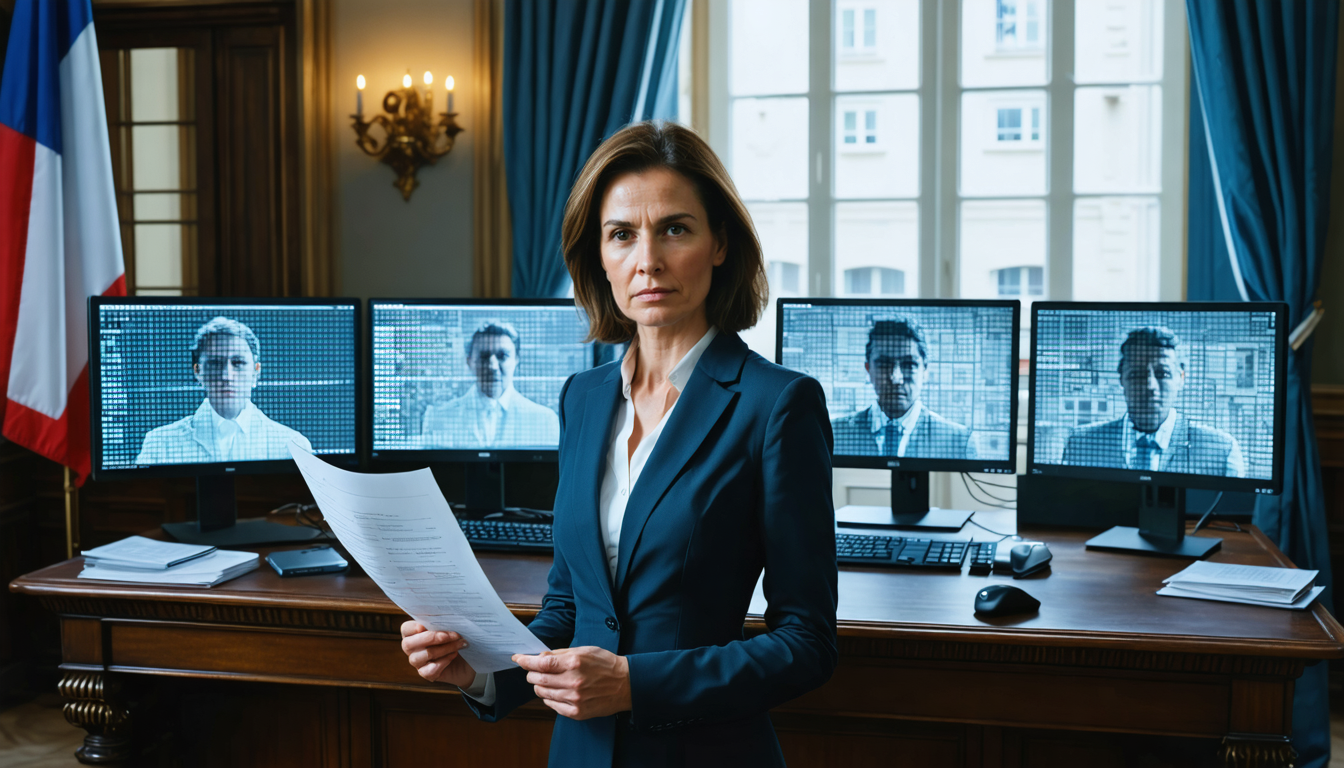
Faced with this digital attack, Mayor Marie-Françoise Fournier spoke firmly, declaring that she could not let pass this attack on the probity and honor of local elected officials. Upon the revelation of the compromising images, she decided to initiate legal proceedings, supported by several other targeted candidates.
These actions aim firstly to contain the spread of the images and limit their propagation. Secondly, they seek to identify and sanction the perpetrators of these visual manipulations, a complex process due to the anonymity and decentralized nature of the digital platforms used for their dissemination. Finally, they aim to create a precedent in the fight against deceptive visual content that can influence electoral outcomes and citizens’ trust.
The initial elements handed over to the police include screenshots and data about the accounts that shared these images. The case brings new visibility to the necessity of adapting legislation to these new means of disinformation, where visual manipulation by AI takes an increasing role, even in modest-sized towns like Guéret.
Legal stakes in Guéret
This situation raises several legal questions:
- Protection of image and right to privacy: Targeted elected officials claim violation of their image rights, protected by law.
- Defamation and criminal liability: The creation of these fake images and their dissemination can be considered defamatory acts.
- Difficulty of attribution: The web complicates identifying those responsible, especially with the use of pseudonyms and virtual private networks.
- Necessary legislative adaptation: The legal framework must evolve to better address infractions related to AI.

The impact of fake AI-generated images on local political trust
The compromising AI-generated images are not just tools for personal destabilization. They have a profound and lasting impact on the trust placed in elected officials and on the entire local democratic fabric. When a campaign becomes the stage for visual manipulation, citizens are invited to doubt not only the targeted individuals but also the electoral process itself.
This loss of trust can greatly weaken local democracy since politics relies on transparency and credibility of actors. In Guéret, the controversy contributed to an atmosphere of uncertainty, even distrust between voters and candidates. This phenomenon illustrates how social networks can amplify the harmful effects of fake images by promoting misinformation and drowning truths under a continuous flow of controversial content.
To counter this, some political actors recommend strengthening media literacy mechanisms, as well as increased vigilance by digital platforms regarding the verification of disseminated content. They also call for a collective mobilization of citizens not to give in to the temptation to believe manipulated images without proof. The debate in Guéret therefore opens a broader reflection on the means to implement to safeguard the integrity of democratic processes against digital manipulation.
Social networks at the heart of the circulation of compromising images
Social networks play a central role in the rapid dissemination of compromising images. In this Guéret case, it is mainly on these platforms that AI-generated montages were shared, causing a shockwave in a very short time. This dynamic is explained by algorithms that favor sensational content to maximize interaction, sometimes at the expense of truthfulness.
The major problem lies in the ease with which these images can go viral, creating an immediate multiplying effect. Once published, these images can quickly escape the control of their initial authors, being reshared thousands of times or relayed by high-audience accounts, thus amplifying the negative impact they have on the elected officials. This also complicates the fight against this disinformation, requiring coordination among public actors, police services, and platforms.
This case again touches on the recurring question of the responsibility of digital platforms which, despite their strengthened efforts to moderate content, struggle to effectively filter fake AI-generated images. Some experts propose innovative solutions, such as integrating visual authentication tools or content labeling that would certify genuine images and flag manipulations.
Ethical and societal challenges of manipulated images in local politics
The use of AI to generate compromising images in politics raises major ethical questions that go far beyond the local level. This method, although it may seem innovative, profoundly transforms the way truth is perceived, endangering the healthy confrontation of ideas that should emerge from any electoral campaign.
The manipulation of an elected official’s image is not only a personal attack: it constitutes a collective harm to democracy. By creating false realities, social bonds and the trust between elected officials and citizens, essential for the proper functioning of the political system, are weakened.
The risks linked to the malicious use of AI in this context include:
- The erosion of truth
- The increased polarization of opinions
- The rise of systematic misinformation
- The marginalization of legitimate voices
To address these challenges, it is crucial to promote stronger ethics around AI use, especially in politics, and to encourage the development of tools enabling citizens to better distinguish authentic content. This civic fight is also that of institutions and AI developers, who must collaborate to ensure responsible use of these technologies.
Concrete measures to protect the reputation of elected officials against fake AI-generated images
Faced with the explosion of compromising AI-created images, practical solutions are beginning to emerge to help elected officials guard themselves against these digital attacks. These measures rely on prevention, awareness, and legal and technical responsiveness.
Among the most effective tools and approaches are:
- Active monitoring of social networks to quickly detect suspicious content.
- Cooperation with platforms to obtain rapid removal of doctored images.
- Training political communication teams to manage crises and respond with relevant counter-arguments.
- Systematic recourse to justice to punish perpetrators and deter repeat offenses.
- Transparent communication with voters to explain manipulation methods and reassure about the integrity of candidates.
An overview table illustrates these different approaches:
| Measure | Description | Advantages | Limitations |
|---|---|---|---|
| Active monitoring | Constant vigilance on social networks to quickly detect fake images | Allows quick and targeted response | Requires significant human and technical resources |
| Cooperation with platforms | Direct collaboration with social networks for content removal | Reduces exposure to toxic content | Depends on the level of platform commitment |
| Team training | Preparing communicators for digital crisis management | Improves responsiveness and quality of the response | May be insufficient against a massive content flow |
| Legal recourse | Sanctioning responsible parties through legal means | Deters offenders | Procedural delays and difficulty of attribution |
| Transparent communication | Informing citizens about image manipulations | Strengthens trust and citizen vigilance | May be perceived as a form of self-justification |
Future stakes: how to prevent abuses of AI-generated images in politics
The Guéret case clearly illustrates that the issues related to compromising AI-generated images in local politics are just beginning. To effectively prevent these abuses, several courses of action are considered both locally and nationally.
Experiments around digital certification systems for images are beginning to be deployed. These technical solutions could eventually allow verifying the authenticity of an image before its distribution. However, this requires wide acceptance by social networks, media, and public actors to be truly effective.
Media literacy and critical thinking training aimed at citizens are also key to limiting the spread of fake images. In Guéret, the case rekindled a debate on the need to integrate such training into school curricula and municipal awareness programs.
Finally, the reflection on legal evolution must continue to intensify, with the possible emergence of specific regulations governing the use of AI in politics, notably regarding the visual representation of elected officials. This would help fill current gaps allowing the unregulated spread of manipulated and compromising content.
Summary of avenues to prevent abuse
- Development of image authenticity certification technologies
- Strengthening intervention capacities of social platforms
- Increased digital education for all citizens
- Adapted and precise legislation on AI use in politics
- Mobilization of citizens for responsible social network use
What are the consequences of the dissemination of compromising AI-generated images?
These fake images can seriously harm the reputation of the targeted persons, disrupt the smooth running of electoral campaigns, and sow distrust among the population.
How can elected officials protect themselves against these manipulations?
They can set up active monitoring of content on social networks, cooperate with platforms to remove images, train their teams, and resort to justice in case of proven harm.
What challenges do AI-generated images pose in the political field?
These images make it difficult to distinguish between true and false, can rapidly spread false information, and undermine citizens’ trust in their representatives.
Why did the Guéret city hall decide to file a complaint?
To defend the honor of local elected officials, fight against disinformation, and create a legal precedent in the face of the rise of compromising AI-generated images.
What long-term solutions are envisioned to limit these abuses?
The development of image authentication technologies, strengthened media education, better legal regulation, and the responsibility of social network users.