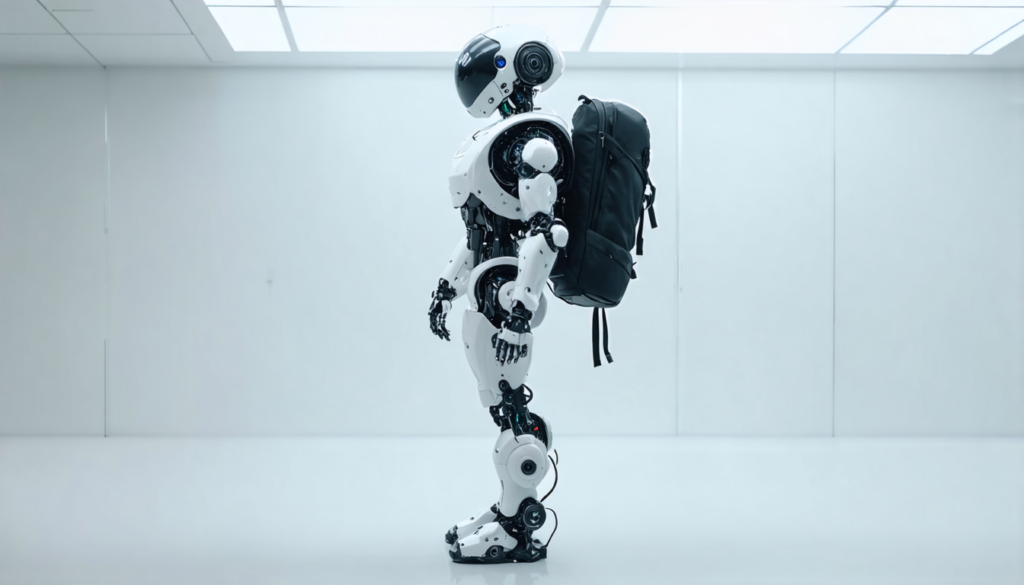
Imagine going to work or university with an extraordinary companion nestled in your backpack. This is no longer science fiction, but a reality embodied by the Chinese start-up Agibot, which is revolutionizing robotics with its ultra-compact humanoid robot, the Q1 (Quester One). Measuring only 80 centimeters, this miniature robot combines mobility, agility, and embedded artificial intelligence, opening up unprecedented opportunities for developers, researchers, and enthusiasts.
At a time when giants like Tesla and Boston Dynamics dominate the market with large models, Agibot takes a radically different approach. The Q1 focuses on portability and robustness, able to fit in a simple backpack, which greatly facilitates its transport and use in urban and industrial environments. Powered by an innovative platform, Agi-Soul, combining motor control and conversational intelligence, it proves that wearable technology can now be combined with autonomous robotics to offer a versatile and accessible robotic assistant.
The democratization of these robots also involves a strong commitment to open source. Thanks to a hardware and software open development kit, Agibot encourages users to customize and adapt their robot, thereby fostering a true collaborative community. The Q1 is not just a toy but a mobile laboratory to experiment, learn, and advance a robotic innovation that aims to integrate sustainably into our daily lives. At the beginning of 2026, this robot changes the way we view robotic mobility and artificial intelligence, ushering in a new era for robotic assistants.
- 1 The challenge of miniaturization: an ultra-compact humanoid robot housed in a backpack
- 2 Agi-Soul Technology: the intelligent core of the ultra-compact autonomous robot
- 3 An Open Source philosophy for a revolution in wearable robotics
- 4 The impact of ultra-compact autonomous robotics on industry and society
- 5 Perspectives for the evolution of robotic mobility with Agibot
- 6 Social integration and ethical challenges related to ultra-compact humanoid robots
- 7 Concrete applications and feedback around Agibot’s Q1
- 8 A new era for robotics with Agibot in 2026
The challenge of miniaturization: an ultra-compact humanoid robot housed in a backpack
Agibot has broken the traditional codes of humanoid robotics by embarking on drastic miniaturization with the Q1. Unlike robotic giants measuring nearly 1.7 meters, the Q1 presents itself with a size of about 80 centimeters, which corresponds to the size of a two-year-old child. This innovation is not just about designing a smaller robot, but optimizing every component so that performance is not sacrificed.
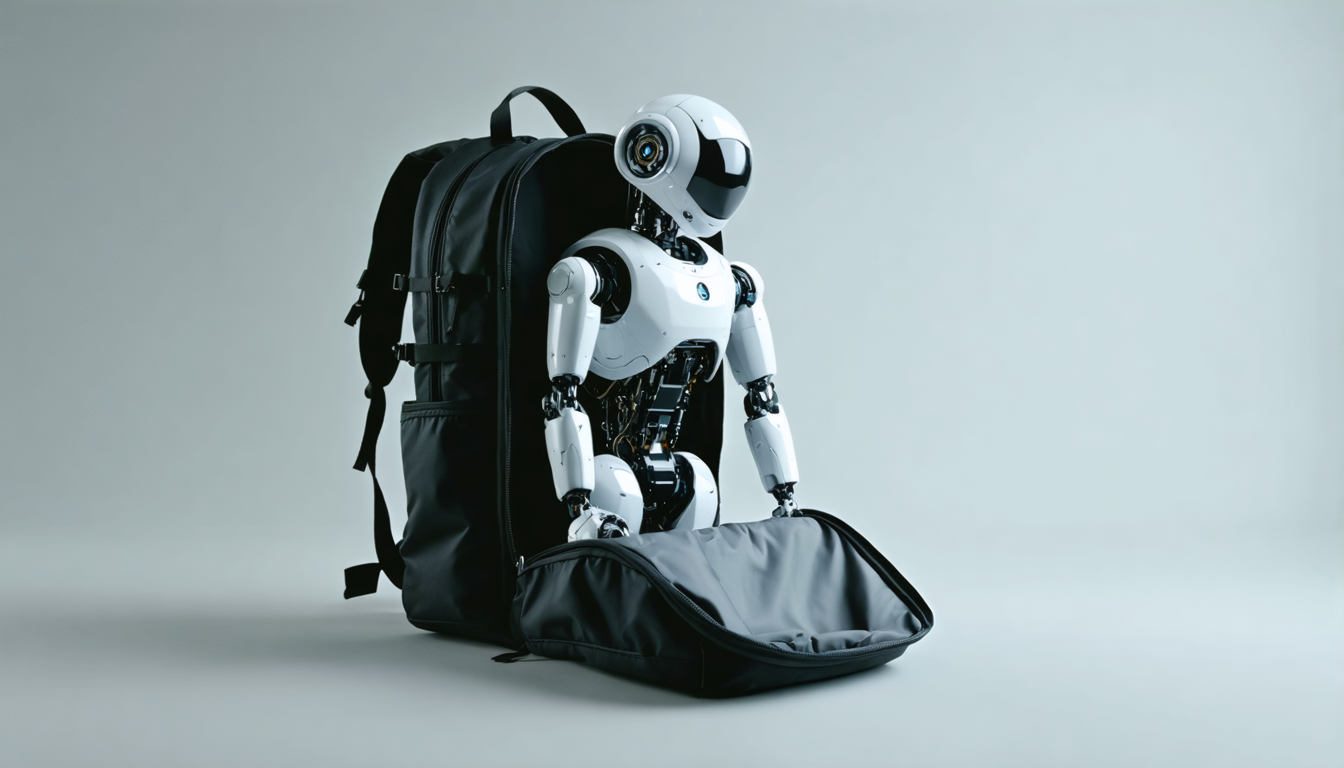
By limiting size and weight, Agibot offers a major advantage: portability. Being able to slip a robot capable of walking, manipulating objects, and interacting into an ordinary backpack fundamentally changes the way robotics can be used in real life. Researchers can thus conduct experiments directly in the field without having to install complex infrastructures.
An additional advantage of this ultra-compact design lies in robustness. A lighter robot is inherently less prone to damage during shocks or falls, which are frequent during testing and learning phases. This also significantly reduces costs related to maintenance and replacement of parts.
However, miniaturization remains a major technical challenge as it requires progress on several fronts simultaneously: reduction of mechanical components, optimization of miniature motors, integration of sensors and artificial intelligence algorithms in a confined space. Agibot masters these technologies brilliantly, proving that a high-performance humanoid robot can fit in a simple backpack, ready to accompany its user everywhere.
Agi-Soul Technology: the intelligent core of the ultra-compact autonomous robot
Beyond its format, what makes the Q1 strong is its software platform Agi-Soul, which integrates advanced language models to enable true interactivity. Rather than merely executing pre-programmed movements, the robot has an artificial intelligence capable of dialoguing, learning, and adapting to its environment.
Agi-Soul offers innovative control over the entire robot body through precise force control. This technology gives the Q1 impressive flexibility and agility: it can not only stand upright against external disturbances but also dance, climb stairs, or perform delicate tasks such as object manipulation.
The platform also allows the association of virtual assistants with robotic mobility, transforming the Q1 into an educational tutor or personal coach. For example, it can teach languages like English with perfect pronunciation and adjust its pace according to the learner’s level. Furthermore, it can guide the practice of choreographies by breaking down movements step by step, offering a novel interactive physical learning experience.
The combination of robust hardware, compact electronics, and intelligent software shows that ultra-compact autonomous robotics has reached a major technical milestone. The Q1 illustrates how robotic innovation can reconcile mobility, intelligence, and human interaction in a single device never seen before.
An Open Source philosophy for a revolution in wearable robotics
Agibot does not just offer a simple product; the company aims to build a true ecosystem around the Q1. For this, it relies on total openness of hardware and software with a freely accessible development kit (SDK) and hardware development kit (HDK).
This Open Source approach invites developers, researchers, and makers to customize, modify, or even improve the robot according to their needs. The robot’s frame is designed to allow adding shells and accessories made by 3D printing, enhancing creativity and experimentation. In the long term, this can lead to an active community around this robotic assistant, capable of pooling discoveries and innovations.
To avoid discouraging beginners, Agibot also offers an intuitive programming interface without code, based on drag-and-drop principles. This opens robotics to a much wider audience, not necessarily mastering complex languages like Python or C++. This democratization is important as it fosters rapid and varied adoption, ranging from hobbies to professional uses.
Here is a list of concrete advantages of this Open Source philosophy:
- Accessibility: simplified programming even for non-experts.
- Customization: ability to create physical and software extensions.
- Community: collaborative support and sharing of innovations.
- Cost: price reduction thanks to the absence of proprietary lock-in.
- Evolution: regular updates and easy integration of new features.
The impact of ultra-compact autonomous robotics on industry and society
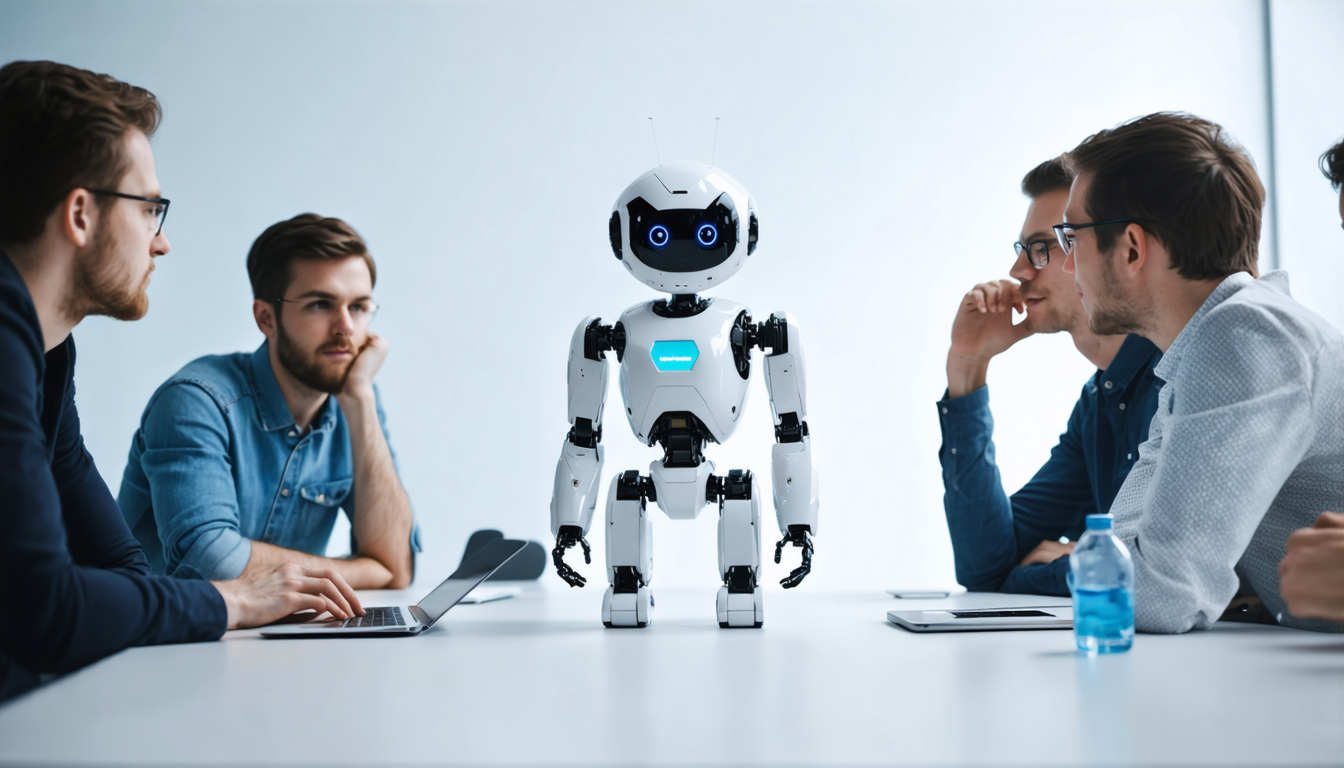
The Q1 and its counterparts in wearable robotics represent a turning point for multiple sectors. In industry, these robots can be easily deployed in confined spaces to assist human operators, perform repetitive or dangerous tasks, thereby improving safety and productivity.
In the educational and domestic fields, these ultra-compact humanoid robots take the form of personalized assistants who support learning, rehabilitation, or even leisure. Their compact size allows them to integrate physical interactions previously reserved for controlled environments, making experiences more natural and immersive.
A comparative table illustrates the major evolution brought by the Q1 compared to larger and traditional models:
| Criterion | Traditional robots (Tesla, Boston Dynamics) | Q1 Agibot |
|---|---|---|
| Size | ~1.7 meters | 80 centimeters |
| Portability | Difficult transport, requires infrastructures | Can be slipped into a standard backpack |
| Robustness | Sensitive to major shocks | Designed to withstand falls and impacts |
| Accessibility | Very high cost, limited use | Affordable price with open source kit |
| AI Interaction | Limited to specific commands | Intelligent dialogue with integrated language model |
Thus, the Q1 paves the way for a smoother and daily integration of robotic assistants known for their agility and autonomy. This technological shift is expected to spread widely in 2026, disrupting codes in many fields.
Perspectives for the evolution of robotic mobility with Agibot
Thanks to the launch of the Q1 and its innovative wearable technology, Agibot positions itself as a key player in the autonomous robotic mobility of the future. The company plans to expand its range with models capable of learning new tasks through embedded machine learning, increasing interaction with humans, and even coordinating in groups to carry out complex missions.
This future robotics is based on three major pillars: continuous miniaturization, increasingly responsive artificial intelligence, and open hardware modularity. These combined elements promote massive diffusion, both in industry, healthcare, education, and personal environments.
Moreover, Agibot is developing a connected user network facilitating the sharing of experiences, distribution of software updates, and pooling of resources. This is thus a true digital infrastructure that is being built, fueling advances in autonomous robotics while strengthening user customization.
It is no longer just a technological object, but an evolving and intelligent system, capable of integrating into daily life with unprecedented fluidity. This dynamic helps to bring physical artificial intelligence even closer to ordinary human experience.
With the emergence of ultra-compact humanoid robots like the Q1 in public or private spaces, ethical and societal questions arise. How will these robotic assistants affect our social interactions? What place should be given to physical artificial intelligence in our daily lives?
Miniaturization and portability make these robots discreet, almost familiar, which can facilitate their acceptance. However, care must be taken to preserve privacy, protect data generated by these machines, and ensure their use respects strict ethical standards.
Furthermore, these robots raise the question of responsibility when they make decisions or perform actions in sensitive contexts. The development of a clear legal framework is essential, incorporating algorithm transparency and human supervision.
Ongoing pilot projects already demonstrate how to involve civil society in the co-construction of these rules and in raising awareness of the benefits and limits of humanoid robots. The goal is not only to support a serene adoption but also to promote harmonious coexistence between humans and machines.
Concrete applications and feedback around Agibot’s Q1
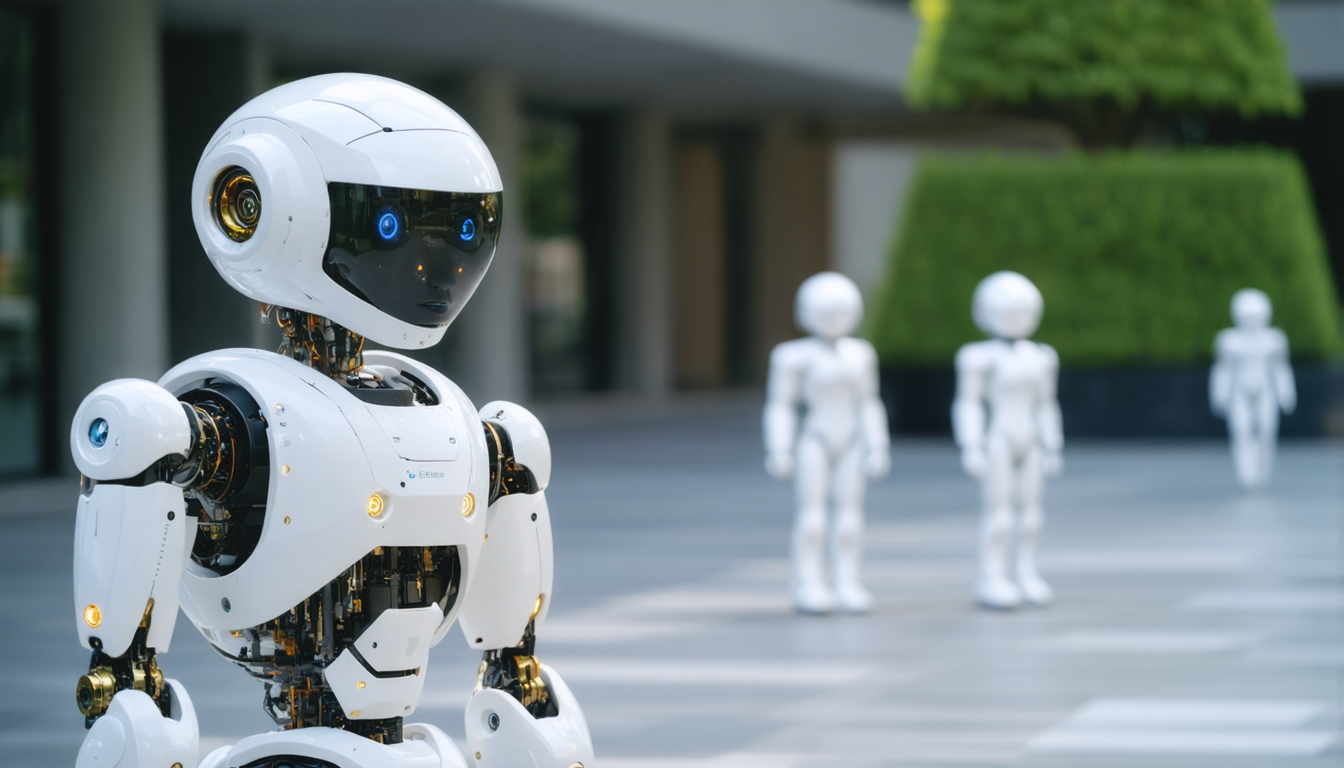
Since its gradual deployment, the Q1 has already proven its versatility across different sectors. In education, schools use this robot as a teaching assistant to help students learn languages or artistic practice. Its ability to repeat without fatigue and correct in real-time is particularly appreciated.
In laboratories, the Q1 is used to test robotic mobility algorithms, especially in complex urban environments or in precision tasks. Its reduced size facilitates onsite experiments rather than in specialized centers, thus reducing costs and time.
Many start-ups and developers have also adopted the open platform to create diverse projects ranging from interactive game creation to assisting the elderly. These innovative uses highlight the multiplicity of possibilities with a robotic assistant embodied in an ultra-compact format.
A non-exhaustive list of current applications:
- School support: tutoring and interactive learning.
- Research and development: field experimentation in mobility.
- Entertainment: animation and learning choreographies.
- Home assistance: companionship and reminders for seniors.
- Light industry: production assistance and quality control.
A new era for robotics with Agibot in 2026
The ultra-compact humanoid robot Q1 illustrates the new generation of portable devices that merge robotic mobility, artificial intelligence, and human interaction. Agibot has taken a decisive step towards more accessible, agile, and adaptive robotics, breaking away from the bulky and poorly portable devices of the past.
As 2026 promises to be rich in innovations, the Q1 paves the way for effective democratization of personal assistant robots, carriers of promises to improve our daily lives. From portability in a simple backpack to integration into collaborative networks, this technology embodies the tangible future of autonomous and intelligent robotics.
The focus now turns to the next evolutions of this technology, which will undoubtedly further disrupt our interactions with machines and the very notion of embodied artificial intelligence.