
While the dream of a phone fully integrating ChatGPT, dubbed ChatGPT-Phone, captivated minds seeking digital innovation, OpenAI took an unexpected turn by unveiling its intention to launch a smart pen. More than just a writing tool, this connected device powered by artificial intelligence marks a deeply thoughtful approach to technology: far from omnipresent screens and intrusive voice assistants, this pen offers a new way to interact with machine learning. In harmony with everyday uses, this pen, internally named Gumdrop, appears as a subtle yet powerful revolution for 2026, highlighting a technology that fades away to better serve the user.
Between disappointments regarding past AI hardware projects, growing demands for simplicity and minimalism, and collaboration with legendary designer Jony Ive, OpenAI’s approach reflects a new maturity in integrating artificial intelligence into daily life. This connected pen, devoid of a screen but capable of digitizing handwriting and recording sound exchanges, fits into a logic of discreet innovation. It promotes a silent digital assistant that structures and enriches ideas without ever interrupting concentration. This bold choice underscores OpenAI’s desire to rethink interactions with AI by privileging the discreet presence of a tool, not a new interface. The future of AI, through this lens, becomes a smoother, calmer, and more intuitive experience.
- 1 OpenAI enters the hardware era with a smart pen: an innovation against the grain
- 2 The OpenAI smart pen: a connected device designed to capture ideas and conversations without impacting your daily life
- 3 The OpenAI smart pen facing previous AI hardware failures: a pragmatic revolution
- 4 Why a connected pen is the best response to the digital age and information overload
- 5 Jony Ive and the importance of design in the success of the OpenAI smart pen
- 6 The ChatGPT pen: a pro tool for targeted use from the launch
- 7 A philosophical evolution of AI: supporting thought without interruption
- 8 Perspectives and challenges around the ChatGPT pen: towards integrated and calming AI
- 8.1 How is the OpenAI smart pen different from a classic voice assistant?
- 8.2 What is Jony Ive’s role in this project?
- 8.3 Who is the ChatGPT pen primarily targeted at upon launch?
- 8.4 How does OpenAI guarantee the confidentiality of data collected by the pen?
- 8.5 Will the smart pen be accessible to the general public?
OpenAI enters the hardware era with a smart pen: an innovation against the grain
For years, announcements around the ChatGPT-Phone sharpened the curiosity of the public and technology experts. Numerous hardware projects emerged, mentioning watches, connected pins, or even devices capable of replacing the traditional smartphone by relying entirely on artificial intelligence and the integrated voice assistant. Yet, OpenAI ultimately set its sights on a simple and familiar object: a smart pen. This decision seems almost audacious at first glance, but it reveals a bold vision of technology discreetly serving humans.
Coming from an innovative and minimalist positioning, this pen, designed for 2026, stands out by its complete lack of a screen. Instead of invading the user’s visual space, it disappears while becoming indispensable. This choice corresponds to a clear desire to combine the power of machine learning with a natural and socially universal gesture: writing. Moving toward an era where technology becomes transparent, OpenAI bets on this simple, intuitively accepted interaction to redefine how we cooperate with artificial intelligence and capture information.
The project, known under the code name “Gumdrop,” even benefited from the expertise of famous designer Jony Ive, father of the iconic iPhone design. His influence ensures that style and functionality will blend harmoniously into this object to produce a non-invasive connected device, designed to accompany without distracting. The smart pen does not replace the smartphone; it complements, enriches, and subtly supports your thoughts and daily interactions.

The OpenAI smart pen: a connected device designed to capture ideas and conversations without impacting your daily life
At a time when voice assistants invade homes and screens dictate our rhythms, OpenAI offers a radically different digital approach. The smart pen does not wish to capture attention at every moment. It acts as a passive collector, capable of digitizing handwritten writing in real time, as well as recording ambient audio during meetings, conferences, or informal conversations.
Unlike a classic voice assistant that constantly solicits the user, this connected device works in the background. It gathers raw data that ChatGPT will analyze later to extract summaries, project plans, priority action lists, or detailed reports. This “cold” intervention helps avoid untimely interruptions and gives the pen the posture of a tool serving reflection, not distraction.
This ability to structure information relies on advanced machine learning algorithms perfectly integrated into the ChatGPT platform. Handwritten notes are transformed into comprehensible digitized text, while audio streams are analyzed to isolate key points. For example, an executive in a meeting can quickly reread a summarized report without having to manually reconstruct the discussion.
The smart pen also presents itself as a discreet medium respecting social and professional dynamics: it does not blink, does not vibrate, and imposes no new constraints. The use is natural, the interface invisible. It sits in the pocket or on the table, integrated into a familiar environment.
Key features of the OpenAI smart pen
- Automatic digitization of handwritten notes, with smooth and precise conversion into digital text
- Silent recording of surrounding audio, to capture the essentials of meetings or dictated ideas
- Analysis and synthesis via artificial intelligence, transforming data into organized documents
- Permanent and secure connection to the OpenAI account, ensuring confidential cloud processing
- Ergonomic and minimalist design, designed to fit naturally into everyday use
This technological choice highlights a major evolution in how AI can become transparent and omnipresent without being intrusive, offering a rare balance between innovation and habit respect.
The OpenAI smart pen facing previous AI hardware failures: a pragmatic revolution
In 2020 and beyond, several devices purported to revolutionize AI-based interactions struggled to convince. The Humane AI Pin, the Rabbit R1, among others, suffered from a mismatch between promises and real uses. Often, these objects turned out to be too intrusive, too complex, or impractical for daily life.
OpenAI learned from these setbacks. The smart pen does not attempt a spectacular commercial coup, nor does it seek to impose a new screen or notification system. It fits into the logic of an additional tool, simple, reliable, and immediately useful.
A comparison table between these devices highlights the major differences:
| Features | Humane AI Pin | Rabbit R1 | OpenAI Smart Pen |
|---|---|---|---|
| Presence of a screen | Yes | Yes | No |
| Frequent interruptions | Yes | Yes | No |
| Recording functionality | Sometimes | Yes | Audio and handwritten notes |
| Focus on minimalism | No | No | Yes |
| Inclusion in daily life | Low | Medium | High |
| Target usage | General public | General public | Knowledge professionals |
This frugality in design and function reinforces the idea that innovation lies not in complexity, but in the relevance of integration into our routines.
Why a connected pen is the best response to the digital age and information overload
In a world saturated with screens, notifications, and omnipresent voice assistants, OpenAI proposes a return to simplicity with its smart pen. This meets a deep need for calm and control of one’s digital environment, far from the constant hustle triggered by technology.
The pen becomes the bridge between the tangible and the digital: a recognized, accepted object that generates neither stress nor distraction. Practical uses are numerous. For example, a student can write handwritten notes in class, knowing they are instantly saved and organized, and later receive an intelligent summary facilitating review.
Another example, an executive in a meeting can capture all important information without interrupting the flow of debates. Afterwards, the pen offers summaries, even action recommendations adapted through AI analysis. This approach transforms cognitive effort into real efficiency while preserving the quality of human interaction.
The smart pen embodies an innovation that relies on technology not to replace humans, but to elevate their work and creativity, without overload or unnecessary digital constraints.
List of key benefits offered by OpenAI’s smart pen:
- Maximum discretion, without screen or intrusive notifications
- Seamless integration into already existing habits
- Improved productivity through automatic analysis
- Reduced stress related to information overload
- Fosters creativity through the freedom of handwriting
Jony Ive and the importance of design in the success of the OpenAI smart pen
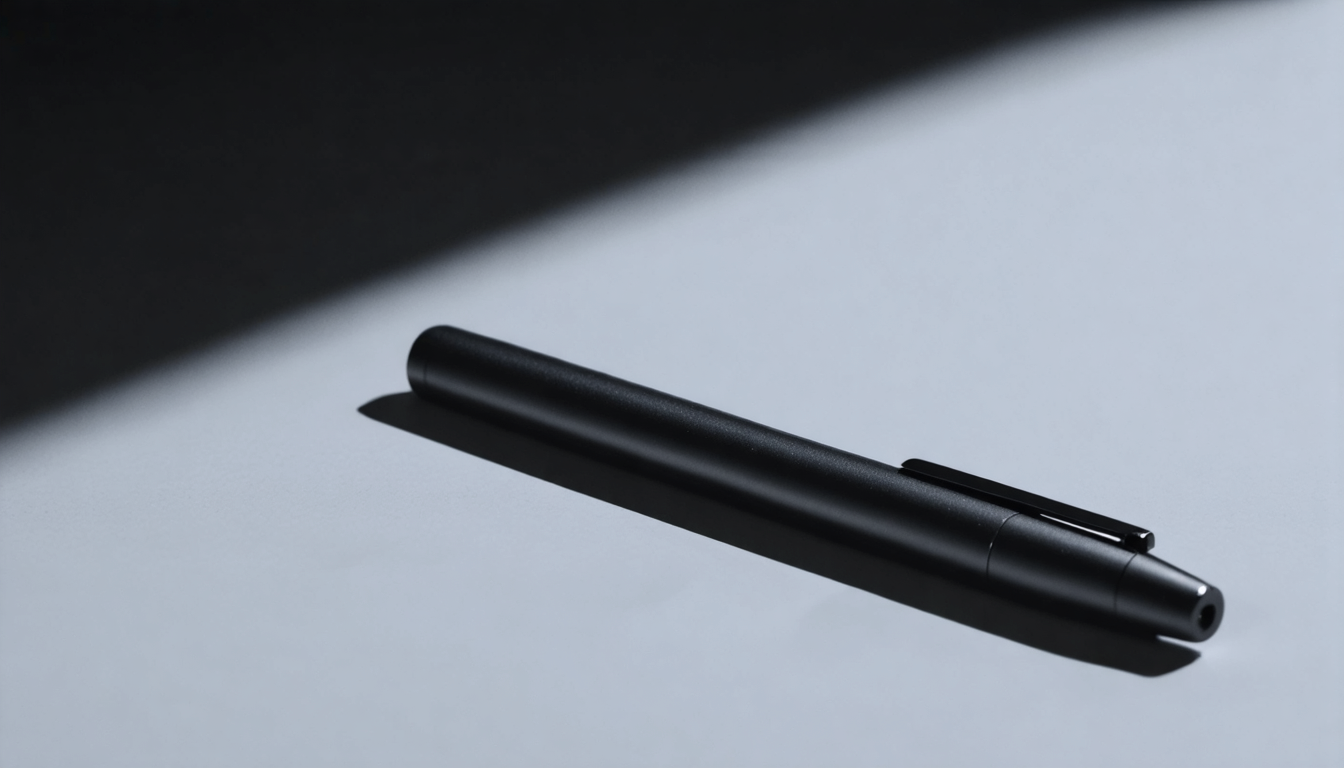
The role of Jony Ive, former head of design at Apple, in designing this smart pen is a crucial element. His reputation rests on the ability to design objects that are both elegant, functional, and intuitive. Here, design is not limited to mere aesthetics: it is a strategic lever to ensure that the tool fits perfectly into professional and personal environments.
The pen must be an object that one barely notices. Its shape evokes familiarity, the materials chosen reassure to the touch, and the total absence of a screen suppresses parasitic interactions. This minimalist design philosophy reflects a usage mode oriented toward concentration and calm, very far from the classic paradigms of contemporary electronic products.
Within this project, Jony Ive reaffirms that innovation does not necessarily come through digital complexity but through excellence in creating an object with and for humans. In 2026, this positioning aligns with a growing demand for more sober, more ethical technologies, and above all adapted to our lifestyles.
The ChatGPT pen: a pro tool for targeted use from the launch
At launch, the smart pen will not be intended for the general public. It primarily targets a demanding professional segment: journalists, researchers, executives, advanced and creative students. These users share the need to take precise notes, quickly organize information, and gain efficiency thanks to intelligent technology.
The pen will work as a connected device, linked to a smartphone or an OpenAI account via the cloud. The operation will likely rely on a subscription model, thus strengthening access to updates and improved services linked to artificial intelligence. This strategy illustrates OpenAI’s willingness to offer a truly high-performance tool, designed for a selected community, before any possible wider democratization.
Its price, not officially disclosed, should reflect its professional target. It will not be a general public gadget but a genuine offline digital assistant, capable of transforming note-taking and idea management.
A philosophical evolution of AI: supporting thought without interruption
Beyond technology, this smart pen represents a paradigm shift in how artificial intelligence can integrate into our lives. Rather than being a screen or an omnipresent and sometimes invasive voice assistant, AI becomes a discrete, almost silent presence that supports reflection and creativity.
Sam Altman, the head of OpenAI, described this device as a “cabin by a lake,” a metaphor symbolizing serenity and the absence of constant pressure generated today by most connected devices. This concept emphasizes quality over quantity of digital interactions, promoting a healthier use of technology.
However, this approach raises the essential question of trust: will we accept an object that constantly listens, even if it promises discretion and silence? Transparency in data management and security will be major imperatives to convince users of the relevance of this intelligent assistant.
Perspectives and challenges around the ChatGPT pen: towards integrated and calming AI
While the world of innovation in artificial intelligence often leans towards flashy and highly visible devices, OpenAI’s bet is original: to create a communicating product that never excessively demands its user. This approach could fundamentally change how we conceive voice assistants, connected devices, and more broadly, technology.
Here is an overview of the challenges and perspectives surrounding this launch:
- Gradual adoption: a targeted rollout first among professionals, with user feedback to refine the product
- Enhanced privacy: strict data management to meet digital security expectations in 2026
- Extension of uses: eventually, integration in various contexts such as education, artistic creation, or project management
- Cooperation with other devices: interconnection with smartphones, computers, and digital platforms for a coherent ecosystem
- Evolution towards greater autonomy: continuous improvement through machine learning and adaptation to individual preferences
This promising path could thus give rise to a new generation of AI, no longer focused on visible performance, but on quality of support and reduction of digital stress.

How is the OpenAI smart pen different from a classic voice assistant?
The smart pen acts as a passive data collector, without interrupting the user. Unlike voice assistants that constantly demand attention, this pen captures handwriting and ambient audio for later processing, thus promoting calm and concentration.
What is Jony Ive’s role in this project?
Jony Ive, former iconic Apple designer, oversees the creation of the pen to ensure a minimalist, functional, and discreet design. His work ensures the object integrates perfectly into daily use without being intrusive.
Who is the ChatGPT pen primarily targeted at upon launch?
The pen mainly targets knowledge professionals such as journalists, executives, researchers, and advanced students, who need a powerful tool for note-taking, structuring, and analyzing information.
How does OpenAI guarantee the confidentiality of data collected by the pen?
OpenAI implements a rigorous security and data protection framework, with secure cloud processing linked to the user’s OpenAI account, ensuring confidentiality and transparency in managing personal information.
Will the smart pen be accessible to the general public?
At launch, the pen is mainly intended for specialized professional use. A wider democratization could be considered later, but for now, it is a targeted tool integrated into a subscription model.