
As the digital revolution driven by artificial intelligence profoundly transforms the global economy, China is now at the forefront of the resulting upheavals. This country, which long embodied industrial power and rapid growth, is now facing a radical shift in its labor market. Accelerated automation and the widespread adoption of AI are weakening a large part of its traditional jobs, creating a palpable climate of uncertainty among employees. This phenomenon already has tangible repercussions: Chinese companies are reducing their workforce, adjusting their recruitment strategies, and young graduates struggle to find their place in this new landscape.
In the face of this very worrying situation, the question arises for France: is it also exposed to the same risks linked to the rise of artificial intelligence? While the French labor market currently seems spared, the first alarming signs in China could well announce a global shockwave, a warning for European economies and beyond. France, a country with a dense industrial and service fabric, must closely observe these transformations while preparing appropriate responses to safeguard its professional future.
- 1 Drastic changes in the job market in China due to artificial intelligence
- 2 Chinese strategies to manage the impact of AI on work and employment
- 3 Comparison between the AI impact on the labor market in China and France
- 4 The AI impact on the professional future of Chinese employees: a model that questions France
- 5 Risks for France facing the rise of AI: lessons learned from China
- 6 Which sectors are most exposed to job loss linked to AI in China and France?
- 7 How can professional training be a lever in the new era of AI?
- 8 Future perspectives: finding a balance between humans and artificial intelligence
- 8.1 What are the main causes of job loss linked to AI in China?
- 8.2 Is France ready to face the impacts of AI on its labor market?
- 8.3 Which sectors are most vulnerable to automation in France and China?
- 8.4 How are Chinese employees trying to adapt to the digital revolution?
- 8.5 What lessons can France draw from the Chinese experience with AI?
Drastic changes in the job market in China due to artificial intelligence
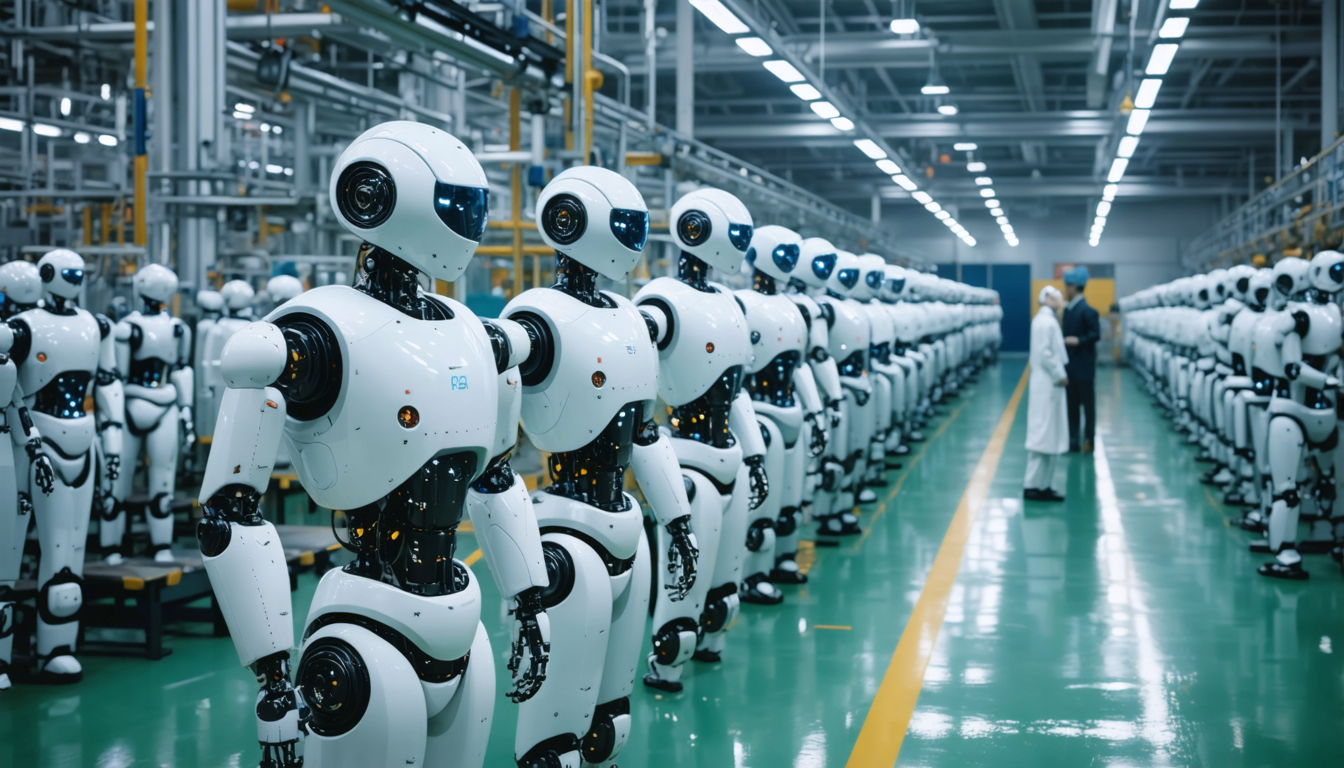
For several years, China has established itself as a leader in the development and integration of AI into its industries. This technology in China no longer limits itself to research but now extends to production and services, completely reshaping many functions. Unlike in Europe, where the discourse often remains hypothetical, in China the AI impact on employment is a tangible reality, experienced daily by workers.
A striking example lies in the software development sector. Today, more than half of the code produced internally by certain companies is generated or assisted by AI algorithms. Huawei, a Chinese technology giant, announces that automation already allows reducing software engineers’ workload by up to 30%, and hopes to reach a 70% reduction in the coming years. This increased efficiency drives workforce rationalization, with companies no longer needing to recruit as many specialists or even having to reduce their existing staff.
The consequences are palpable: according to a study conducted by McKinsey, more than one-third of companies in Greater China anticipate a significant job loss due to the adoption of AI and automation. Some even plan to reduce their workforce by more than 10% as early as the following year. This phenomenon mirrors a broader trend of economic slowdown, exacerbated by sectoral crises such as real estate and international sanctions, but the impact of AI remains an important trigger in this dynamic.
The profile of affected workers is also evolving. It is particularly young graduates who feel the pressure: in a country expecting nearly 12.7 million new entrants to the labor market by 2026, competition becomes fierce. Many face an increase of AI-assisted junior profiles, questioning the value of traditional professional experience. This phenomenon stands out in a system that has long valued skill growth and gradual career paths, and there is already an observed increase in the precariousness of active youth.
Case study: Frances Xu, an early victim of the digital revolution in China
Frances Xu, in her thirties and marketing director in Hong Kong, illustrates these upheavals well. Despite her stable position, she does not feel safe from the effects of automation. Rather than waiting to undergo a staff reduction, Frances has chosen to diversify her skills. She is currently training in traditional Chinese medicine, a profession considered difficult to automate, betting on enhanced security against the technological wave.
Her case raises an essential point: in the face of AI, flexibility, the ability to reinvent oneself, and to acquire so-called “human” or complementary skills to the machine become crucial assets. However, not all workers have the same resources or opportunities to adapt quickly, which creates a social and professional divide.
Chinese strategies to manage the impact of AI on work and employment
Faced with the digital revolution fueled by AI, China has adopted a dual strategy. On the one hand, companies, often supported by the government, bet on a “human-machine collaboration” approach to mitigate the negative effects on employment. On the other, authorities play a regulatory role, particularly in the close monitoring of massive layoffs, to avoid any social instability.
The strong involvement of the state in the economic fabric allows for gradual workforce reduction, thus avoiding massive waves of unemployment. This fine management goes hand in hand with a partial freeze on hiring in certain sectors, a cautious measure not to further destabilize the Chinese labor market.
Technology companies like Tencent or Baidu claim that AI does not necessarily lead to job destruction but to job transformation. They notably call for repositioning employees towards tasks with high added value or creative tasks, inseparable from human intelligence.
This strategy is not without flaws, as the rise of AI disrupts entire segments of low-skilled or repetitive jobs, threatening the most vulnerable. The risk is increasing inequalities, especially between technologically advanced large metropolitan areas and less urbanized regions. Nevertheless, the government plan also promotes the development of adapted professional training pathways, which, in the long term, may encourage the creation of new jobs.
Here is a list of the main intervention axes favored in China:
- Close monitoring of massive layoffs to limit social tensions
- Promotion of collaboration between humans and AI in industrial processes
- Temporary hiring freeze in the most affected sectors
- Skills reorientation through ongoing training
- Development of jobs related to technology and creative industries
Comparison between the AI impact on the labor market in China and France
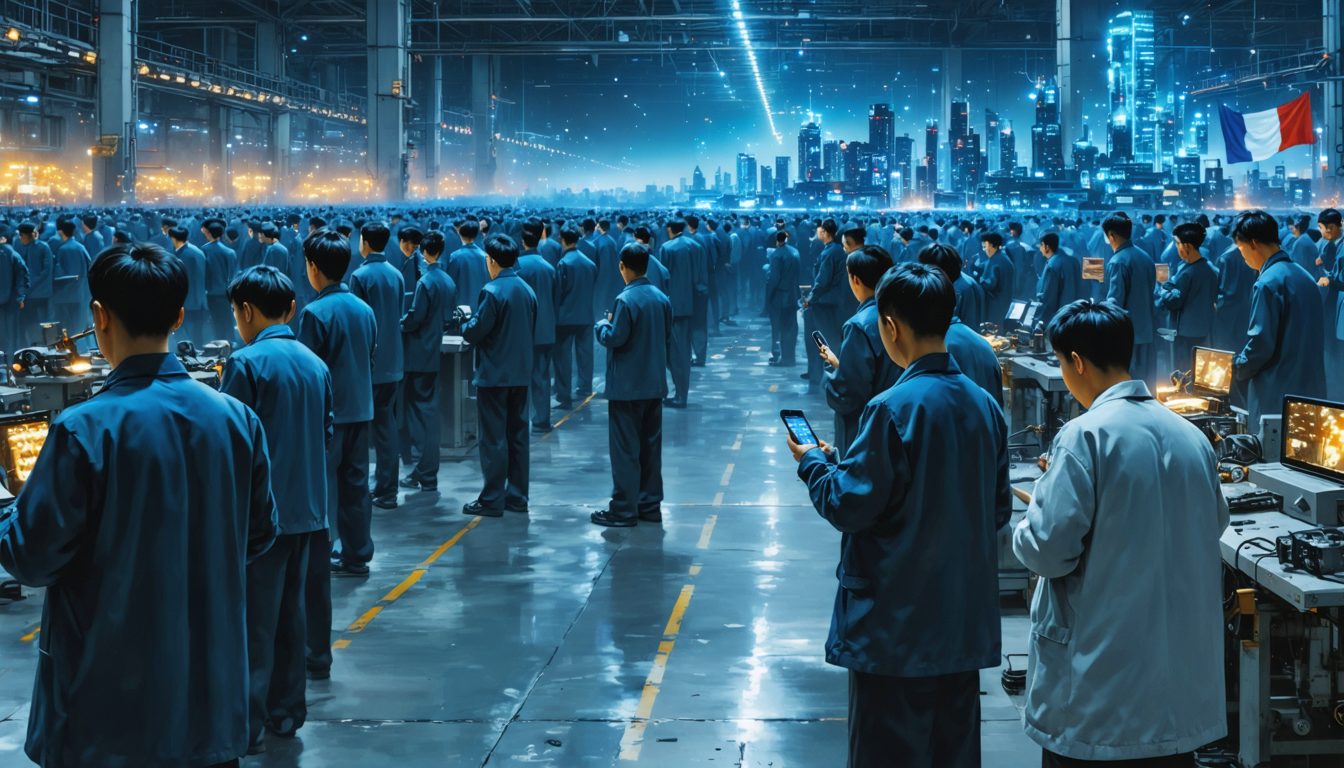
While China is already experiencing the profound consequences of automation, France observes the phenomenon from a distance. In mainland France, the question of AI impact on employment remains largely theoretical for now, but this delay does not exclude a future similar adjustment to that experienced by China.
The French context presents notable specificities. On the one hand, the labor market is more rigid, with stronger social protections and a structured social dialogue system. On the other hand, France often lags behind in adopting new technologies compared to China, notably due to strict regulations and intense public debates on social risks.
This framework temporarily protects workers but does not immunize them against the radical transformation induced by artificial intelligence. The current observation is that French companies are progressively investing in AI solutions to increase their competitiveness, particularly in manufacturing, finance, and health sectors.
According to experts, France could eventually experience similar workforce reductions, notably among low-skilled tasks, which are the first to be automated. The challenge is therefore to anticipate and support professional transition through adapted public policies and targeted training to preserve the human advantage in a digital economy.
Comparative table of AI impact factors on employment in China and France
| Factors | China | France |
|---|---|---|
| AI adoption | Very fast and massive, especially in tech and industry | Progressive, with caution and public debates |
| Social protection | Weaker, less rigid, rapid workforce adjustments | Strong, rigid labor market, enhanced worker protection |
| Role of the State | Direct intervention to manage social stability | More indirect regulatory role, via legislation and social dialogue |
| Young graduates | Fierce competition, substitution by AI-assisted junior profiles | Increasing pressure but integration still possible with training |
| Main affected industries | Technology, manufacturing industry, services | Industry, finance, health, services |
The AI impact on the professional future of Chinese employees: a model that questions France
The accelerated adoption of AI tools in China marks a major break in the very conception of work. While automation is seen as a productivity lever, it comes with real threats to job sustainability, creating a climate of distrust among workers. The professional future is now tinged with uncertainty, prompting a dual movement of adaptation and search for new skills.
Many employees feel increasing stress, anticipating layoffs linked to professional “obsolescence” induced by machines. This phenomenon weighs on morale and productivity and introduces a psychological challenge whose long-term effects on occupational health are still little measured. This professional distress particularly affects young workers, often the most exposed to competition with AI.
Some turn to professions considered “resistant” to automation, such as those related to personal services, health, or cultural and creative fields. However, this transition requires massive training support, often insufficient on the ground.
There is also an observed condensation of jobs towards hybrid profiles, capable of working in symbiosis with AI, mastering both technical and human skills. This trend pushes to completely rethink initial and continuing training curricula, focusing on flexibility and lifelong learning.
Risks for France facing the rise of AI: lessons learned from China
France cannot ignore the warning signs sent by China. The digital revolution driven by artificial intelligence could become, in the short or medium term, a true societal challenge for mainland France. The identified risks are multiple:
- Increase in inequalities between automatable and non-automatable jobs;
- Precarization of young graduates facing competition amplified by high-performance AIs;
- Pressure on social protection systems and unemployment insurance in case of waves of layoffs;
- Risk of social tensions if the transition is not managed with an effective support policy;
- Rapid transformation of work modes with a rise of telework and digital platforms.
Faced with these challenges, France must prepare to adjust its public policies, strengthen professional training, and encourage a truly beneficial human-machine collaboration. This also involves an inclusive debate about the place of AI in the economy, to avoid an anxiety-provoking escalation and guarantee everyone a dignified and sustainable professional future.
Which sectors are most exposed to job loss linked to AI in China and France?
The AI impact is not homogeneous across economic sectors. In China as in France, certain fields of activity are more vulnerable, especially those involving repetitive or easily automatable tasks. In the Chinese context, pressure is strong in:
- The manufacturing sector, where robotization progressively replaces entire production lines;
- Administrative and managerial services, automated via AI data processing;
- Software development, with generative AI tools facilitating code production;
- Commerce and logistics, where robots handle preparation and delivery functions.
In France, industrial and service sectors are beginning to face these challenges, with particular focus on:
- The automotive and aeronautical industries, two pillars of industrial employment;
- Financial and banking services, where AI gradually replaces traditional advisors;
- Health, especially for administrative tasks and automated medical imaging;
- Retail and large-scale distribution, in full digital transformation.
The table below summarizes these sector exposures, showing similarities and distinctions between the two countries.
| Sectors | China – Level of exposure | France – Level of exposure |
|---|---|---|
| Manufacturing and heavy industry | High | Moderate to high |
| Administrative services and management | High | Moderate |
| Software development | Very high | High |
| Commerce and logistics | High | Moderate |
| Finance and banking | Moderate | High |
| Health | Moderate | Moderate to high |
How can professional training be a lever in the new era of AI?
In this context of technical and social upheaval, professional training proves to be one of the most powerful tools to enable employee adaptation. In China, there is a growing number of targeted retraining programs for workers threatened by job loss linked to automation.
These training sessions focus on acquiring hybrid skills, combining mastery of digital tools, knowledge of artificial intelligence, and development of irreplaceable “human” abilities such as creativity, communication, or project management. For example, some companies offer training paths dedicated to human-robot collaboration, where employees learn to cooperate effectively with AI in production or services.
France is also beginning to strengthen its approach, relying on public policies that promote skills updating throughout careers, with systems like the Personal Training Account (CPF) or enhanced partnerships with the private sector. However, the speed and efficiency of this transformation remain to be demonstrated in the face of rapid technological adoption.
Some initiatives deserve to be highlighted:
- Creation of centers of excellence dedicated to AI training and future professions.
- Encouragement of accelerated retraining for the most affected sectors.
- Development of mixed Human-AI training to optimize work efficiency.
- Strengthening individual and collective support systems for employees.
- Promotion of continuous learning across all sectors.
Future perspectives: finding a balance between humans and artificial intelligence
The Chinese example has demonstrated that automation should not be apprehended solely as a threat. It is also a tremendous opportunity to reinvent the approach to work, foster innovation, and improve professional quality of life. The tension lies in the ability to manage this transition without sacrificing individuals in the process.
For this, several courses of action are emerging on a global scale:
- Designing responsible AI governance, combining regulation and encouragement for innovation.
- Developing a corporate culture that values adaptation and continuous learning.
- Investing in sectors generating qualified and sustainable jobs.
- Creating solidarity mechanisms to support inevitable job losses.
- Deepening social dialogue to anticipate frustrations and evolve legislation.
The experiences and transformations in China are both a warning and a guide for France. If the AI impact on employment is already evident there, there is still time for mainland France to anticipate, adapt, and approach the digital revolution with pragmatism and humanism.
What are the main causes of job loss linked to AI in China?
Job loss in China is mainly due to automation of repetitive tasks, automatic code generation, and workforce rationalization encouraged by the increased efficiency allowed by artificial intelligence.
Is France ready to face the impacts of AI on its labor market?
France has a more protected and rigid labor market, which offers some short-term protection. However, faced with the rise of AI, it must strengthen professional training and adapt its public policies to limit risks of precarization and massive job losses.
Which sectors are most vulnerable to automation in France and China?
Sectors such as manufacturing, administrative services, software development, finance, commerce, and logistics are most affected by automation in China and France, with varying degrees depending on technological maturity and local specificities.
How are Chinese employees trying to adapt to the digital revolution?
Some employees are training for jobs difficult to automate, such as traditional medicine, while others develop hybrid skills to collaborate with AI. Retraining and continuous learning are key strategies in the face of labor market upheavals.
What lessons can France draw from the Chinese experience with AI?
France can learn the importance of proactive regulation, targeted support for employees, and establishing an effective training system to turn the impact of AI into an opportunity rather than a threat.