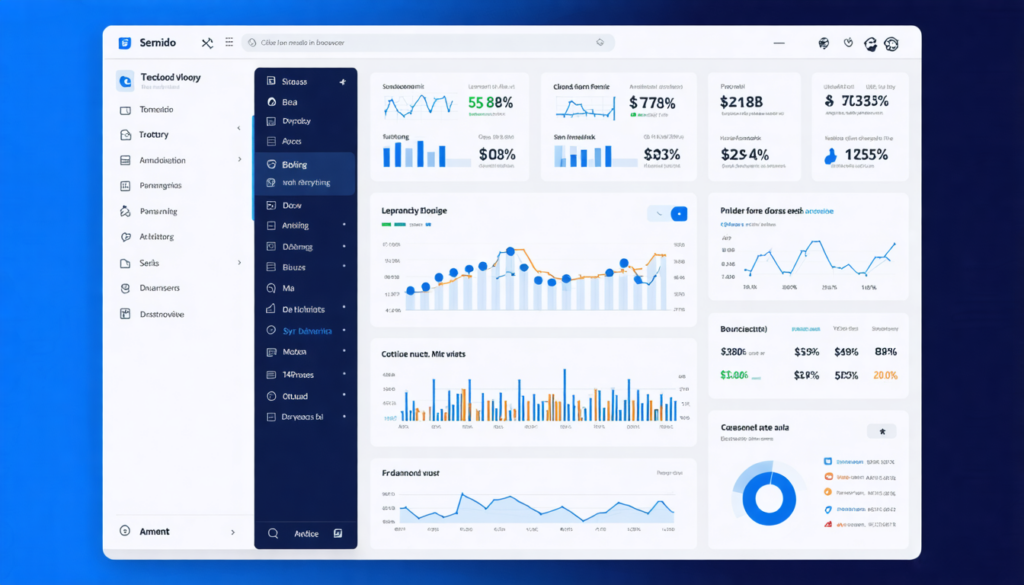
In a context where companies operate in an increasingly complex economic environment, financial management and accounting processes occupy a central place in organizational success. Yet, despite technological advances, these essential functions often remain locked in traditional methods, slow and prone to errors. Today, with the advent of artificial intelligence (AI), a major transformation is underway. Safebooks embodies this revolution by offering an innovative solution aimed at automating accounting and simplifying financial management through advanced data analysis.
This revolution responds not only to a need for efficiency but also to an urgency linked to the exponential growth of data volumes, the fragmentation of financial systems, and the increased complexity of business operations. Financial teams, forced to juggle multiple ERP, CRM software, or invoicing platforms, still face a restrictive reality: each tool delivers its own version of the figures, often divergent, demanding tedious manual verifications. Safebooks tackles this structural problem by centralizing these disparate information flows and automating accounting reconciliation using intelligent and specialized AI agents.
With nearly 15 million dollars raised and a confirmed presence since December, Safebooks aims to disrupt industry standards. Its founders, like Ahikam Kaufman, emphasize that the challenge is significant: it is about freeing financial teams from repetitive work, improving data compliance, and offering instant visibility into the company’s financial health. In a world where 58% of financial functions had already adopted artificial intelligence in 2025, Safebooks embodies the promise of responsible, effective, and perfectly integrated automation within existing systems.
- 1 Artificial intelligence and the simplification of financial processes: an indispensable duo in the digital age
- 2 How Safebooks integrates artificial intelligence to optimize corporate accounting
- 3 The fundamental role of data centralization in the simplification of financial processes
- 4 Automation and error reduction: Safebooks’ strategic lever in finance
- 5 The transformation of accounting tasks through artificial intelligence: concrete examples
- 6 The role of Safebooks technology in supporting rapidly growing companies
- 7 Safebooks, a technology serving responsible and agile financial management
Artificial intelligence and the simplification of financial processes: an indispensable duo in the digital age
Digital transformation has impacted many sectors before fully reaching finance. In 2026, financial functions remain among the most conservative in adopting modern tools due to the intrinsic complexity of data and the high risks related to errors. However, artificial intelligence is changing the game by simplifying financial processes, notably those involving accounting, cash flow management, or bank reconciliation.
Unlike fragmented traditional systems where each software handles specific data segments, AI solutions like Safebooks offer a centralized and unified approach. The key is to consolidate information from various sources – contracts, ERP, invoices, customer databases – within a unique and intelligent graph. This architecture facilitates real-time anomaly detection and removes frictions related to the manual matching of figures.
This simplification benefits not only financial teams: it directly impacts the company’s strategy. By having reliable and up-to-date information, decision-makers can react faster to deviations, non-compliance risks, and market changes. It is a powerful lever to enhance accountability, reduce accounting closing times, and optimize cash flow management, essential to organizations’ sustainability.
For example, where a bank reconciliation task previously took several tens of minutes, today it can be completed in a few seconds thanks to AI agents. These agents do not merely execute instructions; they learn and adjust over time to improve operation accuracy. This advanced automation process, combined with simplified management, represents a true revolution in how financial management is approached.
How Safebooks integrates artificial intelligence to optimize corporate accounting
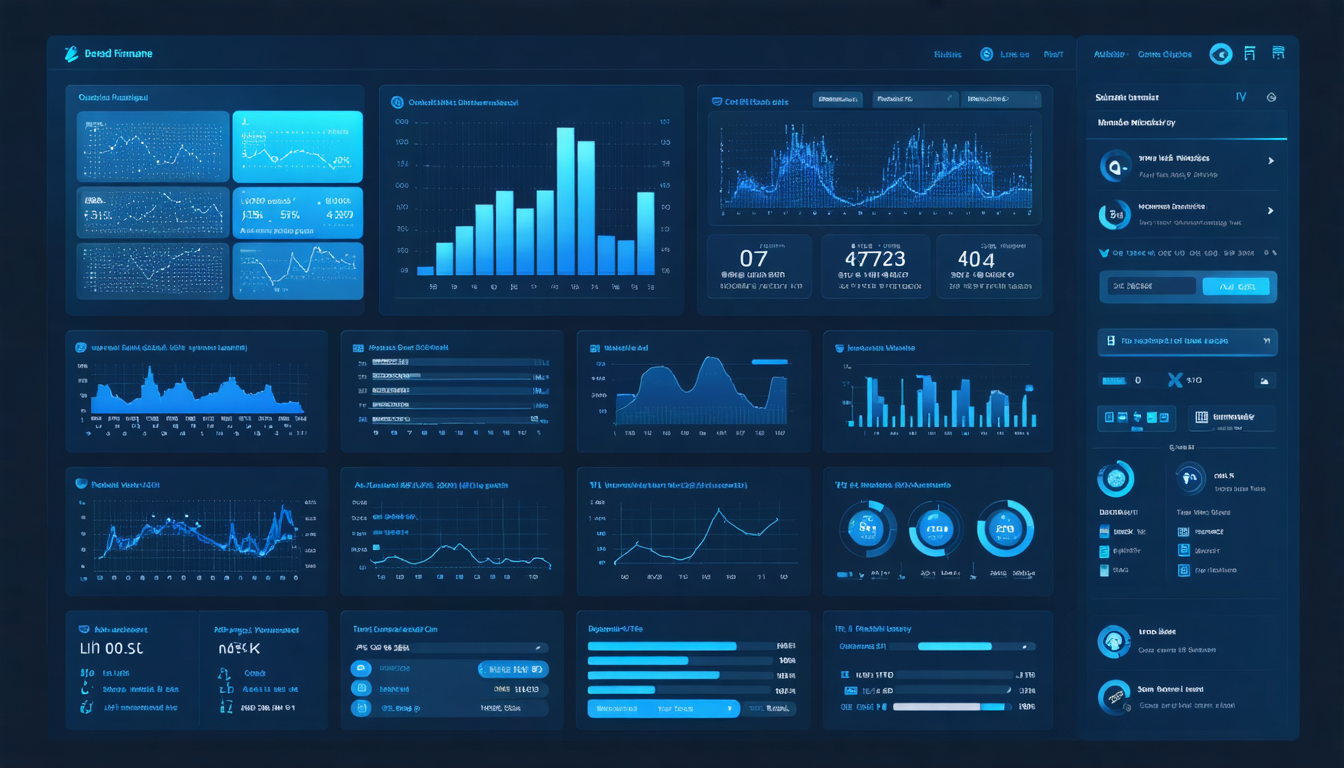
Safebooks relies on technology based on intelligent agents designed to analyze, link, and control data coming from tools as varied as ERPs, CRM platforms, and invoicing systems. This integration is particularly strategic because it does not require replacing the existing system but superimposing an intelligent layer that offers a unified view.
AI agents perform in-depth analysis of both structured and unstructured data, incorporating not only figures but also associated legal and contractual documents. This allows Safebooks to automatically detect discrepancies and anomalies, report inconsistencies, and quickly propose suitable solutions. This method drastically reduces the manual workload related to verifying thousands of daily transactions.
A typical case concerns the order-to-cash cycle, a complex process where the slightest error can impact customer relationships and regulatory compliance. Thanks to automation, Safebooks reduces billing errors, improves account statement accuracy, and allows real-time monitoring of financial flows.
The results are striking: a process that took 22 minutes is reduced to 22 seconds, making finance not only faster but also more reliable. This capability is indispensable, especially in rapidly growing companies experiencing exploding data volumes, rendering verification methods based solely on human checks quickly obsolete.
The concrete advantages of intelligent automation in financial management
- Productivity gain: drastic reduction of repetitive and manual tasks.
- Improved accuracy: significant decrease in human errors and disputes.
- Increased visibility: access to reliable and up-to-date data in real time.
- Enhanced compliance: early anomaly detection and reduction of regulatory risks.
- Optimal responsiveness: accelerated decision-making thanks to better data quality.
The fundamental role of data centralization in the simplification of financial processes
Modern financial management can no longer afford to be fragmented across multiple tools operating in isolation. As the Safebooks approach shows, data centralization is the very foundation of effective simplification.
When financial teams handle data daily from unsynchronized systems, every decision is based on a partial, sometimes conflicting version. This data mosaic leads to a multiplication of lengthy and complex verifications. Relying on a unified system like the one proposed by Safebooks eliminates this problem by aggregating all information into a coherent, structured, and accessible database.
This centralization also manages time differences linked to systems: where some update in real time, others work in batches, causing chronological delays. Safebooks’ AI agents continuously monitor these flows to immediately flag issues, thus avoiding potential synchronization errors that could cause billing delays or financial losses.
Organizations benefit from better anticipation of market fluctuations and can adjust their accounting strategies with increased confidence. In a world where speed is now a competitive criterion, this ability for synthesis and predictive analysis paves the way for more agile and innovative finance.
Comparative table of traditional methods vs centralization with Safebooks
| Aspect | Traditional methods | Centralization with Safebooks |
|---|---|---|
| Data management | Dispersed, multiple unsynchronized sources | Centralized, unified in real time |
| Verifications | Manual, long, error-prone | Automated, fast, reliable |
| Responsiveness | Low, delayed decisions | High, real-time decisions |
| Compliance | High risk of undetected anomalies | Continuous monitoring, early detection |
| Workload | High, repetitive | Reduced thanks to AI automation |

Automation and error reduction: Safebooks’ strategic lever in finance
At the heart of financial service challenges lies the absolute necessity to reduce the frequency and impact of errors. The burden of manual operations and the multiplication of interfaces increase the risk of inconsistencies, generating economic losses and an increase in customer disputes.
Safebooks, through its artificial intelligence agents, addresses this challenge by initiating advanced automation of accounting processes. This automation is not limited to simple robotic processing but includes contextual analysis allowing the distinction of relevant anomalies, limiting false positives and guiding teams toward necessary corrections.
Another notable aspect is Safebooks’ ability to operate continuously, offering 24/7 monitoring. While human teams must deal with time constraints, AI agents continuously scan transactional flows and contracts, ensuring constant vigilance and reduced exposure to risks.
This notably enables rapidly growing companies to support their development without proportionally multiplying administrative costs. Intelligent automation thus proves to be a lever of competitiveness, combining operational rigor and strategic flexibility.
The transformation of accounting tasks through artificial intelligence: concrete examples
Manual verification and analysis processes have long been synonymous with a heavy workload for accounting professionals. Safebooks changes this reality by demonstrating how artificial intelligence can revolutionize these daily tasks.
For example, at a major e-commerce player, the integration of Safebooks reduced the time spent on bank reconciliation by 80%. The system automatically analyzes matches between order data and payments, detects potential discrepancies, and produces instant alerts. This automation frees up time for teams to focus on higher-value tasks such as financial strategy or cost optimization.
Another case observed in a rapidly growing SME reveals how the platform helped prevent billing errors involving client penalties. Through continuous analysis and instant access to always up-to-date data, teams were able to quickly rectify anomalies, thus improving customer relations and regulatory compliance.
These concrete experiences illustrate the power of AI in the daily life of financial services, confirming that process simplification through tools like Safebooks is no longer an option but an imperative in an environment where competitiveness also relies on the quality of internal management.
The role of Safebooks technology in supporting rapidly growing companies
Companies experiencing accelerated growth face a major challenge: quickly adapting their financial processes to exponential transaction volumes. Even the most well-honed manual methods cannot keep up with such a pace without generating errors or delays.
In this context, Safebooks offers an adapted response. Thanks to its technological infrastructure based on artificial intelligence agents, the platform continuously monitors, analyzes, and adjusts financial flows. This allows maintaining optimal management quality even in high dynamic situations.
The ability to process large amounts of data in record time avoids team saturation and prevents non-compliance risks. Moreover, Safebooks facilitates the production of reliable financial reports intended for authorities or shareholders, ensuring transparency and trust, two essential elements for supporting healthy growth.
This strategic positioning places Safebooks technology at the heart of the digital transformation of finance, benefiting agile and innovation-oriented companies.

Safebooks, a technology serving responsible and agile financial management
In a world where financial and regulatory complexity is continuously increasing, companies must find a balance between rigor and flexibility. Safebooks contributes to this goal by offering a solution that combines artificial intelligence and data governance.
Automation does not replace human expertise but complements it by delegating repetitive and tedious tasks to AI agents, allowing teams to focus on strategic decisions. This complementarity is essential to meet growing requirements in compliance and transparency.
Furthermore, the platform promotes better risk anticipation by highlighting deviations before they become critical. This preventive ability has become a major competitive advantage in 2026, when the speed and relevance of financial decisions often determine organizations’ success.
Finally, Safebooks illustrates how artificial intelligence can be a driver of responsible innovation, combining automation, performance, and adherence to ethical and regulatory standards, thus fostering agile, proactive, and sustainable financial management.