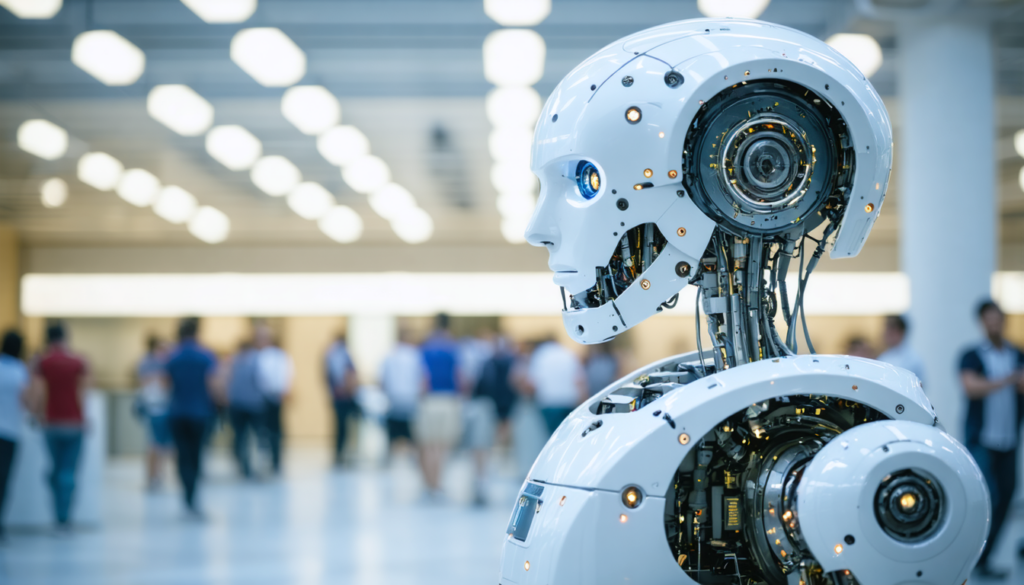
Imagine a place where learning is like no other: rows of humanoid robots perfect their movements, train to perform daily tasks, and develop their skills for an ambitious goal. Located in Beijing, the first school specifically designed to train these machines to become autonomous and efficient in the real world has launched a unique program, revolutionizing our way of conceiving the relationship between humans and technology. This innovative center bridges advanced artificial intelligence and the automation of the most repetitive or hazardous jobs, offering a glimpse into the future of training and work.
This project, which marries innovation and pragmatism, appears as a direct response to the economic and demographic challenges of China, where the rapid aging of the population demands urgent reflection on the partial or complete substitution of human labor. Humanoid robots, whose capabilities now go beyond simple mechanical programming, are invited to learn in an environment simulating different professional contexts: from industrial production lines to hospital services, including logistics and domestic tasks. This pioneering school opens the way to a new era where machines and humans could coexist, each with their specific strengths.
- 1 A unique training center for humanoid robots: behind the scenes of automated training
- 2 The necessity of a school for robots: between technicality and social challenges
- 3 Major technical challenges in humanoid robot training
- 4 Societal implications of human replacement by robots
- 5 Towards a harmonious integration of robots into society: challenges and strategies
- 6 Concrete examples of robot use trained at the Beijing school
- 7 The future of humanoid robot training: innovations and international prospects
A unique training center for humanoid robots: behind the scenes of automated training
The birth of this institution in Beijing materializes a major technological and educational breakthrough. Unlike traditional training intended for humans, this school is exclusively aimed at humanoid robots destined to integrate professionally in various sectors. The main objective is to standardize machine training to optimize their economic and social integration.
Inside the vast premises, the atmosphere is completely different from a classic classroom. Silence is only partially interrupted by the clicking of articulated fingers or the subtle humming of internal motors. Robots progress through realistic scenarios where their motor, sensory, and cognitive abilities are regularly tested. Each exercise is designed to faithfully reproduce the realities of the environments they will later encounter.
The teaching process relies on a combination of artificial intelligence and machine learning, allowing robots to adapt quickly. For example, in a factory simulator, the robot must learn to handle fragile parts without damaging them. This activity requires not only robotic precision but also the ability to adjust its movements in real time, according to the unforeseen events on the production line.
Moreover, this training laboratory allows for unprecedented acceleration. Where a human would take months to master a complex set of movements, robots can practice intensively in a virtual universe and achieve the equivalent of thousands of hours in a few minutes. This speed opens strong economic perspectives, especially for companies seeking solutions to the shortage of qualified labor or to make their production safer and more efficient.
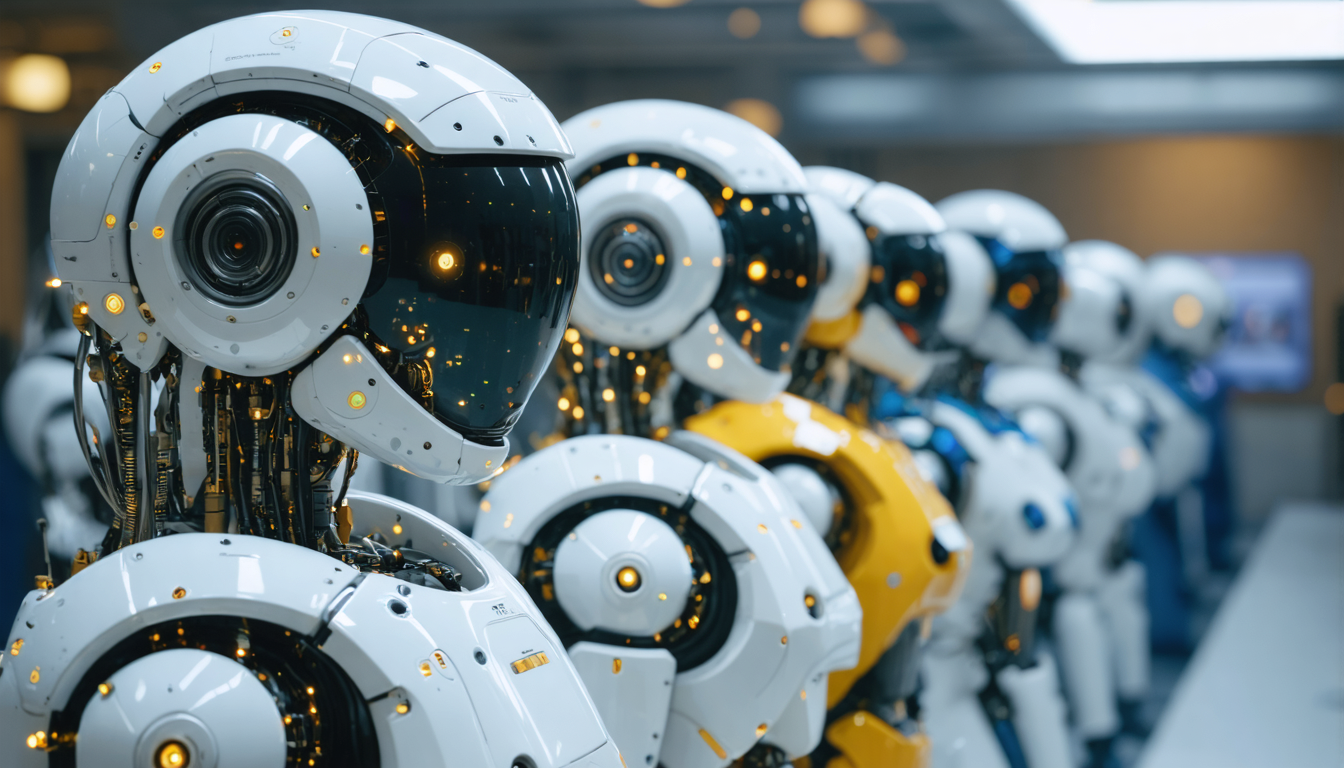
Humanoid robotics is evolving by leaps and bounds, and with it, the need for appropriate training. Indeed, dexterity and versatility remain major challenges. While a traditional robotic arm excels at repetitive but limited tasks, humanoid robots must integrate a greater complexity: that of reproducing delicate, sometimes improvised gestures, as a human would.
In this institution, robots learn by imitation. Equipped with sophisticated sensors, they observe the gestures of human operators, break down these movements into analytical sequences, and reproduce them. Artificial intelligence plays a key role here, allowing them not only to emulate a gesture but also to improve it over trials, thanks to reinforcement learning.
This learning method allows essential flexibility. Here are some aspects that the training highlights:
- Imitation of human gestures in their precision and fluidity.
- Adaptability to environmental changes and unforeseen events.
- Decision-making ability and real-time adjustment.
- Consideration of safety, especially in interaction with humans.
- Development of reinforced procedural memory through multiple virtual scenarios.
This methodology makes sense in the Chinese context, where demographic aging reduces the available active population, pushing authorities to massively encourage intelligent automation. By training robots to be multifunctional, capable of assisting or replacing humans in physical and sometimes dangerous tasks, society is preparing for a future where these machines will become omnipresent.
Major technical challenges in humanoid robot training
Although the idea of a school for robots may seem bold, reality imposes colossal technical challenges. The complexity lies mainly in the faithful reproduction of human movements, which combine precision, power, and sensitivity. For example, handling an egg without breaking it requires extremely fine coordination that was until recently impossible for robotics.
To meet this challenge, the training includes several axes:
- Capture and decomposition of gestures: Human operators practice in front of sophisticated sensors that record every detail of their motor skills.
- Virtual simulation: The recorded data feed virtual environments where robots train to repeat these gestures thousands of times at accelerated speed.
- Reinforcement learning: Thanks to constant feedback on their performance, humanoids gradually adapt their movements to achieve optimal mastery.
- Physical control: Real-world trials validate acquired skills and adjust mechanical systems.
This mixed approach between virtuality and reality is what distinguishes the Beijing school from simple test laboratories. Robots benefit from quasi-military training that prepares each of them to successfully meet the demands of the labor market.
Societal implications of human replacement by robots
The gradual deployment of professional robots raises a passionate debate. While some see the advent of an era freed from repetitive and arduous tasks, others worry about the consequences on employment. In this context, the school for robots crystallizes these concerns as it symbolizes the realization of human replacement by machines.
However, it is essential to nuance. For many, the arrival of humanoid robots should be seen as a complement and not a radical substitute. These machines can take care of thankless and repetitive tasks, thus offering humans the possibility to devote themselves to activities with high added value such as creativity, management, or human relations.
To illustrate the stakes, here is a comparative table of the benefits and concerns related to this automation:
| Benefits | Concerns |
|---|---|
| Improved productivity thanks to efficient and tireless robots | Risk of job losses in low-skilled sectors |
| Reduction of occupational accidents in hazardous jobs | Difficulty of social adaptation to rapid change |
| Opportunities for developing new human skills | Reinforcement of economic and social inequalities |
| Possibility to assist humans in complex environments | Ethical questions related to autonomous machine decision-making |
This debate is far from settled in 2026. The Beijing school acts both as a catalyst and a social laboratory exploring the boundaries between humans and machines.
Towards a harmonious integration of robots into society: challenges and strategies
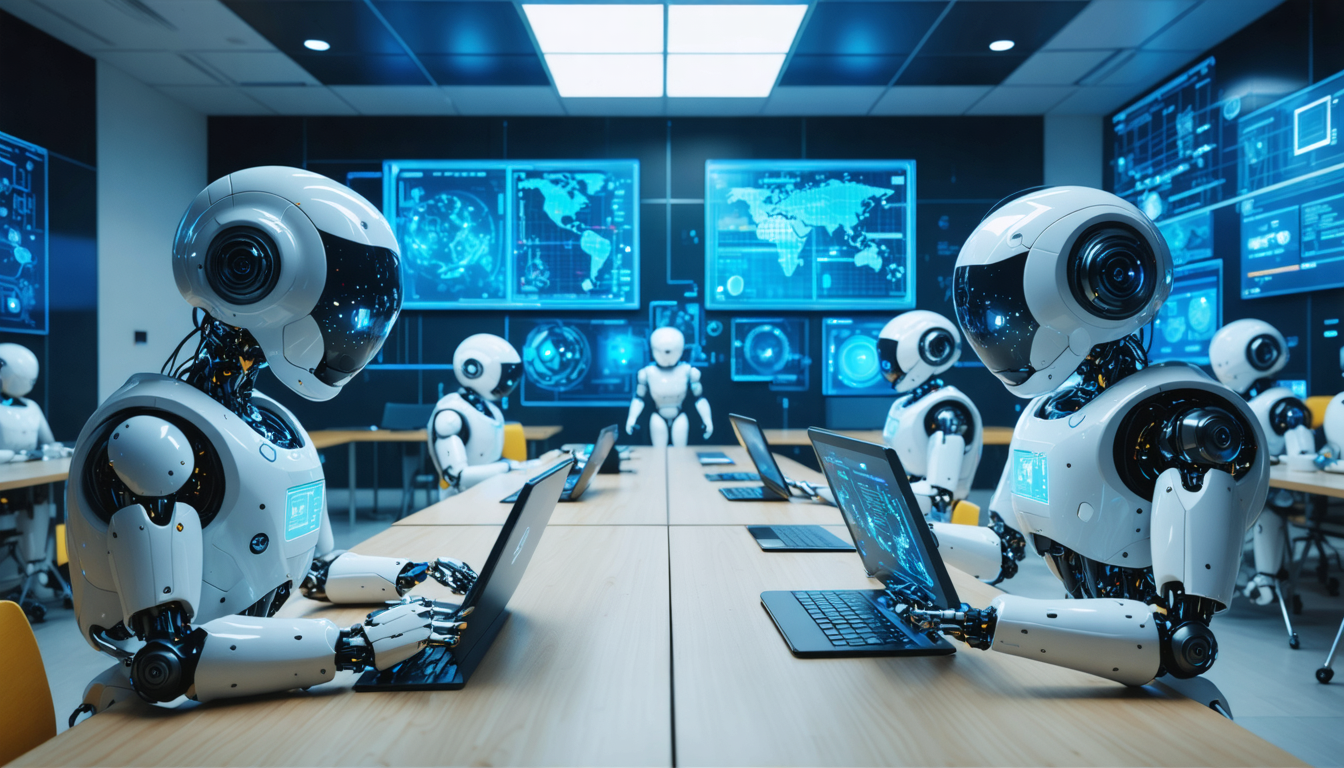
Facing accelerated technological evolution, society must design a new form of collaboration between humans and robots. This inaugural school lays the foundations for a model where the humanoid is no longer seen as a simple tool, but as a true actor integrated into economic and social life.
Integration goes through several stages:
- Specialized training: Continuous adaptation of programs to meet the evolving needs of markets and technologies.
- Real-world experimentation: Essential phase to validate autonomous working capacities and interaction with human teams.
- Regulatory adoption: Development of standards guaranteeing the safety and rights of human and robot workers.
- Social acceptance: Awareness and public support to evolve mindsets.
Pioneering companies are beginning to integrate these robots trained directly at the school into their processes, noting a decrease in labor costs, increased reliability, and a reduction in accident rates. In sectors such as logistics, elderly care, or industrial maintenance, coexistence is becoming the norm rather than the exception.
Concrete examples of robot use trained at the Beijing school
Several use cases illustrate the versatility of humanoid robots coming from this innovative training. Here are a few:
- Industry: Robots specialized in assembling delicate parts, reducing breakage rates and human errors.
- Health: Assistance to hospital staff in transporting equipment or accompanying patients, especially in geriatrics.
- Logistics: Automated management and sorting of parcels in warehouses, with adaptation to manual work hazards.
- Domestic services: Robots capable of performing various tasks such as cleaning or simple meal preparation, improving quality of life.
This variety of applications highlights the importance of a comprehensive and flexible training provided in a dynamic framework. The school emphasizes the ability to adapt to rapid changes in technological and human needs.
The future of humanoid robot training: innovations and international prospects
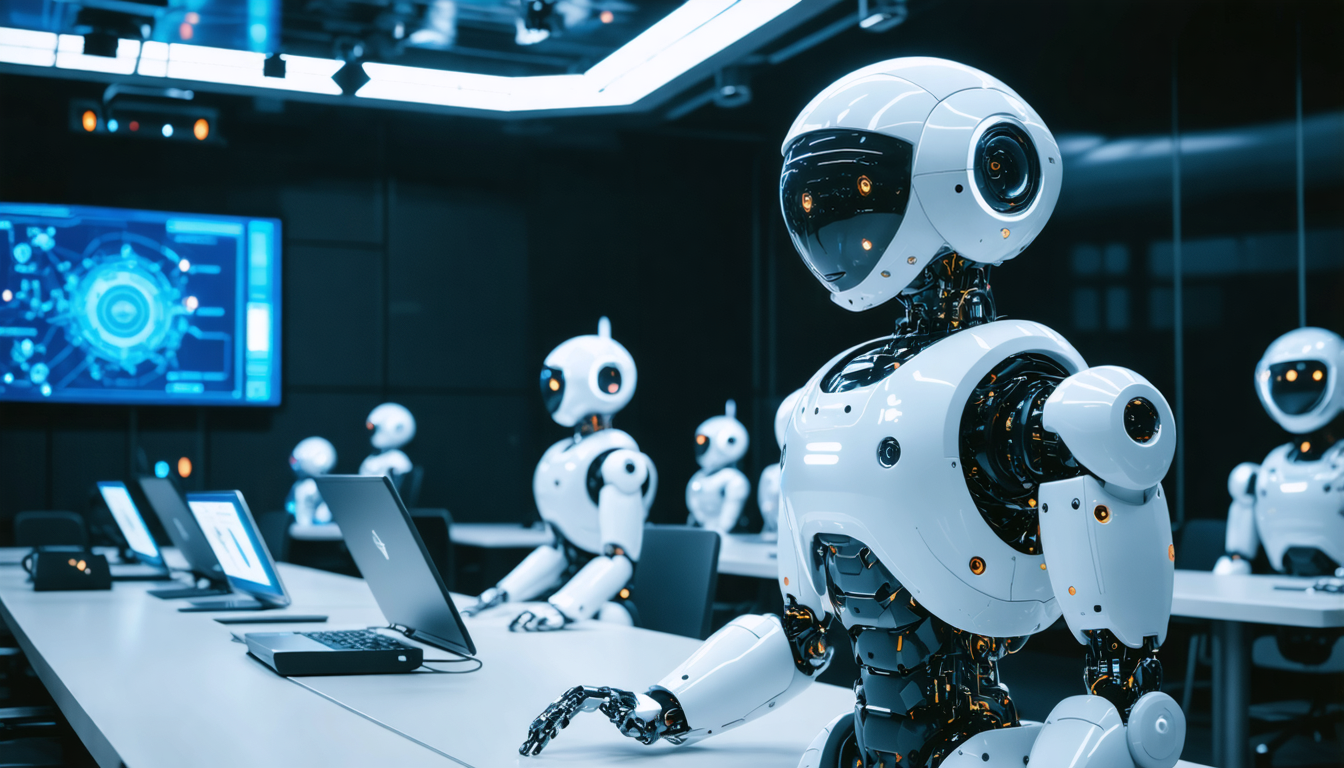
The creation of this first school in China marks a founding step in robot training. But quickly, global attention turns to exporting this model and adapting it to the international context. The know-how acquired in Beijing could be integrated into new institutions, promoting global standardization of robotic skills.
The envisioned innovations include notably:
- Development of interconnected school networks facilitating the sharing of learning data.
- Continuous improvement of artificial intelligence algorithms to increase autonomy capacity.
- Creation of increasingly sophisticated test environments, integrating augmented reality to simulate complex situations.
- Consideration of cultural and economic specificities in the design of training programs.
Ultimately, this system could pave the way for a true global community of trained robots, ensuring better compatibility between machines and humans on a planetary scale.