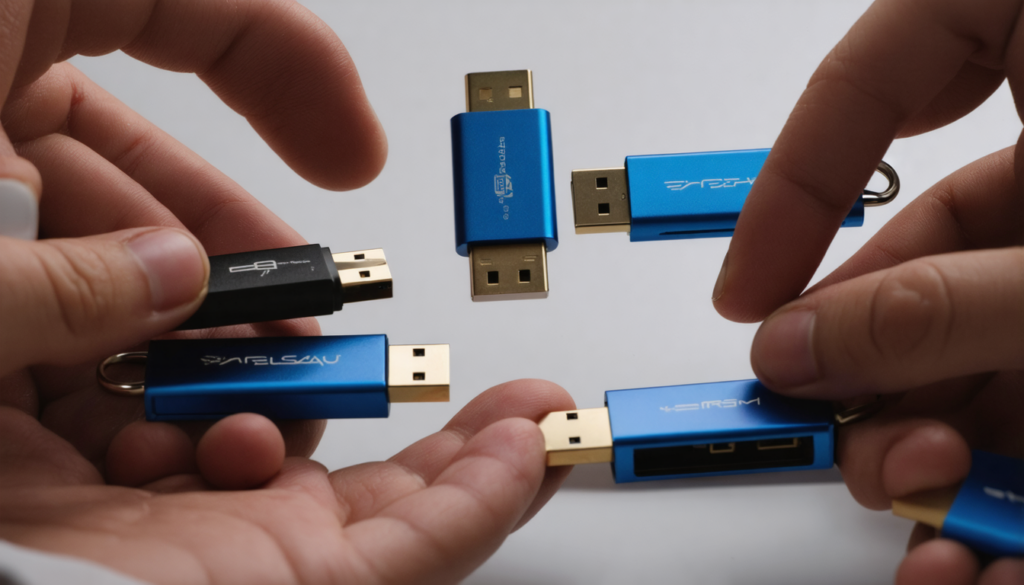
In the digital age, data storage methods are multiplying, offering users various solutions tailored to their needs. Yet, despite the rise of the cloud, the USB drive retains a special place in the daily lives of millions of users in 2026. Its portability, ease of use, and universal compatibility make it an essential tool for diverse uses ranging from professional work to personal storage. Between immediate accessibility and direct control over files, the USB drive offers a tangible alternative to the growing trend of dematerialization.
Companies, students, and individual users continue to trust it, especially for quickly transferring large documents or securely backing up sensitive data. While the cloud requires a reliable internet connection and sometimes raises privacy concerns, the USB drive positions itself as a guarantor of full file control. Its role is therefore not limited to obsolete technology but rather a strategic complement in the current digital ecosystem.
- 1 The key strengths of a USB drive versus Cloud storage in 2026
- 2 The different types and formats of USB drives suited to all contemporary needs
- 3 USB standards and technical performances influencing file transfer
- 4 Concrete uses of the USB drive in 2026: students, professionals, and individuals
- 5 Data security: USB drive versus cloud in 2026
- 6 Modern innovations around the USB drive shaping its future
- 7 Practical advice for choosing a suitable USB drive and avoiding common pitfalls
The key strengths of a USB drive versus Cloud storage in 2026
In a hyper-connected world where cloud storage increasingly dominates digital storage strategies, the USB drive nevertheless retains several significant advantages. Portability surely remains its greatest asset. A small USB drive easily slips into a pocket or a bag, allowing for quick transportation of large files without relying on an internet connection, which is crucial in certain regions or professional environments where connectivity is unreliable or strictly secured.
Another fundamental argument lies in data security. Unlike the cloud, which involves the transfer, storage, and management of files on often geographically distant external servers, the USB drive allows total control over information. The risk of breach via remote hacking is thus reduced. Some drives now include advanced encryption technologies dedicated to professional users concerned with protecting sensitive data. Their physical durability and robustness also prevent file corruption, which is an advantage compared to the technical or software risks associated with the cloud.
Finally, immediate accessibility is ensured with the USB drive. You just need to plug it into a compatible device to open, edit, or transfer files without waiting for synchronization or download times, often observed with saturated cloud platforms. This represents a significant productivity gain, especially in sectors requiring rapid handling of heavy documents such as video, photography, or scientific fields.
The different types and formats of USB drives suited to all contemporary needs
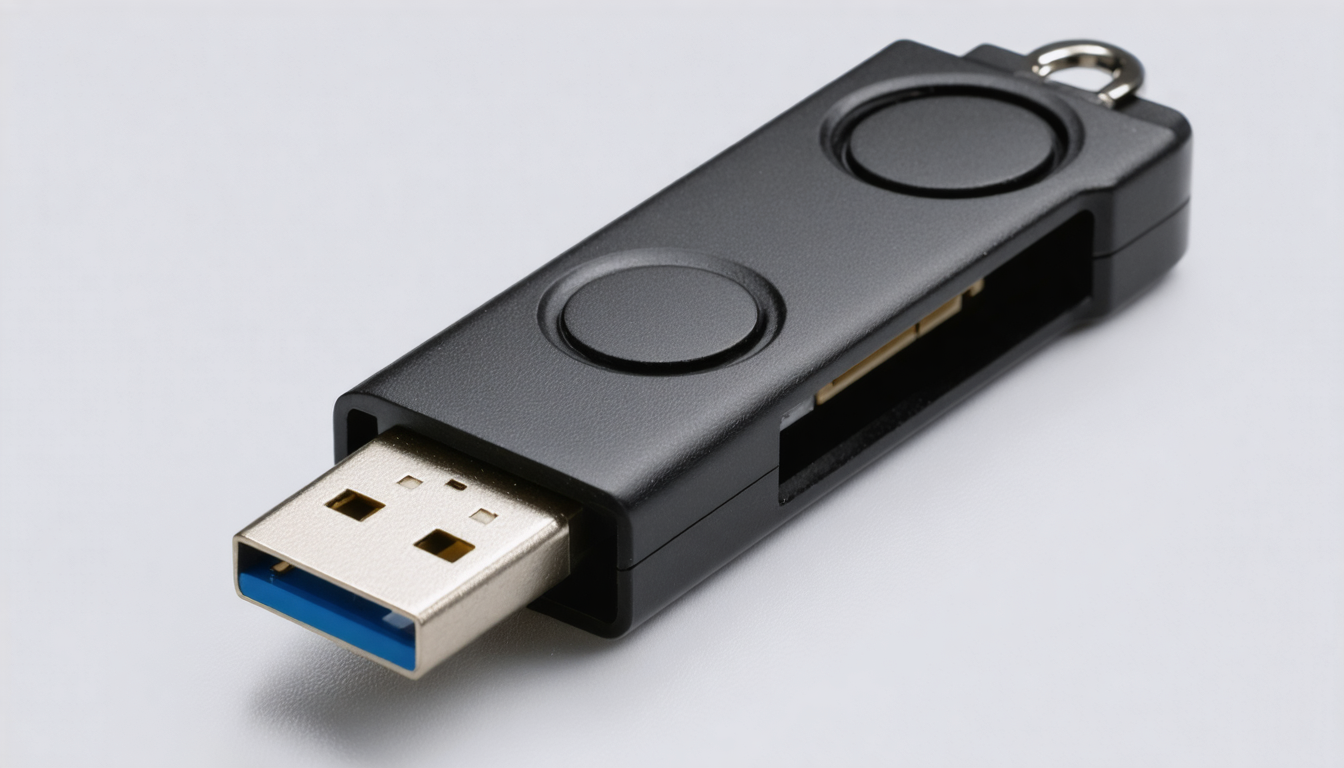
The USB drive market in 2026 has expanded significantly to better meet the diverse needs of users. The variety of available capacities allows choosing a model based on the volume of data to be stored. Thus, 16 GB models remain ideal for textual documents or lightweight files, while drives reaching several terabytes are perfectly suited for large multimedia collections or professional archives.
Beyond capacity, physical formats play an important role. Some users prefer ultra-compact drives, almost invisible once plugged in, so as not to obstruct USB ports. Others prefer robust models with reinforced casings made of durable materials to avoid breakage during frequent travel.
Another important criterion is the variety of connectors. Indeed, there is a democratization of hybrid models equipped with both a classic USB-A connector and a USB-C port, allowing extended compatibility with recent computers, tablets, and smartphones. Some manufacturers also offer USB drives with wireless connectivity, combining physical portability and access flexibility.
This evolution of formats and capacities is accompanied by a desire to address audiences as varied as students, who need a simple solution to review on multiple devices, or professionals who handle confidential files while ensuring physically embedded data protection.
Comparative table of popular USB drive capacities and formats in 2026
| Capacity | Physical format | Typical speed | Recommended use | Connector |
|---|---|---|---|---|
| 16-64 GB | Mini compact | USB 3.2 Gen 1 (up to 5 Gbps) | Documents, light photos | USB-A, USB-C hybrid |
| 128-512 GB | Robust with reinforced casing | USB 3.2 Gen 2 (up to 10 Gbps) | HD videos, advanced backups | USB-C and USB-A |
| 1-4 TB | Standard compact | USB 3.2 Gen 2×2 (up to 20 Gbps) | Professional storage, large archives | USB-C only |
USB standards and technical performances influencing file transfer
An essential aspect to consider when choosing a USB drive is its transfer speed, mainly dictated by the USB standard it supports. In 2026, drives compatible with USB 3.2 Gen 2 or Gen 2×2 have popularized ultra-fast transfers, allowing files of several gigabytes to be moved in a few seconds, an indispensable comfort for professionals and content creators.
Older standards such as USB 2.0, although still present in some devices, are largely outdated in terms of performance. Their speed is limited to a few tens of megabits per second versus several gigabits for current standards, significantly slowing down the workflow, creating a real bottleneck in managing large data.
Backward compatibility remains, however, a strong point of modern USB drives. They generally work without issues with older machines thanks to intelligent speed management, even if it is still limited by the host port.
For a truly frustration-free experience, it is important to assess one’s needs based on the type of files handled and to favor a USB drive meeting the best-suited standard to optimize transfer fluidity.
Concrete uses of the USB drive in 2026: students, professionals, and individuals
The user profiles of the USB drive are multiple and all benefit from its features in specific contexts. Among students, the USB drive facilitates the storage and transport of courses, projects, and collaborative work. Its simple and fast-use nature perfectly meets the demands of often heterogeneous school or university environments in terms of IT devices.
On the professional side, the USB drive becomes a true trusted tool, especially for quickly exchanging documents during meetings or training but also for backing up sensitive data. They are often used in regulated companies requiring strict controls regarding privacy and data security, where the cloud can pose problems due to hosting policies and risk of digital exposure.
Individuals also find in the USB drive an ideal solution for backing up precious memories, such as family photos or personal videos. Not to mention the ease of plugging it into a wide range of home devices, including smart TVs or media players, facilitating viewing or sharing content without having to juggle with cloud accounts or subscriptions.
This versatility demonstrates the adaptability of the USB drive to current needs, with an always effective response to mobility, immediacy, and confidentiality requirements.
List of concrete advantages of the USB drive for different users
- For students: ease of transport and multi-device compatibility
- For professionals: enhanced security and direct control over data
- For individuals: memory storage without network dependence
- For travelers: access to data even offline
- For users in low-connectivity areas: reliable and autonomous solution

Data security: USB drive versus cloud in 2026
The question of data security remains a key topic in the choice between USB drive and cloud. Online storage relies on secure infrastructures but remains dependent on a centralized strategy and the quality of protocols adopted by providers. Risks of hacking, data leaks, or failures affecting multiple users simultaneously cannot be excluded, even with today’s advanced technologies.
Conversely, the USB drive can be considered a personal digital safe, whose access remains physically controlled by its owner. The growing integration of hardware encryption mechanisms, biometric recognition, or passwords protects sensitive files against any fraudulent use. This level of protection is particularly appreciated in fields where confidentiality is vital, such as health, finance, or public administrations.
However, the USB drive also presents risks: loss, theft, or physical damage compromise access to data. That is why a good backup strategy should combine secure local use and cloud storage, offering a double level of protection for optimized trust.
Modern innovations around the USB drive shaping its future
In 2026, USB drives continue to benefit from technical advances to remain competitive against cloud solutions. Designs are now more compact and ergonomic, sometimes integrating materials resistant to shocks and water for increased durability. Style, previously standardized, becomes a valued criterion, with possible customization in certain high-end ranges.
Hybrid connectors combining USB-A and USB-C are becoming widespread to respond to evolving devices, simplifying interoperability. Some drives also include smart features, such as the ability to automatically create encrypted backups or sync files without using a computer.
In this dynamic, the USB drive combines ease of use and advanced technologies to remain a relevant solution, particularly against the challenges of mobility and personal data protection. It thus establishes itself as a valuable complement to cloud solutions, enabling hybrid and secure use in line with current user expectations.
Practical advice for choosing a suitable USB drive and avoiding common pitfalls
The choice of a USB drive should not be left to chance. You must start by clearly assessing your needs in terms of capacity, transfer speed, and security. For basic use, an entry-level 64 GB drive may suffice. On the other hand, for professional or multimedia use, favoring high-end USB 3.2 Gen 2 or Gen 2×2 models will optimize workflow.
The security level also needs consideration: drives with hardware encryption and password protection are recommended for sensitive data. Additionally, checking physical robustness, waterproofing, and warranty offered can prevent disappointments during use.
Pay particular attention to compatibility with devices used daily, notably the presence of USB-C connectors for current smartphones and tablets. Finally, favor recognized brands to avoid reliability defects and benefit from efficient customer service, which is a wise approach.
In summary, a thorough analysis of essential needs and characteristics guarantees a durable and satisfactory investment in a medium that remains indispensable for data backup and transfer in 2026.

The USB drive, seemingly simple, confirms in 2026 its indispensable place in a digital environment where data storage is strategic and the demands for data security and accessibility are growing. It combines portability, reliability, and transfer speed, offering a safe and efficient alternative to the cloud, regardless of the usage context.