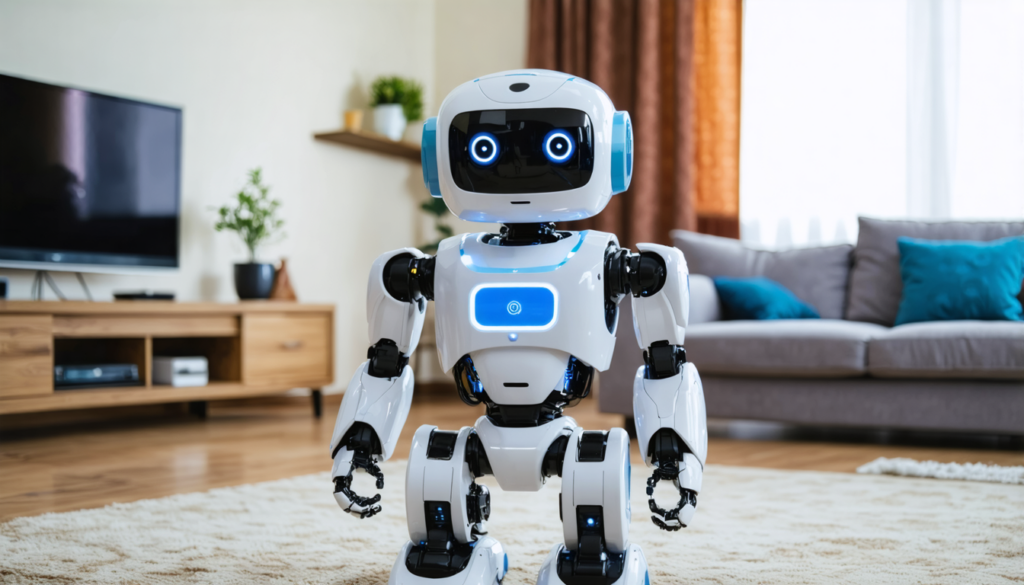
As CES 2026 is about to open its doors in Las Vegas, a new breeze is blowing through the world of domestic robotics. LG, a technology giant, is preparing to unveil its latest innovation gem: a humanoid robot specially designed to integrate into our homes. Unlike industrial or experimental prototypes that remain confined to laboratories or companies, this robot aims to be accessible to the general public. Named CLOiD, it promises to revolutionize our daily lives by taking charge of household chores that are often repetitive and time-consuming. This approach represents a major new step in the democratization of artificial intelligence and robotic assistance technologies, thanks to a design made for family use, combining simplicity, efficiency, and natural interaction.
At the heart of this revolution, LG is betting on an intuitive interface, an elegant design, and above all, an affective intelligence capable of adapting to the emotions and needs of users over time. The project aims to make domestic robotics not only efficient but also empathetic, capable of understanding the atmosphere of a home and acting proactively. Faced with growing challenges in terms of time management and quality of life, this robot could well be the awaited answer, offering a true alternative to lighten chores and give families precious time to share.
In a sector where innovations follow one another, this launch fits into a dynamic where smart machines are now entering the private sphere with more affordable prices and greater accessibility. The power of embedded technologies, combined with a focus on emotional adaptability, positions LG at the forefront of a trend many already consider the next technological revolution after the rise of conversational artificial intelligence. CES 2026 therefore promises much more than a simple technological preview: it is a true promise of the future for everyday human-machine coexistence.
- 1 LG CLOiD: a domestic humanoid designed for the general public
- 2 The technological innovations at the core of CLOiD
- 3 An affective artificial intelligence for an empathetic domestic companion
- 4 The implications of CLOiD for daily household life
- 5 LG’s strategic role in domestic robotics in 2026
- 6 Accessibility and price: a revolution for the general public
- 7 Ethical and social challenges surrounding domestic humanoid robots
- 8 Outlook and future innovations after CLOiD
LG CLOiD: a domestic humanoid designed for the general public
LG’s announcement marks a turning point in mass-market robotics, with a humanoid robot meeting the concrete expectations of individuals. Unlike industrial or research robots that are often bulky and expensive, CLOiD is designed for the home. This robot stands out for its compact size: about 1.2 meters tall and 25 kilograms, which facilitates not only its mobility inside a home but also its installation and integration into living spaces. With this dimension, LG materializes the idea that robotics is no longer reserved for a technological elite but can address a wide audience.
The robot’s design remains harmonious, combining functionality and aesthetics. Its two articulated arms with seven degrees of freedom ensure great fluidity of movement, which is essential to handle various household objects with care. Thanks to its motorized hands with five fingers, CLOiD can perform precise gestures, from the simplest (picking up an object) to the most complex (handling a glass or opening a door). This level of dexterity is not only a technical feat but also paves the way for real versatility in the tasks the robot can tackle, positioning this model as a truly multifunctional assistant.
Ergonomics have also been designed to facilitate interaction. The robot integrates a touchscreen, a speaker, and a camera, offering several communication modes. A natural voice interface enables it to understand commands without requiring heavy programming or precise gestures, an essential asset for non-specialist users. This integration is also complemented by a set of sensors that provide intelligent navigation. Thanks to them, CLOiD can move with ease, avoid obstacles, and adapt to the changing configurations of a home.
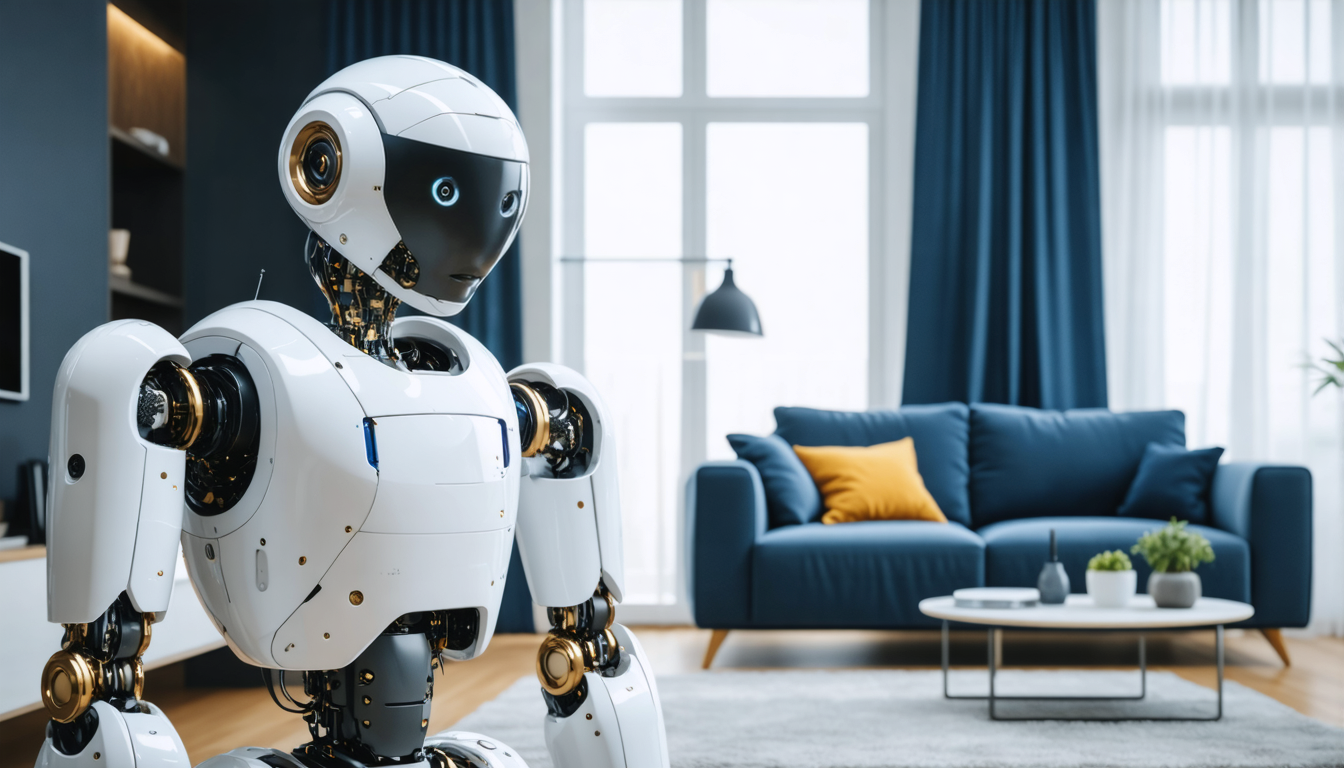
LG’s intention is to transform the classic image of the futuristic humanoid robot into a genuine domestic companion useful on a daily basis. This is a break with prototypes that are often inaccessible or confined to spectacular but impractical demonstrations. By targeting individuals, LG is therefore betting on new accessibility, driven by technological innovations matured over the years and a clearly oriented ambition toward quality of life.
The technological innovations at the core of CLOiD
The soul of CLOiD lies in the sophisticated combination of several technological advances. First, the robot is equipped with a dedicated electronic chip that manages all its functions optimally. This processor core allows low latency in interactions and intelligent processing of data from its multiple sensors. For example, the 3D cameras and LIDAR sensors used for navigation provide high-resolution mapping of rooms, enabling the robot to plan its movements with remarkable precision.
As for the articulated arms, their sophisticated design relies on advanced engineering allowing movements that are both fast and delicate. Mastery of the degrees of freedom is a key element: it guarantees the smoothness needed to avoid jerky movements that could damage fragile objects. This technology was initially developed for industrial robots, but LG has been able to miniaturize and adapt it to the domestic context with a pragmatic approach.
The voice and visual interactions represent another area where CLOiD surprises. Integrating the latest advances in natural language recognition, the robot converts dialogues into concrete actions without requiring rigid formulations. This greatly simplifies handling for all household members. Moreover, the touchscreen allows quick access to settings or additional options, thereby enhancing the tool’s user-friendliness.
Furthermore, the built-in battery offers enough autonomy for several hours of continuous activity. LG has worked to optimize energy consumption, ensuring that CLOiD can perform several household tasks without interruption. In addition, the automatic recharge, with autonomous return to its base, is an asset for the robot to always be ready for use, demonstrating its user orientation.
Summary table of LG CLOiD’s technological features
| Feature | Description | User Benefits |
|---|---|---|
| Articulated arms with 7 degrees of freedom | Fluid and precise movements to manipulate various objects | Ability to perform varied tasks delicately |
| Motorized hand with 5 fingers | Fine grip and increased manual dexterity | Ability to perform complex actions (open drawers, handle dishes) |
| 3D cameras and LIDAR sensors | Intelligent navigation and real-time mapping | Fluid movement that avoids obstacles and adapts the route |
| Voice interface and touchscreen | Natural and intuitive interaction | Accessibility for all household members without training |
| Long-lasting battery and autonomous recharge | Extended autonomy and automatic return to base | Independence and constant availability of the robot |
An affective artificial intelligence for an empathetic domestic companion
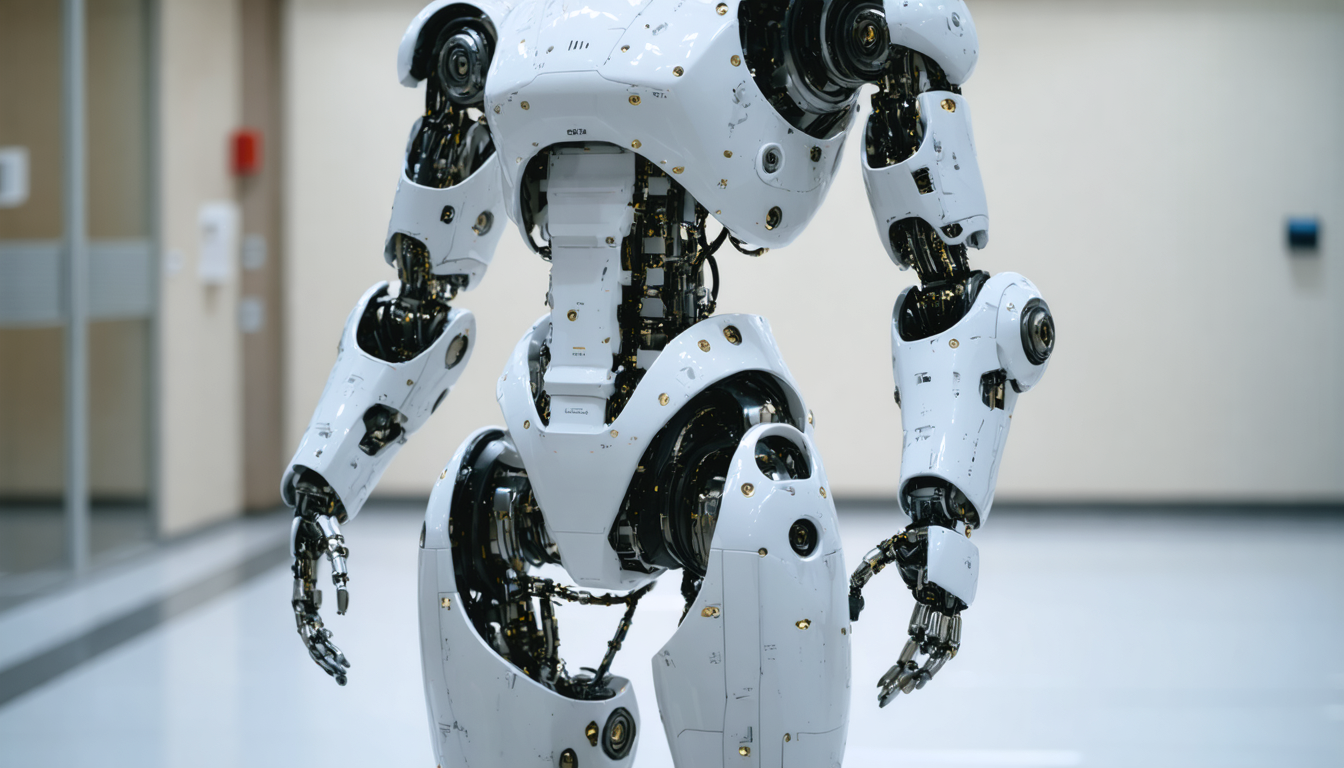
One of LG’s cornerstones of innovation rests on what the brand calls “Affective Intelligence.” This technology goes far beyond a simple command execution system. CLOiD is equipped with an AI capable of analyzing not only commands but also the emotional and behavioral context of users. For example, it can detect mood variations through voice analysis and facial recognition, enabling it to adapt its responses, offering more softness or assistance depending on the person’s state.
CLOiD also integrates advanced machine learning systems that allow it to personalize itself over time. It studies its owners’ daily habits to anticipate their needs. This can translate into actions such as automatically adjusting lighting according to time and ambiance, modifying room temperature, or reminding important events. This proactive automation helps reduce stress and facilitates domestic organization.
The concept is based on four major pillars:
- Perception: Understanding the environment and occupants’ emotions.
- Personalization: Adjusting functions based on individual preferences and habits.
- Proactive assistance: Acting even before explicit requests are made, anticipating needs.
- Human-centered design: Promoting a friendly and natural interaction so the robot is perceived as a true companion.
This affective intelligence model marks a turning point, as it breaks the traditional image of a cold and mechanical robot. By establishing a more human relationship, LG hopes CLOiD will build lasting trust, opening the way to harmonious coexistence between humans and machines. This approach also fits within a shift in uses, where technology should no longer simply serve as a gadget but become a partner capable of contributing to emotional well-being.
The implications of CLOiD for daily household life
The launch of CLOiD promises to profoundly transform the management of household chores. The mental load linked to these repetitive tasks is today a major issue: between cleaning, managing objects, and various domestic obligations, free time shrinks drastically. With a humanoid assistant, families can envisage daily support that frees them from these tedious constraints.
Consider the daily life of Anne, an active mother, who uses CLOiD to simplify her life. The robot allows her to delegate tasks such as tidying up, light cleaning, or organizing displaced objects. Additionally, it reminds important appointments, suggests menus adapted to preferences, and adjusts lighting for a more relaxing ambiance after a busy day. This support transforms the domestic experience by realigning priorities around moments of sharing and relaxation rather than just material management.
Moreover, CLOiD can play a role in gentle home monitoring, notably to assist elderly or mobility-impaired people. For example, by detecting a fall or an unusual alert, it can immediately inform a relative or arrange appropriate assistance. Thus, it is a tool not only functional for household chores but also a reassuring companion in everyday life.
Thanks to these capabilities, mass-market robotics crosses a major milestone toward full integration into the private sphere. It is now an intelligent assistant capable of understanding users’ needs, interacting naturally, and effectively intervening without invading personal space. This evolution meets a genuine social need to reconcile technology and quality of life.
List of domestic tasks CLOiD can accomplish:
- Tidying up and organizing various objects
- Light cleaning and dusting
- Preparation and handling of kitchen utensils
- Lighting and temperature management
- Home security monitoring
- Reminders and management of the family calendar
- Assistance to people with reduced mobility
LG’s strategic role in domestic robotics in 2026
LG’s official entry into the domestic humanoid robot market marks a strategic step for the company. Historically recognized for its innovations in home appliances and consumer technologies, the company is redefining its scope by betting on robotics as a lever for future growth. The creation of a laboratory dedicated to robotics and artificial intelligence illustrates the ambition to invest heavily in this expanding sector.
This movement is accompanied by an open strategy through partnerships with other tech and research players. By combining their expertise, LG aims to accelerate the development of innovative solutions, notably around emotional adaptability and human-machine interaction. This collaborative approach is essential to meet the complex demands of users and to refine the relevance of robots in daily life.
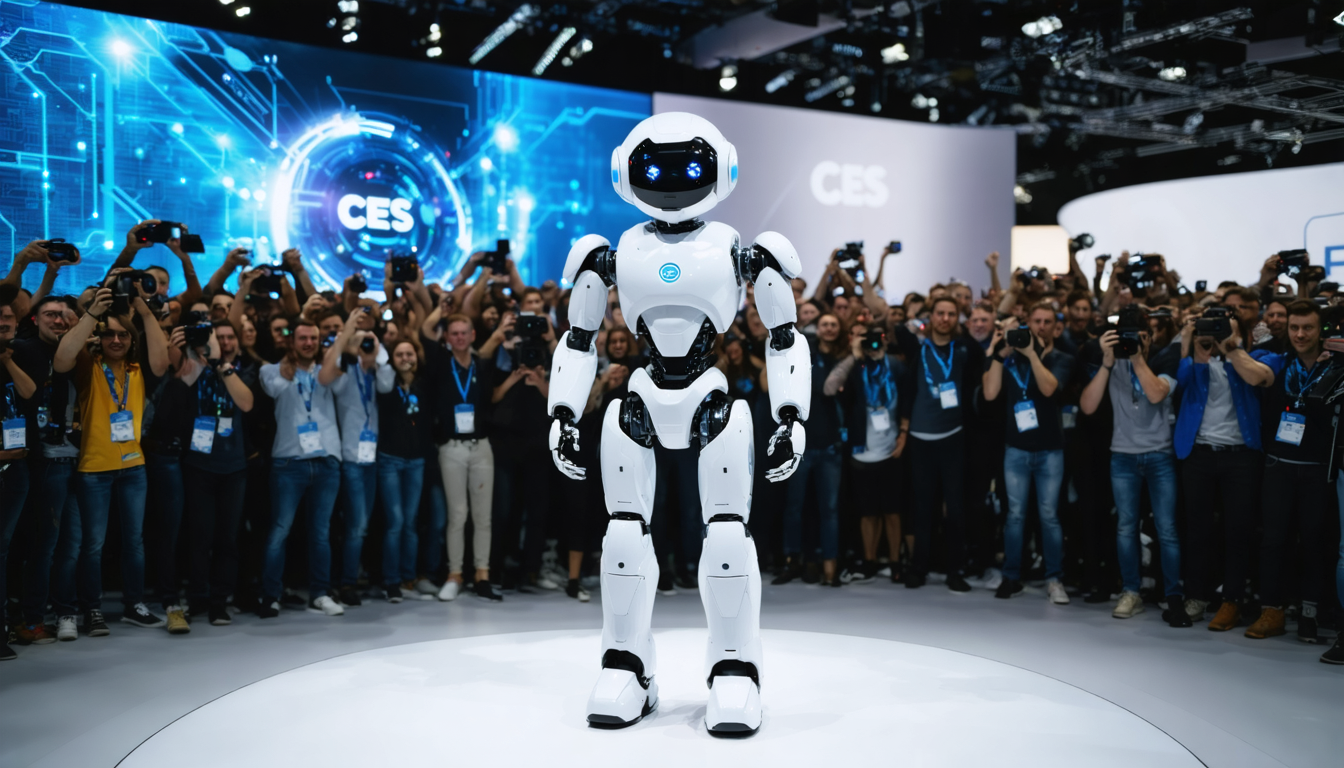
By choosing to present CLOiD at CES 2026, LG also capitalizes on the international visibility of the event to establish its credibility in this new field. This trade show has become a key meeting place for breakthrough innovations, and this revelation fits into a global strategy aiming to position LG not only as a connected device provider but also as a major player in domestic artificial intelligence.
On the economic front, the company anticipates significant growth in the personal robotics market, supported by increasing demand for assistance robots and a gradual decrease in costs thanks to critical mass. The launch of CLOiD could well mark the start of large-scale democratization of domestic robotics, promoting access to this technology through more affordable prices.
Accessibility and price: a revolution for the general public
One of the most remarkable aspects of LG’s announcement is the central place given to accessibility. The manufacturer does not just create an exceptional prototype; it aims for a marketable product destined for a wide audience. This orientation toward the general public implies significant constraints in terms of cost, usage, and simplicity. For this, LG had to rethink certain standards to propose an affordable solution without sacrificing quality or performance.
The announced price, although still to be confirmed in precise details, is set at an unprecedented level. More accessible than competing humanoid robots developed by players like Tesla or Figure AI, CLOiD benefits from a pricing strategy that paves the way for mass adoption. This democratization is a key element of the announced revolution, as it allows a greater number of households to benefit from robotic and AI advances that were until now reserved for a restricted circle.
Ease of use, coupled with an intuitive interface, also contributes to this overall accessibility. Users do not need specific training to fully exploit CLOiD. Natural voice comprehension, environmental adaptability without exhaustive programming, and robust sensors allow smooth handling, even for non-tech-savvy users.
This new era where the humanoid robot is no longer a luxury but a standard domestic tool translates into exciting prospects. Technology becomes a true life partner rather than a detached object, opening the way to better quality of life daily. LG, with CLOiD, seems to have grasped this shift, ready to disrupt uses and initiate a major technological and societal revolution.
With the democratization of humanoid robotics in households also emerges a number of crucial ethical and social questions. Beyond the technological feat, it is the human and societal impact that requires thorough attention. How will the growing presence of robots in the private sphere transform family relationships, domestic work, or even privacy management?
A first issue concerns the affective relationship: although CLOiD is designed to foster empathetic interaction, it remains important to distinguish what belongs to artificial intelligence and what constitutes a genuine human relationship. The risk of social isolation, notably among vulnerable people, will require reflection. At the same time, dependency on automation could trigger a shift in responsibilities within the home, modifying the distribution of domestic work.
Moreover, the collection and processing of personal data raise confidentiality questions. To function efficiently, CLOiD constantly analyzes its environment and users’ behaviors. It is essential that LG establishes solid guarantees to ensure information security and respect for privacy, to avoid any risk of abuse or intrusive surveillance.
Finally, these robots could trigger transformations in the labor market, notably in cleaning and home care sectors. While robotics improves comfort for individuals, it also requires economic and social adaptation for the professionals involved. Society will have to address these changes by reconciling technological progress and social equity.
Outlook and future innovations after CLOiD
The launch of CLOiD is not an end but a promising start for domestic humanoid robotics. LG is already preparing the future with projects aimed at enriching the capabilities of its robots, integrating emerging technologies and user feedback. The goal is to constantly improve the versatility, responsiveness, and emotional intelligence of machines.
Among the avenues explored are mobility improvements with faster and more adaptive locomotion systems, for example capable of climbing stairs or evolving in outdoor environments. The development of an even more natural interface, able to combine voice recognition, gesture recognition, and facial expressions, also opens the way for smooth and intuitive interaction.
Another important innovation: integrating domestic robotics into a broader connected ecosystem. CLOiD could, in next versions, coordinate its interventions with other smart home devices, optimizing energy management, security, comfort, and even leisure. This network will help create a homogeneous smart home, where each device works in harmony with the humanoid.
Finally, advances in artificial intelligence will continue to make the robot increasingly autonomous and capable of proactive learning. Tomorrow’s domestic companion will know not only how to meet immediate needs but also anticipate new services, becoming a true evolving life partner capable of supporting its users over time.
List of possible future innovations for domestic robotics:
- Advanced navigation including stairs and varied terrains
- Multimodal interfaces combining voice, gestures, and facial expressions
- Coordination with connected objects and the smart home ecosystem
- Improvement of affective intelligence and learning capabilities
- Energy optimization for greater autonomy
- Enhanced surveillance and emergency intervention capabilities
- Ever deeper personalization of interactions according to uses
LG thus confirms its commitment to advance robotics beyond mere automation and to place this technology within a human, accessible, and innovative perspective.