
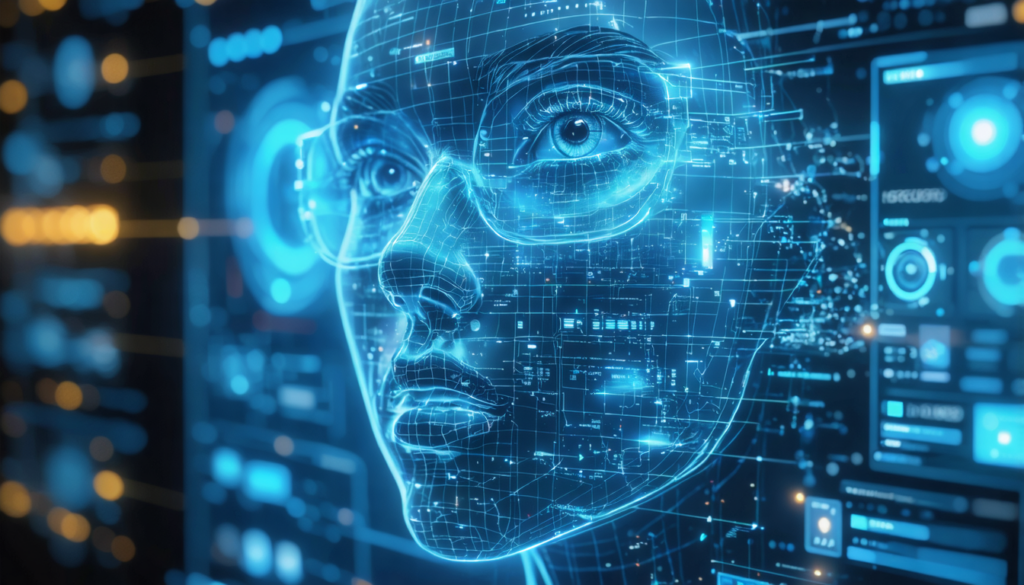
Since its launch, DALL-E 2 has revolutionized the way artistic creation is reinvented thanks to artificial intelligence. Now accessible to everyone, this “text-to-image” image generation tool offers a growing community the possibility to transform simple words into digital artworks. From designing illustrations for marketing to image editing, as well as applications in design and education, digital creativity is entering a new era. This democratization reflects a maturing technology that combines power, precision, and ease of use, while raising new ethical and technical questions. While DALL-E 2 is open to the public, its successor DALL-E 3 promises even more finesse and integration, creating an ever richer ecosystem for enthusiasts and professionals.
Artificial intelligence is no longer limited to data analysis or voice recognition: it now infiltrates creative fields previously reserved for humans. DALL-E 2, developed by OpenAI, transforms textual descriptions into high-quality images, leveraging a generative model based on Machine Learning and advanced semantic interpretation algorithms. Open to everyone since 2022, this service uses credits to modulate access, with varied possibilities ranging from simple generation to editing and extending generated images. It is an invitation to explore limitless creativity through an intuitive interface that relies on a deep understanding of words and striking visual rendering.
- 1 The foundations of DALL-E 2: understanding artificial intelligence at the heart of artistic creation
- 2 How to sign up and use DALL-E 2: a complete guide to getting started with AI image creation
- 3 The creative power of DALL-E 2 for professionals: from design to advertising
- 4 DALL-E 3 and 2026 innovations: beyond DALL-E 2, the new generation of AI artistic creation
- 5 DALL-E 2 and the creative community: the Mega Gallery, a crossroads of inspiration and collaborative art
- 6 Open-source alternatives and competitors: how does DALL-E 2 position itself in 2026?
- 7 Ethical issues and limits to know for responsible use of DALL-E 2
The foundations of DALL-E 2: understanding artificial intelligence at the heart of artistic creation
DALL-E 2 is much more than a simple image generator: it embodies a major breakthrough in integrating language and visuals through artificial intelligence. Based on models like CLIP and unCLIP developed by OpenAI, it interprets textual descriptions while generating detailed and faithful images to the message. This technology relies on massive learning, analyzing over 650 million images and their captions to capture the complex semantic relationships between language and image.
Unlike older algorithms that relied on object recognition, DALL-E 2 has the unique ability to understand the context and nuances of a sentence, allowing it to create original works rather than simple montages made from existing images. The unCLIP model then generates a first visual sketch which it progressively refines to improve the coherence of textures, shadows, and perspectives, resulting in images whose fidelity can rival photography.
This combined approach paves the way for a new generation of computer-assisted artistic creation, where each image is a unique work born from collaboration between the machine and the human mind. The possibilities are not limited to creation ex nihilo: DALL-E 2 can also edit already existing images, add, remove elements, or even extend a work beyond its initial frame thanks to the “Outpainting” feature. This palette of tools serves both curious novices and demanding professionals who want to accelerate their creative processes while enriching visual quality.
How to sign up and use DALL-E 2: a complete guide to getting started with AI image creation
Since September 2022, DALL-E 2 has been freely accessible via the OpenAI platform, subject to a credit system allocated to users. To benefit from this service, the first step is to create an account on the official site. The process includes validation via email, often coupled with SMS confirmation to ensure profile security and authenticity.
To simplify login, it is also possible to use a Google or Microsoft account directly. These different options offer great flexibility depending on individual preferences and digital habits. Once validated, the user receives an initial quota of free credits, generally sufficient to experiment with creating several images without additional costs.
To create an image, just write a description in English, limited to 400 characters, in the dedicated text area. This description, or “prompt,” should contain as many details as possible: the subject, artistic style, desired mood, colors, or specific details about the composition. Once your prompt is confirmed, DALL-E 2 generates four visual proposals. From there, different choices are available: download the image, request modifications via the editing tool, or generate variations to explore other interpretations.
If you want to modify an existing image, DALL-E 2 offers an upload tool allowing you to load a file from your device, after which you can apply transformations or extensions thanks to the “Outpainting” function. This innovative feature allows pushing the boundaries of the initial frame by adding elements consistent with the image’s style while maintaining aesthetic continuity.
- Create an OpenAI account via email, Google, or Microsoft
- Receive a free credit quota upon registration
- Formulate a precise prompt in English, maximum 400 characters
- Generate four images per request, choose or edit
- Download or extend images via Outpainting
- Manage credits for prolonged or advanced use
The creative power of DALL-E 2 for professionals: from design to advertising
DALL-E 2 has established itself as a valuable ally in numerous professional sectors. Its rapid and high-quality AI image generation capabilities correspond particularly well to the needs of advertising, industrial design, video games, and architecture. In a matter of seconds, a designer can obtain several illustrative proposals that inspire the creation of innovative concepts or facilitate project presentations to clients.
For example, Heinz exploited DALL-E 2 to design original advertising campaigns, generating engagement through unprecedented and disruptive visuals that broke new ground. In cinema and video games, teams use this tool to invent the appearance of characters, sets, or storytelling elements, significantly reducing traditional production times.
Architects and interior designers benefit from this tool to provide instant renderings of remodeled spaces according to precise instructions, adapted to their clients’ tastes. This time saving often translates into improved responsiveness and quality of exchanges, contributing to a smoother and more creative iterative process.
In summary, DALL-E 2 offers a complete ecosystem, putting a simple interface in the hands of professionals to transform an idea into a tangible, modulable, and customizable image. Uses are multiple and range from simple illustration to the production of visual elements integrated into cross-media projects, thus offering a suitable response to all the demands of the professional world.
DALL-E 3 and 2026 innovations: beyond DALL-E 2, the new generation of AI artistic creation
In October 2023, OpenAI unveiled DALL-E 3, a major evolution that pushes the limits of the generative model even further. Integrated into ChatGPT and Bing Image Creator, this version significantly improves prompt understanding, even complex or highly detailed ones. Where DALL-E 2 required some technical mastery to optimize its results, DALL-E 3 offers a smoother access allowing everyone to communicate in natural language.
Users can thus formulate a simple request, for example a narrative description of a scene, and obtain a coherent image, rich in textures, details, and nuances. Moreover, the iterative interaction feature allows refining the generated image by modifying an element or adding an object without starting over. This flexibility makes the tool particularly appreciated by creators, marketers, and professionals
Additionally, OpenAI has strengthened security mechanisms by integrating digital watermarks and optimizing the detection of harmful or abusive content. Integration into Microsoft solutions (Designer and Bing) democratizes access, making AI-assisted artistic creation a natural step in professional workflows, especially in visual design and digital communication.
| Feature | DALL-E 2 | DALL-E 3 |
|---|---|---|
| Text comprehension | Good | Excellent |
| Detail accuracy | Average | Very high |
| Image quality | Good | Advanced photorealism |
| Customization options | Limited | Advanced control |
| Availability | OpenAI | ChatGPT Plus, Microsoft Bing |
DALL-E 2 and the creative community: the Mega Gallery, a crossroads of inspiration and collaborative art
To showcase the creativity of its users, OpenAI launched DALL-E’s Mega Gallery, an interactive showcase gathering a wide variety of works generated by the community. This online gallery features hundreds of examples of images coming from varied prompts, covering both classic styles like surrealism as well as more modern, abstract, or hyperrealistic renderings.
Each image is accompanied by the original prompt, offering a unique insight into how artificial intelligence interprets words to create a specific visual. This initiative acts like an idea laboratory, allowing artists and curious users to explore different ways to formulate requests to obtain innovative results.
Beyond a simple exhibition, the Mega Gallery is also a community space where creators can exchange, inspire each other, and refine their skills in using the DALL-E 2 generative model. This collaborative dynamic strengthens the sense of belonging and stimulates collective creativity, contributing to the rapid expansion of digital creativity accessible to all.
Open-source alternatives and competitors: how does DALL-E 2 position itself in 2026?
Despite its success, DALL-E 2 must contend with a competitive environment marked by the rise of open-source solutions and free models, such as Stable Diffusion. The latter offers greater freedom of use for creators, without the constraints of DALL-E’s credit system, while allowing advanced customization thanks to its accessible code.
Moreover, MidJourney attracts users seeking a more artistic rendering through subscription. Other emerging players like DeepSeek, with their Janus Pro model, claim superior performance in terms of speed and quality. The AI image generation market thus multiplies choices for professionals as well as amateurs, each able to opt for the solution best suited to their needs, whether economic, creative, or technical.
The competition pushes OpenAI to regularly improve its technologies but also highlights the importance of a diversified offer in a rapidly expanding sector. For users, knowledge of the specificities of each tool is essential to make the most of these solutions and to continuously innovate in their creative processes.
- DALL-E 2: ease of use, photorealistic quality, credit system
- Stable Diffusion: open source, maximum flexibility, free
- MidJourney: subscription, sophisticated artistic rendering
- DeepSeek Janus Pro: advanced multimodal model, high performance
- BlueWillow and RunDiffusion: innovative alternatives with advanced features
Ethical issues and limits to know for responsible use of DALL-E 2
The opening of DALL-E 2 to the general public raises important issues around the responsible use of this artificial intelligence. OpenAI has notably established measures to prevent the creation of images of public figures or realistic faces, thus avoiding abuses related to fake news or deepfakes. These safeguards are reinforced by monitoring combining automated technologies and human intervention.
The risk of copyright infringement also remains a major debate. By generating images inspired by a large corpus of existing works, the model raises questions about intellectual property and the recognition of human artists. Even though users benefit from a commercial license on the images they produce, it is recommended to always ensure compliance with applicable rules and good practices.
Finally, using DALL-E 2 requires ethical reflection on generated content to avoid the dissemination of discriminatory, offensive, or inappropriate representations. OpenAI and the community work towards responsible deployment, combining innovation and respect for human values so that this digital artistic revolution happens in a secure and respectful framework.
What is DALL-E 2?
DALL-E 2 is a model developed by OpenAI capable of generating images from textual descriptions thanks to advanced artificial intelligence that combines language and visuals.
How to access DALL-E 2?
You need to create an account on the OpenAI website and use a credit system to generate images, accessible via the web interface or integrated into certain products like ChatGPT Plus.
Can I modify the generated images?
Yes, DALL-E 2 offers editing features allowing you to add, remove elements or create variants from an existing image.
What are the main differences between DALL-E 2 and DALL-E 3?
DALL-E 3 offers better prompt understanding, more photorealistic image quality, and integration into popular tools like ChatGPT and Microsoft Bing, promoting a more intuitive use.
Is the generated content royalty-free?
Users have a commercial license for created images, but they must comply with OpenAI’s terms of use and ensure they do not infringe on copyright.




