As the cold slowly sets in with the arrival of the winter months, each morning becomes a challenge for those who want to balance thermal comfort and control their energy budget. Traditional habits around heating, often driven by an automatic reflex, struggle to meet these demands. Yet, a simple adjustment in managing the radiator ignition time could change everything. This temporal tip, easy to implement, promises to truly revolutionize your mornings, combining the pleasure of a gentle awakening with tangible energy savings. By rethinking the timing of your heating system, it becomes possible to optimize consumption without compromising your morning well-being, making it an essential solution in the face of the constant rise in energy costs.
In 2025, the energy context forces every household to adopt smarter strategies. The conclusion is clear: traditional heating periods, often too long or poorly calibrated, generate significant waste. Managing the operating time of heating is therefore as essential as choosing the temperature to maintain. Knowing how to program your system so that it starts just before your awakening, rather than at its trigger, offers a pragmatic and innovative response to this hydraulic and thermal dilemma. This approach reveals the full importance of synchronizing heating use with biological and daily rhythms, paving the way for a new era of economic heating adapted to our modern lifestyle.
- 1 Understanding how timing influences your energy savings and thermal comfort
- 2 Common habits that weigh down your morning expenses and how to fix them
- 3 The 30-minute rule: a simple temporal tip that revolutionizes mornings
- 4 Additional actions to maximize energy savings and enhance morning well-being
Understanding how timing influences your energy savings and thermal comfort
Many believe that setting a thermostat to a constant temperature all night is the best way to avoid cold awakenings. However, this habit proves to be a major source of energy overconsumption. It is indeed cheaper to let the house temperature drop during hours of absence or sleep and warm it just before being present. This timing management is based on the key notion of thermal inertia, a fundamental concept often misunderstood that determines how a dwelling retains heat.
Thermal inertia and its impact on heating
Thermal inertia characterizes the capacity of materials and construction to store and release heat. In a well-insulated house, the indoor temperature drops slowly. This means that heating programmed ahead of the wake-up does not need to run long to provide optimal thermal comfort. Conversely, a poorly insulated home sees its temperature fall rapidly, requiring more intense heating and thus potentially higher costs to catch up with accumulated cold. This differentiation is crucial when aiming to optimize consumption and reduce your energy bill.
Dispelling myths about morning energy consumption
Contrary to the received idea that heating must remain on continuously to avoid a consumption spike at awakening, recent studies confirm this is not the case. Leaving heating on all night at a low level is much more expensive. A targeted and brief temperature rise, starting about 30 minutes before waking, proves more economical as it operates on the thermal acceleration phase rather than permanent maintenance. This management method, based on heating optimization, balances controlled energy expenses with the pleasure of a warm environment from the moment you get up.
| Nocturnal heating approach | Energy consumption | Estimated cost | Comfort upon awakening |
|---|---|---|---|
| Maintaining 19°C all night | High and continuous | High | Optimal but costly |
| Drop to 16°C and targeted rise | Low at night, controlled morning peak | Reduced | Optimal if well programmed |
Common habits that weigh down your morning expenses and how to fix them
Our morning routines are often the stage for energy-draining actions done without thinking. Among them, two practices stand out as main causes of excessive and poor-quality consumption: leaving the heating on all night and starting the heating only at wake-up.
Why heating all night is an expensive mistake
Many leave their system heating their home all night to avoid a feeling of cold upon waking. However, the human body does not require a high temperature for good sleep. On the contrary, a temperature between 16 and 17°C promotes more restorative sleep. Heating unnecessarily for 7 to 8 hours generates a considerable expense without real benefit. In times of ongoing energy inflation, this behavior quickly translates into hundreds of euros in extra electricity or gas bills.
The thermal shock of heating triggered too late
At the other end of the spectrum, completely turning off heating at night then turning it full blast at wake-up causes a much more intense consumption spike. The boiler or radiators must run at full power to make up for the lost heat, increasing overall costs. Moreover, staying in a cold and humid environment for several minutes is uncomfortable, which deteriorates the quality of awakening and negatively affects morning well-being. This method is therefore not only ineffective but also destabilizing for the body.
The 30-minute rule: a simple temporal tip that revolutionizes mornings
Faced with the double pitfall of extremes, a clear and accessible solution emerges: respect the 30-minute rule. This involves programming the heating to turn on systematically 30 minutes before wake-up time. This temporal tip optimizes system operation, ensuring a pleasant temperature from the moment you get up while limiting consumption.
The scientific reasons behind this tip
Thirty minutes is a sufficient time for the indoor temperature to rise calmly, without excessive demands. This gradual rise respects thermal inertia, avoiding consumption spikes and extending equipment lifespan. Comfort sets in naturally, turning awakening into a gentle and warm experience.
Multiple advantages of this temporal setting
- Energy savings: reducing heating hours by activating the heat source only when necessary.
- Better thermal comfort: avoiding morning cold, a factor of stress and discomfort.
- Less stress on the heating system: a gradual temperature rise preserves circuits and increases their longevity.
- Ease of application: most current programmable thermostats integrate this feature without complexity.
Additional actions to maximize energy savings and enhance morning well-being
Applying the 30-minute rule is a decisive first step, but complete optimization of economical heating requires considering several associated levers, notably loss management, room-specific temperature, and advanced automation.
Reducing thermal losses for effective heating
Fighting heat loss is as crucial as good timing. About 10 to 15% of heat escapes through windows, significantly impacting the bill. Carefully closing shutters and curtains at night provides an additional barrier against the cold outside. In the morning, enjoying sunlight through full opening helps naturally warm the home, reducing heating use.
Adapting temperature according to rooms for tailored comfort
Heating each room based on its use lets families smartly save energy. Here is a summary table of recommended temperatures:
| Room | Recommended temperature (day) | Recommended temperature (night/absence) |
|---|---|---|
| Living areas (living room, dining room) | 19°C – 20°C | 16°C – 17°C |
| Bedrooms | 17°C | 16°C |
| Bathroom | 22°C (during use) | 17°C |
Connected thermostats or thermostatic valves offer fine control of these parameters, helping avoid waste in unoccupied rooms.
Intelligently programming according to your lifestyle
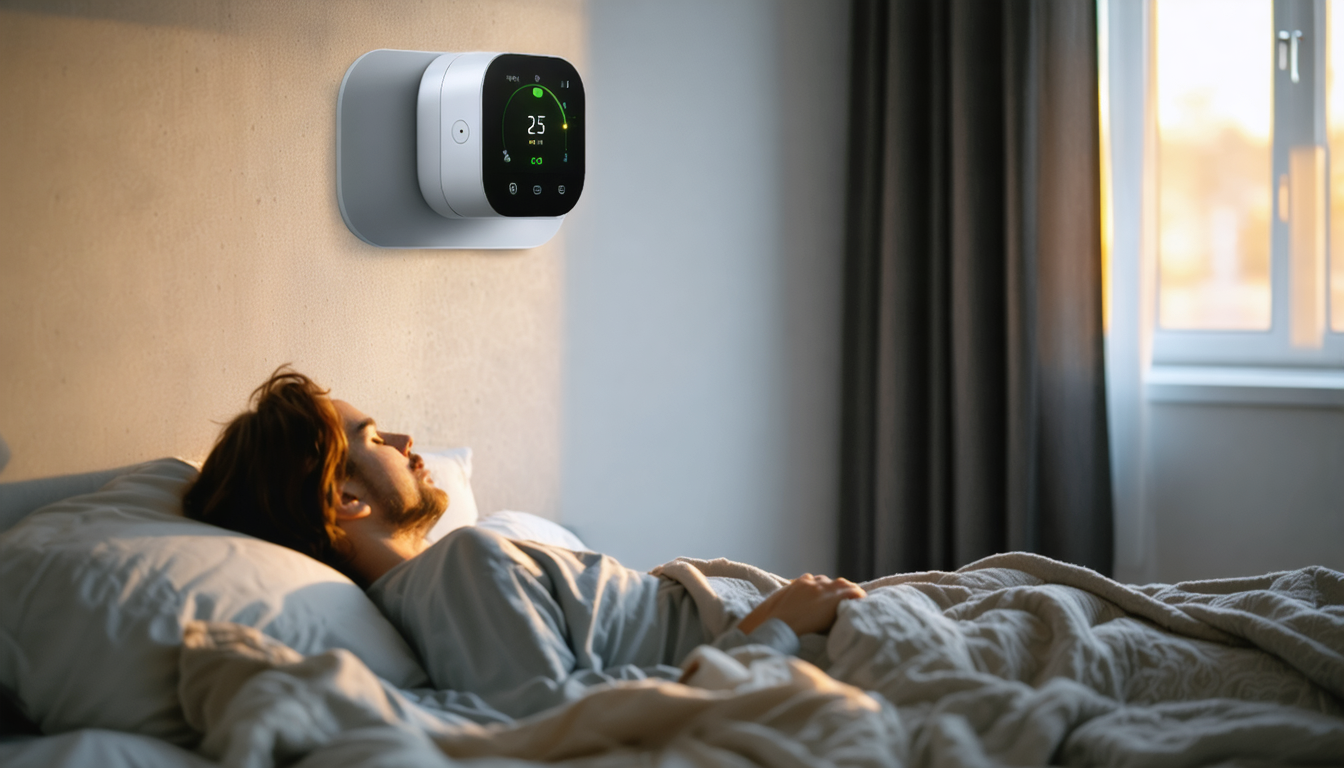
Automation guarantees regularity and efficiency. A programmable thermostat can define several scenarios according to days and occupancy:
- Weekday scenario: start 30 minutes before wake-up, lower after leaving, raise before return.
- Weekend scenario: maintain a pleasant temperature longer, according to a later wake-up.
- Holiday scenario: set frost protection mode to avoid unnecessary consumption while protecting the installation.