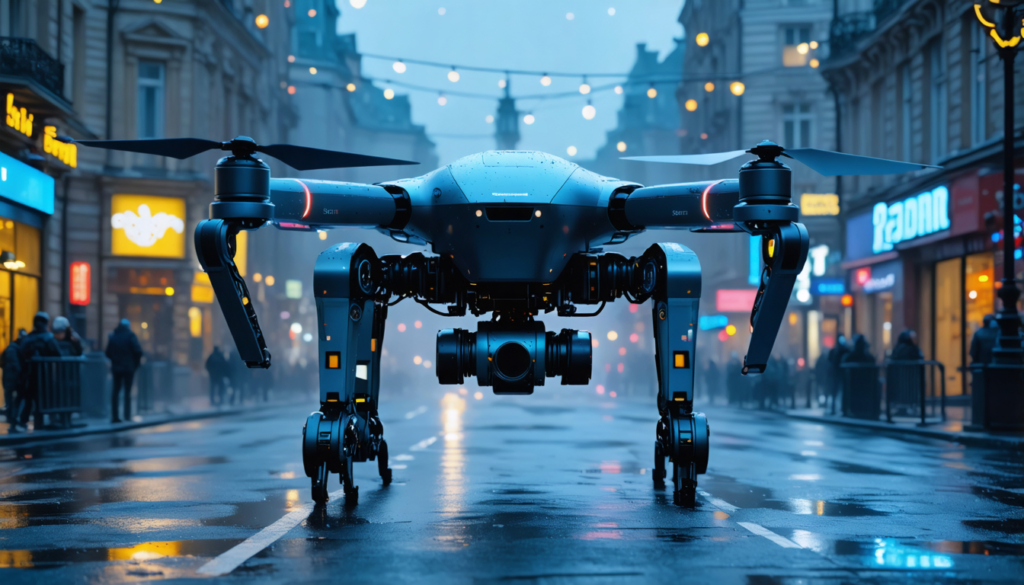
The convergence between robotics and cybercrime is reaching unprecedented levels in Europe, as strongly highlighted by Europol in its latest report. The rise of autonomous robotic technologies opens unprecedented perspectives not only for the modernization of services but also for the development of a form of hybrid digital crime, where the digital invades the physical domain. At the heart of this mutation, criminal networks are adopting drones, autonomous ground and underwater robots to carry out remote attacks, creating a diffuse threat that security forces struggle to contain. This transformation of operating modes exponentially increases the risks in the European space, making the fight against organized crime more complex and dangerous.
Shining an alarming light on this trend, Europol announces a redesign of surveillance and regulation practices necessary to counter this emerging phenomenon. As artificial intelligence grants robots decision-making autonomy, robotized crime becomes difficult to apprehend legally and technically. A burglar could soon use a squadron of micro-drones to force an access, without ever setting foot on the crime scene, while robotic platforms will offer illicit services on demand. The challenge is threefold: anticipate the sophistication of attacks, develop suitable cybersecurity tools, and integrate a “3D” dimension into European security.
- 1 The revolution of crime-at-a-distance and its impact on European security
- 2 Major technological trends fueling robotic cybercrime
- 3 The innovative concept of 3D Police to counter robotic cybercrime
- 4 Robots and cybercrime: a technological arm wrestling for cybersecurity
- 5 The fundamental role of regulatory frameworks facing the rise of robotic crime
- 6 Perspectives on the evolution of robotized digital crime towards 2035
- 7 International cooperation: an imperative condition to counter robotic threats in cybersecurity
The revolution of crime-at-a-distance and its impact on European security
The Europol report describes a radical transformation: the end of the need for a direct physical presence to commit offenses. With the rise of unmanned systems, the concept of crime-at-a-distance is becoming established. Today, most offenses involve the criminal being on site, whether to burglarize a home or use physical violence. By 2035, this paradigm will be disrupted by robotic tools that allow action beyond the reach of any witness or moral law enforcement.
These intelligent machines – drones, rolling robots, autonomous submarines – offer unprecedented operational possibilities. For example, a drone equipped with advanced sensors could be rented through an illicit interface to deliver prohibited products or surveil a sensitive target. This idea of Robotics-as-a-Service (RaaS) opens a new criminal economy where actors no longer expose their identities or places of residence. Their risk of arrest significantly decreases.
In terms of security, this evolution means that traditional surveillance and intervention devices, primarily based on human presence and physical capture, must imperatively evolve. Authorities will need technological means to detect, track, intercept, and neutralize autonomous machines in the air, on land, and even underwater.
The impacts of this change go beyond the mechanics of intervention; they also touch on the legal framework and the very conception of evidence. Indeed, how can human involvement be proven behind an action carried out by an autonomous robot operating under AI control? This new challenge requires legal adaptation where the notions of responsibility and technological traceability will be essential.

Major technological trends fueling robotic cybercrime
Europol highlights several technological vectors converging to strengthen cybercrime linked to robotics. First, the continuous improvement of artificial intelligences integrated into robots grants them increased autonomy. They are no longer simple remotely controlled machines, but entities capable of real-time decision-making, adaptation, and even circumventing security measures.
Moreover, the miniaturization of robotic technologies gives rise to swarms of micro-drones. These small robots capable of moving in formation can enter confined physical spaces, such as air ducts, to spy or carry out localized attacks, notably in the context of physical cyberattacks against sensitive infrastructures.
The integration of robots into an “Internet of Everything” (IoE) network, where each robotic terminal is a point of access to the global system, constitutes another threat. A hacked delivery robot could thus serve as a “Trojan horse” to introduce malware inside a secure building, compromising data or even triggering targeted malfunctions.
Data pollution has also become a double-edged weapon: criminals manipulate the algorithms guiding robots, causing deviations, collisions, or interruptions in critical logistic or industrial chains. This algorithmic contamination can destabilize strategic infrastructures without individuals being directly involved.
| Technological trends | Potential consequences | Examples of envisaged attacks |
|---|---|---|
| Increased AI autonomy of robots | Implementation of independent actions, adaptation to countermeasures | Drones adjusting trajectory to avoid defenses |
| Miniaturization and swarms of micro-drones | Discreet spying and close-range attacks | Infiltration into premises via air ducts |
| Internet of Everything (IoE) with multiple access points | Transformation of robots into hacking vectors | Remote manipulation of a secure system |
| Data pollution and manipulation | Malfunctioning of algorithms, accidents, and sabotage | False navigation of a delivery robot causing an accident |
This rapidly evolving technological dynamic requires constant vigilance. The complexity of systems increases, as does their vulnerability. Authorities must develop multifaceted strategies combining technical understanding, advanced cybersecurity, and sophisticated intervention devices to stay ahead.
The innovative concept of 3D Police to counter robotic cybercrime
Facing these new threats, Europol proposes a radical change in the approach to security: the establishment of a 3D Police. Today, law enforcement operates mainly on two dimensions: ground and limited aerial surveillance. Tomorrow, this field must integrate an integrated surveillance covering terrestrial, aerial, and aquatic environments.
Such an approach means that ground patrols will be supplemented by autonomous surveillance drones and robots that patrol waterways, port infrastructures, as well as airspace at altitude. This deployment must be coordinated through artificial intelligence systems capable of analyzing in real time the data collected on multiple planes to detect intrusions or suspicious behaviors.
One of the greatest technical challenges is the development of robotic forensic tools. Identifying who controls a robot when it executes a criminal action is complex. Evidence must now include digital traces, algorithm logs, network exchanges, and metadata generated by autonomous systems. Thus, traceability will become crucial to establish responsibility.
Additionally, security forces will need to acquire hack-back capabilities and in-flight interception of suspected robots. This involves developing technologies capable not only of interrupting a hostile mission carried out by a robotic system but also capturing or neutralizing equipment in full movement.

Robots and cybercrime: a technological arm wrestling for cybersecurity
The relationship between robotics and cybercrime is not solely conflictual. Europol reminds us that these technologies can be valuable tools to strengthen security. For example, bomb disposal robots allow neutralizing explosives in dangerous areas without risk to humans. Similarly, specialized drones intervene in search and rescue or in 3D mapping of complex crime scenes.
The major challenge remains to restore balance by counting on innovation and regulation. Institutions must bridge the growing gap between the ingenuity of criminal networks and their own technical and human capacities. This also involves strengthened collaboration between robotic technology manufacturers and authorities, including information sharing, technical standardization, and the creation of adapted legal frameworks.
Enhanced electronic security of robots, certification of embedded software, and constant monitoring of operating data are among the avenues considered to counter hacking risks and malicious use.
The fundamental role of regulatory frameworks facing the rise of robotic crime
Europol states that the rapid progression of robotic cybercrime cannot be controlled without implementing robust and adaptive regulatory frameworks. These rules will establish the conditions for the use and commercialization of autonomous robots, notably in sensitive areas.
A coherent European legal framework would guarantee compliance with technical standards, prevention of illegal diversion, and ensure clear responsibility in case of abuse. Moreover, regulation will encourage manufacturers to integrate reinforced security devices and traceability mechanisms from the design stage.
Transnational collaborations will also be crucial, because the dematerialized and borderless nature of cybercriminal activities linked to robotics challenges fragmented national approaches. Europol thus promotes increased international coordination, intelligence sharing, joint operations, and harmonization of response procedures.
- Establishment of European security standards for autonomous robots
- Obligation to integrate anti-tampering systems in the production chain
- Strengthening control and certification devices before commercialization
- Creation of shared databases on incidents and vulnerabilities
- Training and awareness campaigns for law enforcement and industry actors
Perspectives on the evolution of robotized digital crime towards 2035
Europol analyses anticipate that robotic crime will continue to evolve rapidly until around 2035. It pushes the boundaries between the virtual and the real, blurring the frontier between cyberspace and the physical environment. Autonomous systems will become capable of launching complex attacks, coordinating multi-actor and multi-domain operations without requiring constant human intervention.
Imagine a future where a “criminal algorithm” centrally manages an automated drug trafficking network, orchestrating deliveries by drones, laundering via cryptocurrencies, and data manipulation, while reacting in real time to interruption attempts. Such hybrid cyber-physical structures will make police interventions more difficult.
This perspective encourages a proactive approach. It involves developing solutions integrating defensive artificial intelligence, robotic systems specially designed to neutralize attacks, and continuous strengthening of human skills in robotic cybercrime. Technological innovation must be combined with in-depth monitoring and anticipation work.
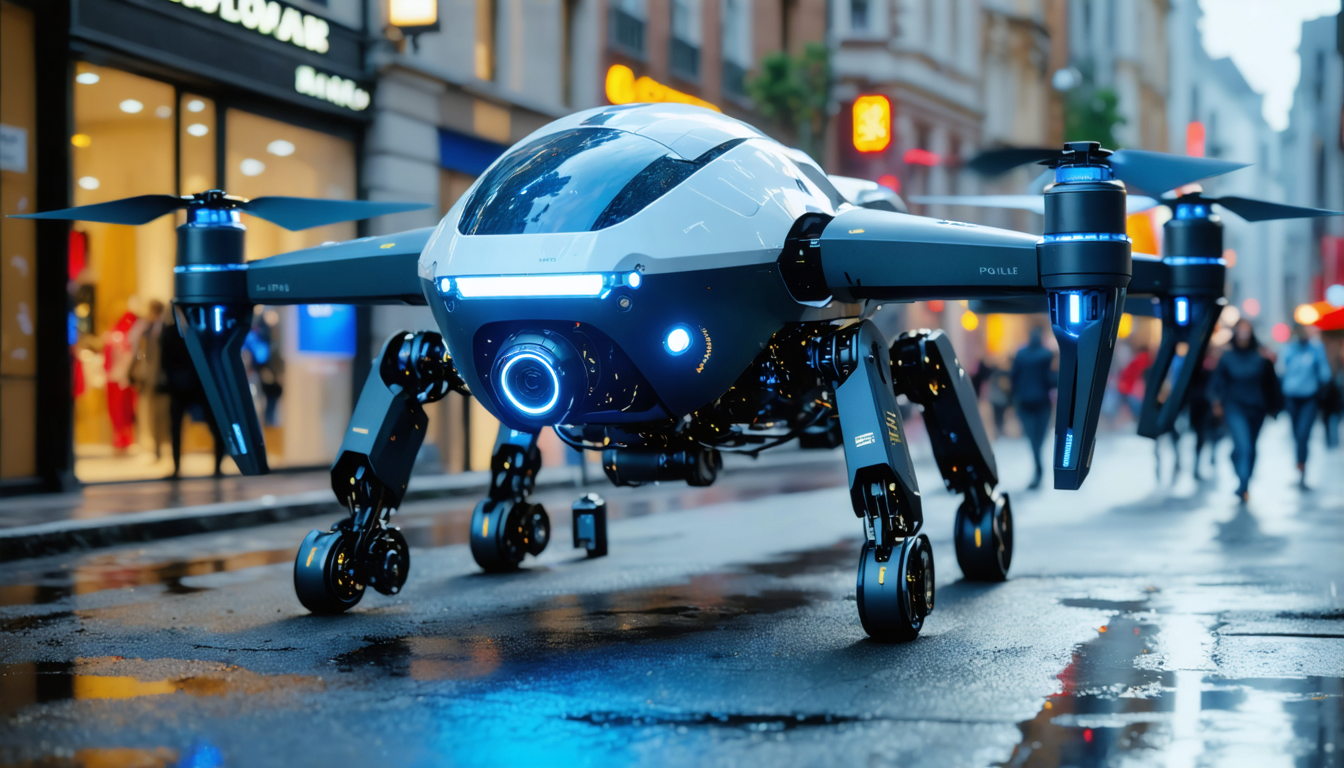
International cooperation: an imperative condition to counter robotic threats in cybersecurity
The global nature of threats imposes strong requirements in terms of cooperation. Europol recalls that robotic crime crosses borders, exploiting disparities in regulation and action capabilities between countries. Consequently, building an effective response requires harmonizing legislation, rapid and secure data exchanges, as well as coordinated operations.
For example, a network of criminal drones operating across several member states could be neutralized only by synchronized operations to avoid rapid relocation of illicit equipment. This also involves coordination with private actors, notably in the fields of robotics, the Internet of Things, and telecommunications.
The internationalization of approaches is essential beyond Europe, as cybercriminals operating with artificial intelligences and robots exploit the global digital space. International conventions on cybersecurity and robots must be modernized to integrate these new realities.
List of priority axes for recommended international cooperation:
- Permanent exchange of technical information on vulnerabilities
- Joint development of robotic and AI investigative tools
- Coordinated cross-border operations against robotic networks
- Sharing best practices in regulation
- Cross-training of security forces across different countries