At the onset of chilly evenings, when the air gradually fills with the scents of autumn, the kitchen becomes a refuge where taste and comforting warmth intertwine. The autumn season naturally calls for a return to generous and enveloping dishes, and autumn veloutés with squash stand out as essentials. These velouté recipes, prepared with patience and care, bring more than just warmth: they tease the taste buds with a palette of warm flavors that transform meals into moments of sweetness and conviviality. Get ready for a gourmet immersion, where culinary tips and slow cooking secrets at gentle heat turn these seasonal vegetables into creamy delights, perfect to face the chills in the heart of the night.
Autumn offers a vibrant spectacle, between golden leaves and crisp air, an ideal invitation to curl up around a steaming bowl. And what better than a delicately spiced squash velouté to set this atmosphere? Let’s forget the clichés of bland and monotonous soup and explore rich, creamy, and balanced recipes that play on the marriage of spices and textures. Transforming squash into culinary velvet only requires a touch of attention, mastery of temperatures, and above all, the desire to awaken each ingredient. Whether you are an experienced chef or a weekend cook, the tips shared here will elevate this simple dish to a staple of your chilly evenings.
- 1 The magic of squash in autumn veloutés: rich flavors for cozy evenings at home
- 2 The best autumn velouté recipes: creativity and tips for excited taste buds
- 3 Mastering slow cooking technique: a must for successful autumn veloutés
- 4 Culinary tip: well-measured tips to enhance and warm your chilly evenings
- 5 Food and wine pairings: enhancing autumn squash veloutés for a complete tasting experience
The magic of squash in autumn veloutés: rich flavors for cozy evenings at home
The squash, the undisputed star of autumn, offers a variety that continues to fascinate, from butternut, red kuri, musquée, to giraumon. These root vegetables in warm hues are naturally rich in vitamins A and C, fibers, and antioxidants, perfect for strengthening our body against dropping temperatures. Cool autumn evenings call for preparations that warm the body while maintaining a pleasant lightness. Transforming into velouté is ideal as it preserves the squash’s natural sweetness while offering a creaminess that delights every palate.
The secret to a successful autumn velouté lies first in slow cooking at gentle heat. Squash cooked too quickly will lose its flavor and become mealy, whereas gentle cooking allows its aromas to fully develop. Often, steaming or cooking in a casserole accompanied by a good homemade vegetable broth is chosen to enhance the ingredients without drowning them. Adding spices like mild curry powder, ground ginger, or nutmeg reveals warm notes that balance the natural sweet softness of the squash.
To deepen the flavor, culinary tips often recommend coating the squash puree in extra virgin olive oil infused with aromas before adding the liquids. This method allows the essential oils of the spices to diffuse at the beginning of cooking, creating an enchanting scent from the first minutes. The velouté can then be enriched with a touch of coconut milk, which brings roundness and incomparable creaminess while enhancing the subtlety of the aromas. Thus, each spoonful becomes a sensory journey, perfect for evenings that demand sweetness and comfort.
Moreover, the garnish plays a crucial role in the success of these dishes. Roasted pumpkin seeds, lightly caramelized dry in a pan over medium heat, provide an indispensable crunchy contrast. This juxtaposition of textures – the creamy softness of the soup and the crunch of the seeds – delights the taste buds and elevates the whole. Let us not forget that these details make all the difference between a classic recipe and a memorable culinary creation.
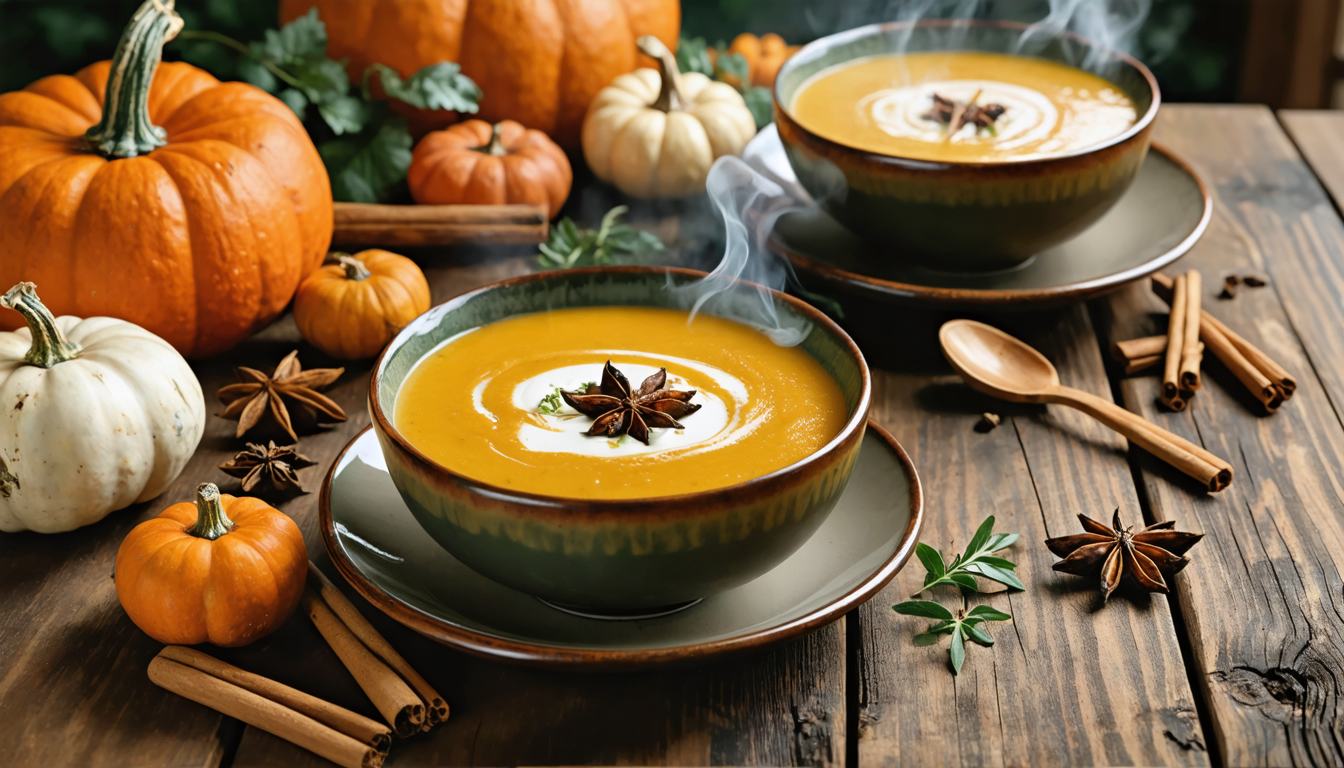
The best autumn velouté recipes: creativity and tips for excited taste buds
Autumn veloutés are not locked into a single mold. On the contrary, it is a constantly evolving cuisine where creativity expresses itself in the choice of ingredients and spices. The classic butternut recipe remains a delicious anchor point, but by pairing squash with other vegetables like carrot, sweet potato, or fennel, endless taste possibilities open up. These combinations are both rich in nutrients and flavor nuances, offering a balanced, smooth, yet surprising velouté.
Here is a list of ingredients and useful tips to succeed with your seasonal veloutés:
- Butternut squash: sweetness and ideal texture for a creamy velouté
- Coconut milk: roundness and lightness, perfect to substitute classic cream
- Spices such as mild curry, ginger, nutmeg: to enhance without burning, creating warm pleasures
- Homemade vegetable broth: essential base for authentic flavor
- Roasted pumpkin seeds: adds crunch and indulgence
- Maple syrup (optional): for a sweet touch that highlights the spices
Combined elements, with mastery of cooking and dosage, allow you to create personalized recipes that charm the taste buds while enveloping guests in a gentle well-being. For example, a velouté where sweet potato is paired with nutmeg and coconut milk will seduce those who love sweet softness, while a potimarron velouté with curry powder and a hint of Cayenne pepper will please enthusiasts of stronger, slightly spicy flavors.
To better visualize the different possible compositions, here is a table summarizing some recipe ideas with their key ingredients and dominant flavor profiles:
| Recipe | Main ingredients | Flavor profile | Complementary textures |
|---|---|---|---|
| Butternut-coconut velouté | Butternut purée, coconut milk, mild curry | Sweet, creamy, and exotic | Roasted pumpkin seeds |
| Potimarron-ginger velouté | Potimarron, ground ginger, vegetable broth | Warm and slightly spicy | Golden croutons |
| Sweet potato-nutmeg velouté | Sweet potato, nutmeg, fresh cream | Sweet and comforting | Crushed nuts |
| Musquée squash-curry velouté | Musquée squash, curry powder, almond milk | Spicy and subtle | Sesame seeds |
Mastering slow cooking technique: a must for successful autumn veloutés
The key to fully developing the taste and texture of autumn veloutés lies in controlled cooking at gentle heat. This technique consists of maintaining a moderate temperature throughout the preparation, thus preventing the vegetables from losing their aromas or becoming pasty. Too high heat risks burning spices or turning the cooking water into a flavorless bath. It is this slowness that makes the difference between an ordinary soup and a rich, memorable velouté.
Practically, gentle cooking applies right from the step of coating the spices in olive oil. After gently heating the oil, spices are added while stirring continuously to awaken their flavors without burning them. Then the squash purée is integrated, and this gentle heat continues, allowing optimal coating of the aromas. The broth and coconut milk are then incorporated, the mixture brought to a very light simmer, and never to a vigorous boil.
Flavors develop gently, merging for about fifteen minutes, creating a homogeneous and rich blend. Finally comes the time to emulsify the soup, an operation that, using an immersion blender, incorporates a bit of air. The result: a texture so soft and velvety that it evokes a velvet garment delicately placed on the taste buds.
Many cooks also use this technique to preserve all the nutritional values of their ingredients. Keeping vitamins intact while concentrating flavors is a delicate but achievable balance when knowing the tips related to temperature and cooking time. A preparation at gentle heat thus becomes a promise of pleasure, as beautiful to see as to taste.
Culinary tip: well-measured tips to enhance and warm your chilly evenings
Beyond cooking precision, culinary tips provide that final touch which transforms an autumn velouté into a warm and memorable dish. For example, the famous optional pinch of Cayenne pepper is a subtle way to infuse a piquant light without overwhelming the taste buds, ideal for contrasting with the squash’s sweetness. Guérande sea salt, for its part, offers natural salinity that highlights all aromas, while freshly ground black pepper brings subtle complexity without crushing scents.
Another remarkable tip is to incorporate a teaspoon of maple syrup at the end of cooking, before the final blending. This careful gesture brings gentle caramelization and balances the slight bitterness of the spices, emphasizing the sweet richness typical of butternut squash. It is not a trivial sweet addition but a true gourmet signature that radically transforms the taste profile.
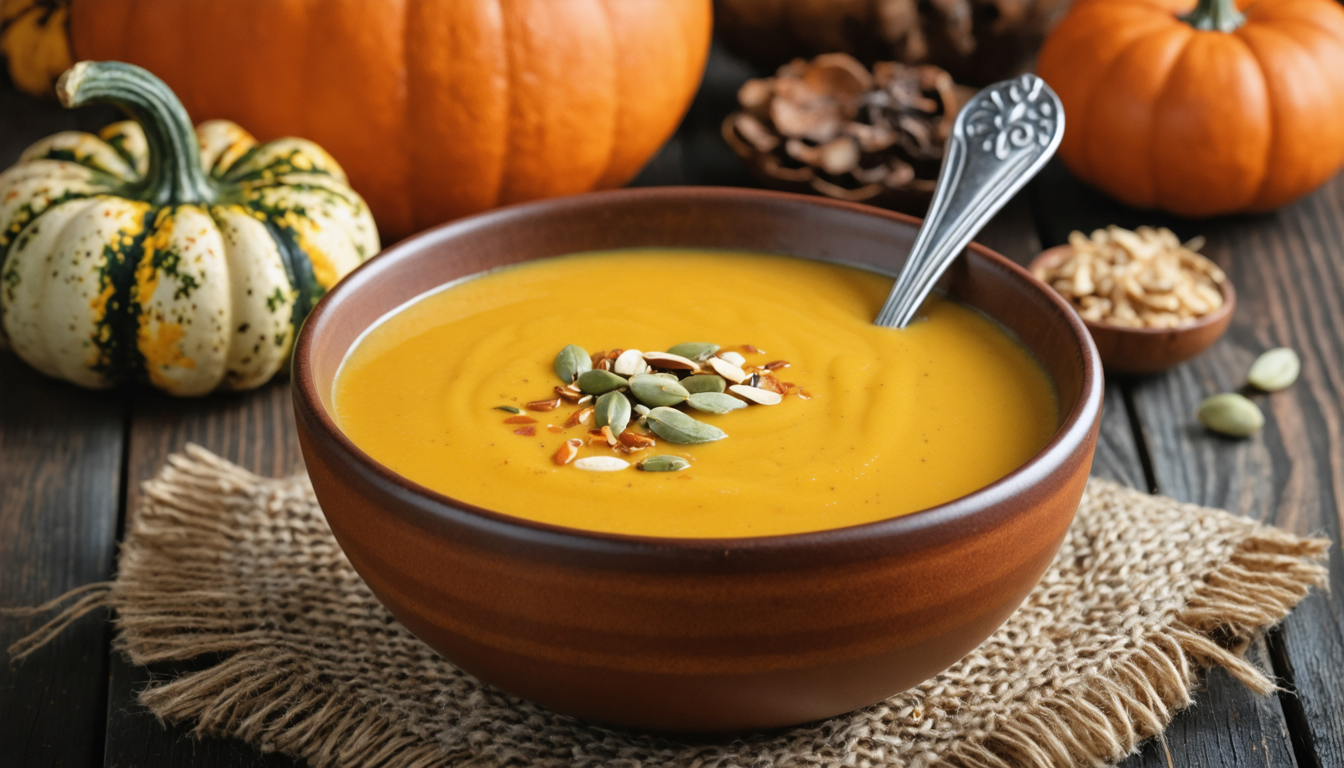
Finally, the crunchy garnish should never be neglected. Beyond roasted pumpkin seeds, one can also opt for homemade garlic and herb croutons or sprinkle the velouté with toasted hazelnuts. These texture contrasts liven up each spoonful and give the dish appreciable relief that warmly embraces the guests’ souls. This variety also allows everyone to adjust their velouté according to their preferences, for sublime and personalized chilly evenings.
To summarize, here are the essential key tips to perfect your velouté:
- Use cooking at gentle heat to preserve flavors
- Add spices at the beginning to release their aromas
- Include a touch of maple syrup to balance sweetness and spices
- Choose a quality salt like Guérande
- Care for the garnish with crunchy textures (seeds, croutons)
Food and wine pairings: enhancing autumn squash veloutés for a complete tasting experience
A successful squash velouté deserves to be paired with a wine worthy of its complexity. The balance between sweetness, creaminess, and spices requires a delicate pairing, capable of exciting the taste buds without overpowering the flavors. For white wine lovers, the ideal is to favor a wine that combines character and roundness. Within the richness of French wine regions, the Loire Valley offers perfect treasures for this exercise.
Chenin Blanc, with variations like dry Vouvray or Montlouis-sur-Loire, is a remarkable option. Its fruity notes, sometimes quince or honey, and its tangy freshness play a contrasting role with the richness of coconut milk and the sweetness of squash. The lively structure of these wines supports the spiciness while complementing the dish’s roundness.
Moreover, a slightly oaked Burgundy Chardonnay, such as a Saint-Véran, can create sparks as a pairing. Its buttery, hazelnut, and white fruit flavors perfectly harmonize with the velouté’s creaminess and gentle aromas. These pairings then create a complete tasting experience, where each sip and spoonful tell a rustic yet refined story.
Here is a summary table of some food and wine pairings to best accompany your autumn chilly evenings around a velouté:
| Wine | Region | Characteristics | Pairing with |
|---|---|---|---|
| Dry Vouvray (Chenin Blanc) | Loire Valley | Fruity, quince notes, refreshing acidity | Butternut-coconut velouté, mild curry |
| Montlouis-sur-Loire (Chenin Blanc) | Loire Valley | Balanced, honey and white flowers | Potimarron-ginger velouté |
| Saint-Véran (Chardonnay) | Burgundy | Buttery, hazelnut, fruity | Sweet potato-nutmeg velouté |
| Gewurztraminer | Alsace | Spicy, floral, slightly sweet | Musquée squash-curry velouté |