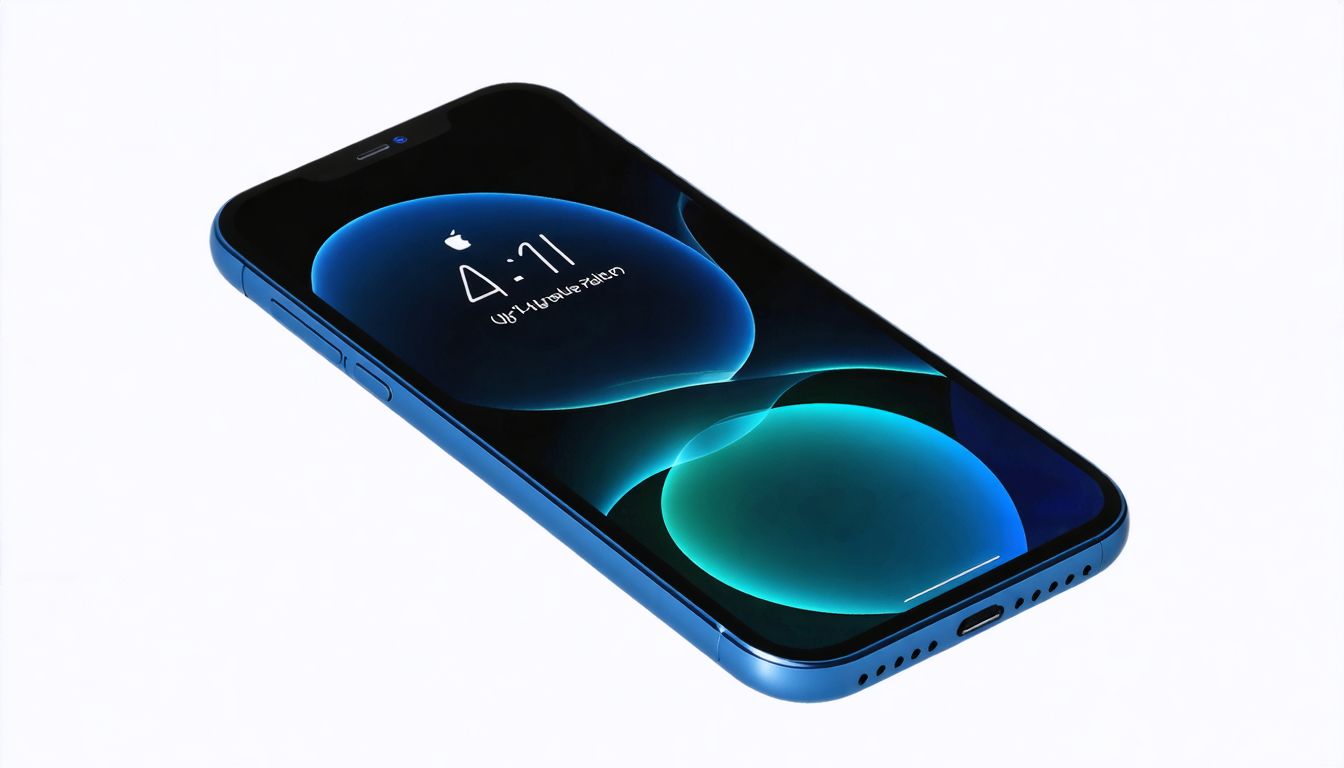
At the dawn of 2025, Apple once again transforms the landscape of mobile technology. Unprecedented leaks from an internal version of iOS 26 combined with information gathered from Asian suppliers have given rise to a wave of spectacular revelations about future iPhone models planned up to 2028. Far from marking a pause in innovation, Apple is preparing instead to deploy a range of revolutionary smartphones, reflecting a renewed ambition for technology and design.
The smartphone world is thus set to experience its biggest overhaul in several years, thanks to new directions that combine technical sophistication and avant-garde aesthetics. The iPhone Fold, expected in 2026, for example, disrupts classic standards with its foldable format without compromise on sturdiness or visual quality, eliminating the visible crease on the screen. Meanwhile, the Pro line takes an unprecedented step forward with the integration of Face ID sensors under the screen, heralding the disappearance of the famous notch and making way for an almost full and very immersive display.
In 2027, an event marks a symbolic turning point: the launch of the iPhone 20. A true flagship model, it celebrates twenty years of the lineup by inaugurating a completely “all-screen” concept, reinforced by under-display camera technology combined with a curved glass design on all four sides. The abandonment of physical buttons in favor of haptic zones on the edges designs the iPhone of the future, combining elegance and enhanced performance thanks to the first 2 nm etched chips. This technical feat paves the way for local artificial intelligence capabilities previously unmatched.
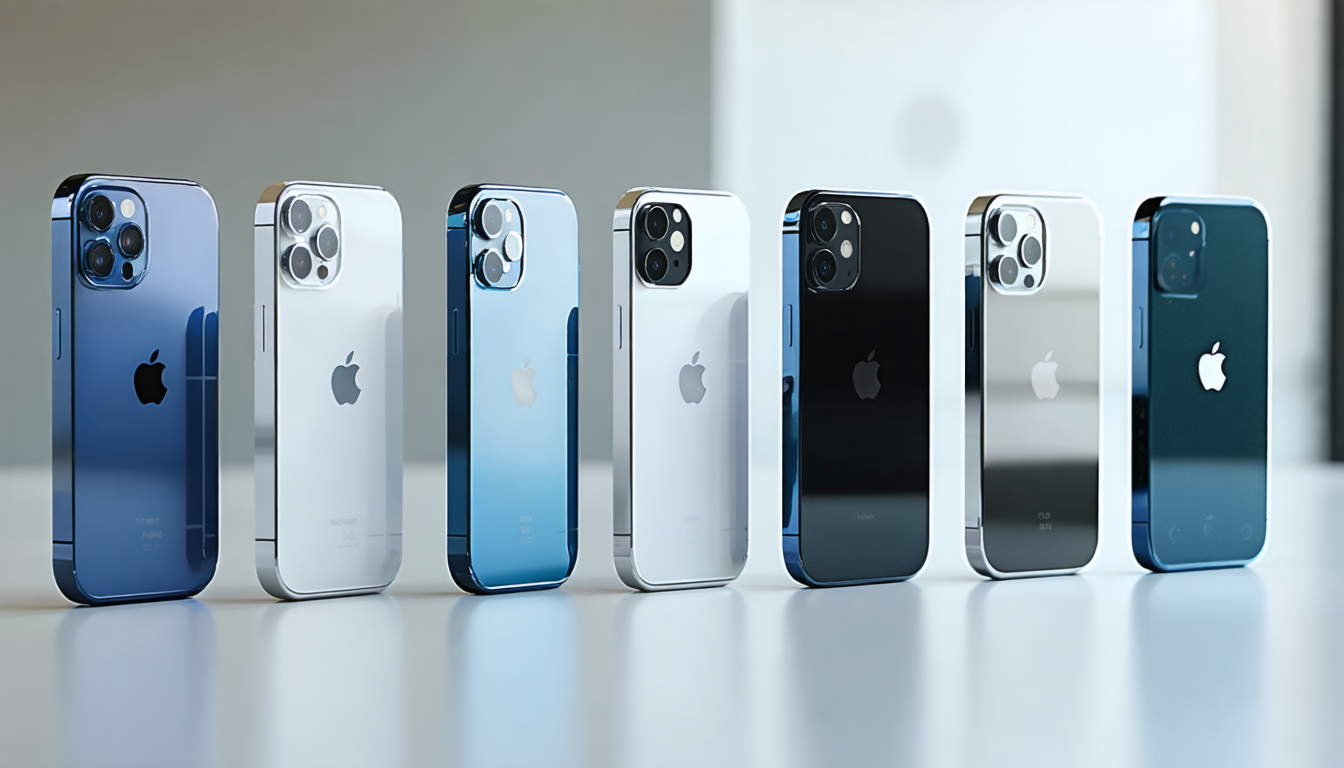
Beyond the hardware, the iOS 28 system leak reveals the advanced integration of proactive artificial intelligence, operating as a fully autonomous personal agent. The iPhone 21, scheduled for 2028, promises an extended range of seven diversified models, covering all consumer expectations: accessible versions in the “e” series, thin and stylish smartphones within the Air series, models equipped with powerful photo configurations in the Pro series, and the pinnacle of foldable technology with the Fold series.
This unprecedented roadmap reveals that Apple aims not only to maintain its leadership in mobile technology but also to redefine the very concept of smartphone. The diversification of models and the announced advanced features place the company in a strong position against increasingly intense competition, notably in the fields of flexible displays and AI. These exclusive forecasts support the idea that the coming years will be decisive for the fluidity, intelligence, and versatility of the iPhones we will soon hold in our hands.
- 1 Foldable Revolution: The iPhone Fold and Apple’s New Era of Flexible Smartphones in 2026
- 2 iPhone 20 in 2027: The Pinnacle of “All-Screen” Design to Celebrate Two Decades of Success
- 3 iPhone 21 in 2028: An Extensive Range Integrating Advanced Artificial Intelligence
- 4 The Progressive Disappearance of Physical Buttons: A Trend Taking Hold in Future Models
- 5 The Evolution of Mobile Photography: Periscopic Zoom and Under-Display Sensors
- 6 iOS 28 and Artificial Intelligence: A Turning Point in Proactive Digital Life Management
- 7 How Do These Innovations Reflect Apple’s Overall Strategy?
Foldable Revolution: The iPhone Fold and Apple’s New Era of Flexible Smartphones in 2026
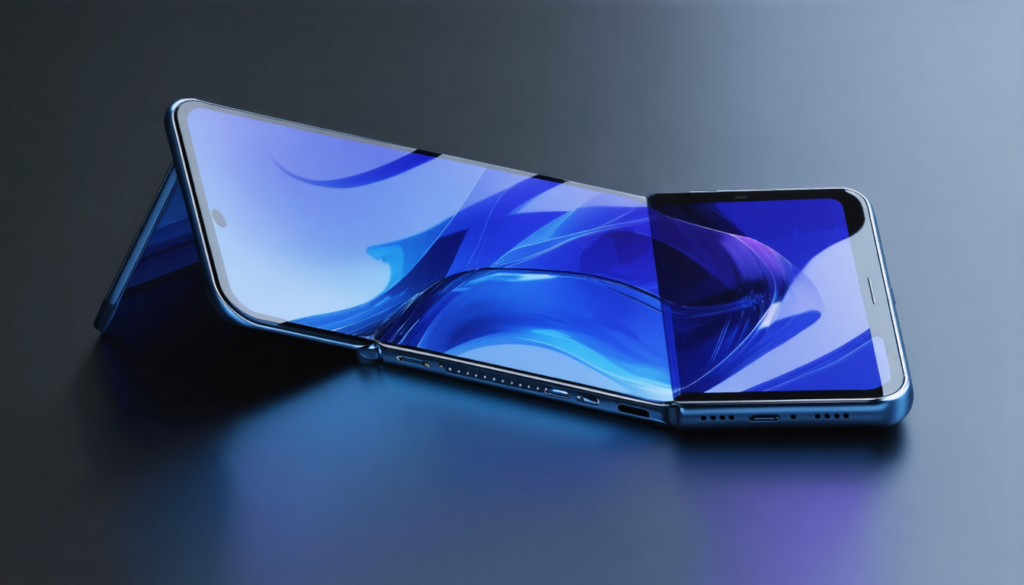
The arrival of the iPhone Fold undoubtedly constitutes the most visible transformation in the Apple lineup. Designed to respond to the rise of foldable smartphones, this model will be launched in 2026 in a “clamshell” format, reminiscent of the Galaxy Z Flip design, but with such a refined technical signature that it should revolutionize user experience. The usual issue with this type of product — the appearance of a crease on the screen — would here be completely eliminated by advanced and unprecedented in-house engineering.
Apple thus intends to offer a perfectly smooth and continuous display once the smartphone is opened, ensuring visual immersion without compromise. This challenge required the development of a new screen material and revisited internal mechanisms to ensure durability and flexibility without sacrificing the thinness of the device. This model thus promises to be Apple’s technological comeback in a segment it had so far approached cautiously.
An Innovative Design for a New Mobile Experience
Beyond the technology, the iPhone Fold also redefines smartphone design. On one side, it combines compactness in a closed format, ideal for urban or mobile use. On the other, once unfolded, the device transforms into a compact tablet that multiplies usage possibilities.
This seamless transition between two formats, accompanied by optimized power, positions Apple at the forefront of mobile innovation. The disappearance of the notch from 2026 on the Pro line with the integration of Face ID under the screen completes this ambitious approach, offering an almost uninterrupted display for better immersion and a clean design.
Impact on the Foldable Smartphone Market
On the market, the iPhone Fold could act as a catalyst, urging competitors to reinvent their offers and forcing suppliers to accelerate research on flexible displays and ultra-thin components. Moreover, this royal innovation from Apple should boost consumer confidence in the robustness of foldable smartphones, which are still sometimes seen as fragile.
The release of the iPhone Fold also heralds a new dynamic in the iOS ecosystem. Applications will have to adapt to the dual format, offering an enhanced multitasking experience to optimize browsing, gaming, or content creation.
iPhone 20 in 2027: The Pinnacle of “All-Screen” Design to Celebrate Two Decades of Success
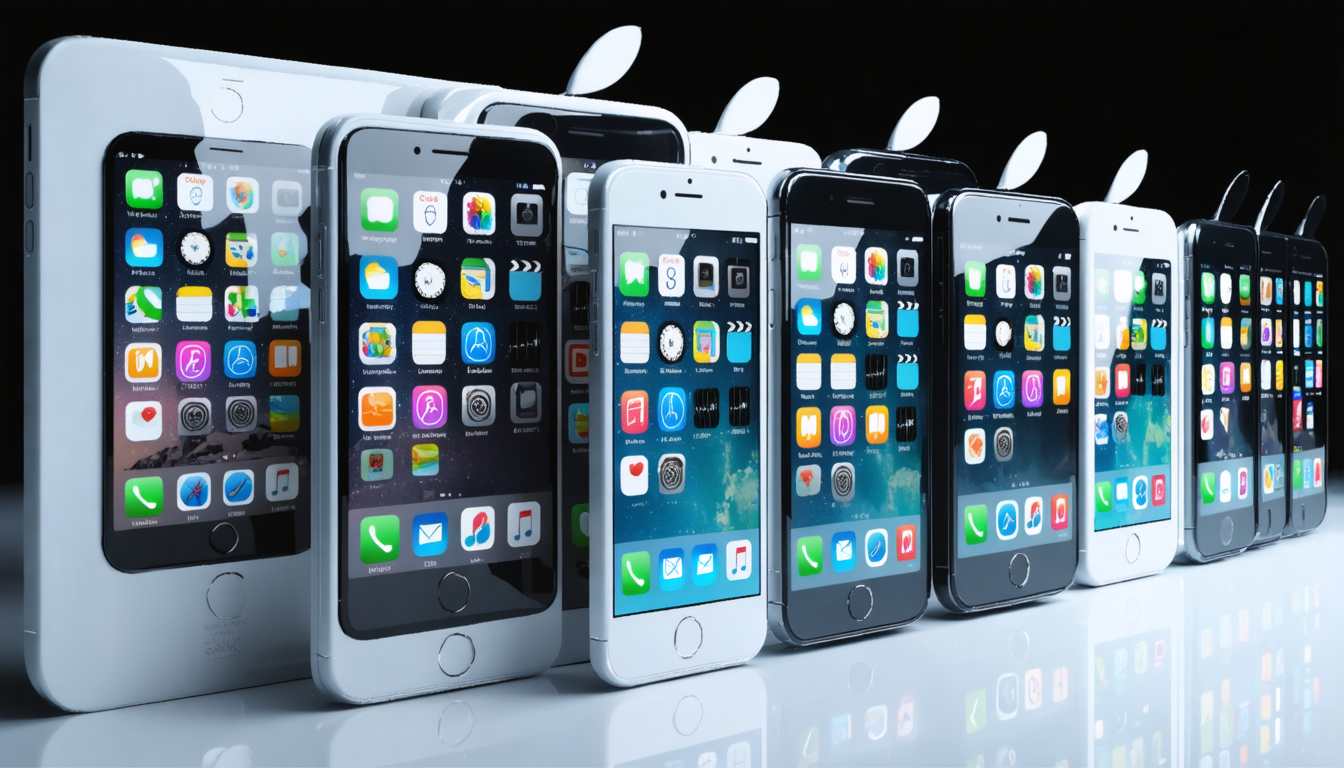
In 2027, Apple will celebrate a milestone anniversary and intends to make a strong impact with an iPhone 20 designed as a true technological and aesthetic masterpiece. This ultra-premium model embodies Steve Jobs’ original vision of a smartphone whose screen constitutes the entirety of the front face, with no obstruction whatsoever. To achieve this, Apple has adopted advanced under-display camera (UDC) technology, making the device completely transparent and offering an unprecedented immersive visual experience.
The overall design of this smartphone should make a sensation thanks to its curved glass finish on all four edges, a craftsmanship feat that literally melts the iPhone in the hand. The ergonomics will also be rethought to do away with physical buttons: the edges will be touch-sensitive, offering haptic zones that replace traditional controls. This disappearance of buttons will bring a new refined dimension to phone handling.
Unrivaled Power Driven by 2nm Etching
On the components side, the iPhone 20 will be equipped with the first 2-nanometer etched chips thanks to the partnership with TSMC. This extreme miniaturization will optimize performance while reducing energy consumption, a crucial element for thermal management and battery life. The impact on local artificial intelligence capabilities will translate into ever more advanced and faster intelligent functions, enhancing the iPhone’s responsiveness to your daily interactions.
This will open new perspectives, notably in computational photography, augmented reality, and voice processing. These are features that today’s users can only scratch the surface of, but which will become the standard with this generation.
A Technological Milestone with Lasting Influence
The iPhone 20 is thus announced as a model as symbolic as it is functional. It marks a shift towards a truly uncompromising smartphone in terms of design and performance. For enthusiasts, this anniversary edition will be a coveted object, while for the market, it represents a new reference to reach.
Apple thus establishes a new industrial standard in aesthetics and technological integration, pushing all brands to rethink how a smartphone can offer a smoother, more natural, and immersive user experience.
iPhone 21 in 2028: An Extensive Range Integrating Advanced Artificial Intelligence
The year 2028 will be marked by the stabilization of a broadened and extremely diversified iPhone range. Up to seven distinct models will cater to very varied user profiles. Apple has thus planned to cover all economic segments and expectations by integrating artificial intelligence as a common thread of this offer.
The Four Main Families of iPhone
The segmentation is designed to specifically respond to the needs and ambitions of consumers:
- “e” Series: aimed at an audience seeking an affordable iPhone, succeeding the SE models, suited for simple daily use without cutting essential features.
- Air Series: focuses on thinness and style, with lightweight, elegant models that emphasize aesthetics while ensuring good performance.
- Pro and Pro Max Series: these models are dedicated to professionals and experts, highlighting raw power, advanced photo sensors notably periscopic for exceptional zooms.
- Fold Series: the premium foldable segment, with a premium positioning for technology and innovation enthusiasts.
Integrated Artificial Intelligence, a True Personal Agent
iOS 28, which will accompany these new devices, introduces a new era of Apple Intelligence. This AI becomes proactive, anticipating your digital needs to efficiently manage your appointments, reminders, communications, and much more, without constant user intervention. Siri 2.0 thus transforms into an autonomous personal agent, capable of adapting to your life habits and offering personalized recommendations in real time.
For example, this AI can analyze your calendars and trips to automatically suggest the best route depending on traffic conditions, or anticipate your battery recharge needs according to your daily usage.
| Model | Main Features | Target Segment | Planned Year |
|---|---|---|---|
| iPhone Fold | Foldable screen without crease, Face ID under screen | Innovation and premium | 2026 |
| iPhone 20 | 100% all-glass screen, 2 nm chip, haptic zones | Ultra-premium | 2027 |
| iPhone 21 “e” series | Accessible model, simplified design | Entry level | 2028 |
| iPhone 21 Air series | Thinness and aesthetics, featherweight | Mid-range | 2028 |
| iPhone 21 Pro / Pro Max | Power and advanced photography | High-end | 2028 |
| iPhone 21 Fold | Advanced foldable technology | High-end foldable | 2028 |
These hardware innovations will thus be coupled with software advances that make the iPhone 21 an intelligent digital companion, ready to transform the way we interact with our devices daily.
The Progressive Disappearance of Physical Buttons: A Trend Taking Hold in Future Models
For several years now, Apple has followed a strategy aimed at reducing the clutter of physical interfaces to favor clean designs and a more natural interaction with the smartphone. This trend is definitively taking hold with upcoming models, notably the iPhone 20, where traditional buttons give way to haptic touch zones integrated into the device’s edges.
This evolution responds to several challenges. On one hand, it allows optimizing the front space entirely dedicated to the screen, essential for an immersive experience. On the other hand, it offers greater resistance to external aggressions, notably by eliminating mechanical openings that could let in dust or water.
Another advantage of this arrangement is the possibility to provide a more advanced customizable function, allowing the user to reprogram commands according to their needs or preferences. Thanks to very precise haptic responses, the tactile experience remains natural without compromising reliability.
This design choice contributes to the visual identity of future iPhones, highlighting Apple’s desire to establish harmony between aesthetics and innovative functionality.
The Evolution of Mobile Photography: Periscopic Zoom and Under-Display Sensors
Photography remains a major focus for Apple in its future models. The iPhone 21 Pro and Pro Max lineup embodies this desire to push photography quality limits, notably with the introduction of advanced periscopic zooms, capable of offering highly detailed shots at long distances without sacrificing smartphone compactness.
This technology relies on an innovative optical system, using mirrors and lenses arranged like a periscope, allowing magnifications never before seen in Apple devices. The results are striking, delivering sharp and bright images previously reserved for professional cameras.
At the same time, the Face ID sensors under the screen, which will appear in 2026 on Pro models, improve not only aesthetics but also user privacy. By integrating these elements beneath the panel, Apple ensures fast, secure, and discreet facial recognition without any visual intrusion.
Concrete Usage Examples
- Photographing a sporting event with a powerful optical zoom to capture every detail from afar.
- Using discreet facial recognition for instant unlocking without disturbing the display.
- Creating immersive content in augmented reality, benefiting from the enhanced precision of sensors.
iOS 28 and Artificial Intelligence: A Turning Point in Proactive Digital Life Management
The software aspect is not left behind in these forecasts. iOS 28 promises a major overhaul of the interaction between the user and their iPhone through the integration of advanced artificial intelligence, called Apple Intelligence. This AI, embodied by the new Siri 2.0 version, becomes more than a voice assistant: it acts as an autonomous personal agent.
This autonomy translates into an ability to anticipate needs, manage the agenda, optimize phone resources, and even provide personalized advice for more efficient device use. For example, the AI could automatically adjust energy management according to your habits to extend daily battery life.
At the same time, this proactive intelligence integrates enhanced security functions, detecting and protecting against potential threats, whether phishing, intrusion, or malicious applications. It also simplifies navigation by grouping relevant information and suggestions on the screen without cluttering the interface.
How Do These Innovations Reflect Apple’s Overall Strategy?
These future models embody Apple’s willingness not to settle for incremental updates but to operate targeted diversification to respond to the rising competition, notably in the foldable and artificial intelligence domains.
This approach strengthens the Apple ecosystem, offering experiences tailored to all types of users and allowing better penetration into diverse segments. Foldable technology thus signals an opening to more flexible uses adapted to a connected and mobile lifestyle. Proactive AI, meanwhile, introduces a revolution in how smartphones can become indispensable daily.
In short, this roadmap revealed exclusively ensures that Apple remains an innovation engine in mobile technology, anticipating trends to continue imposing its standards in a market undergoing profound change.